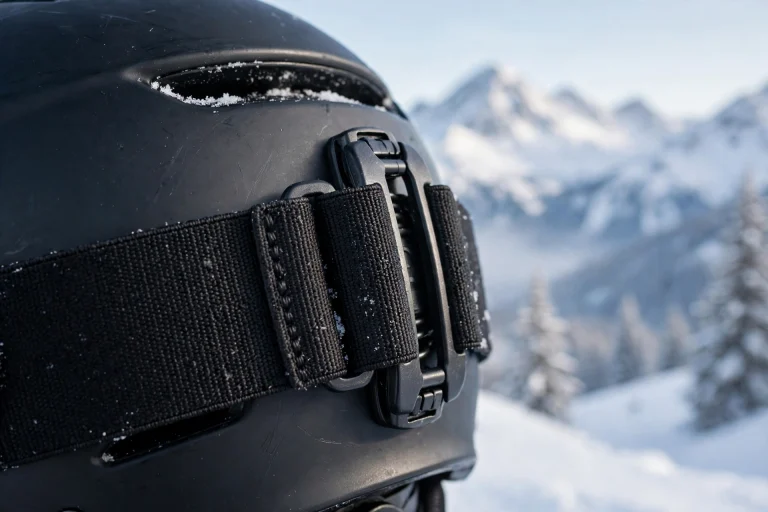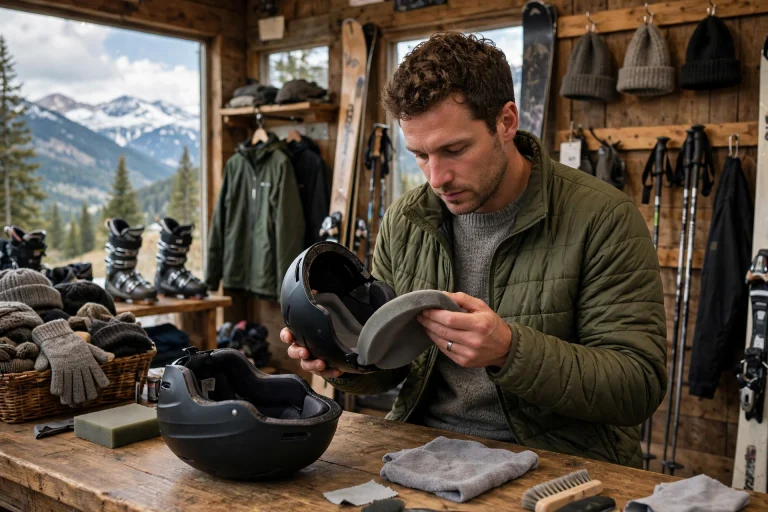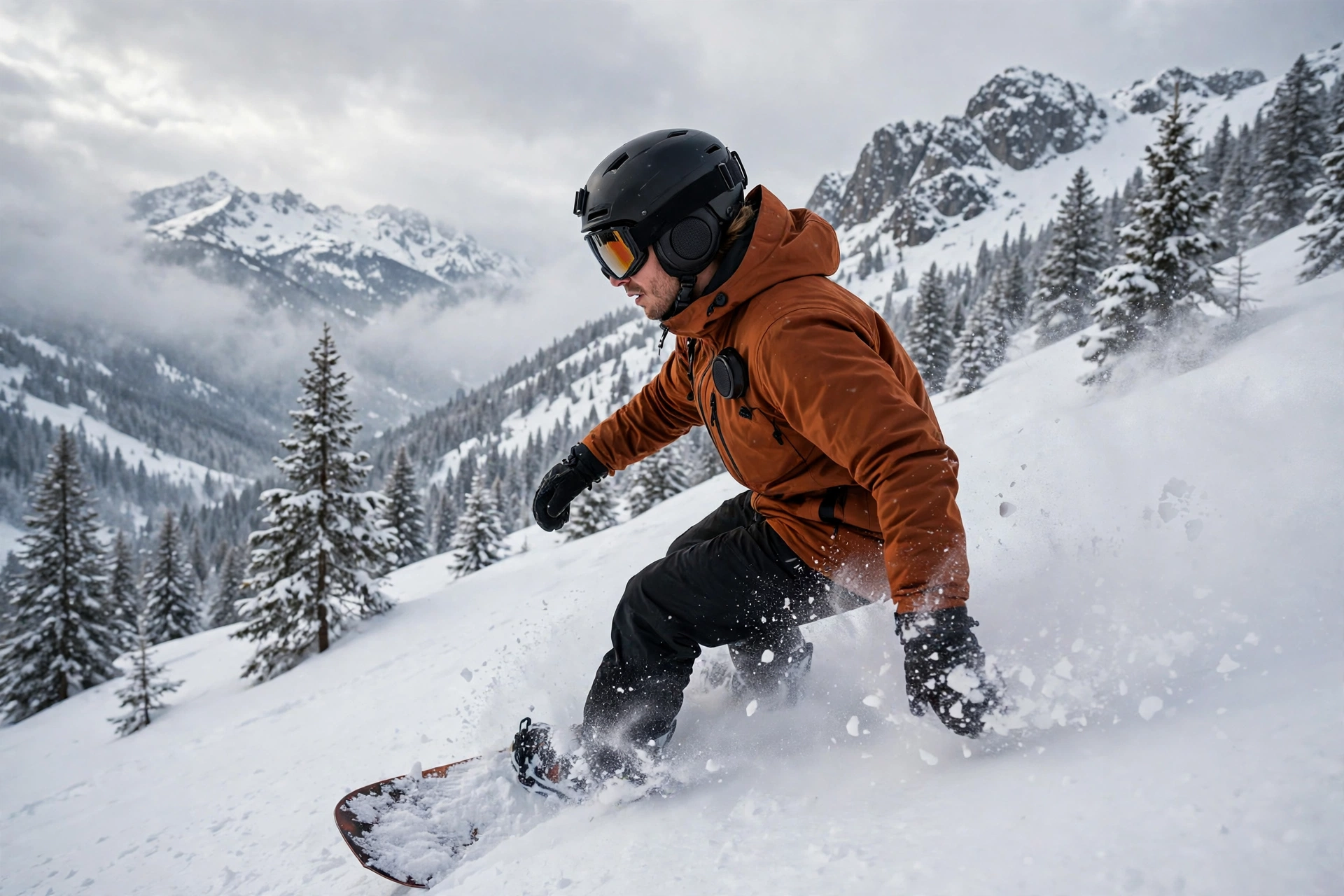
Snowboard helmet audio chips and headphones are small speakers or drop-in audio units that fit into the helmet’s ear pads so you can listen to music or take calls without earbuds — in general terms, ear-pad speakers that sit over the ear are more comfortable and safer on the mountain than earbuds, because they leave your ears less sealed off from the sounds around you.
Music on the mountain is a love-it-or-hate-it topic, but the hardware has settled into a few clear options. Understanding the difference between built-in chips, drop-in speakers, and regular headphones helps you choose without buying the wrong thing twice.
What Are Helmet Audio Chips, Exactly?
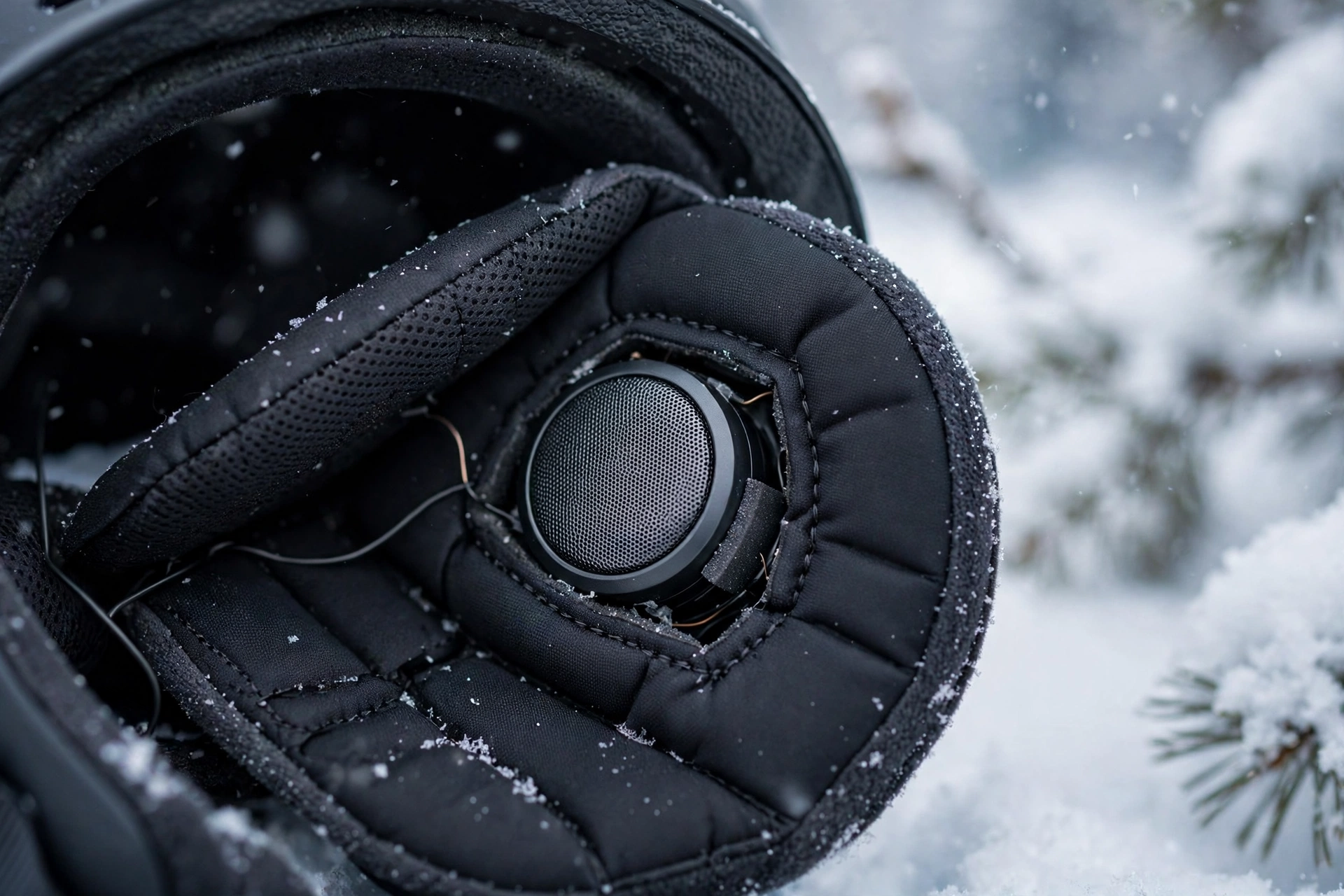
Audio chips are compact speaker units designed to slot into the ear pads of a compatible helmet. Some helmets are sold “audio-ready” with pockets in the ear pads; the chip drops in, connects by wire or Bluetooth to your phone, and plays through a thin speaker that sits over your ear rather than inside it.
Some makers sell their own chips matched to their helmets, while others make universal chips that fit a range of ear-pad pockets. The matched versions usually fit more neatly and sit flatter, while universal ones are cheaper and transferable between helmets — but check the pocket size and connector type before buying, since not every chip fits every helmet.
A few helmets now come with audio built in from the factory. These are convenient — no fitting, no loose parts — but the audio cannot be moved to your next helmet, and if the electronics fail, the whole unit needs attention rather than just a replacement chip.
How Are Ear-Pad Speakers Different From Headphones and Earbuds?
Position is the key difference. Ear-pad speakers sit outside the ear, inside the helmet’s ear pad, so sound reaches you without sealing the ear canal. Earbuds sit inside the ear and block outside sound far more completely, which is why they feel isolating on a busy slope.
Comfort differs too. Earbuds under a helmet can press painfully, work loose when the helmet moves, and tangle with the chin strap. Ear-pad speakers stay put because the helmet holds them, and they do not press into the ear — on a long day, that difference matters.
Regular over-ear headphones are a poor fit under a snowboard helmet in general terms: they add bulk, change the helmet’s fit, and push the shell out of position. If you want music, a helmet-specific audio solution is the practical choice, not adapted headphones.
Can You Still Hear What Matters With Music Playing?
Yes, if you keep the volume sensible — and that is the safety point that matters most. Ear-pad speakers let ambient sound through by design, so lift announcements, other riders calling out, and the sound of someone approaching from behind remain audible at moderate volume. At maximum volume, that advantage disappears.
Keep one ear lower, or the overall volume at a level where you can still hear conversation. Many riders set the volume so music is background, not foreground, and pause it on busy traverses, in lift queues, and on narrow cat tracks where awareness matters most.
Some audio units include a microphone for calls. Taking a call on a lift is convenient, but riding while talking divides attention — save calls for the lift or the lodge, and keep riding time for riding.
What Should You Check Before Buying Helmet Audio?
Compatibility first. Check whether your helmet has audio pockets, what size they are, and whether the chip you want fits them. Some helmets need a specific brand’s chip; others accept any thin speaker unit. Measure the pocket if the maker does not state it, and read the chip’s fitting guide before ordering.
Battery life in the cold matters. Bluetooth chips run on small batteries that lose capacity in freezing temperatures, so a unit rated for a full day at room temperature may fade sooner on the mountain. Charge fully before riding, and keep the phone warm — a cold phone battery dying ends the music regardless of the chip.
Controls are worth checking too. Can you change volume and skip tracks with gloves on? Units with large buttons or a simple remote on the ear pad are far easier to use on the move than tiny buttons or phone-only controls, which mean stopping and taking gloves off.
- Compatibility: check ear-pad pocket size and connector before buying
- Volume: keep it low enough to hear other riders and announcements
- Controls: glove-friendly buttons beat phone-only control on the slope
- Battery: charge fully and expect shorter life in the cold
Do Audio Chips Affect Helmet Safety or Fit?
A properly fitted chip should not change the helmet’s fit. The speaker sits inside the ear-pad pocket, replacing padding that was already there, so the shell’s position on your head stays the same. If a chip makes the ear pad bulge, presses on your ear, or pushes the helmet sideways, it does not fit that helmet — remove it rather than tolerating a changed fit.
Never modify the helmet to fit audio. Do not cut ear pads, drill the shell, or remove impact foam to make room for a speaker — those changes can compromise the helmet’s structure. Use only the pockets the maker provided, and only chips designed to fit them.
The helmet’s protective function is unchanged by audio in general terms, provided the fit is unchanged — and that includes the rotational-force management explained in this guide to what MIPS is for helmets. The risk from helmet audio is not the hardware but distraction: music that is too loud, or attention spent on controls, takes focus off the slope, so manage volume and use as carefully as you manage the fitting.
Frequently Asked Questions
Q: Will any Bluetooth earbuds work under a snowboard helmet?
A: They may fit, but they tend to press, work loose, and seal off outside sound more than ear-pad speakers do. A helmet audio chip made for your helmet’s ear pads is usually more comfortable and leaves you more aware of your surroundings.
Q: Can I move an audio chip to a new helmet?
A: In general terms, yes if the new helmet has compatible ear-pad pockets and the chip fits them. Universal chips transfer more easily than brand-matched ones, so check pocket size before assuming a chip will move with you.
Q: Is listening to music while snowboarding safe?
A: It can be, at moderate volume with ear-pad speakers that let ambient sound through, and with music paused or lowered in busy or blind areas. The risk rises with volume and distraction, so keep the volume low enough to hear other riders, and never let track controls take your attention off the slope.

Olivia
Writer at Helmet Today, covering helmet reviews, fit and riding safety.