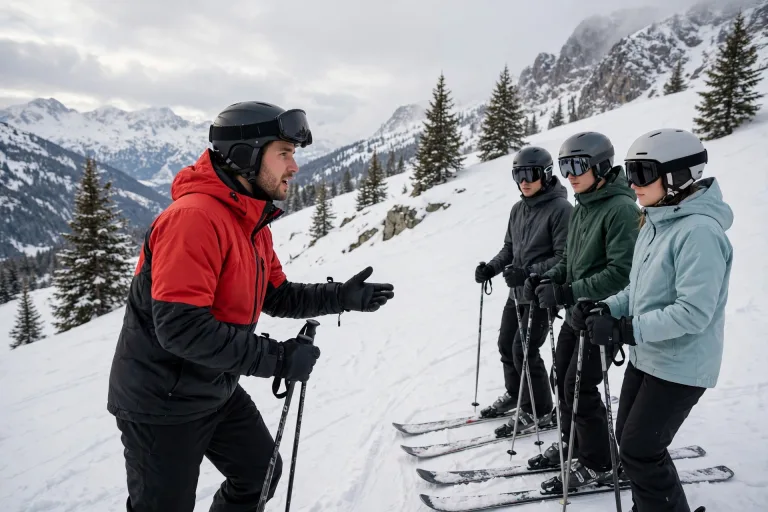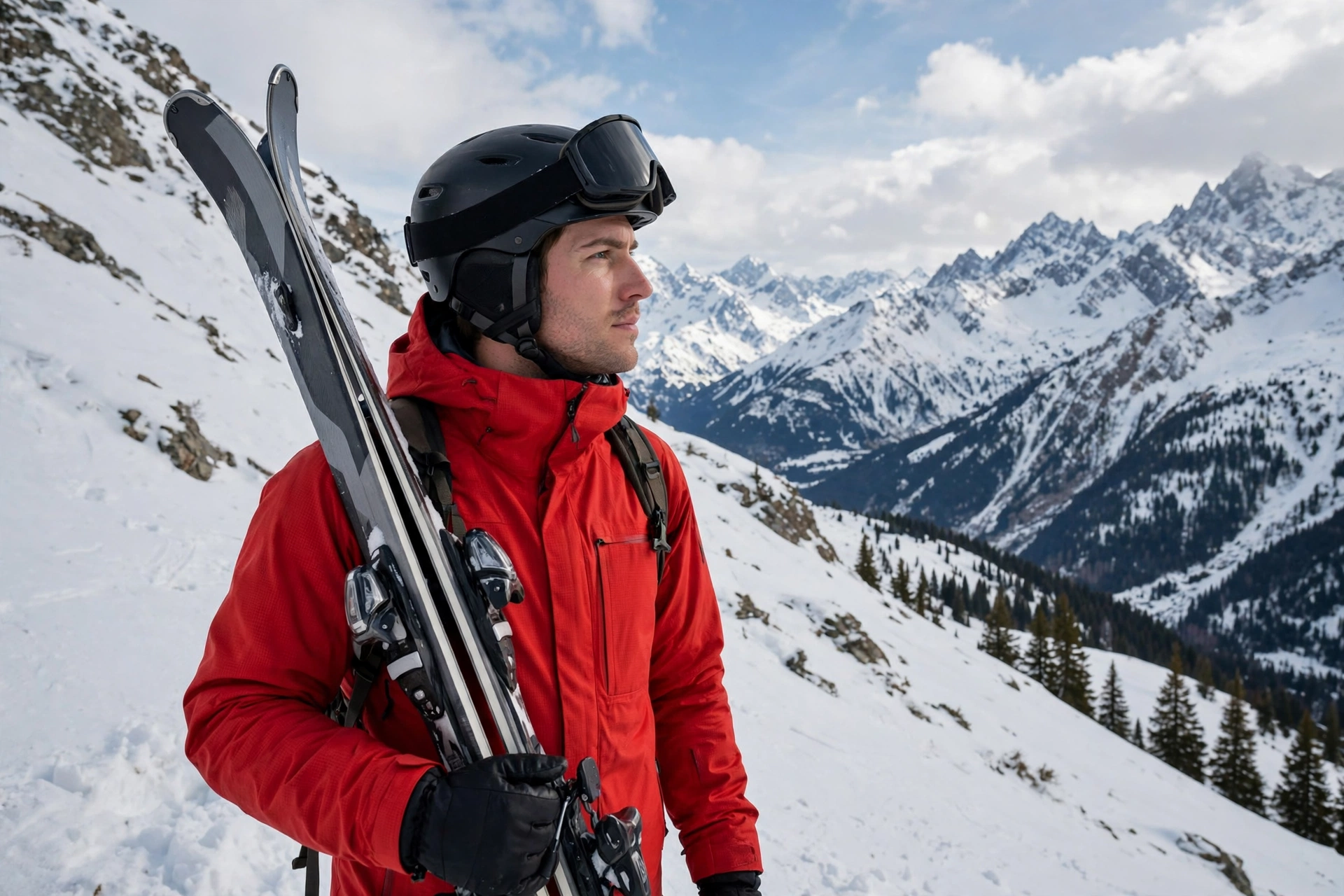
A helmet for ski patrol is a snow sports helmet worn by the patrollers who keep a ski resort safe, and in general terms it is a regular ski helmet chosen for long days on the mountain, clear visibility, and easy communication with the rest of the patrol team. Ski patrollers spend the whole day outside in all weather, so their helmet has to work for skiing, for standing around in the cold, and for the rescue and safety work that fills much of their shift.
Ski patrol is the team that looks after safety on the slopes. Patrollers mark hazards, close dangerous areas, check the runs in the morning, and respond when a skier or snowboarder is hurt. Their helmet is part of their uniform, and it is also part of their working kit, in the same way as their skis, their radio, and their first aid pack.
What does a ski patroller do?
A ski patroller’s day starts before the lifts open, when the team checks the runs for hazards such as ice, rocks, or fallen branches, and sets out the signs, ropes, and padding that mark the safe areas. In general terms, the patrol then spends the day moving around the mountain, watching the slopes, helping visitors who have lost their way or lost their confidence, and responding to accidents when they happen. It is a mix of skiing, watching, and waiting, and the patroller needs to be ready to move fast at any moment.
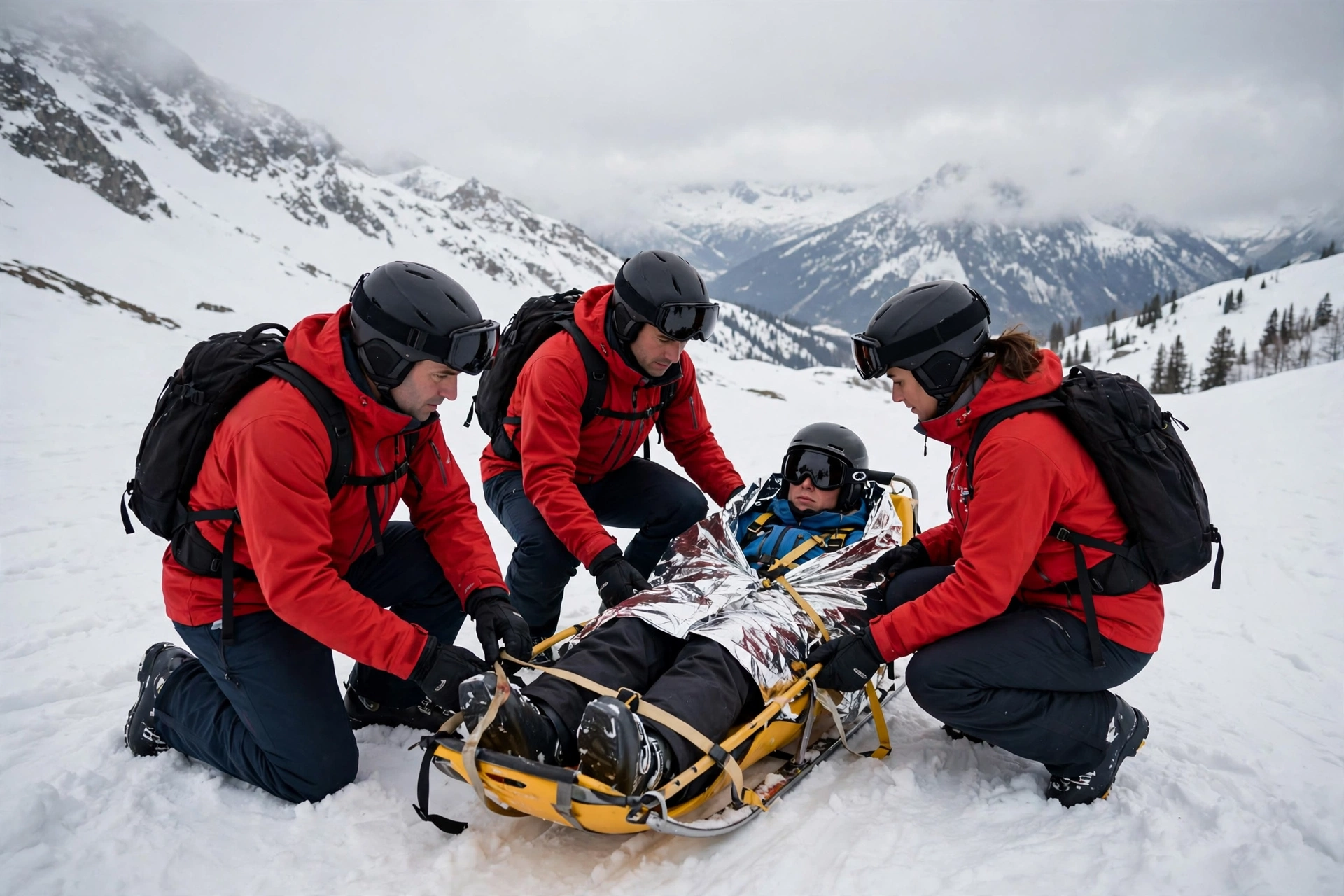
When someone is hurt, the patroller is often the first trained person on the scene. They assess the injury, give first aid, keep the person warm and still, and arrange for the person to be brought down the mountain safely, often on a rescue sled. They also deal with avalanches in resorts where that is a risk, using controlled methods to make slopes safe before the public arrives. It is skilled, physical work, and it calls for good skiing, good judgement, and the ability to stay calm under pressure.
What kind of helmet does ski patrol wear?
Ski patrol helmets are, in general terms, standard ski helmets that meet the same snow sports standards as the helmets sold to the public, and they are chosen for fit, warmth, and ventilation rather than for any special patrol-only design. A patroller wears the helmet for many hours at a time, so it has to sit comfortably, work well with goggles, and keep the head warm in the cold without overheating on a hard ski down. Many patrollers choose a helmet with adjustable vents, so they can let in more air when they are working hard and close the vents when they are standing still in the wind.
The helmet also has to work with the rest of the patroller’s kit. It needs to sit well with a radio earpiece or a communication headset, and it needs to leave the ears and the face free enough for the patroller to hear and to talk clearly. Some patrol teams use helmets in a team colour, often red, so that visitors can spot a patroller quickly on a busy slope, and some add a patrol badge or sticker. The colour and the marking help the public find help, which is part of the point of the uniform.
How is a ski patrol helmet different from a normal ski helmet?
In most ways, a ski patrol helmet is not very different from a normal ski helmet, and that is the point: the patroller needs the same protection as any other skier. In general terms, the differences are in how the helmet is used rather than in how it is built. A patroller wears the helmet for far longer each day than a holiday skier, and uses it in more kinds of work, from skiing fast to an accident to standing still in a snowstorm while a rescue is organised, so comfort over a long shift matters more than it does for a casual skier.
There are a few practical differences worth noting. A patrol helmet is more likely to be fitted with a radio or headset, and the patroller will have checked that the helmet works with that kit before the season starts. The helmet may also be used with a headlamp in low light or during early-morning slope checks. Beyond that, the helmet follows the same rules as any ski helmet: it must fit well, meet a recognised snow sports standard, and be replaced after a hard impact. Some helmets also include a system designed to help with rotational forces in a fall, such as MIPS, and a patroller may choose one of those in the same way any skier might.
What else does a ski patroller carry?
Alongside the helmet, a ski patroller carries a pack with first aid supplies, and that pack is often as important as the helmet itself. In general terms, it holds bandages, splints, and the tools needed to keep an injured person stable until more help arrives, as well as warm layers and a way to keep a casualty sheltered from the wind and snow. The patroller also carries a radio, so the team can stay in touch across the mountain, and a shovel and probe in resorts where avalanches are a risk.
The patroller’s skis are also part of the kit, and they are chosen for the same reason as the helmet: they have to work in all conditions, from hard ice in the morning to soft snow in the afternoon. A rescue sled, kept at the patrol hut or at points around the mountain, is used to bring an injured skier down the slope.
Can you buy a ski patrol style helmet?
Yes, you can buy a helmet like the ones ski patrol wear, because in general terms there is no special patrol-only helmet to buy: the helmets patrollers use are regular ski helmets available in shops. If you like the look of a patrol helmet, look for a ski helmet in a bright, visible colour, with good ventilation, a comfortable fit with your goggles, and a recognised snow sports certification. Those are the qualities that matter to a patroller, and they are the same qualities that matter to any skier.
It is worth choosing the helmet for your own skiing rather than copying a patroller’s exact model. A patroller’s helmet is chosen for a long working day on the mountain, while yours may need to suit shorter days, different weather, or a different head shape. Try helmets on with your goggles and check the fit before you buy.
Do ski patrollers have to wear a helmet?
In general terms, yes: wearing a helmet is part of the job for ski patrol, and it is also a matter of setting an example. A patroller who skis without a helmet would send the wrong message to visitors on the slopes.
Why are ski patrol helmets often red?
Red is easy to spot against white snow, so a red helmet and jacket help visitors find a patroller quickly when they need help. Not every resort uses red, but high visibility is the reason behind the choice.
Do ski patrollers wear the same helmet all season?
They usually wear the same helmet through the season, as long as it still fits well and has not taken a hard impact. A helmet that has been in a serious fall should be replaced, in the same way as any ski helmet.

Olivia
Writer at Helmet Today, covering helmet reviews, fit and riding safety.