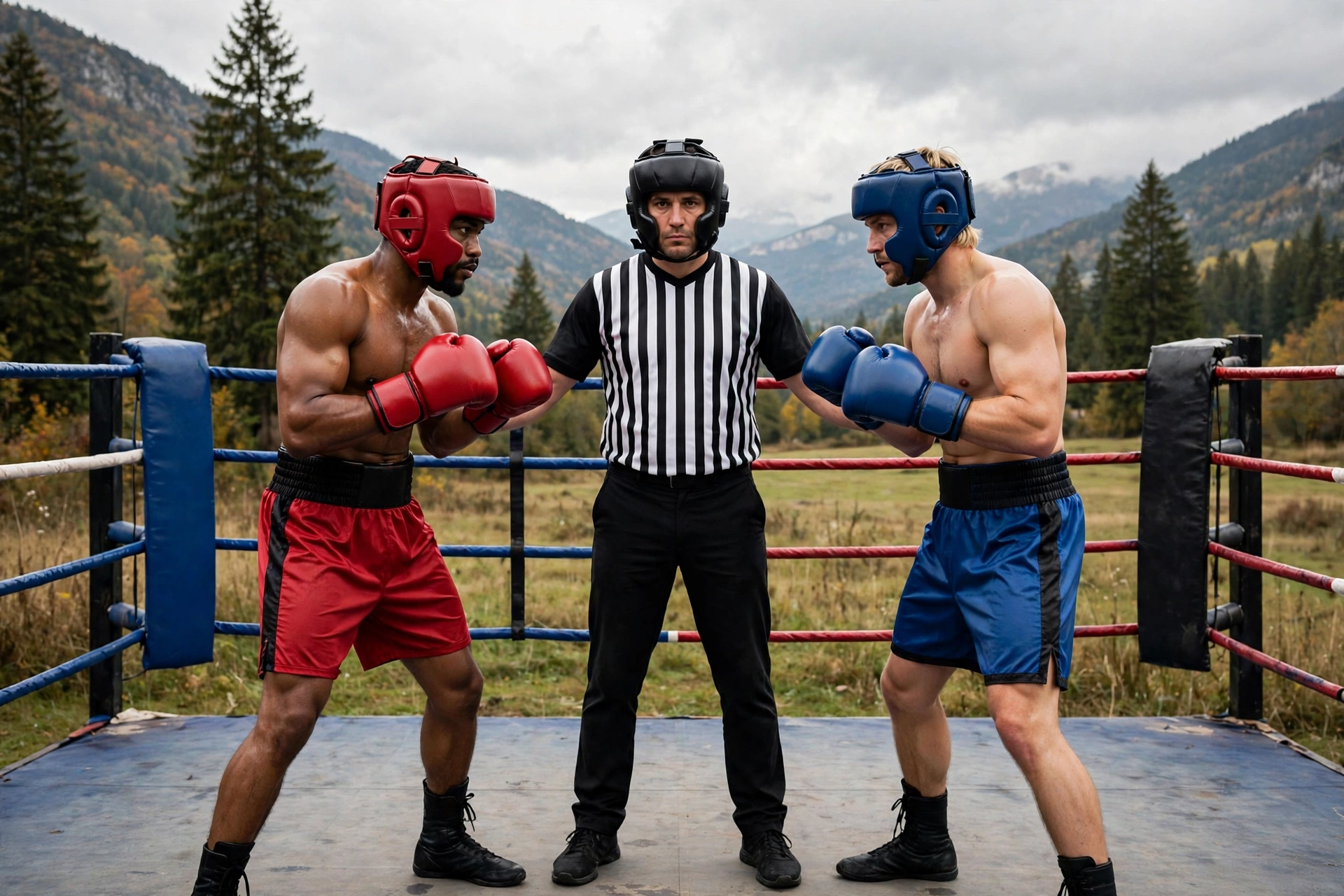
A helmet for boxing referees is a lightweight protective helmet worn by the referee in some boxing matches to guard against accidental blows, head clashes, and falls while they work close to the fighters. In general terms, it looks like a padded headguard rather than a hard-shell helmet, with soft padding around the forehead, temples, and back of the head, and an open face so the referee can see clearly and be seen by the boxers. It is not worn in every bout, but where it is used, it is there to protect the one person in the ring who is not supposed to be hit at all.
A boxing referee works closer to the action than anyone else in the arena, and that closeness carries a risk. Fighters throw punches in fast combinations, they clinch and lean on each other, and they sometimes lose their balance and fall towards the referee. A stray glove, an elbow in a clinch, or a head clash can catch the referee without warning, and a helmet takes the edge off those accidents.
Why would a boxing referee wear a helmet?
A boxing referee wears a helmet for the same reason any official in a contact sport wears protection: accidents happen, even when nobody is trying to hurt the referee. In a fast exchange, a punch aimed at one boxer can miss and catch the referee instead, and in a clinch the two fighters can push and turn in ways that are hard to predict. A helmet softens those accidental blows and lowers the risk of a cut or a bruise to the head, which matters when the referee has to stay sharp and make split-second calls.
The helmet also helps in the less obvious moments. When a boxer is knocked down, the referee moves in quickly to check on them, and a falling fighter can land against the referee’s head or shoulder. When the referee steps between the fighters to break a clinch, heads can clash. In general terms, the helmet is not there for the punches that are part of the fight, but for the moments around the fight, when the referee is at their closest and least able to defend themselves.
What kind of helmet do boxing referees wear?
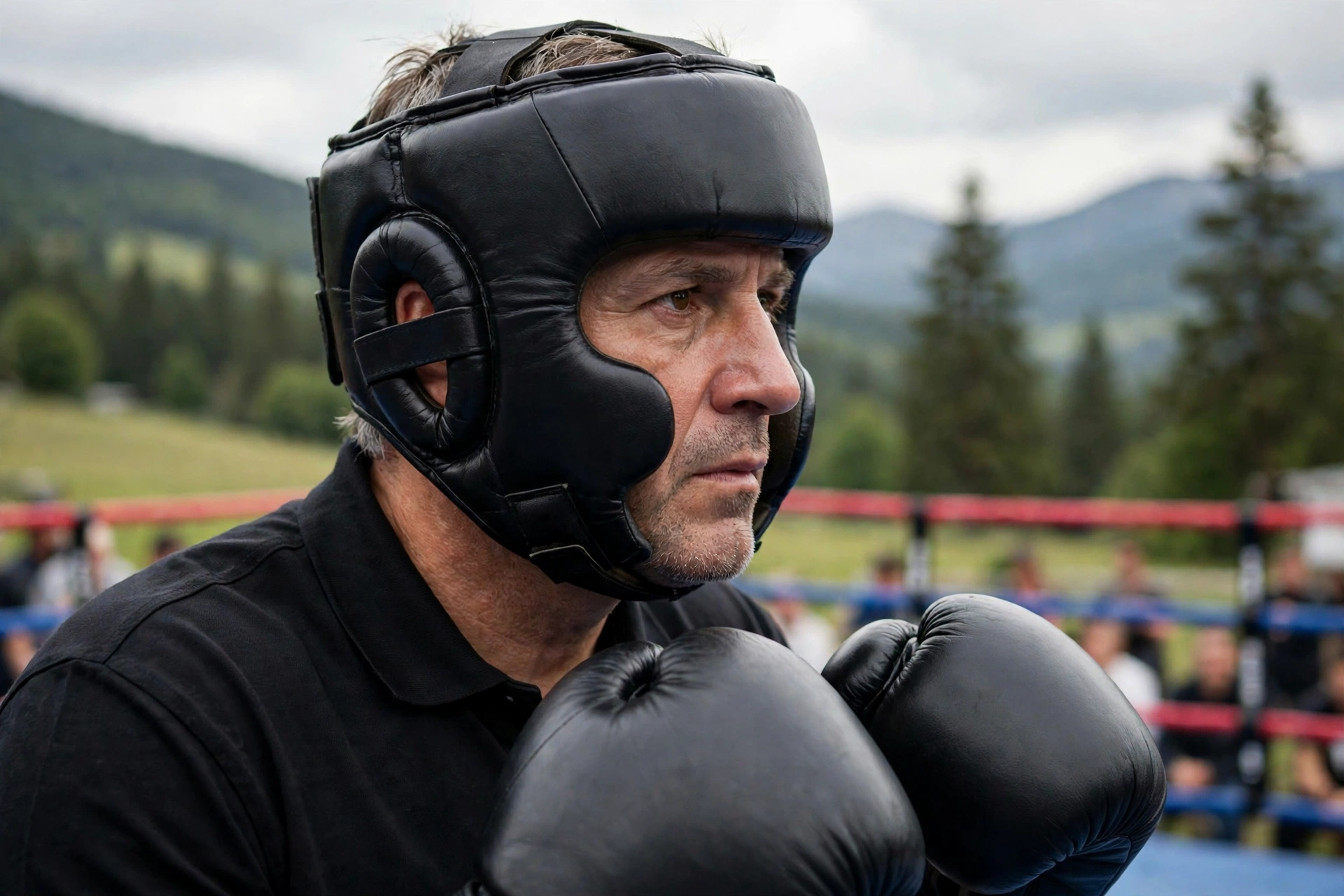
In general terms, a boxing referee wears a padded headguard rather than a hard-shell helmet. It is made from layers of foam covered in leather or a similar tough material, with padding over the forehead, the sides, and the back of the head, and an open face so the referee can see, speak, and breathe freely. The padding is firm enough to absorb a knock, but soft enough to be comfortable for a whole bout, and the helmet is held in place with a chin strap or a lace at the back.
The design is deliberately simple. A referee needs to hear the corner, talk to the boxers, and watch every movement in the ring, so the helmet must not block the ears or narrow the field of vision. Some referee helmets have a little extra padding at the back of the head, where a fall or a clash is most likely to land, and most leave the face open. The right choice depends on the rules of the event and on what the referee finds comfortable.
How is a referee’s helmet different from a boxer’s headguard?
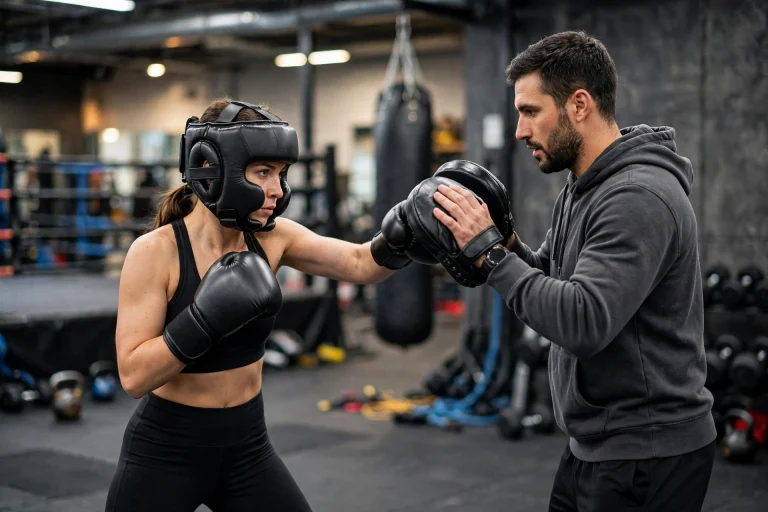
A referee’s helmet and a boxer’s headguard look similar at first glance, but they are made for different jobs. A boxer’s headguard is built to absorb repeated punches from a gloved fist, so it is usually thicker and heavier, with padding that covers more of the head and cheek. A referee’s helmet is lighter, because the referee is not being punched on purpose, and it is made to be worn for a long time without tiring the neck or blocking the referee’s view of the ring.
The fit is different too. A boxer’s headguard is tightened down hard before a bout and checked by the referee, while a referee’s helmet must be quick to put on and take off between bouts, and comfortable enough to wear while moving around the ring. In general terms, the two helmets share the same idea — padding that protects the head — but the referee’s version trades some of that padding for lightness, vision, and comfort, because the referee’s job is to watch and control the fight, not to take part in it.
When do boxing referees wear a helmet?
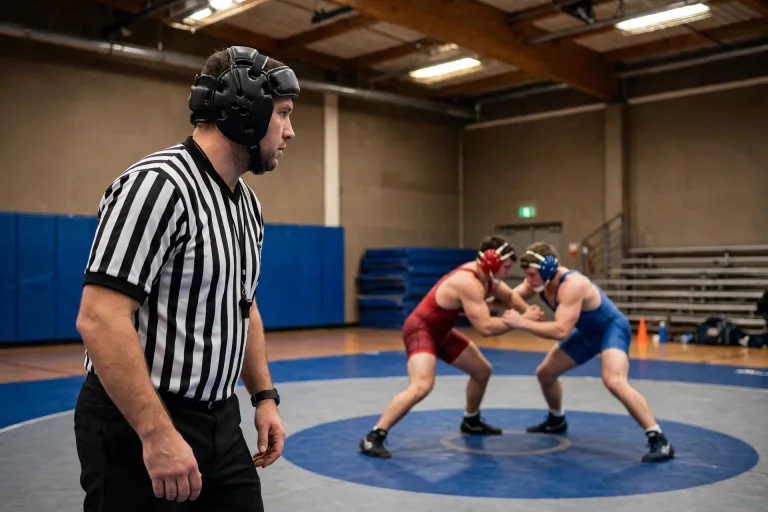
Boxing referees do not wear a helmet in every bout. In general terms, helmets are more common in amateur and youth boxing, where the rules often require extra protection for everyone in the ring, and in some training and sparring sessions, where the pace is fast and the referee is close to inexperienced fighters. In professional boxing, referees usually work without a helmet, and the decision often comes down to the rules of the event and the choice of the official.
Even where a helmet is not required, some referees choose to wear one for their own comfort and safety, especially if they work many bouts in a day or referee younger fighters who are less predictable. A referee who has been caught by a stray blow before is more likely to wear one again. The helmet is a personal choice as much as a rule, and a referee who feels safer in one is likely to do a better job in the ring.
How should a referee’s helmet fit?
A referee’s helmet should fit snugly all round the head without squeezing, and it should stay in place when the referee moves quickly or turns their head. When the helmet is fastened, it should not slide forward over the eyebrows or tip back and expose the forehead, and it should not press on the ears or pinch at the temples. In general terms, a good fit is one the referee forgets about once the bout starts, because a helmet that needs constant adjusting is a distraction.
To check the fit, put the helmet on and fasten the strap, then shake your head gently from side to side and nod up and down: the helmet should move with your head, not on its own. Check that you can see clearly to the sides and that you can hear normally, because a helmet that blocks your vision or muffles sound is not doing its job. Some modern headguards include a system designed to reduce rotational forces in a fall, such as MIPS, although that feature is more common in hard-shell helmets than in padded headguards, so check what your helmet offers before you buy.
Do all boxing referees wear helmets?
No. Helmets are more common in amateur and youth boxing, where the rules often require extra protection, and less common in professional bouts, where referees usually work without one. It depends on the rules of the event and the referee’s own choice.
Is a referee’s helmet the same as a boxer’s headguard?
Not quite. A boxer’s headguard is usually thicker and heavier, built to absorb repeated punches, while a referee’s helmet is lighter and made for comfort, vision, and long wear, since the referee is not being punched on purpose.
Does a referee’s helmet block vision or hearing?
In general terms, no, if it fits well. A good referee’s helmet has an open face and clear sides so the referee can see the whole ring and hear the corners, and if it blocks your view or muffles sound, the fit or the model is wrong.

Olivia
Writer at Helmet Today, covering helmet reviews, fit and riding safety.