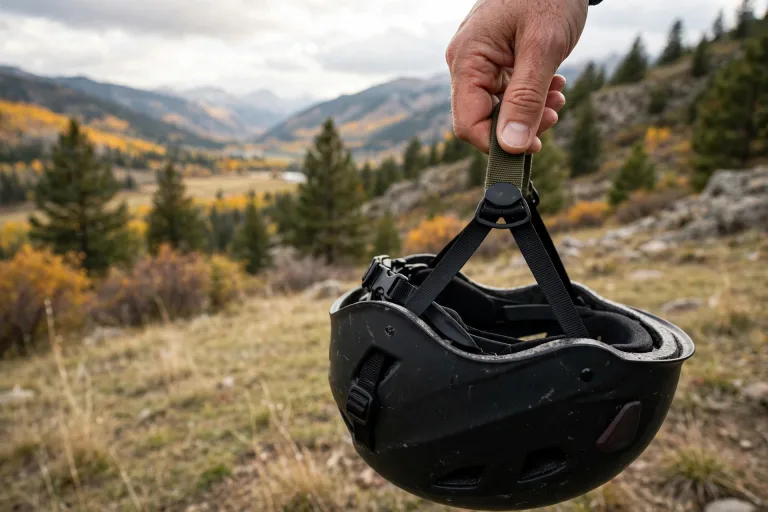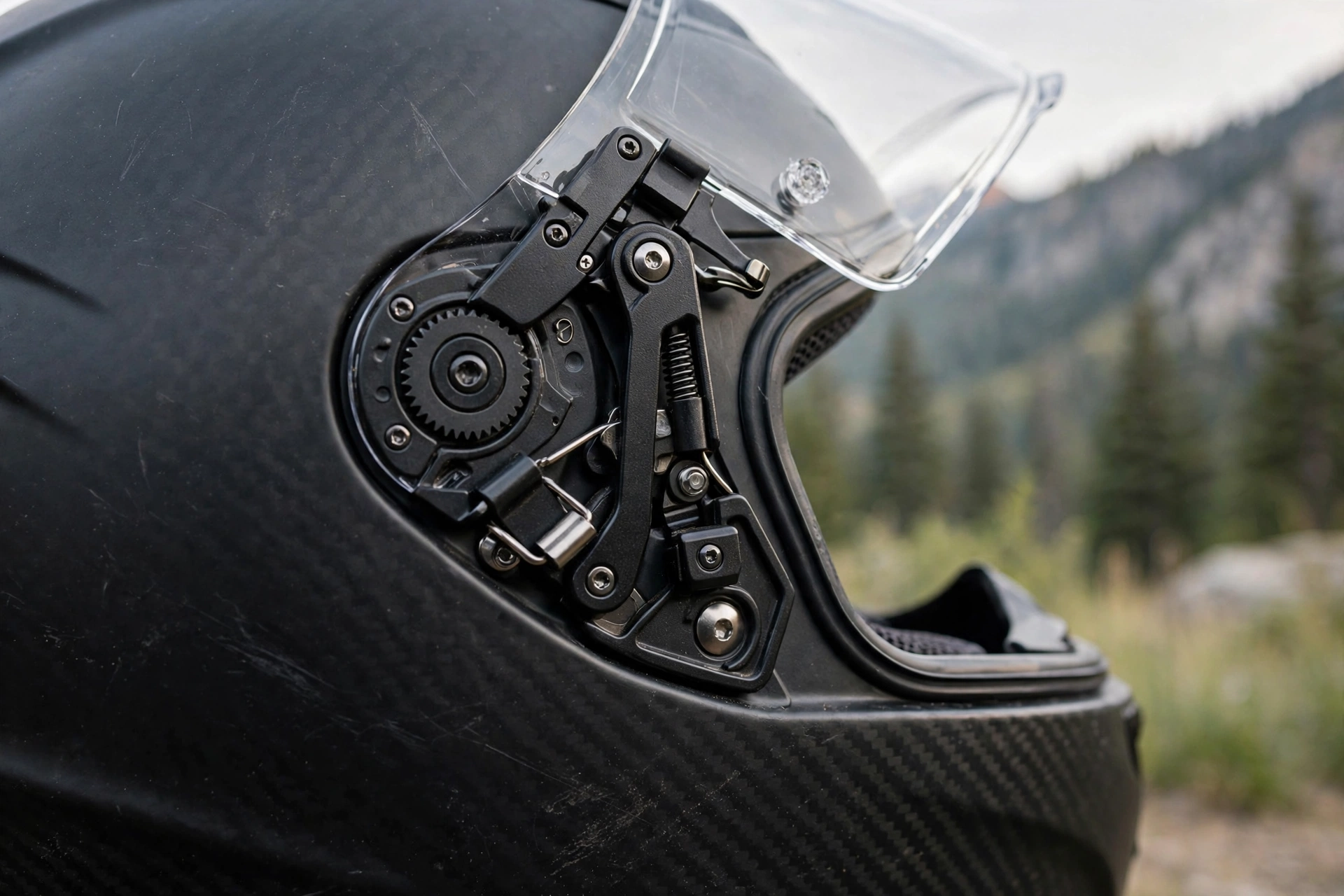
A helmet visor ratchet is the small toothed mechanism on the side of a helmet that holds the visor in place and lets it click into a set position, such as fully open, partly open, or fully closed. In general terms, it is the part that stops the visor from flopping down on its own or flying open at speed, and it is what gives the visor its firm, clicking feel when you move it. Most full-face motorcycle helmets have one on each side of the visor, and many other helmets with a moving visor use a similar design.
The ratchet is easy to overlook because it is small and hidden under a cover on the side of the helmet, but it does a surprisingly important job. A visor that will not stay where you put it is more than an annoyance: it can drop into your line of sight, let in wind and rain at the wrong moment, or rattle and distract you while you ride. The ratchet keeps the visor steady, and when it wears out, the difference is obvious the first time you ride with it.
What does a visor ratchet do?
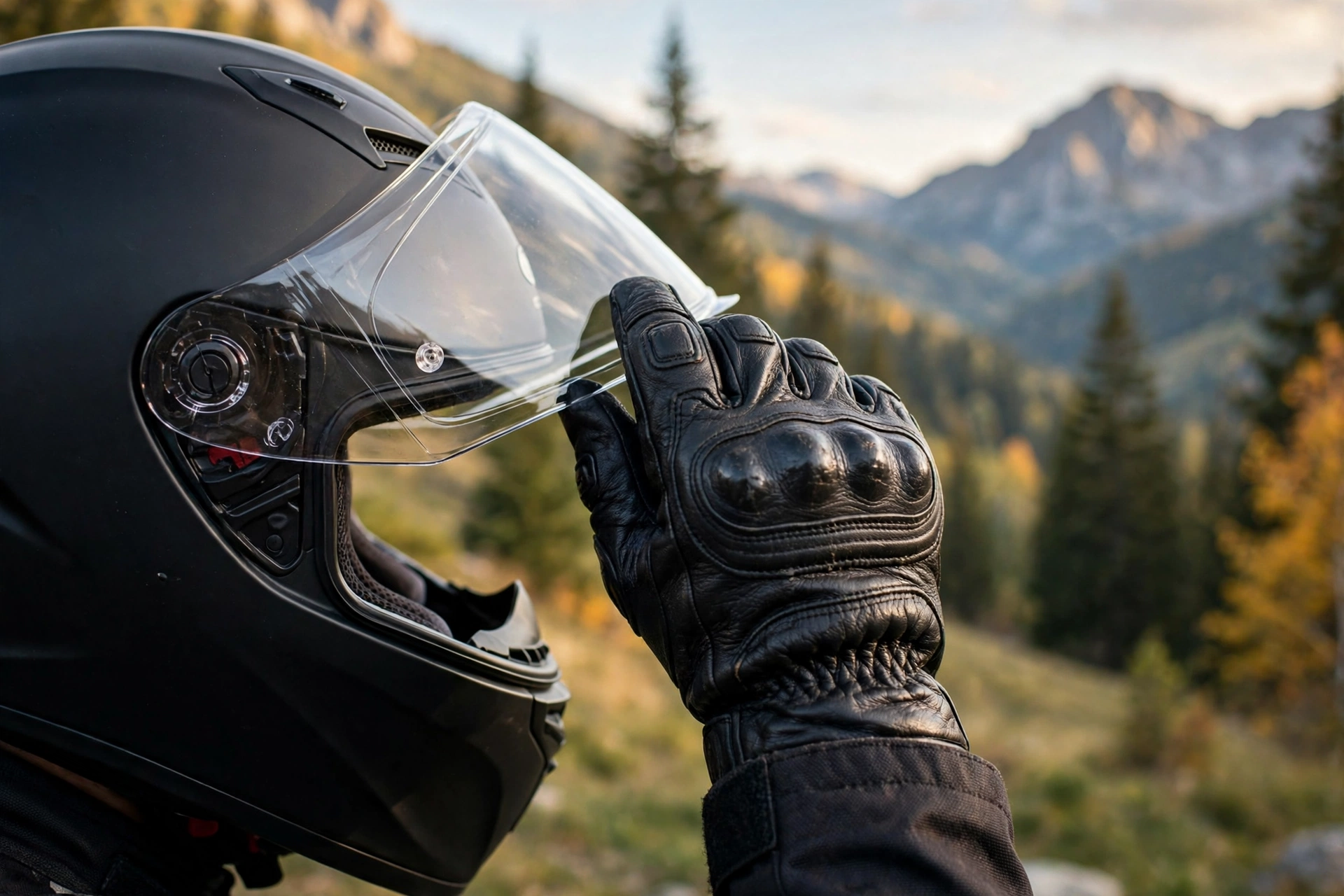
A visor ratchet holds the visor at the angle you choose and keeps it there. When you lift the visor to let in air or talk to someone, the ratchet clicks and locks it open; when you lower it to shut out the wind, the ratchet holds it closed against the seal around the helmet. In general terms, it turns a loose flap of plastic into a proper part of the helmet that you can set and trust.
The ratchet also protects the visor itself. Without it, the visor would swing freely on its pivot, and every bump in the road would send it bouncing up and down, which would wear the pivot and scratch the visor against the helmet. By holding the visor still, the ratchet reduces that wear and helps the visor last longer.
How does a visor ratchet work?
A visor ratchet works with a set of small teeth and a spring-loaded catch that fits between them. The teeth are usually part of a round plate fixed to the side of the helmet, and the catch is attached to the visor itself. When you move the visor, the catch rides over the teeth and clicks into the gaps between them, and the spring holds it there until you push the visor again. In general terms, it works like the click of a ratchet spanner: it moves freely in one direction and locks in steps as it goes.
The number of steps depends on the helmet. Some ratchets have only two or three positions, such as open and closed, while others have several in-between stops, so you can crack the visor open just a little for airflow without lifting it fully. The mechanism is kept small and light, and it is usually covered by a side plate that keeps out dirt and rain. Because the parts are small and work hard, they are one of the first things to wear out on a well-used helmet.
What are the signs of a worn visor ratchet?
The clearest sign of a worn visor ratchet is a visor that will not stay where you put it. It may slide down on its own while you ride, creep open at speed, or feel loose and wobbly when you move it. In general terms, a healthy ratchet clicks firmly at each stop, while a worn one feels soft, vague, or silent, and the visor may sit at a slightly different angle on each side. If the visor rattles over bumps, that is another sign that the ratchet is no longer holding it firmly.
You may also see the wear if you look closely. The teeth on the ratchet plate can become rounded or chipped, and the spring that holds the catch in place can weaken over time. Dirt and grit can make the problem worse by grinding between the teeth, so a ratchet that has never been cleaned may feel rough or sticky before it feels loose. If the visor has started to misbehave, it is worth checking the ratchet before assuming the visor itself is at fault.
Can you replace a helmet visor ratchet?
In many cases, yes. A lot of helmet makers sell the ratchet parts as spares, and on many helmets the side plate can be removed with a coin or a small screwdriver to reach the mechanism underneath. In general terms, the job is a matter of taking off the old plate and spring, fitting the new ones in the same place, and putting the visor back on, although the exact steps vary from one helmet to another. The maker’s manual or website usually shows how it is done, and it is worth reading before you start.
There are times when replacement is not the answer. If the mounting point on the helmet shell is cracked or worn, a new ratchet may not hold properly, and the helmet itself may need to be replaced. Spare parts can also be hard to find for older or less common helmets. If you cannot find the right part, or the job looks more complex than a simple swap, a helmet dealer or repair shop can often help, and they can tell you honestly whether the helmet is worth fixing.
How do you look after a visor ratchet?
Looking after a visor ratchet is mostly about keeping it clean and moving it gently. Wipe away dust and grit from the sides of the helmet with a soft cloth, and avoid forcing the visor past its stops, which can chip the teeth. In general terms, a ratchet that is treated gently and kept clean will last for years, while one that is yanked and left dirty will wear out much sooner. A tiny drop of the lubricant the maker recommends can help if the action feels stiff, but never use a harsh spray or solvent near the helmet.
It is also worth checking the ratchet as part of your regular helmet care, alongside the strap, the liner, and the shell. A quick test before a ride takes seconds: lift the visor through its stops and check that each one clicks and holds. Safety features inside the helmet, such as MIPS, get a lot of attention, but the small working parts on the outside matter too, because a visor that stays where you put it keeps your vision clear and your attention on the road.
Why does my helmet visor keep falling down?
In general terms, a visor that falls on its own usually has a worn visor ratchet. The teeth or the spring inside the mechanism have worn down, so the catch no longer holds the visor in place, and the ratchet parts may need replacing.
Can I ride with a broken visor ratchet?
You can, but it is not a good idea. A visor that drops into your line of sight or flies open at speed is a distraction, and it can let in wind, rain, or insects. Fix or replace the ratchet before your next long ride.
How long does a visor ratchet last?
There is no set lifespan, but a ratchet that is kept clean and moved gently can last for years of regular use. Heavy use, dirt, and rough handling wear it out faster, and it is one of the first parts to show wear on a well-used helmet.

Olivia
Writer at Helmet Today, covering helmet reviews, fit and riding safety.