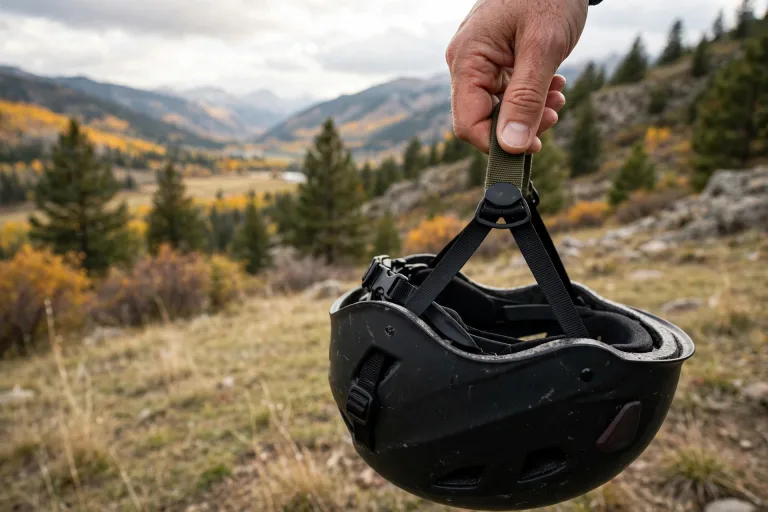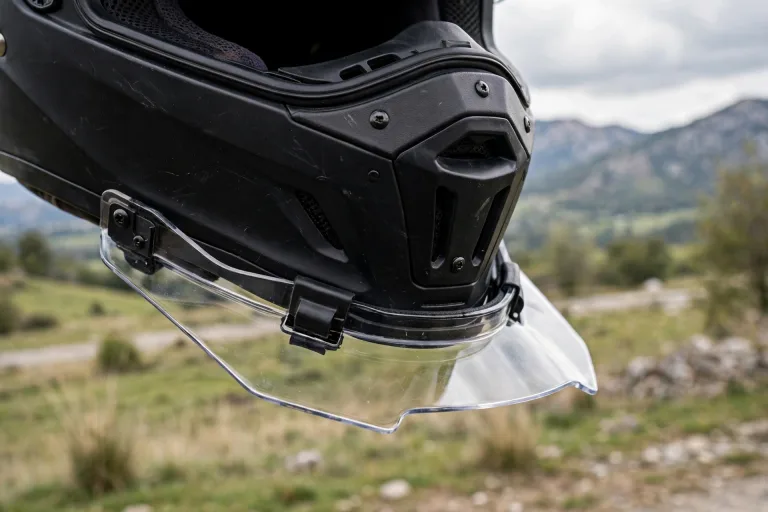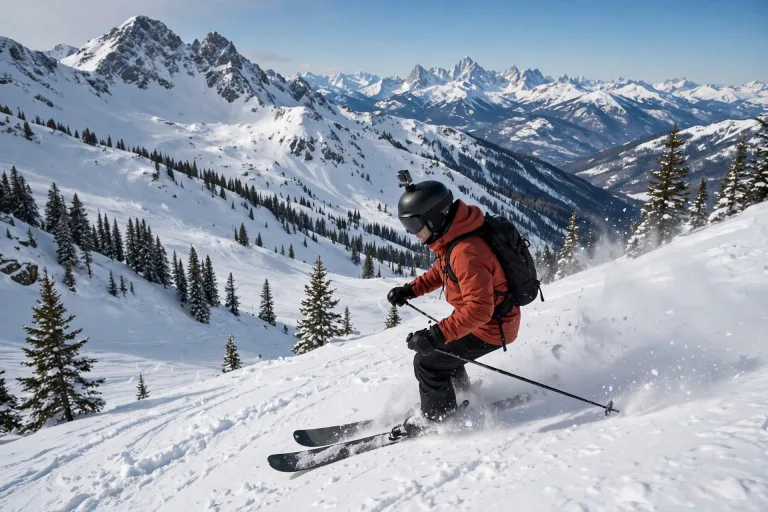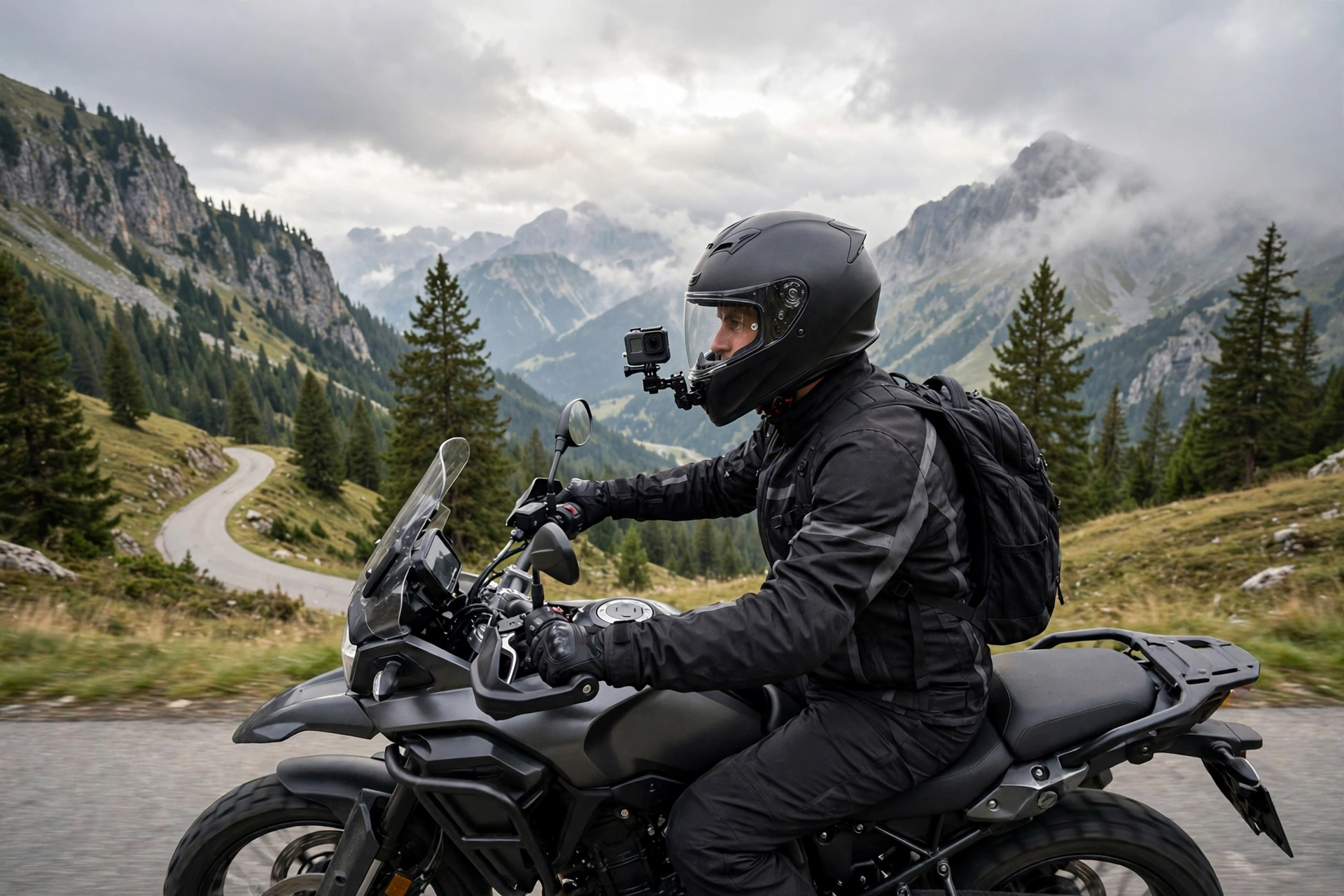
Helmet camera mounts for motorcycling are small brackets that fix an action camera to a motorcycle helmet, so you can film your rides hands-free without holding a camera or mounting one on the bike. In general terms, a mount holds the camera firmly on the top, the side, or the chin of the helmet, and it is designed to stay put at motorway speeds, through wind, rain, and vibration. A good mount keeps the camera steady, keeps your hands on the bars, and records the road from your own point of view.
Motorcyclists use helmet cameras for many reasons: to record a scenic ride, to capture a track day, to review their riding, or to have a record if something goes wrong on the road. A helmet mount is the most popular way to do it, because the camera moves with the rider’s head, so the footage follows the rider’s gaze into corners and through traffic. The mount itself is a simple piece of kit, but fitting it well matters, because a camera that comes loose at speed is a hazard.
How do helmet camera mounts for motorcycling work?
A helmet camera mount works by giving the camera a fixed base on the helmet, usually with a curved adhesive pad, a strap, or a clamp, plus a small joint that lets you tilt the camera to the angle you want. The camera then clips or screws onto that base, and the mount holds it steady while you ride. In general terms, the mount has two jobs: to keep the camera attached to the helmet at speed, and to keep it pointing in the right direction while you move your head.
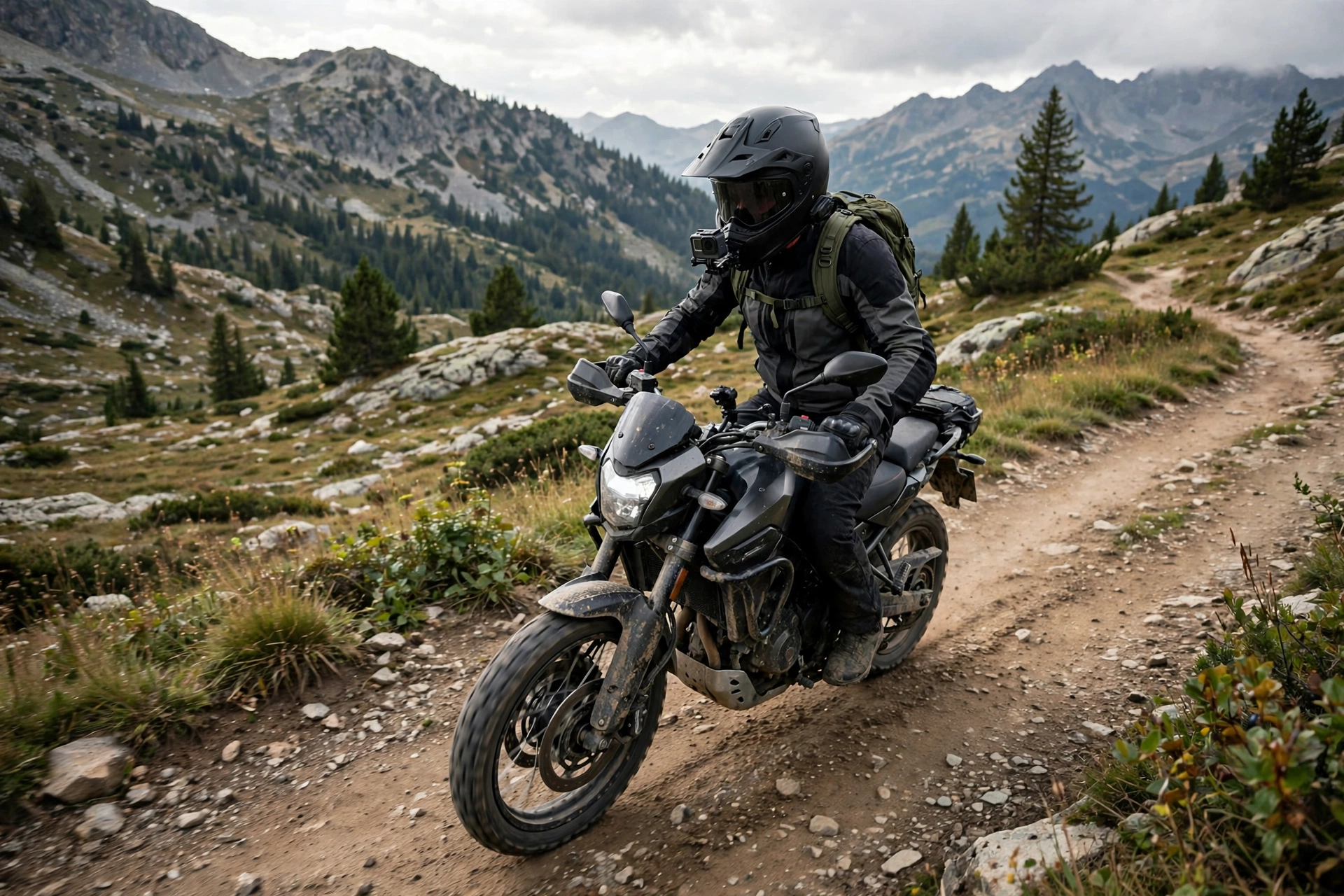
Most mounts use a curved adhesive pad that matches the shape of the helmet, with a buckle or a screw fitting on top for the camera. Chin mounts are also popular with motorcyclists, because they sit low and central, giving a view over the tank and the road ahead. Whatever type you choose, the mount should be fitted to a clean, dry helmet and left to bond before you ride.
Where is the best place to mount a camera on a motorcycle helmet?
The best place to mount a camera on a motorcycle helmet is usually on the chin, on the top, or on the side, and the right choice depends on the view you want and the shape of your helmet. A chin mount gives a low, central view that feels like the rider’s own eyes, with the bike’s instruments and the road ahead in the frame. A top mount gives a wide view over the rider’s head, with very little of the helmet in the picture, while a side mount sits lower and is easier to reach to start and stop recording.
A chin mount can catch more wind and can interfere with the visor if it is fitted badly, while a top mount can make the helmet feel top-heavy. In general terms, a chin mount suits riders who want a natural, first-person view, and a top mount suits riders who want a wide view of the road and the scenery. Try the positions at home before you ride, and check that the camera does not block a vent or press against the visor.
Will a camera mount damage my motorcycle helmet?
A camera mount should not damage a motorcycle helmet if it is fitted in the way the maker describes, but the wrong mount or a careless fitting can cause problems. Adhesive pads are made to stick to the shell without drilling or cutting, and they can usually be removed with gentle heat and patience. Strap mounts avoid glue altogether, and clamp mounts grip a vent or an edge without changing the helmet itself.
What you should never do is drill a hole in a helmet shell or screw a mount through it, because that can weaken the shell and affect how the helmet works in a crash. In general terms, a helmet is a piece of safety equipment first and a camera platform second, so the mount must never come before the helmet’s job of protecting your head. Some helmets include a system designed to reduce rotational forces in a fall, such as MIPS, and a mount fitted over the shell does not change that system, but a mount screwed through the shell could.
What should I look for when buying a motorcycle camera mount?
When buying a motorcycle camera mount, look for a mount that fits the curve of your helmet, holds your camera model securely, and lets you adjust the angle without tools on the road. Check that the base matches your helmet’s shape, because a flat pad on a curved shell will peel off, and a curved pad on a flat area will not sit properly. Check the weight too: a light mount keeps the helmet balanced, while a heavy mount with a big camera can pull the helmet to one side at speed.
Look for a mount with a locking clip or a screw fitting rather than a simple push fit, because a camera that pops off at motorway speed is usually lost or damaged. In general terms, it is worth choosing a mount made for motorcycle use, since it will be built to cope with wind, rain, and vibration. A small tether, which ties the camera to the helmet as a backup, is a cheap way to save an expensive camera if the mount ever fails.
Is it legal to mount a camera on a motorcycle helmet?
Whether it is legal to mount a camera on a motorcycle helmet depends on where you ride, and in general terms most places allow a camera fitted to the outside of the helmet, as long as the helmet itself still meets the approved standard. Some places have rules about attachments that stick out from the helmet, or about anything that changes the helmet’s shape, so check the rules for your area before you ride with a camera fitted.
The key point is that the mount must not change the helmet’s structure or stop it working properly. A mount that is glued or strapped to the outside of the shell is usually fine, while a mount that is drilled through the shell is not. If you are unsure, ask the helmet maker or your local road authority, and keep the camera and the mount as low-profile as you can. A small, neat mount is less likely to cause a problem than a large, bulky one.
Can I use a camera mount on any motorcycle helmet?
In general terms, yes, most motorcycle helmets accept a camera mount, as long as the mount suits the shape of the shell and is fitted without drilling or cutting. Check the mount against your helmet before you buy, and avoid mounts that need a hole in the shell.
Will a helmet camera mount affect my helmet’s safety?
A mount fitted to the outside of the shell with adhesive or a strap should not affect how the helmet works, but drilling through the shell or fitting a heavy mount that changes how the helmet sits can. Fit the mount as the maker describes and check the helmet’s fit afterwards.
What is the best camera mount for motorcycling?
There is no single best mount for every rider, but a light adhesive mount on the chin or the side of the helmet suits most people. Choose one that fits your helmet’s curve, locks your camera model securely, and is built for wind, rain, and vibration.

Olivia
Writer at Helmet Today, covering helmet reviews, fit and riding safety.