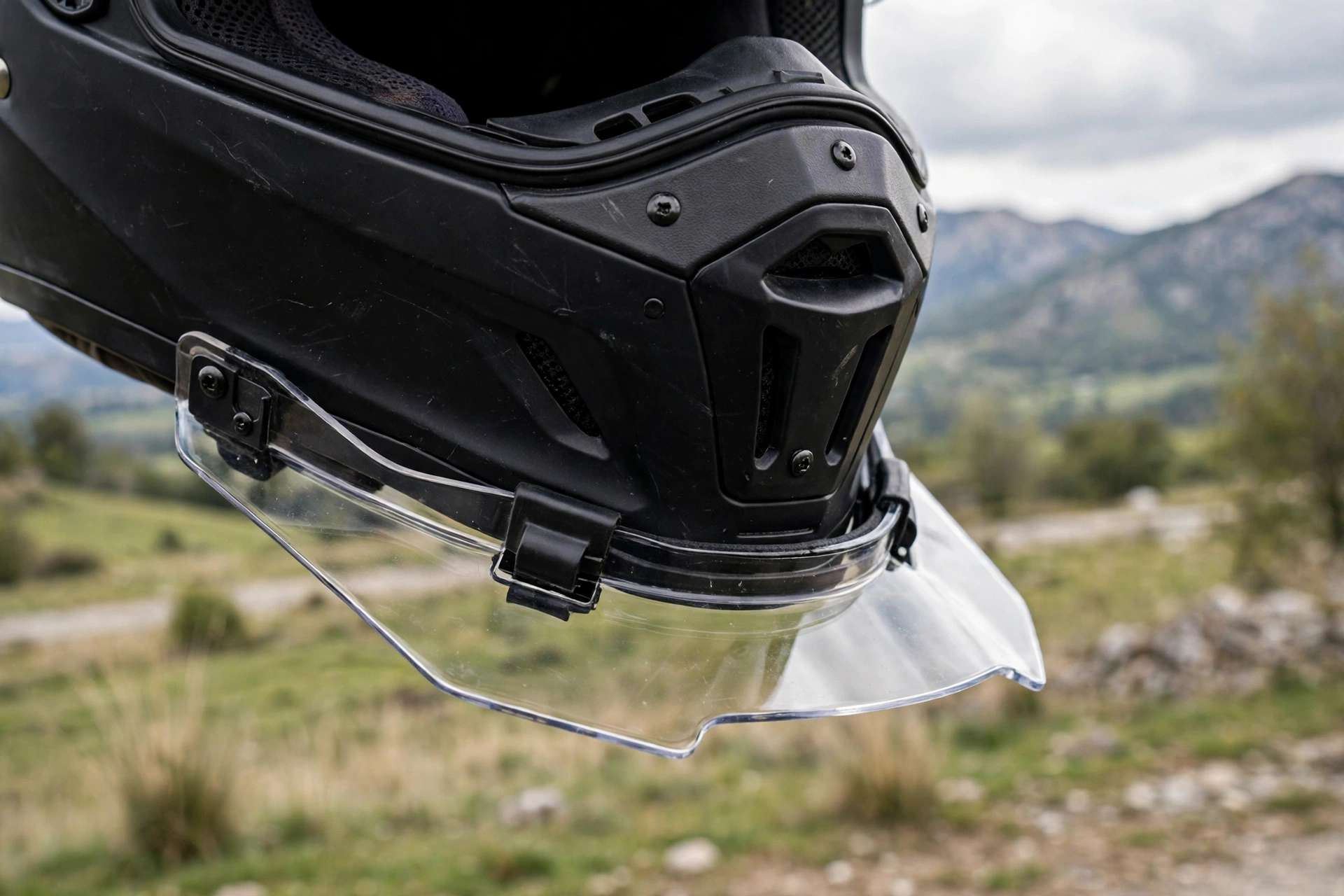
A helmet wind deflector is a small attachment, usually a fabric or foam piece fitted under the chin bar of a motorcycle helmet, that blocks the wind coming up from below and makes the helmet quieter and warmer. In general terms, wind enters a helmet from the front and from underneath, and the air that comes up under the chin is a major source of noise, draughts, and cold. A wind deflector closes that gap, so the air flows around the helmet rather than rushing up inside it.
Many riders first notice the problem on a cold morning or on a long motorway ride, when the wind noise becomes tiring and the chin and neck feel cold. A wind deflector is a simple fix: it is cheap, it fits in minutes, and it can make a noticeable difference to comfort. It does not change the helmet’s protection, but it changes how the helmet feels to wear, and for many riders that is enough to make it worth fitting.
How does a helmet wind deflector work?
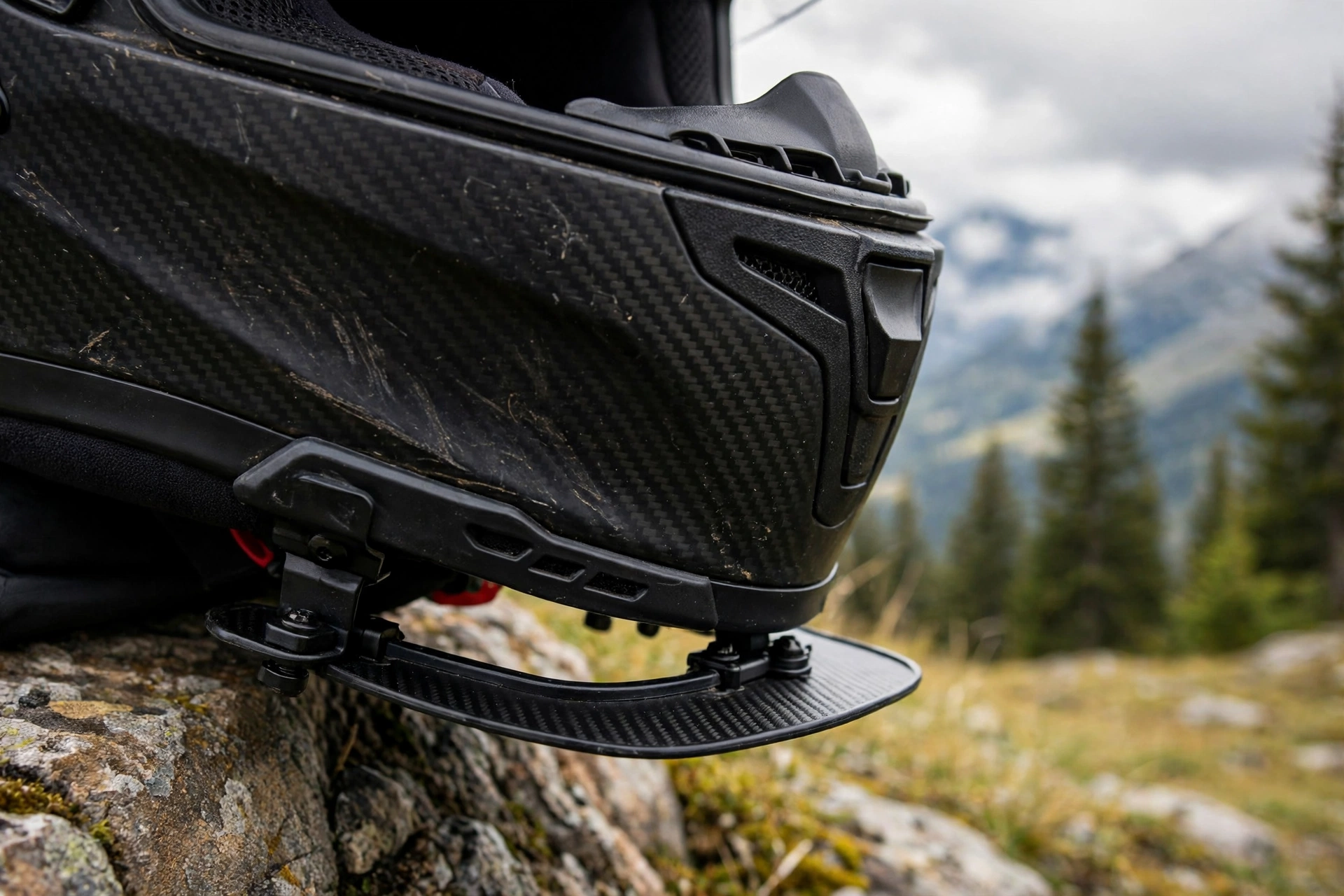
A helmet wind deflector works by blocking the gap between the bottom of the helmet and the rider’s neck, so the wind cannot rush up into the helmet from below. In general terms, the deflector is a curved piece of fabric, foam, or rubber that fits across the chin area, and it acts like a seal that keeps the air out. With the gap closed, the air that would have entered the helmet is forced to flow around the outside instead.
The deflector also reduces the noise that comes from turbulent air inside the helmet. Much of the roar a rider hears at speed is caused by air moving around the chin and the ears, and closing the gap under the chin cuts that noise down. The deflector does not block the helmet’s vents, so air can still flow through the helmet in the way the maker designed, but the uncontrolled draught from below is stopped. Some riders find the helmet feels warmer with a deflector fitted, because the warm air inside the helmet stays inside for longer.
What types of helmet wind deflector are there?
There are two main types of helmet wind deflector: a chin curtain, which is a soft fabric piece that hangs down from the chin bar, and a chin deflector, which is a shaped foam or rubber piece that fits snugly under the chin. In general terms, a chin curtain is lighter and more flexible, and it suits riders who want a simple, cheap fix, while a shaped deflector gives a firmer seal and suits riders who want the best wind blocking.
Some helmets come with a wind deflector included, often as a removable piece that clips or fastens into place under the chin bar. Other helmets have a slot or a fitting for one, and the rider can buy the maker’s own deflector as an accessory. Universal deflectors are also sold, and they are made to fit a range of helmets with straps or adhesive pads. Whichever type you choose, it should fit your helmet’s chin bar without pressing on your throat or blocking the chin strap.
Will a wind deflector make my helmet quieter?
Yes, in general terms a wind deflector will make a helmet quieter, because much of the wind noise a rider hears comes from air entering under the chin and swirling around the ears. Closing that gap cuts the noise noticeably, especially at motorway speeds, where the wind is strongest. The difference is often obvious on the first ride with the deflector fitted, and many riders say it is the best value accessory they have bought for their helmet.
The deflector will not make the helmet silent, because wind noise also comes from the vents, the visor seal, and the shape of the helmet itself. In general terms, a deflector reduces the noise rather than removing it, and the effect is strongest on a helmet that already fits well. If your helmet is noisy because it is too loose or the visor does not seal properly, a deflector will help, but it will not fix the underlying problem. Some helmets include a system designed to reduce rotational forces in a fall, such as MIPS, and that feature does not affect wind noise, so it should not influence your choice of deflector.
How do I fit a helmet wind deflector?
To fit a helmet wind deflector, first check whether your helmet has a fitting or a slot for one, and follow the maker’s instructions if it does. A maker’s deflector usually clips, presses, or fastens into place under the chin bar in a few seconds, and it can be removed just as easily for cleaning. In general terms, the deflector should sit flat against the chin bar, with no gaps at the sides, and it should not press on your throat when the helmet is on.
A universal deflector is fitted with straps, clips, or adhesive pads, and it may need a little trimming to match the shape of your helmet. Try the helmet on after fitting the deflector, and check that the chin strap still fastens properly and that you can breathe and speak comfortably. If the deflector makes the helmet feel tight or pushes the chin bar away from your face, it is the wrong size or the wrong type for your helmet, and you should try a different one.
Are there any downsides to a helmet wind deflector?
The main downside of a helmet wind deflector is that it can make the helmet feel warmer, because it reduces the airflow through the bottom of the helmet. In general terms, that is a bonus in cold weather, when the rider wants to stay warm, but it can be a drawback on a hot day, when the rider wants as much air as possible. Many deflectors are removable, so the rider can take the deflector out in summer and fit it again in winter.
A deflector can also make the visor fog up more easily, because the warm, moist air from the rider’s breath stays inside the helmet for longer. If that happens, open a vent slightly, or use a pinlock insert or an anti-fog treatment on the visor. The deflector can also make it slightly harder to put the helmet on and take it off, because it narrows the opening at the bottom. None of these are serious problems, and most riders find the extra quiet and warmth are worth the small trade-offs.
What is a helmet chin curtain?
A helmet chin curtain is a soft fabric piece that hangs down from the chin bar of a helmet, blocking the wind that comes up from below. In general terms, it is a simple type of wind deflector, and it is often included with the helmet or sold as an accessory.
Can I use a wind deflector on any helmet?
In general terms, most full-face helmets can take a wind deflector, either the maker’s own version or a universal one. Open-face helmets and half helmets do not have a chin bar, so a wind deflector does not fit them in the same way.
Will a wind deflector affect my helmet’s safety?
No, a wind deflector fitted to the chin bar should not affect how the helmet protects the head. It is a comfort accessory, not a structural part, and it should be fitted without changing the helmet itself.

Olivia
Writer at Helmet Today, covering helmet reviews, fit and riding safety.