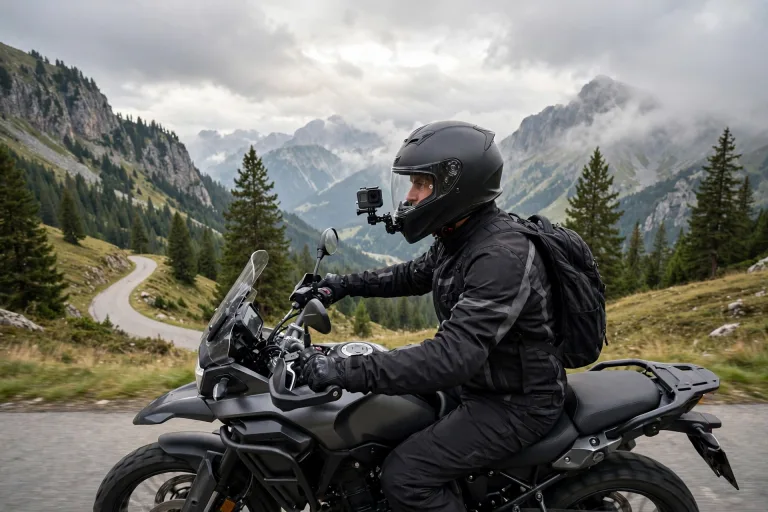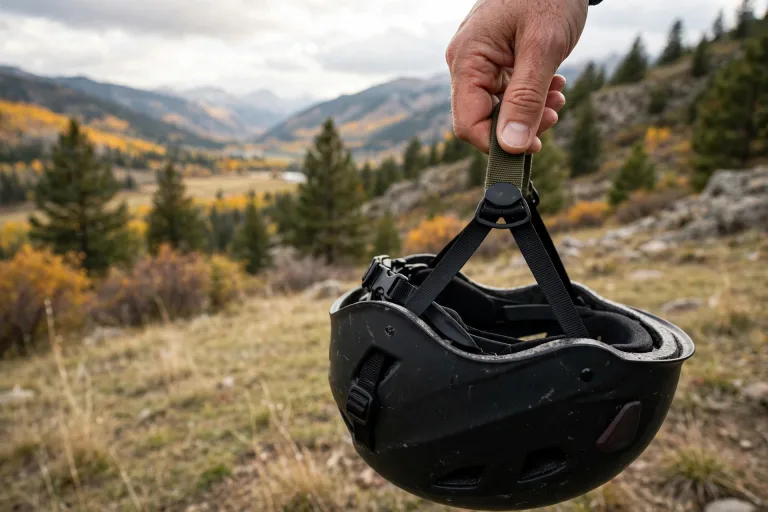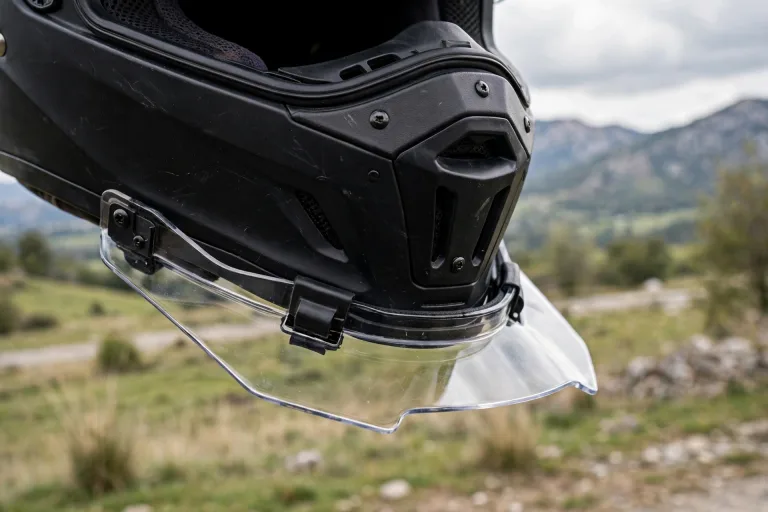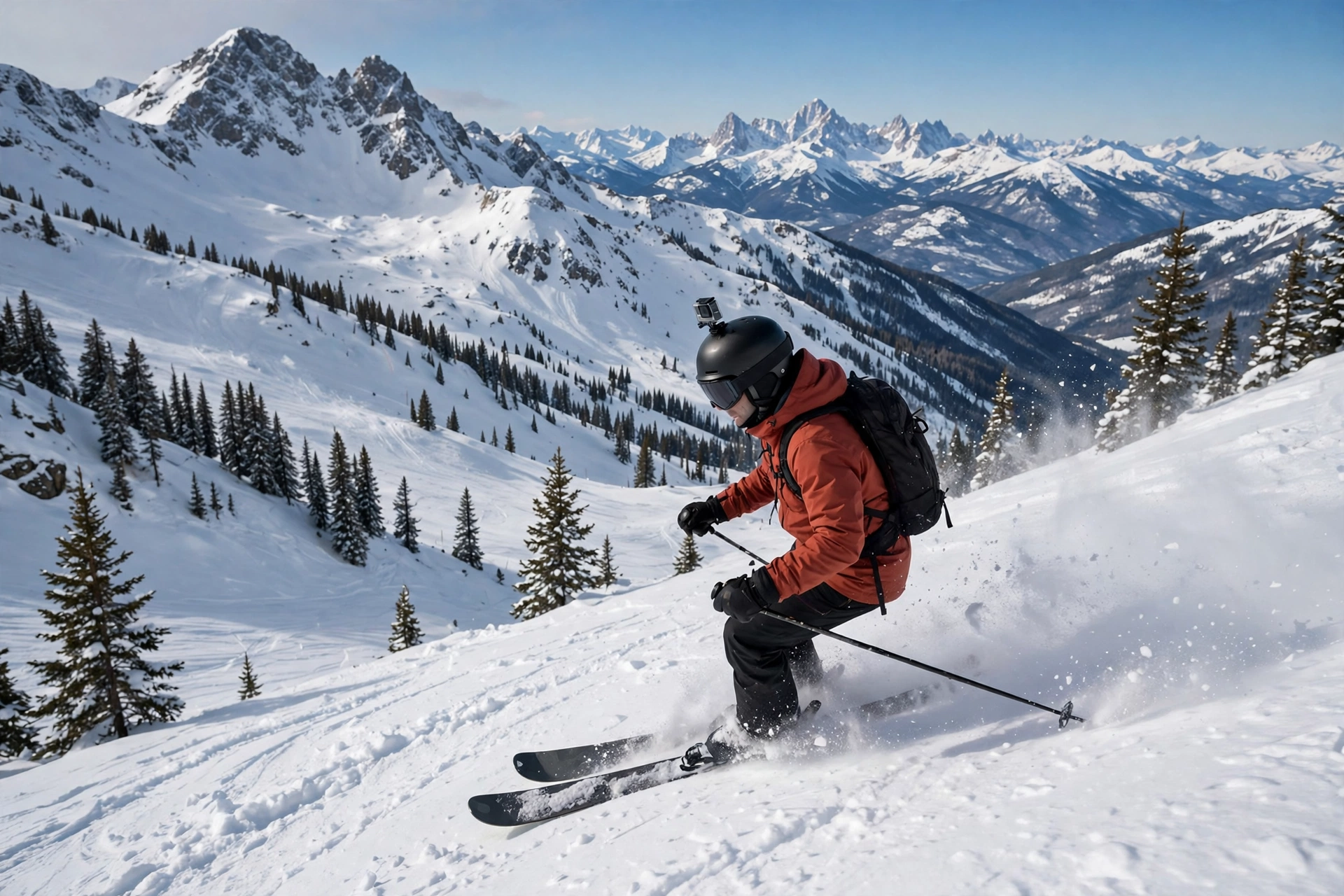
Helmet camera mounts for skiing are small brackets that fix an action camera to a ski helmet, so you can film your runs hands-free without holding a camera or a pole. In general terms, a mount holds the camera firmly in place on the top or the side of the helmet, and it is designed to stay put through turns, bumps, and falls on the snow. A good mount keeps the camera steady, keeps your hands free for your poles, and lets you record the slope from your own point of view.
Filming a ski run used to mean holding a camera or asking a friend to film you, and both options got in the way of actually skiing. A helmet mount solves that problem by putting the camera where your head already is, so the footage follows your gaze down the piste. Choosing the right mount and fitting it well makes the difference between smooth footage and a camera lost in the snow.
How do helmet camera mounts for skiing work?
A helmet camera mount works by giving the camera a fixed base on the helmet, usually with a sticky pad, a strap, or a clamp, plus a small joint that lets you tilt the camera to the angle you want. The camera then clips or screws onto that base, and the mount holds it steady while you ski.
Most mounts use a curved adhesive pad that matches the shape of the helmet, with a buckle or a screw fitting on top for the camera. Some use a strap that wraps around the helmet, and a few clamp onto a vent or a goggle strap. The adhesive pad is the most common choice for skiing because it sits flat and adds very little weight. Whatever type you choose, the mount should be fitted to a clean, dry helmet and left to bond before you head out onto the snow.
Where is the best place to mount a camera on a ski helmet?
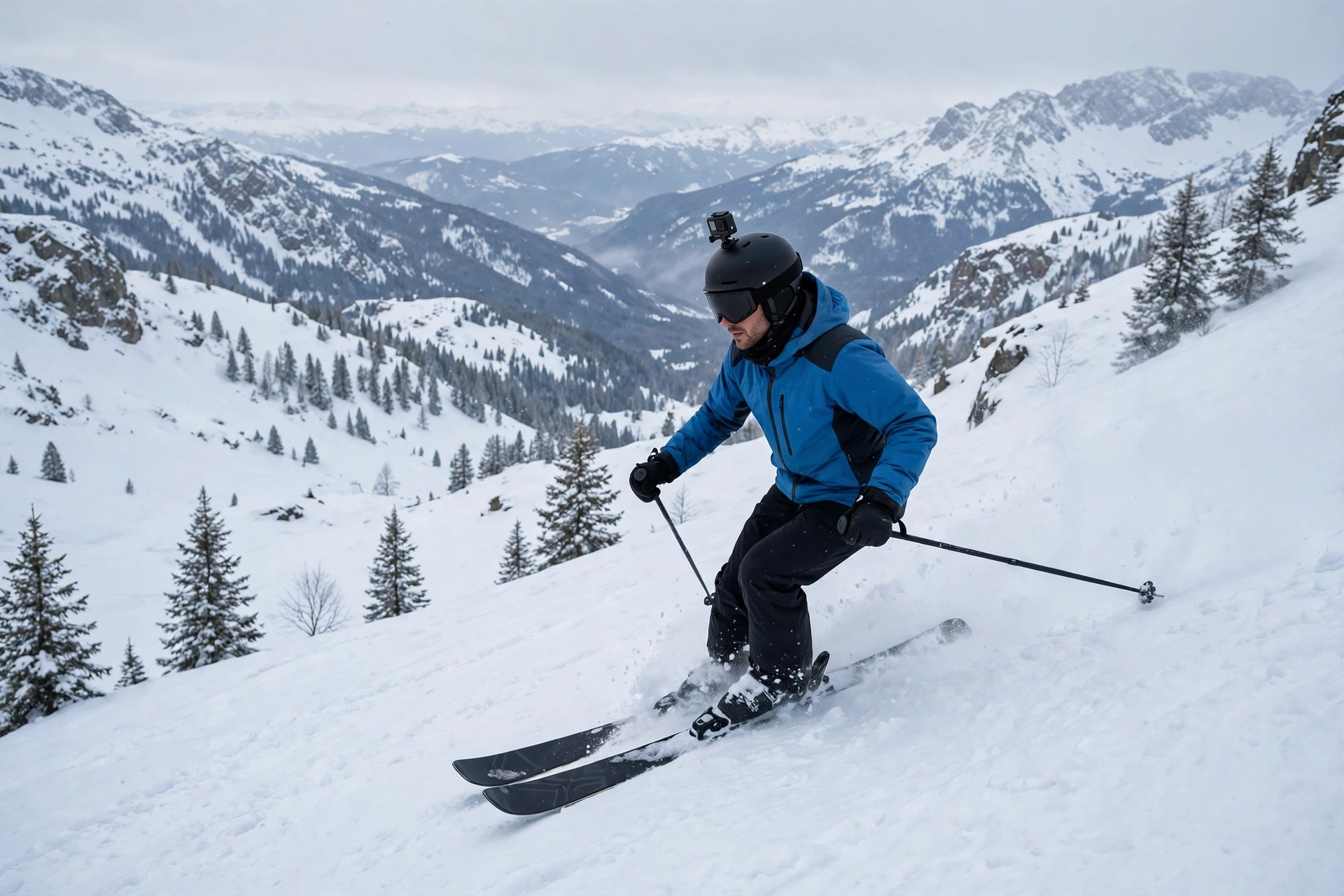
The best place to mount a camera on a ski helmet is usually on the top, slightly forward of centre, or on the side above the ear, and the right choice depends on the view you want and the shape of your helmet. A top mount gives a clean view over your skis and down the slope, with very little of the helmet in the frame. A side mount sits lower, so the footage feels closer to your own view, and it can be easier to reach the camera to start and stop recording.
A top mount can catch more wind and can snag on a lift or a branch, while a side mount can make the helmet feel uneven if the camera is heavy. In general terms, a top mount suits skiers who want a wide view of the piste, and a side mount suits skiers who want to check the recording light more easily. Try both positions at home before you ski, and check that the camera does not block a vent or press against your goggles.
Will a camera mount damage my ski helmet?
A camera mount should not damage a ski helmet if it is fitted in the way the maker describes, but the wrong mount or a careless fitting can cause problems. Adhesive pads are made to stick to the shell without drilling or cutting, and they can usually be removed with gentle heat and patience. Strap mounts avoid glue altogether, and clamp mounts grip a vent or an edge without changing the helmet itself.
What you should never do is drill a hole in a helmet shell or screw a mount through it, because that can weaken the shell and affect how the helmet works in a fall. In general terms, a helmet is a piece of safety equipment first and a camera platform second, so the mount must never come before the helmet’s job of protecting your head. If a mount needs a hole or a permanent change to the shell, it is the wrong mount for that helmet. Some helmets include a system designed to reduce rotational forces in a fall, such as MIPS, and a mount fitted over the shell does not change that system, but a mount that is screwed through the shell could.
What should I look for when buying a helmet camera mount for skiing?
When buying a helmet camera mount for skiing, look for a mount that fits the curve of your helmet, holds your camera model securely, and lets you adjust the angle without tools on the slope. Check that the base matches your helmet’s shape, because a flat pad on a curved shell will peel off, and a curved pad on a flat area will not sit properly. Check the weight too: a light mount keeps the helmet balanced, while a heavy mount with a big camera can pull the helmet to one side.
Look for a mount with a locking clip or a screw fitting rather than a simple push fit, because a camera that pops off on a fast run is usually lost in deep snow. In general terms, it is worth choosing a mount made for cold weather, since cheap adhesive can lose its grip when the temperature drops. A small tether, which ties the camera to the helmet as a backup, is a cheap way to save an expensive camera if the mount ever fails.
How do I keep my ski camera footage steady?
To keep your ski camera footage steady, start with a mount that holds the camera firmly, then let the camera’s own stabilisation do the rest. A loose mount makes every bump show up as a shake, so check the screws and clips before each run, and tighten anything that has worked loose. In general terms, the smoother you ski, the smoother the footage, so relaxed knees and a steady head will do more for your video than any setting on the camera.
Point the camera slightly downward so the skis and the snow fill the lower part of the frame, which gives the viewer a sense of speed and direction. If your camera has a stabilisation setting, switch it on, and if it has a horizon lock, that can help on steep slopes where your head tilts. Wipe the lens before you start, because snow spray and fog can blur the picture.
Can I use a camera mount on any ski helmet?
In general terms, yes, most ski helmets accept a camera mount, as long as the mount suits the shape of the shell and is fitted without drilling or cutting. Check the mount against your helmet before you buy, and avoid mounts that need a hole in the shell.
Will a helmet camera mount affect my helmet’s safety?
A mount fitted to the outside of the shell with adhesive or a strap should not affect how the helmet works, but drilling through the shell or fitting a heavy mount that changes how the helmet sits can. Fit the mount as the maker describes and check the helmet’s fit afterwards.
What is the best camera mount for skiing?
There is no single best mount for every skier, but a light adhesive mount on the top or the side of the helmet suits most people. Choose one that fits your helmet’s curve, locks your camera model securely, and works well in cold weather.

Olivia
Writer at Helmet Today, covering helmet reviews, fit and riding safety.