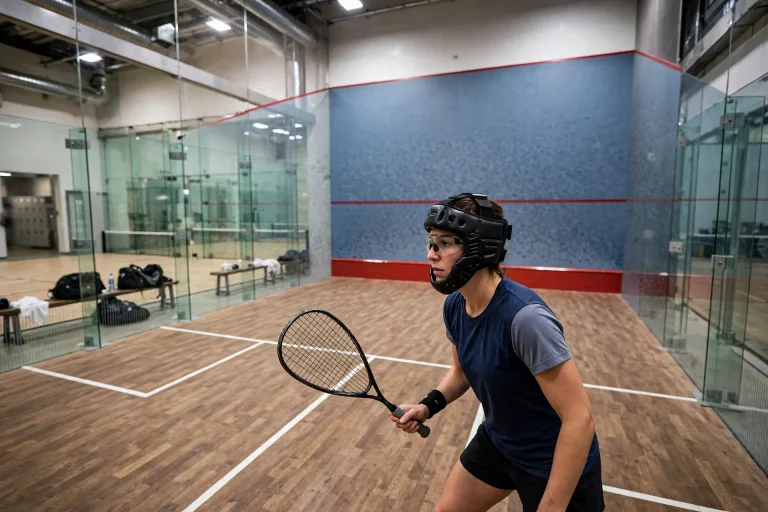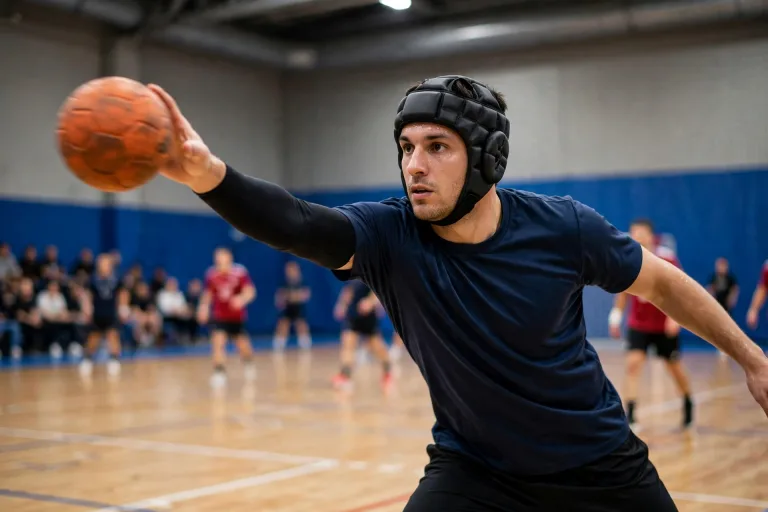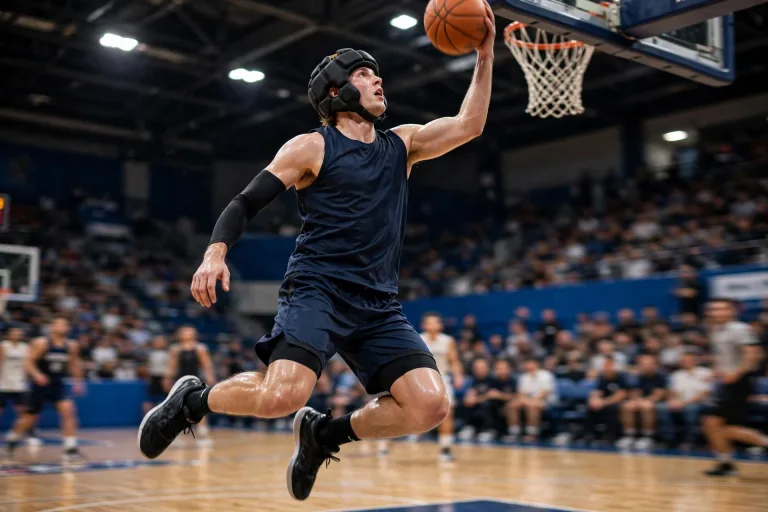
A helmet for rugby coaches is usually a soft padded headguard worn on the sideline or during training, to protect the head from stray balls, collisions, and falls while the coach works close to the action. In general terms, rugby coaches spend much of their time standing near the touchline or stepping into drills, where a ball or a player can arrive without warning. A light headguard gives them a layer of protection without getting in the way of coaching, talking, and moving around the pitch.
Coaches are not tackled in the way players are, but they are still close to a fast, physical game. A pass that goes wrong, a player who is driven backwards, or a slip on wet grass can all lead to a knock on the head. A helmet for a rugby coach is therefore about sensible protection during the working day, rather than about surviving the full contact of a match.
Do rugby coaches need to wear a helmet?
Rugby coaches do not have to wear a helmet, and in general terms most coaches do not wear one during a match. There is no rule that requires a coach to wear head protection on the sideline, and many coaches prefer to work without one so they can hear, speak, and move freely. A helmet is a personal choice, and it usually depends on how close the coach stands to play and how often they step into training drills.
Some coaches do choose to wear a soft headguard, especially if they take part in contact drills, demonstrate tackles, or coach younger players who are still learning to control the ball. A coach who runs a tackling drill is close to falling bodies and swinging arms, and a headguard can take the edge off a knock. If a coach has had a head injury before, or if they simply feel safer with one on, a headguard is a reasonable piece of kit to wear.
What type of helmet should a rugby coach wear?
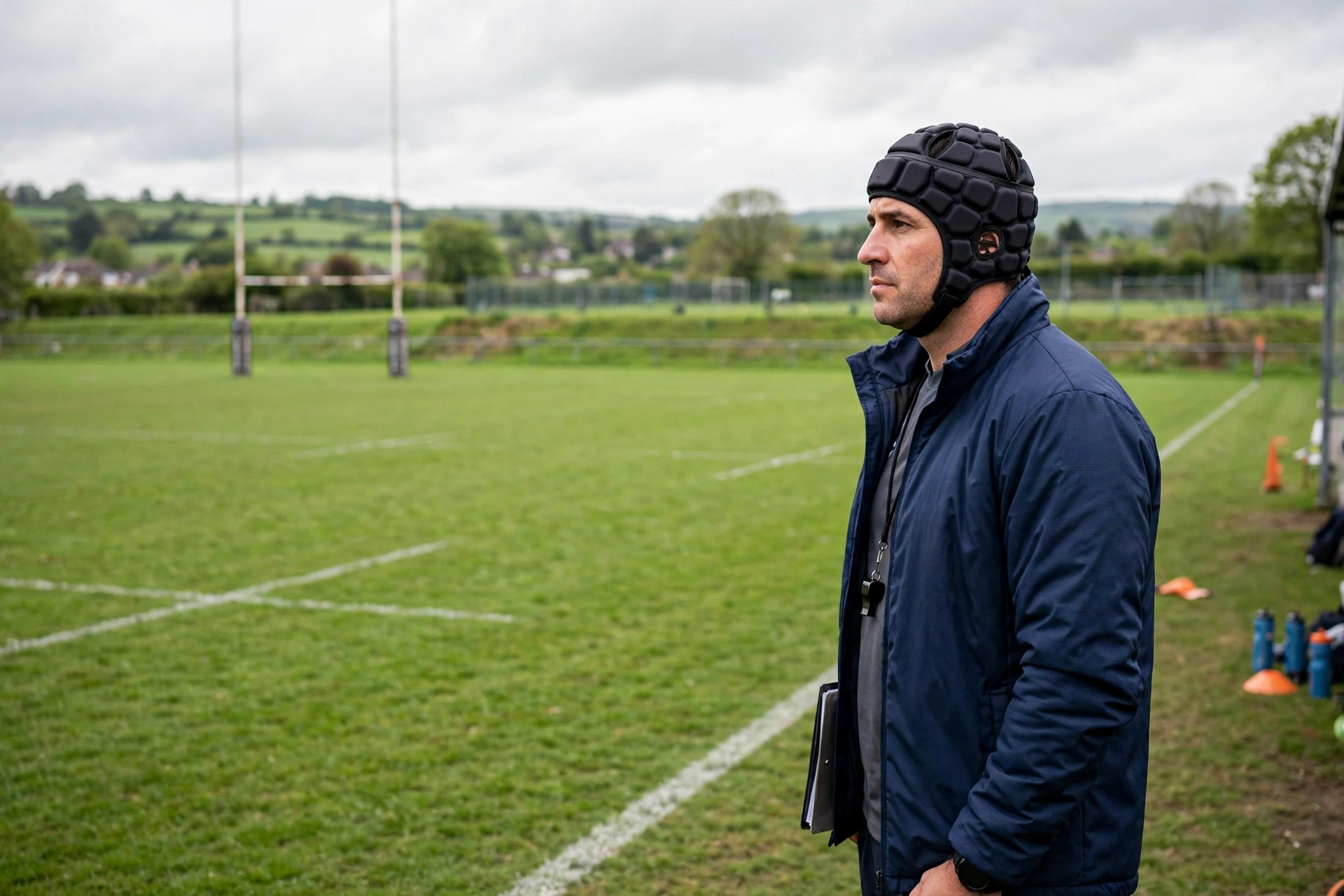
A rugby coach should wear a soft padded headguard, of the same type that players wear, rather than a hard-shell helmet. Rugby headguards are made from soft foam with a cloth cover, and they are designed to fit closely around the head and ears. In general terms, they suit a coach because they are light, comfortable, and easy to wear for a long session, and they do not block hearing or speech in the way a hard helmet would.
A hard helmet, such as a cycling or construction helmet, is not the right choice for rugby coaching. It is heavy, it can slip, and it is not designed for the kind of knocks that happen on a rugby pitch. A soft headguard is made for exactly those knocks, and it can be worn under a hat or on its own in cold or wet weather. Choose one that fits snugly, covers the ears, and stays in place when you turn your head quickly to follow play.
How does a rugby headguard protect the head?
A rugby headguard protects the head by adding a layer of soft foam between the head and whatever hits it, which spreads the force of a knock over a wider area. In general terms, it is most useful against scrapes, cuts, and bruises from glancing blows, elbows, and falls onto firm ground. It is not a hard shell, so it does not work like a crash helmet, and it should not be expected to prevent a serious head injury on its own.
The foam also protects the ears, which can be bruised or torn in close contact, and it gives some cushioning when a coach falls backwards onto the ground. That is why many coaches wear one during training rather than during a match: training is when the coach is most likely to be in the middle of the action. Some helmets include a system designed to reduce rotational forces in a fall, such as MIPS, but that feature belongs to hard-shell helmets, and a soft rugby headguard works in a different way, by cushioning rather than by managing rotation.
What should a rugby coach look for when buying a headguard?
When buying a headguard, a rugby coach should look for a close, comfortable fit, good ear coverage, and a fastening that keeps the headguard in place without pressing on the chin. The headguard should feel snug all around the head, with no loose spots at the back or the sides, and the strap should sit flat under the chin. In general terms, a headguard that moves when you shake your head is too loose, and one that gives you a headache after a few minutes is too tight.
Look for a headguard that is easy to wash, because it will pick up sweat and mud from training sessions, and check that the foam is firm and even, with no thin patches. Some headguards have laces at the back for a finer fit, and some have a simple elastic fit. Try it on with any hat or waterproof hood you wear on the sideline, so you know it works with your normal coaching clothes. A headguard that is comfortable is one you will actually wear, and that matters more than any extra feature.
Can a rugby coach wear a headguard during a match?
Yes, a rugby coach can wear a headguard during a match, and there is nothing in the rules that stops them. In general terms, a coach on the sideline is not a player, so the rules about player equipment do not apply in the same way, and a coach is free to wear a soft headguard if they want the extra protection. It is uncommon, but it is allowed, and nobody on the touchline will think twice about it.
The more common time to wear one is during training, when the coach is on the pitch with the players and taking part in drills. During a match the coach is usually further from the action, standing behind the touchline with a clear view of play. If your coaching style keeps you close to the line, or if you coach a youth team where the ball can go anywhere, wearing a headguard on match day is a sensible choice.
Do rugby coaches have to wear head protection?
No, there is no rule that requires a rugby coach to wear head protection. It is a personal choice, and most coaches work without one, although some choose a soft headguard for training or for coaching close to play.
Is a rugby headguard the same as a scrum cap?
In general terms, yes, the terms are often used for the same piece of kit: a soft padded headguard worn by rugby players. A coach can wear the same type, and it is sold in the same sizes and styles as the ones players use.
Can a rugby headguard prevent concussion?
No, a soft headguard cannot prevent concussion on its own. It can reduce scrapes, cuts, and bruising from glancing blows, but it does not remove the risk of a head injury. Any coach who takes a blow to the head should stop and follow their team’s head-injury guidance.

Olivia
Writer at Helmet Today, covering helmet reviews, fit and riding safety.