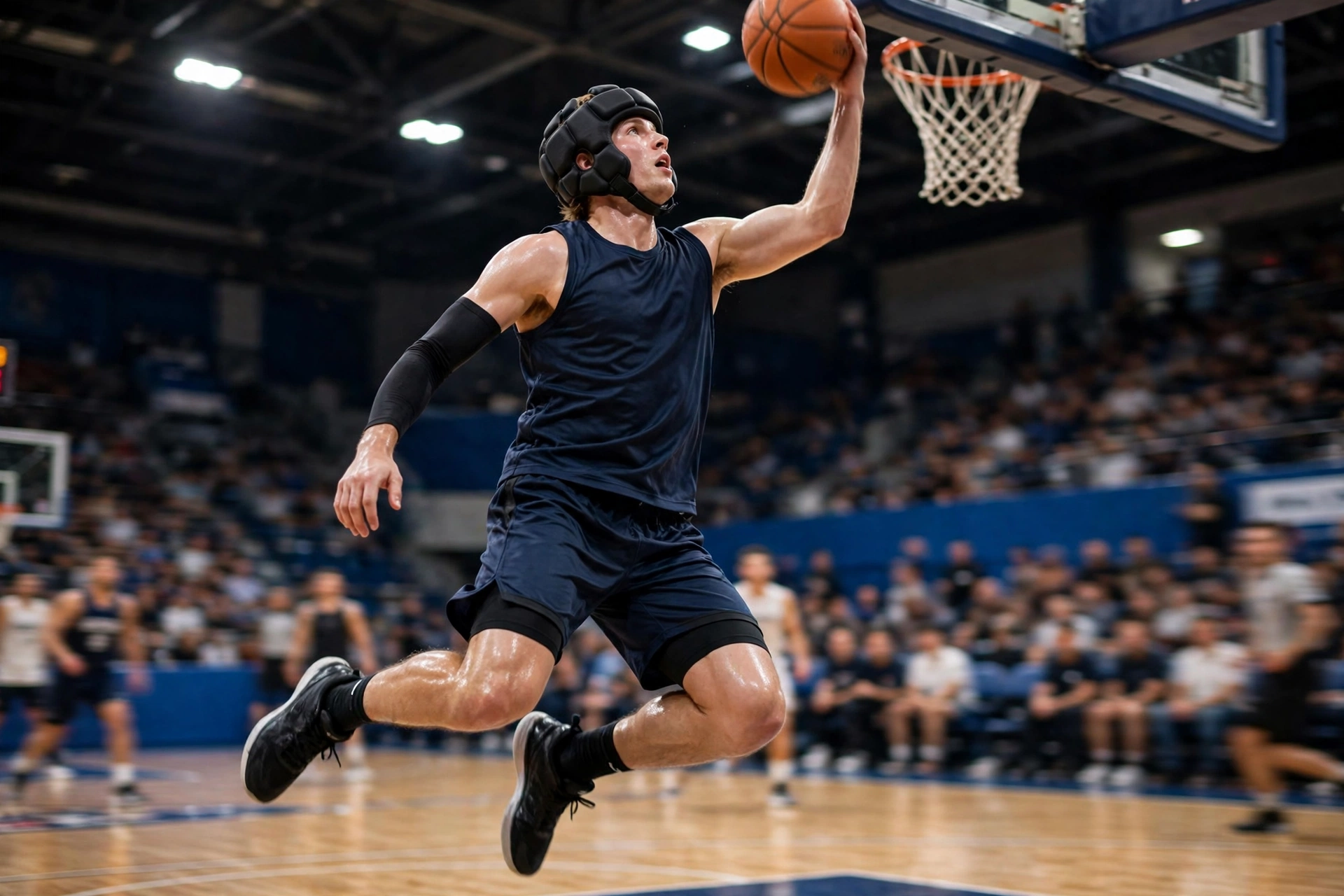
A helmet for basketball players is a padded protective helmet worn on court to cushion the head against knocks, falls and collisions with other players. Basketball is not usually thought of as a helmet sport, but players who have had a head injury, who play an aggressive physical style, or who are returning from concussion sometimes wear a soft, lightweight helmet for extra protection. It is not a standard part of the kit, but for some players it makes the difference between sitting out and playing with confidence.
Why would a basketball player wear a helmet?
The most common reason is a previous head injury. A player who has had a concussion, a cut that needed stitches, or surgery on the head or ear may be advised by a doctor to wear protection while they return to play. A helmet can also help players with a medical condition that makes a knock to the head more risky, or players who have had ear surgery and need to protect the area while it heals. In these cases the helmet is part of a return-to-play plan, so it should be worn exactly as the doctor advised, for as long as they advise it.
Some players wear a helmet simply because of how they play. A physical rebounder who fights for every ball under the basket, or a player who drives hard to the hoop and often ends up on the floor, faces more contact than a player who mostly shoots from outside. For those players, a light helmet is a practical way to reduce the risk of a knock turning into an injury that keeps them off the court.
What does a basketball helmet look like?
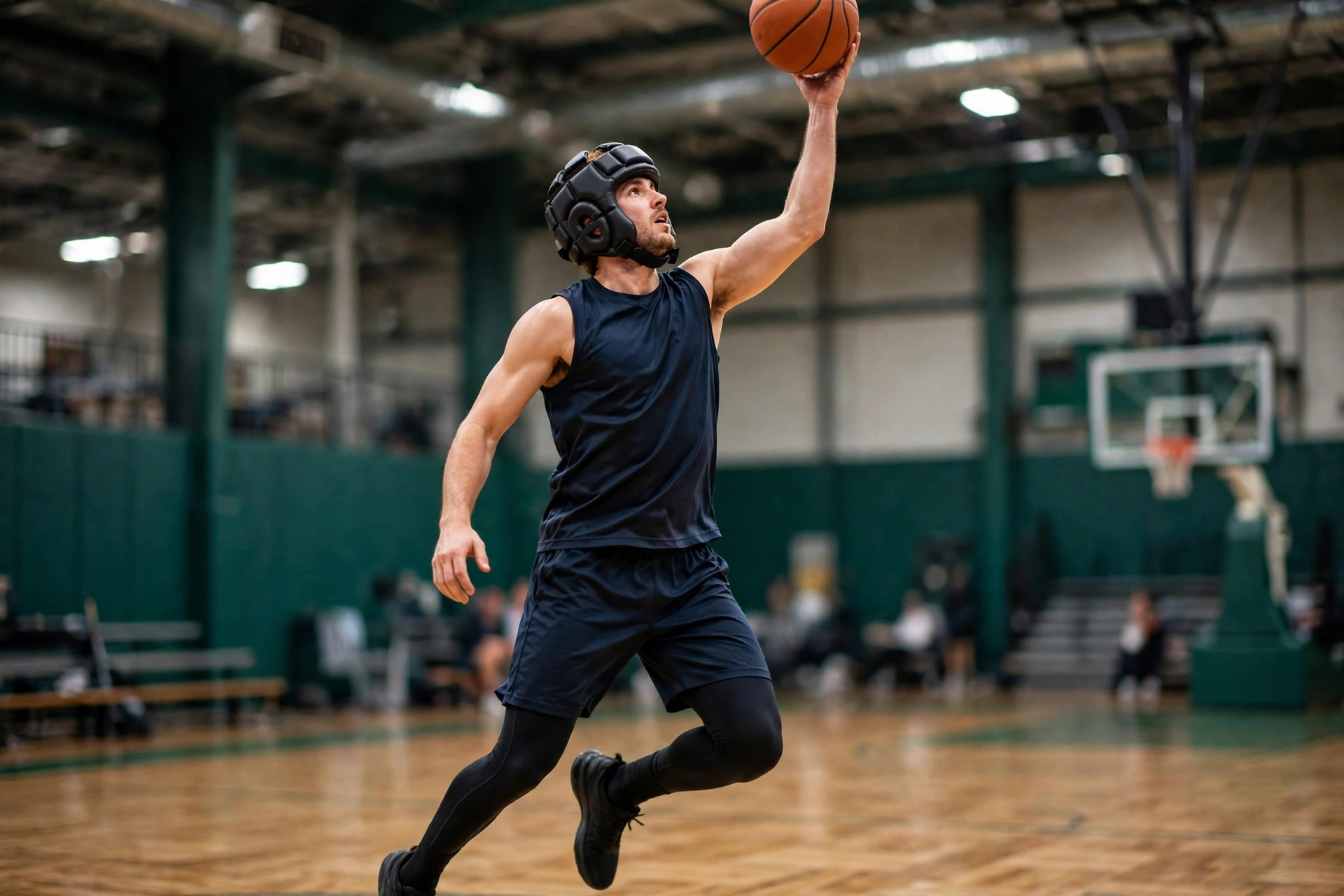
A basketball helmet is usually a soft, close-fitting padded shell rather than a hard helmet like those used in cycling or American football. It is made from layers of foam covered in fabric, with openings for the ears and ventilation, and it fastens under the chin with a strap. The design is deliberately low-profile so it does not get in the way of shooting, passing or heading the ball — it should feel more like a thick headband than a hard shell. Most models weigh very little, which is why players can wear them for a full game without neck fatigue.
Some models are closer to a padded headguard, the kind used in rugby, with a snug fit and flexible padding around the temples, forehead and the back of the head. Others have a harder outer layer for more protection. The right choice depends on the player’s needs: a player returning from a serious injury may need more coverage, while a player who just wants a little extra protection may prefer the lightest model.
Does a basketball helmet affect your game?
A well-fitting basketball helmet should have very little effect on your game once you get used to it. The padding is light, the helmet does not cover your eyes, and it should not change how you shoot or pass. Most players say the biggest adjustment is psychological — feeling different on court — rather than any real change in performance, and that feeling usually fades after a few sessions. Wearing the helmet in practice first, rather than debuting it in a competitive game, makes the adjustment much easier.
Fit is the key. A helmet that is too loose will slide around and distract you, while one that is too tight can cause headaches and make you want to take it off. Try the helmet on with your usual hairstyle, run and jump in it before a game, and check that your peripheral vision is unaffected. If it slips when you sweat, adjust the straps or try a different size rather than playing with a helmet that moves.
Is a basketball helmet allowed in games?
In general terms, most leagues allow protective headgear as long as it is soft, does not have hard parts that could injure other players, and is worn for a genuine protective reason. Hard helmets with rigid shells are usually not allowed in basketball, because they could hurt an opponent in a collision. Soft padded headguards are far more likely to be accepted, but the rules differ between leagues, schools and competitions.
Before wearing a helmet in a competitive game, check the rules of your league and, if needed, ask the referee or the competition organiser in advance. Bring a doctor’s note if you are wearing it for medical reasons, as this can help if anyone questions it. It is much better to sort this out before match day than to be told you cannot play when you arrive.
How do you choose the right basketball helmet?
Start by thinking about why you need it. If a doctor has advised you to wear protection, ask what level of coverage they recommend and whether there is a specific type to look for. Then measure your head and check the size chart, because a helmet that does not fit will not protect you properly — just as with any other helmet, a snug, level fit with no gaps is what you want. If you want to understand how slip-plane technology works in helmets generally, see our guide to MIPS. Trying the helmet on in the shop, if you can, is worth the trip: sizes vary between brands, and a quick fitting session beats guessing from a chart.
Look for a helmet made for court sports rather than a general-purpose hard helmet, and check that the padding is thick enough where you need it — usually the forehead, temples and back of the head. Make sure it is washable, because it will get sweaty, and check whether it can be worn comfortably with a mouthguard if you use one. Replace it if the padding becomes flat or the fabric wears through, because worn padding protects far less than new padding.
Do basketball players normally wear helmets?
No — helmets are not standard kit in basketball, but some players wear a soft padded helmet after a head injury or on medical advice.
Can I wear a hard cycling or skate helmet for basketball?
No — hard helmets are not suitable for basketball and are usually not allowed, because they could injure other players. Use a soft padded helmet made for court sports.
Will a basketball helmet stop concussion?
No helmet can guarantee that. A padded helmet can reduce the force of knocks and falls, but it cannot remove the risk entirely, so follow medical advice after any head injury.

Olivia
Writer at Helmet Today, covering helmet reviews, fit and riding safety.