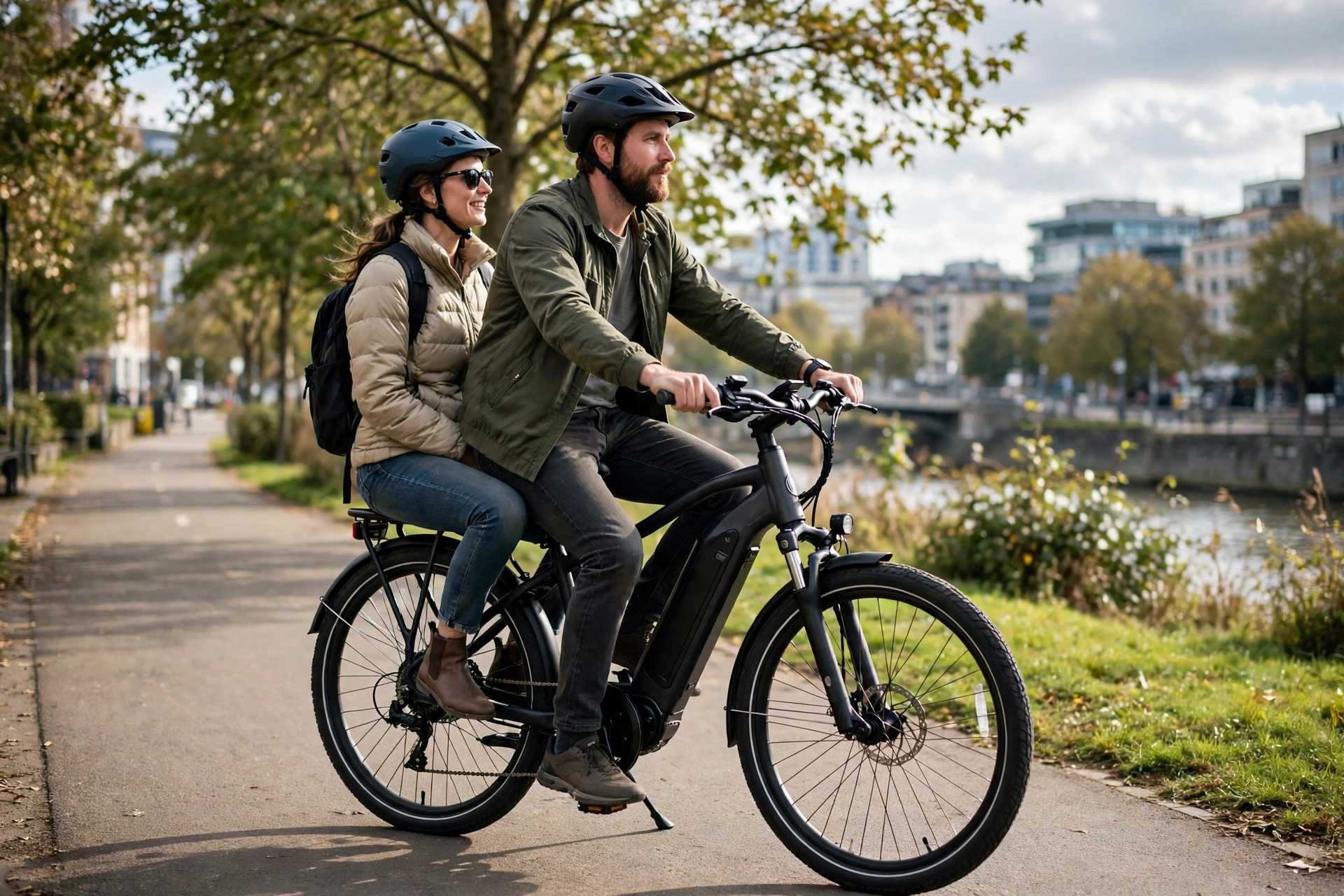
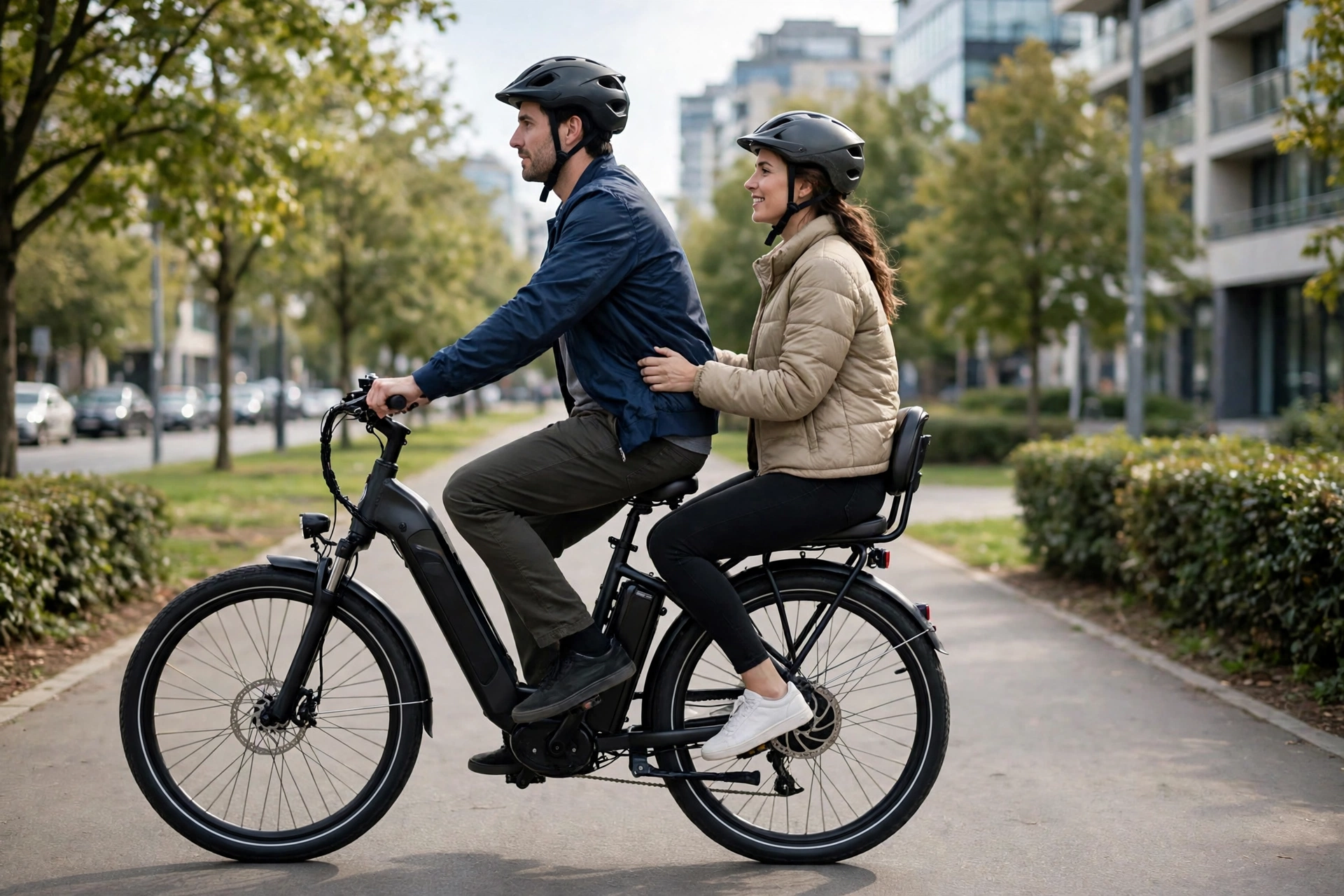
A helmet for e-bike passengers is a bike helmet worn by someone riding on the back of an electric bike, and in general terms both the rider and the passenger should wear one. The passenger faces the same risks as the rider, because an e-bike can travel at speed and a fall or a sudden stop can throw anyone off balance. A helmet does not remove the risk, but it gives the head a layer of protection that a bare head does not have.
E-bikes are now a common way to carry a second person, whether that is a partner, a friend, or a child on a proper passenger seat. Many e-bikes have a rear rack, a long-tail frame, or a fitted passenger seat with footrests, and some riders assume that the passenger is safe because they are not steering. That is not the case. The passenger is moving at the same speed as the bike, and if the bike tips over, brakes hard, or hits a pothole, the passenger can fall just as easily as the rider.
Do e-bike passengers need a helmet?
In general terms, yes. A passenger on an e-bike is exposed to the same road hazards as the rider, including other vehicles, uneven surfaces, and sudden stops. Some places have laws that require helmets for e-bike riders and passengers, while other places leave it to personal choice, so it is worth checking the rules where you ride. Even where there is no legal requirement, wearing a helmet is the sensible choice for a passenger.
Passengers are sometimes less prepared for a fall than riders. The rider is holding the handlebars and watching the road, while the passenger may be looking around, holding a bag, or chatting. That means a passenger can be slower to brace for a bump or a swerve. A helmet helps in exactly that situation, because it protects the head even when the wearer has no time to react.
What kind of helmet should an e-bike passenger wear?
A standard bike helmet is a good choice for most e-bike passengers. It is light, well ventilated, and designed for the kind of falls that happen at cycling speeds. If the e-bike is a faster model, or if the route includes busy roads, a helmet with more coverage around the back and sides of the head can be a sensible step up. Some riders prefer an e-bike rated helmet, which is tested for slightly higher impact speeds.
What matters most is that the helmet is made for cycling and meets a recognised safety standard. A helmet designed for another sport, such as a climbing helmet or a skateboard helmet, may not give the same protection in a cycling fall. A motorcycle helmet is heavier and hotter than a bike helmet, and it is not needed for a normal e-bike ride, although some passengers on high-speed e-bikes do choose one. For most passenger rides, a good bike helmet is the right balance of protection and comfort.
How should a passenger helmet fit?
A passenger helmet should fit in the same way as a rider helmet. It should sit level on the head, low on the forehead, with the front edge about two finger widths above the eyebrows. It should feel snug all the way around, without pressing hard on one spot, and it should not rock forward over the eyes or slide back when the wearer shakes their head gently.
The straps matter just as much as the shell. The side straps should meet just below the ears, forming a neat V shape, and the chin strap should be snug enough that only one or two fingers fit between the strap and the chin. A loose helmet can come off in a fall, so take a minute to adjust it before the ride starts. If the helmet is shared between passengers, check the fit every time, because heads are different shapes and sizes.
What should a passenger check before the ride?
Before setting off, the passenger should check that the seat and footrests are secure and that there is something to hold on to, such as a grab handle or the rider. Loose clothing, long scarves, and bag straps should be tucked away so they cannot catch in the wheel or the chain. The passenger should also agree with the rider on how to communicate, for example by tapping the rider’s shoulder before leaning or shifting position.
It is also worth checking the helmet itself. Look for cracks, dents, or a strap that no longer holds its adjustment, and make sure the buckle clicks shut firmly. Some modern helmets use a slip layer that lets the shell move slightly in an angled impact, an idea known as MIPS. This is a useful feature, but it is not a substitute for a good fit. A helmet that has taken a hard knock should be replaced, even if the damage is not easy to see.
What about children riding as e-bike passengers?
Children should only ride as passengers on an e-bike that is designed for it, with a proper child seat or a passenger seat that fits their size. A child should never sit on a rear rack without a seat, footrests, and something to hold. The child needs a helmet that fits their head properly, because an adult helmet that is too big can slip over their eyes or come off in a fall.
Child helmets come in smaller sizes, and many have an adjustment dial at the back so the fit can be fine-tuned as the child grows. Check the fit every few months, because children grow fast and a helmet that fitted last summer may be too tight now. Keep the ride short and slow with a young passenger, choose quiet routes, and stop often so the child does not get tired and start fidgeting on the seat.
Can a passenger wear the rider’s spare helmet?
Yes, if it fits. A spare helmet is fine as long as it sits level, feels snug, and the straps can be adjusted to the passenger’s head. If it is too loose or too tight, it will not protect properly, so it is better for the passenger to have their own helmet in the right size.
Does a passenger need a helmet on a short, slow ride?
Yes, in general terms. Most falls happen on short, familiar trips close to home, and even a slow fall can cause a head injury if the head hits the ground or a kerb. A helmet takes seconds to put on, so there is no good reason to skip it for a short ride.
Is a cheap bike helmet good enough for an e-bike passenger?
Yes, as long as it meets a recognised safety standard and fits well. Price is not the best guide to protection, and a well-fitting budget helmet that meets the standard is far better than an expensive helmet that is too loose. Replace it if it is damaged or has taken a hard knock.

Olivia
Writer at Helmet Today, covering helmet reviews, fit and riding safety.