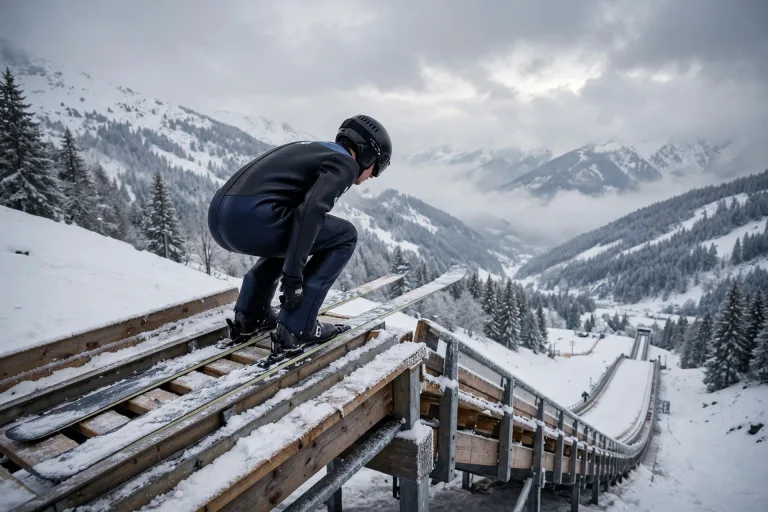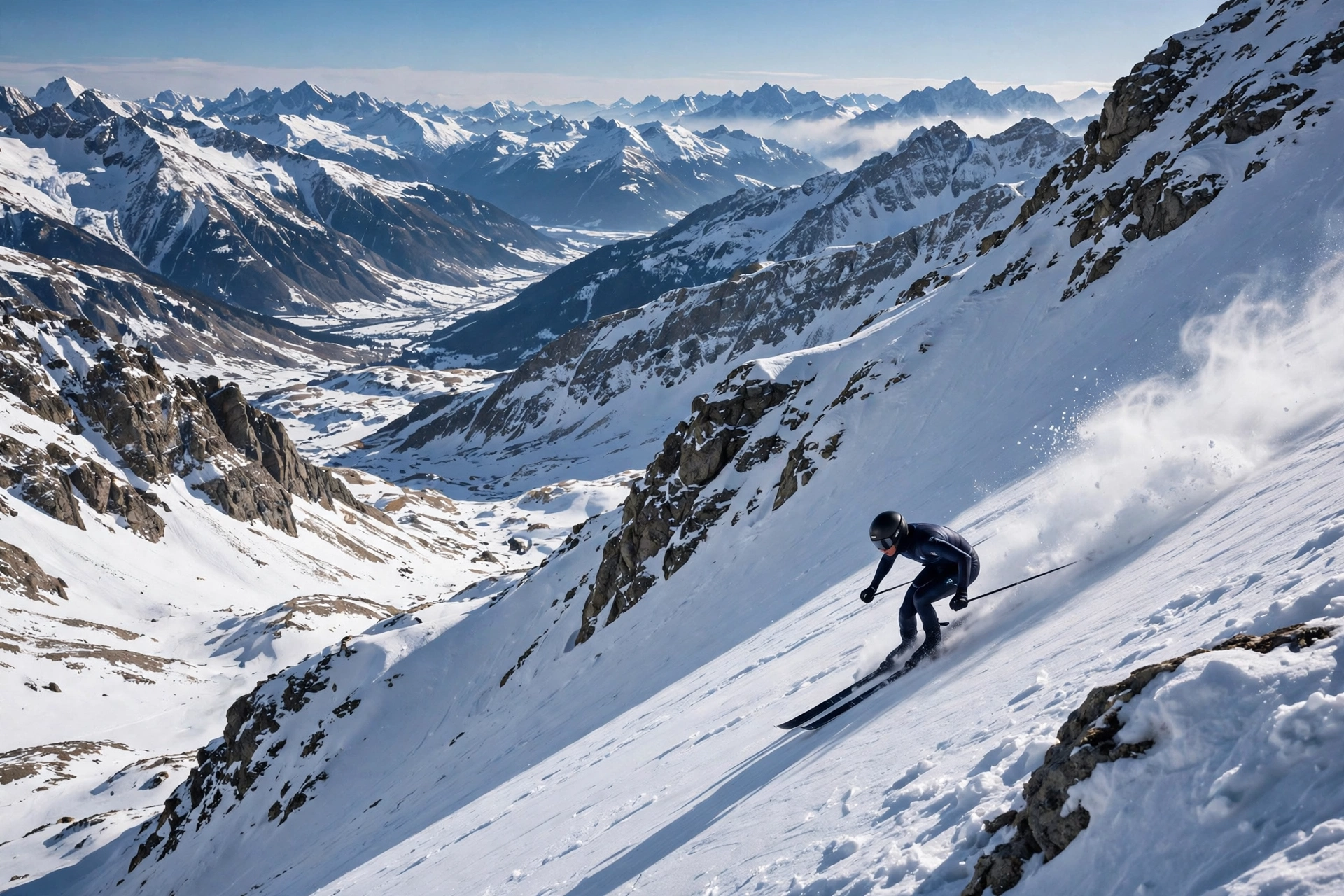
A helmet for speed skiing is a specialised aerodynamic helmet worn by skiers racing in a straight line down a steep slope at very high speed, to protect the head and to cut through the air as cleanly as possible. In general terms, speed skiing is one of the fastest non-motorised sports, and the helmet has two jobs: to shield the skier’s head in a fall at speeds that can be far higher than normal skiing, and to shape the airflow around the head so the skier loses as little speed as possible.
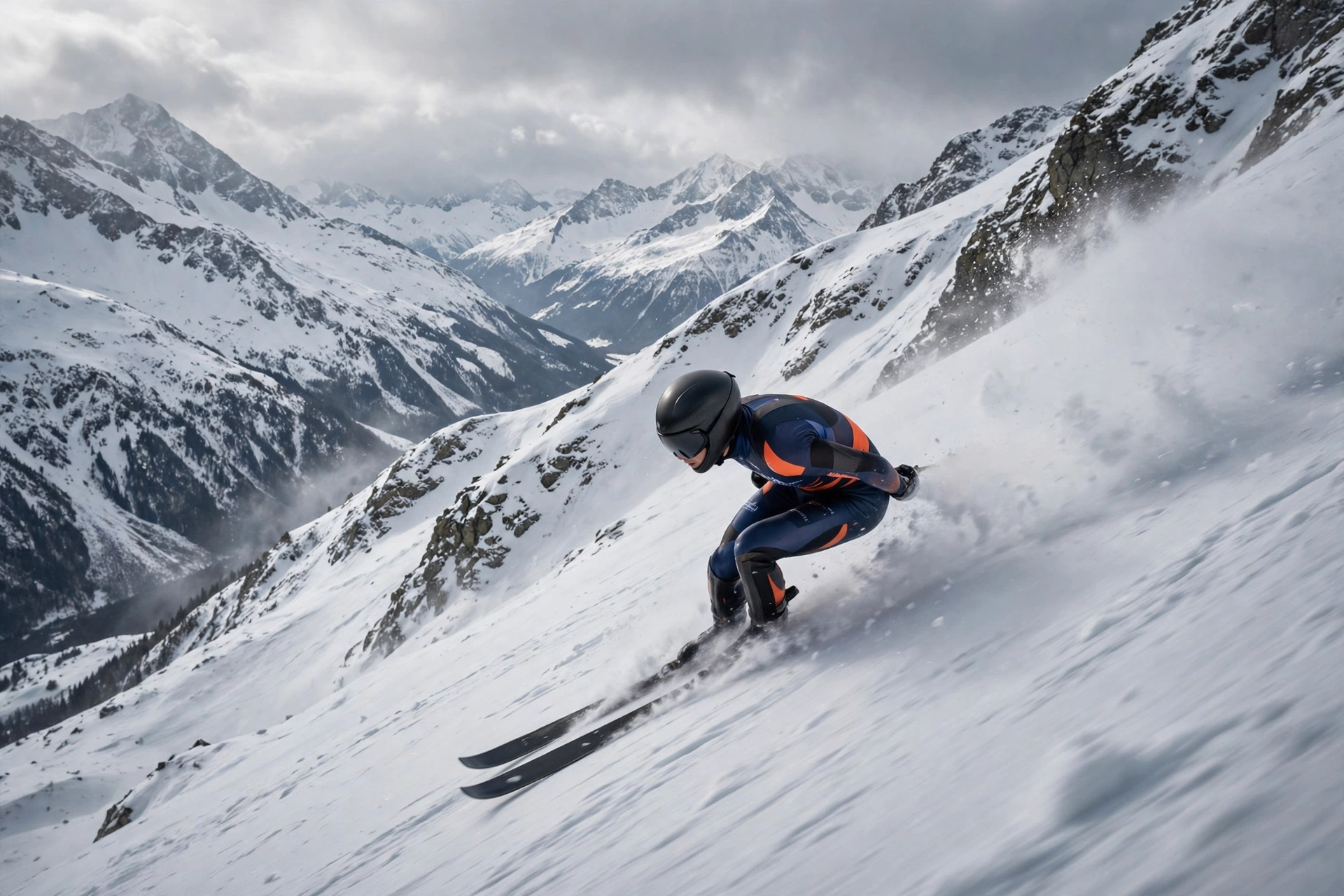
Speed skiers race one at a time down a long, steep course, aiming for the highest speed they can reach. The helmet they wear looks different from a normal ski helmet, with a long, smooth shape that extends down the back of the neck. That shape is not a fashion choice: it is designed to keep the air flowing smoothly over the skier’s head and shoulders at speeds where even a small bump in the shape can slow the skier down.
How is a speed skiing helmet different from a normal ski helmet?
A speed skiing helmet is different from a normal ski helmet mainly in its shape, which is longer and more pointed at the back, and in the way it is built for very high speeds. A normal ski helmet is rounded and compact, with vents for comfort on a recreational run. A speed skiing helmet is stretched out behind the head, with a smooth surface and very few vents, because at racing speed the shape of the helmet matters more than airflow through it.
The speed skiing helmet also tends to fit more tightly and to sit lower on the head, so it works with the skier’s tucked racing position. In general terms, the helmet is part of a whole aerodynamic setup that includes the suit, the position of the arms, and the shape of the skis. A normal ski helmet would still protect the head, but it would slow the skier down, and in a sport decided by fractions of a second, that matters.
What protection does a speed skiing helmet give?
A speed skiing helmet gives the head a hard shell and an energy-absorbing liner, just like other ski helmets, but it is built with the higher speeds of the sport in mind. In general terms, the shell spreads the force of an impact, and the liner inside crushes slightly to absorb energy, so less of that force reaches the head. At the speeds involved in speed skiing, no helmet can remove all risk, but a helmet made for the sport gives the skier the best protection available.
Speed skiers also wear the helmet with a full-face design or with a strong chin guard in many cases, because a fall at racing speed can involve the face as well as the top of the head. The helmet is checked and fitted carefully before a run, because a loose helmet at high speed can move, lift, or catch the wind. Some helmets include a system designed to reduce rotational forces in a fall, such as MIPS, which is one more layer of protection for a skier whose head may strike the snow at an angle.
Do speed skiers have to wear a helmet?
Yes, in general terms speed skiers have to wear a helmet when they race, because the sport’s rules require head protection for every run. The helmet must meet the standard set for the event, and officials can check that the helmet is in good condition and fits properly before the skier is allowed to start. A skier without a suitable helmet does not race.
The rule exists because of the speeds involved. A fall on a normal ski run is already serious, and a fall at speed-skiing pace carries far more energy. The helmet is therefore not optional kit, but a condition of taking part. Recreational skiers who want to try a speed course at a resort event will usually be told the same thing: no helmet, no run.
How should a speed skiing helmet fit?
A speed skiing helmet should fit snugly all around the head, with no gaps and no pressure points, and it should stay in place when the skier shakes their head or looks down into the racing tuck. The helmet should sit low enough to cover the forehead and the back of the head, and the chin strap should be fastened firmly under the chin. In general terms, a helmet that moves when the skier moves is too loose, and a helmet that gives a headache within minutes is too tight.
Because the helmet is long and pointed at the back, the fit around the neck matters too. The tail of the helmet should follow the line of the skier’s back when they are in the tuck, without pressing into the neck or lifting away from it. Goggles should sit neatly against the front of the helmet with no gap, because a gap lets in cold air and snow spray at speed. If the helmet and the goggles do not work together, the skier should try a different combination before race day.
Can I use a speed skiing helmet for normal skiing?
You can use a speed skiing helmet for normal skiing, but in general terms it is not the best choice for a day on the piste. The long tail is designed for a tucked racing position, and when you ski upright it can feel awkward and catch the wind. The helmet also has very few vents, so it can feel hot on a warm day or on a slow lift ride.
A normal ski helmet is lighter, better ventilated, and more comfortable for recreational skiing, and it gives the same basic protection for the speeds of a normal run. A speed skiing helmet is specialist kit for a specialist sport, and it earns its place on a race course rather than on a family holiday. If you only ski at resort speeds, a regular ski helmet is the more sensible buy.
How fast do speed skiers go?
Speed skiers travel far faster than recreational skiers, and in general terms the fastest runs are well beyond normal piste speeds. The exact speed depends on the course and the conditions, and the helmet is designed with those very high speeds in mind.
Does a speed skiing helmet have vents?
Most speed skiing helmets have very few vents, or none at all, because vents disturb the airflow around the helmet at racing speed. The smooth, closed shape is part of what makes the helmet fast, even though it makes the helmet warmer to wear.
Can I buy a speed skiing helmet in a normal ski shop?
In general terms, speed skiing helmets are specialist kit, and a normal ski shop may not stock them. They are usually sold through race suppliers or ordered from the maker, and they are fitted with the same care as other race equipment.

Olivia
Writer at Helmet Today, covering helmet reviews, fit and riding safety.