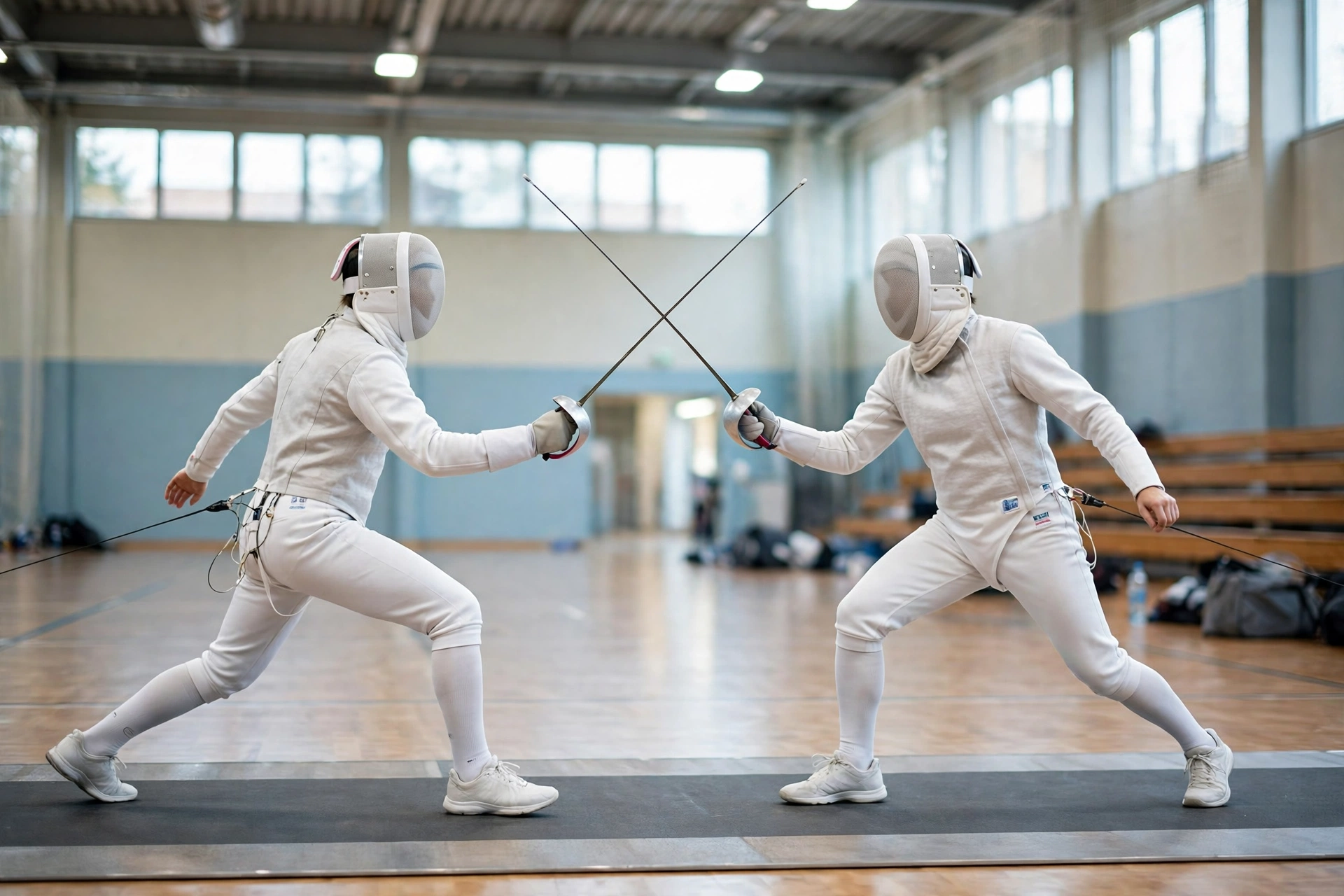
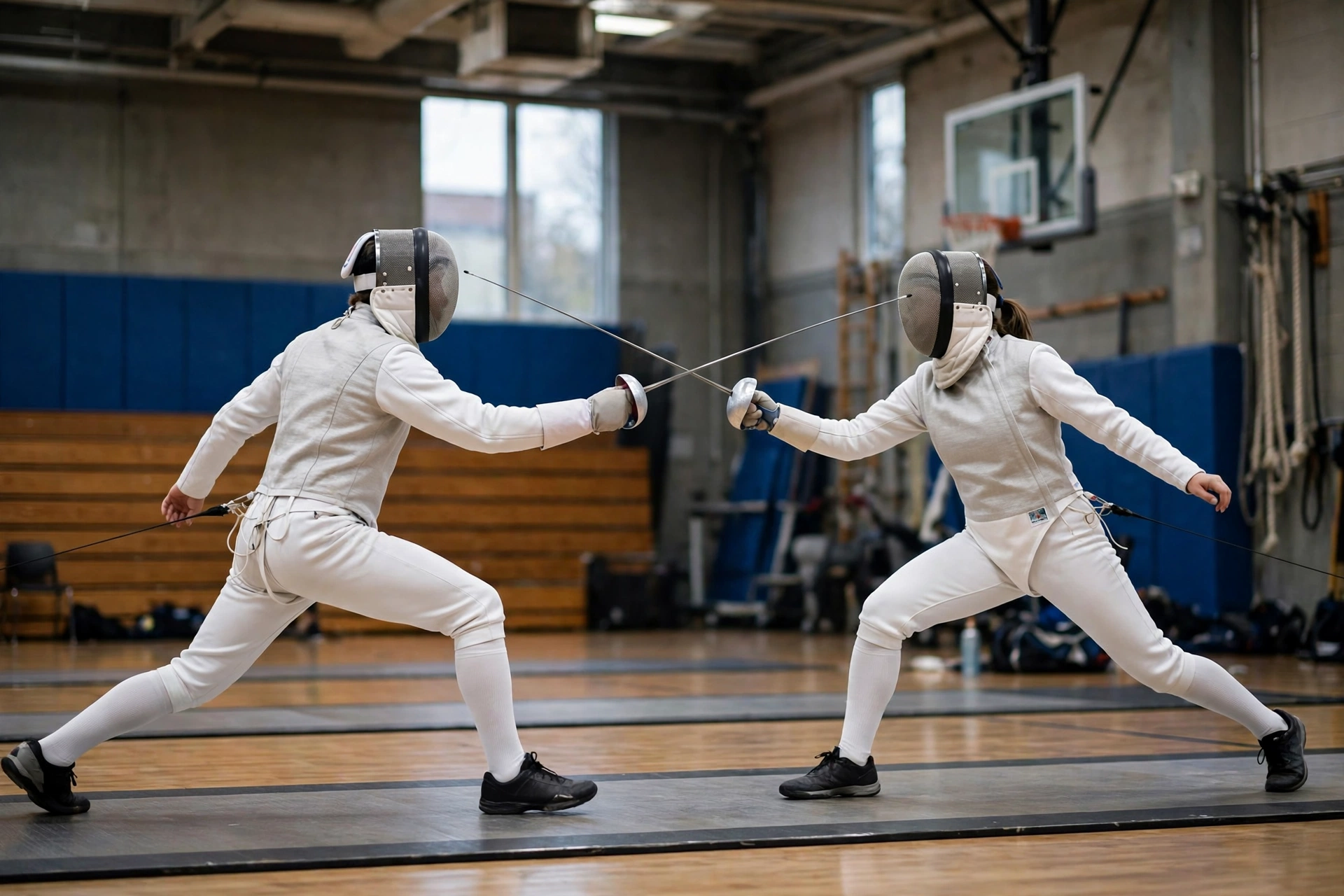
A helmet for fencing is the protective mask worn by a fencer to guard the face, head, and neck from the tip and blade of an opponent’s weapon. In general terms, the fencing mask is the most important piece of safety equipment in the sport, because fencing involves fast thrusts aimed at the body and the head area. Without a mask, even a light touch from a foil, épée, or sabre could cause a serious eye or face injury, so no fencing bout is fought without one.
Fencing looks elegant and controlled, but the weapons move very quickly, and a blade can bend, break, or glance off a guard at unexpected angles. The mask is designed to stop a blade tip, spread the force of a hit, and let the fencer see clearly while staying protected. In general terms, a well-fitting mask gives the fencer the confidence to move, attack, and defend freely, knowing that the face and eyes are guarded. Choosing the right mask, and keeping it in good condition, is part of learning the sport properly.
What is a fencing mask made of?
A fencing mask is usually made from a strong steel mesh at the front, with a padded bib that protects the neck and throat. In general terms, the mesh is fine enough to stop a blade tip, yet open enough to let the fencer see through it clearly. The bib is made from a tough, puncture-resistant fabric that hangs down over the neck and the top of the chest, covering the area below the chin where a blade could slip through.
The back of the mask is often made from a strong fabric or a moulded shell, with an elastic strap or a tongue that holds the mask firmly on the head. In general terms, the inside is padded around the forehead and the sides, so the mask sits comfortably and does not move during a bout. Some masks are made for a specific weapon: a sabre mask, for example, is covered in a conductive material so that hits to the head count in scoring, while a foil or épée mask is not. The construction may vary, but the purpose is always the same — to stop a blade and protect the fencer.
How should a fencing mask fit?
A fencing mask should fit snugly all round, with the mesh sitting a little in front of the face rather than pressing against the nose or forehead. In general terms, the fencer should be able to see clearly in all directions, including to the sides, without the mask shifting when they move. The strap at the back should be fastened firmly, and the bib should lie flat over the neck and chest, with no gaps where a blade could pass through.
The fit should be checked by shaking the head gently and by moving through the fencing stance, the lunge, and the retreat. In general terms, if the mask wobbles, tips forward, or presses on the nose, it is the wrong size or adjusted badly, and it should be changed. A mask that is too large can shift in a bout and leave the face exposed, while one that is too small will be uncomfortable and may restrict vision.
What are the different types of fencing mask?
In general terms, fencing masks are made for the three weapons — foil, épée, and sabre — and the differences are small but important. A foil mask and an épée mask are similar, with a steel mesh front and a padded bib, and they are not conductive, because hits to the head do not score in those weapons. A sabre mask is covered in a conductive material, so that a hit to the mask registers as a valid touch, and it often has a slightly different shape to suit the faster, cutting style of sabre fencing.
There are also differences in the level of protection. In general terms, masks made for competition are built to a higher standard than those made for beginners, with stronger mesh and a more puncture-resistant bib, because competitive fencing is faster and the blades are under more pressure. A beginner can start with a basic mask, but as the fencer’s speed and level rise, a stronger mask becomes worth the investment.
How should a fencing mask be checked and cared for?
A fencing mask should be checked regularly for damage, because a mask that looks fine may have a hidden weakness. In general terms, the fencer should look for bent or broken mesh, loose padding, frayed straps, and wear in the bib, and should check that the mesh has not been pushed inward. A mask that has been hit hard or dropped should be inspected carefully, and any mask with a broken wire or a hole in the mesh should not be used until it is repaired or replaced.
Cleaning is straightforward: the lining can usually be removed and washed, and the mesh can be wiped with a damp cloth and left to dry. In general terms, the mask should be stored in a dry place, away from damp kit bags where rust can form on the mesh, and it should not be crushed under heavy equipment. Some helmets in other sports include a system designed to reduce rotational forces in a fall, such as MIPS, but a fencing mask works differently, relying on its mesh and bib to stop a blade rather than to absorb a fall. The key habit is the same: inspect it often, and do not fence in a mask you would not trust.
Do children need a fencing mask?
Yes, children who fence need a mask just as much as adults, and in general terms they need one that is sized for a child’s head. A mask made for an adult will be too large for a child, and it may shift or leave gaps, so a proper junior size is important. Many fencing clubs keep junior masks for beginners to borrow, and a coach can help a child find the right size before they start fencing.
Children’s masks are made to the same protective standards as adult masks, with a fine mesh and a padded bib, but in a smaller shell. In general terms, a child who is comfortable in their mask will enjoy fencing more and will learn faster, because they are not distracted by a mask that slips or presses. Parents should check the mask regularly as the child grows, since a mask that fitted last season may be too small now. A well-fitting mask is the first step in making fencing safe and enjoyable for a young fencer.
Is a fencing mask the same as a helmet?
In general terms, yes, the fencing mask is the sport’s version of a helmet. It protects the face, head, and neck from blades, and no fencing bout is fought without one.
Can I fence in a mask that is too big?
No, a mask that is too big can shift during a bout and leave the face exposed. In general terms, a fencing mask should fit snugly, sit a little in front of the face, and stay put when the fencer moves.
How often should a fencing mask be replaced?
It should be replaced when the mesh is bent or broken, the bib is worn, or the straps no longer hold it firmly. In general terms, a mask that has been damaged should not be used until it is repaired or replaced.

Olivia
Writer at Helmet Today, covering helmet reviews, fit and riding safety.