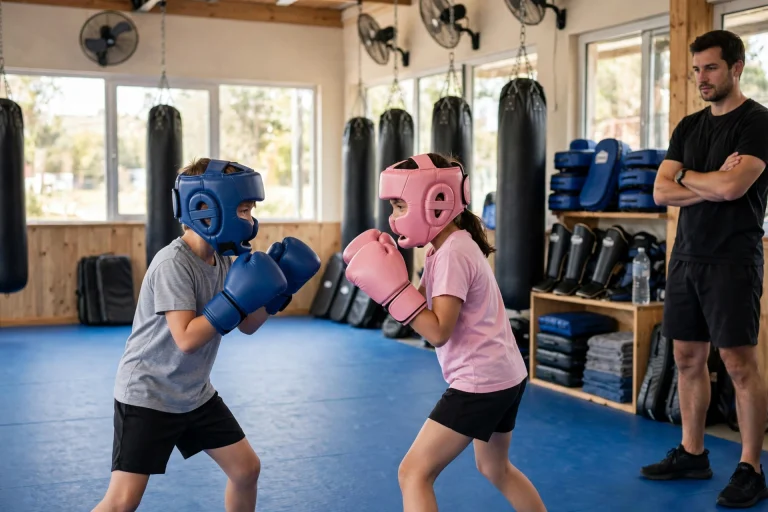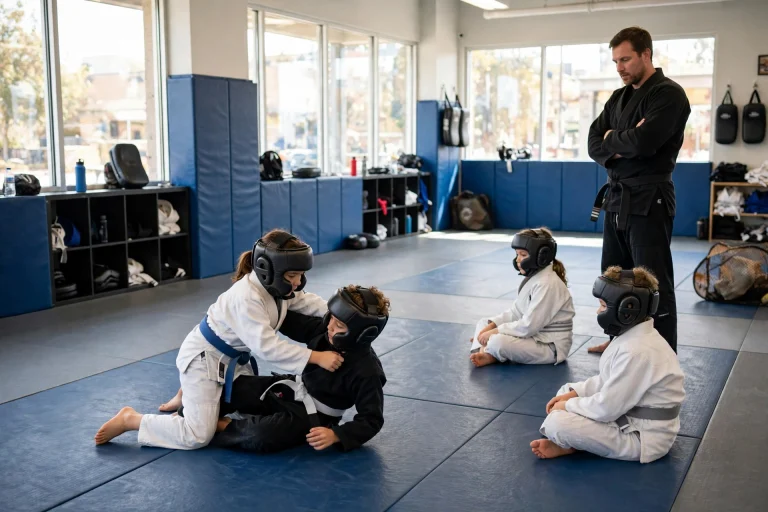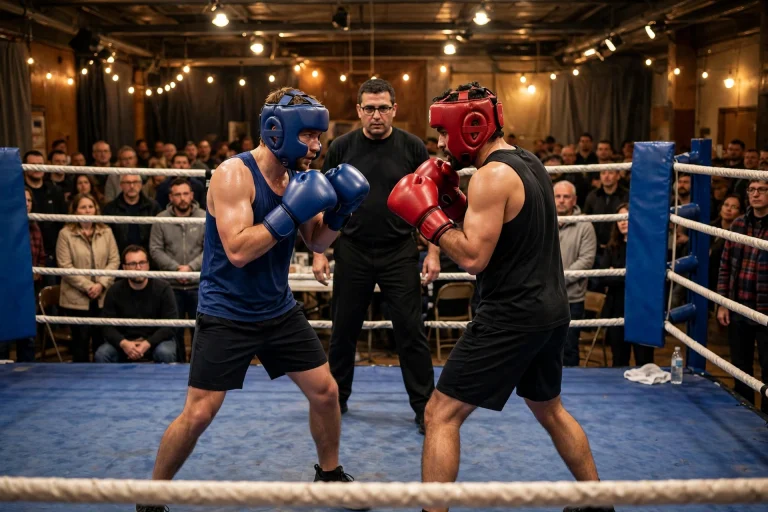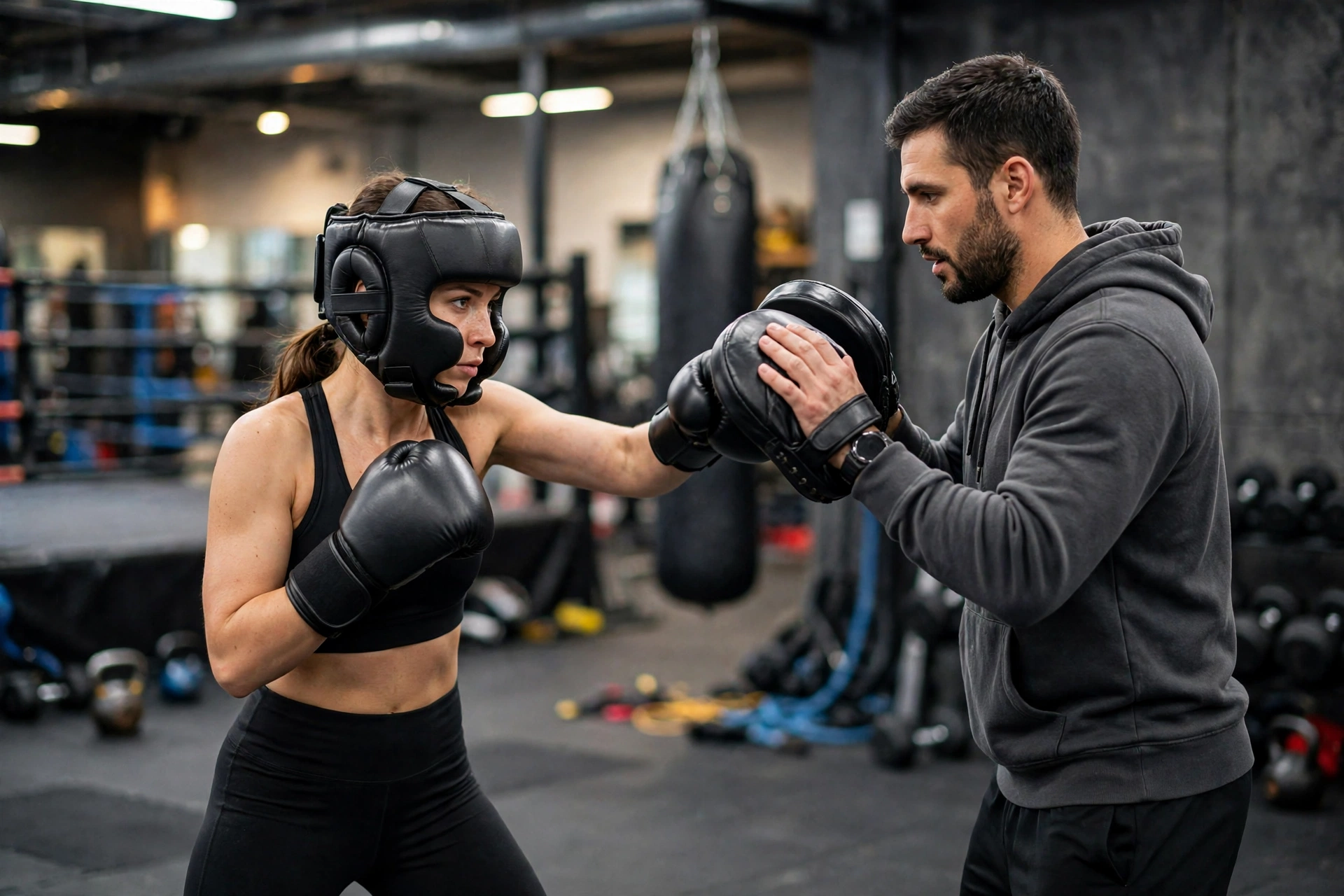
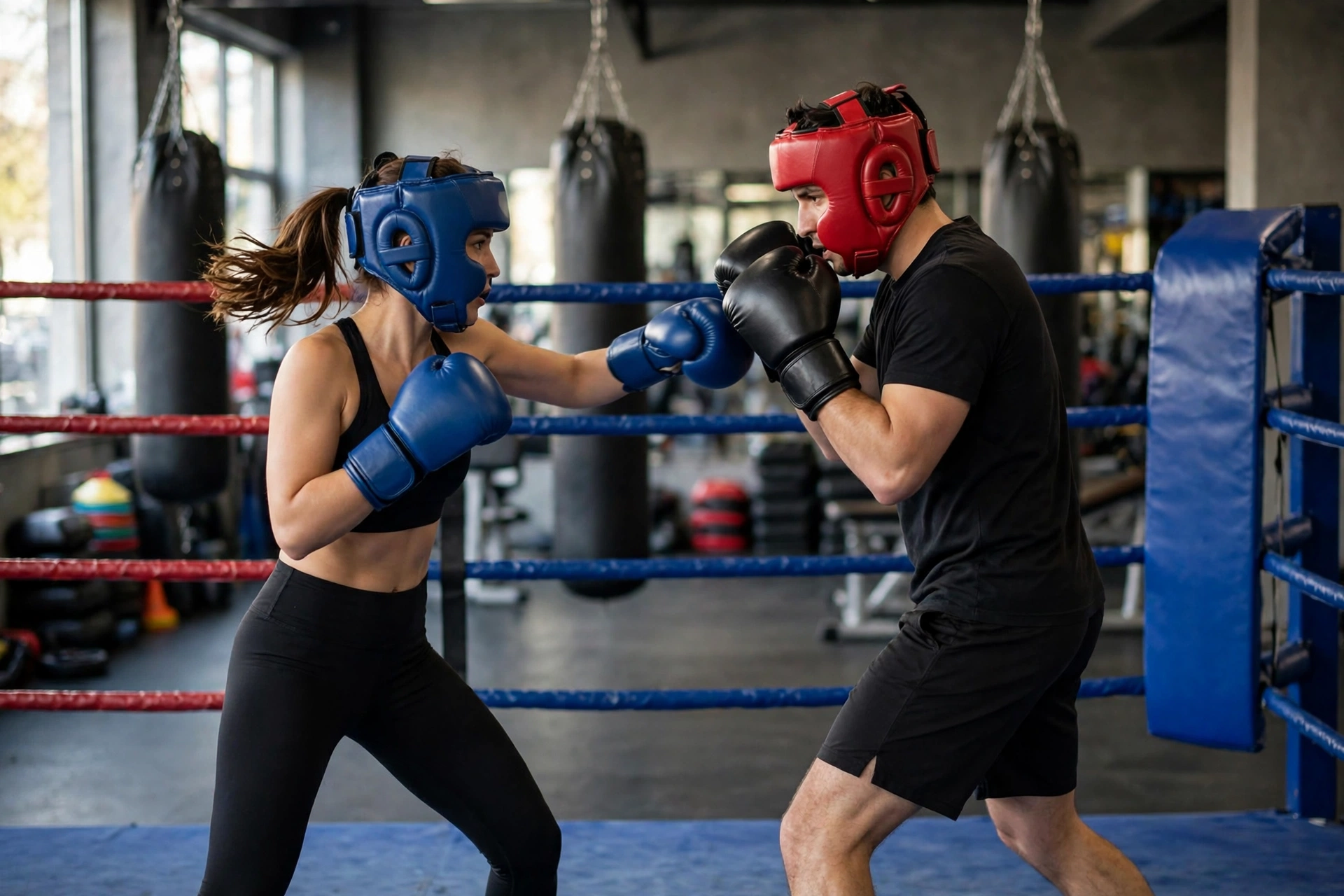
Headgear for women’s boxing classes is protective padded headgear worn to cushion the head during partner drills and light sparring, and in general terms it is the same kind of boxing headgear worn by men, sized and fitted for a woman’s head. It covers the forehead, cheeks, chin, and the back of the head, leaving the eyes, nose, and mouth open so you can see and breathe. It does not make boxing safe on its own, but it reduces cuts, bruises, and friction burns from gloves and head clashes during training.
Most women’s boxing classes are fitness or technique classes, not competitive bouts, so the headgear you need depends on what the class involves. A bag-and-pads class may never need headgear, while a class with partner drills or controlled sparring usually expects you to wear it. Ask your coach before your first session if you are not sure.
What is headgear for women’s boxing classes?
Boxing headgear is a padded guard that fits over the head like a snug cap, with straps under the chin and sometimes a lace or hook-and-loop fastening at the back. It is made from leather or synthetic leather over layers of foam padding, and it is shaped to protect the areas that gloves most often reach: the forehead, the temples, the cheeks, and the chin. The padding spreads the force of a punch over a wider area, which is why glancing blows and light contact feel softer with headgear on.
In general terms, headgear for women’s boxing classes is not a separate product category with its own design. Brands sell headgear in sizes, and women usually wear the smaller sizes, sometimes with a slimmer cheek profile or a lighter build. Some makers market headgear aimed at women, but the protection it offers is the same idea: padding around the head, a secure fit, and a clear line of sight. What matters most is the fit and the coverage, not the label on the box.
Do you need headgear for a women’s boxing class?
You need headgear if your class includes partner work or sparring, even light sparring. Coaches usually require it for any session where gloves are thrown at a partner, because even controlled punches can cause cuts around the eyes and bruising on the cheeks. If your class is only bag work, pads, shadow boxing, and conditioning, headgear is usually not needed.
The best guide is your coach’s rule for the class. Some gyms lend headgear to beginners, so you can try a session before buying your own. If you plan to spar regularly, owning your own headgear is worth it, because shared headgear is sweaty, worn, and often a poor fit. Bring your own hand wraps and gloves too, and check whether your gym has rules about headgear style, such as open-face or full-face, before you buy.
How should boxing headgear fit a woman?
Boxing headgear should fit snugly all round, without pressing hard on the forehead or squeezing the temples. It should sit low enough to cover the forehead and cheeks, and it should stay in place when you move your head quickly or take a light tap. If it slides over your eyes when you duck, it is too loose, and if it gives you a headache after a few minutes, it is too tight. Try it on with your hair tied the way you will wear it in class, because a bun or braid changes the fit.
Check the chin strap and the back fastening before you buy. The strap should hold the headgear firmly without digging into your chin, and the back should close securely so the headgear cannot twist. Many women find that a smaller size with an adjustable back fits better than a one-size option. Ask to try a few sizes with your gloves on, so you can check your vision and breathing with the headgear in place.
What types of boxing headgear are there?
Open-face headgear is the most common type in boxing classes. It protects the forehead, cheeks, and chin but leaves the face open, so your vision is clear and your breathing is easy. It is a good choice for beginners and for light sparring, because you can see punches coming and move out of the way. The trade-off is that the nose and the front of the face are less protected than with other styles.
Full-face headgear adds a bar or extra padding across the nose and cheeks, and cheek-protection headgear has thicker padding over the cheekbones. These styles suit harder sparring and people who bruise easily, but they can narrow your vision and feel heavier. In general terms, start with open-face headgear for a class setting and only move to fuller coverage if your coach suggests it.
What should you look for when buying headgear?
Look first at the fit and the padding. The foam should feel firm and even, with no thin spots over the forehead or cheeks, and the lining should be smooth against your skin. Leather headgear tends to last longer, while synthetic headgear is usually cheaper and easier to wipe clean. Either is fine for a class, as long as the stitching is strong and the straps hold firmly.
Comfort matters as much as protection, because headgear you hate wearing will end up left in your bag. Check that you can breathe easily and see clearly to the sides, and that the headgear does not press on your ears. Some headgear includes a system designed to reduce rotational forces in a fall or impact, such as MIPS, and it is worth asking about if you are comparing models. Try the headgear on before you buy when you can, and keep the receipt in case the fit feels wrong after a full session.
How do you look after boxing headgear?
Boxing headgear gets sweaty, so air it out after every class. Wipe the inside with a damp cloth, leave it open somewhere well ventilated, and let it dry fully before you pack it away. Do not leave it in a hot car or on a radiator, as heat can damage the foam and the outer material over time.
Check the headgear regularly for worn stitching, flattened padding, or straps that no longer hold. In general terms, headgear with compressed or cracked foam protects less well and should be replaced, even if the outside still looks fine. The same applies after a very hard knock, or if the fit has loosened so much that it shifts during training. Store it somewhere dry, away from direct sun, and keep it out of your kit bag between sessions so it can breathe.
Can beginners wear headgear in a women’s boxing class?
Yes, beginners can wear headgear, and coaches often recommend it for the first partner drills. It helps you get used to contact gradually, and it protects against the accidental bumps that are common while you are still learning distance and timing.
Does headgear stop concussion?
No, headgear does not stop concussion. It reduces cuts and bruising and softens light contact, but it cannot remove the force of a hard punch to the head. Good coaching, controlled sparring, and stopping when you feel unwell matter far more than any headgear.
Can you wear glasses under boxing headgear?
In general terms, no, glasses should not be worn under boxing headgear during partner work or sparring. They can break and injure your eyes, and they do not fit well under the padding. Ask your coach about contact lenses or training without glasses if your vision is poor.

Olivia
Writer at Helmet Today, covering helmet reviews, fit and riding safety.