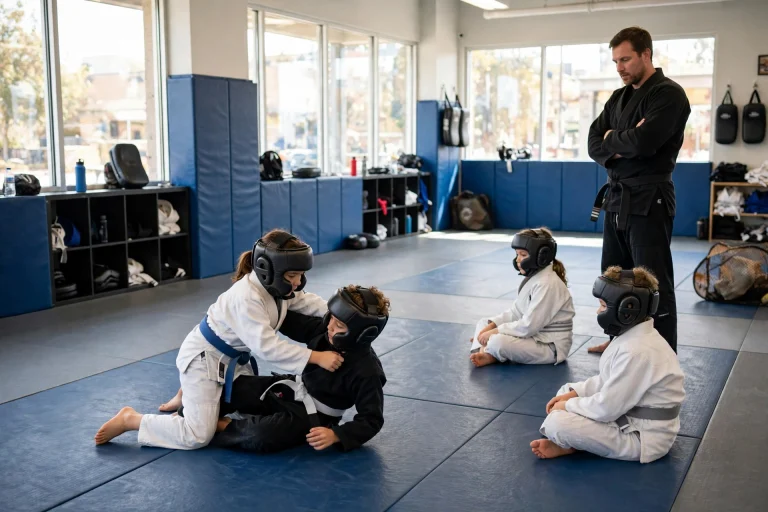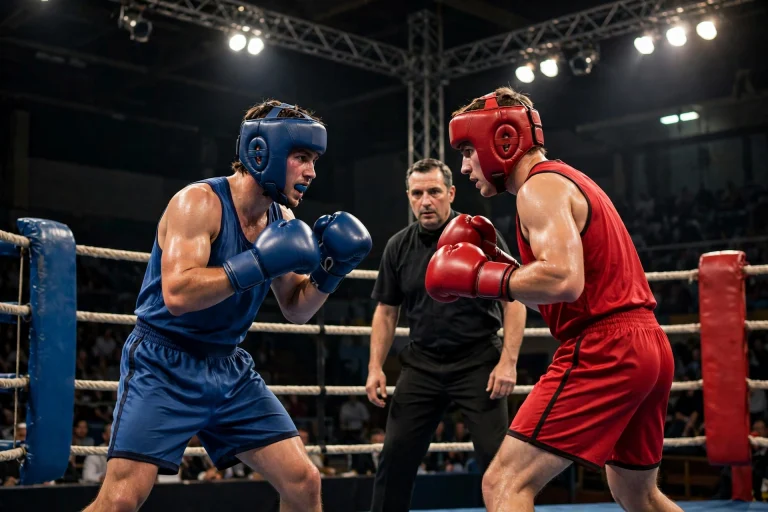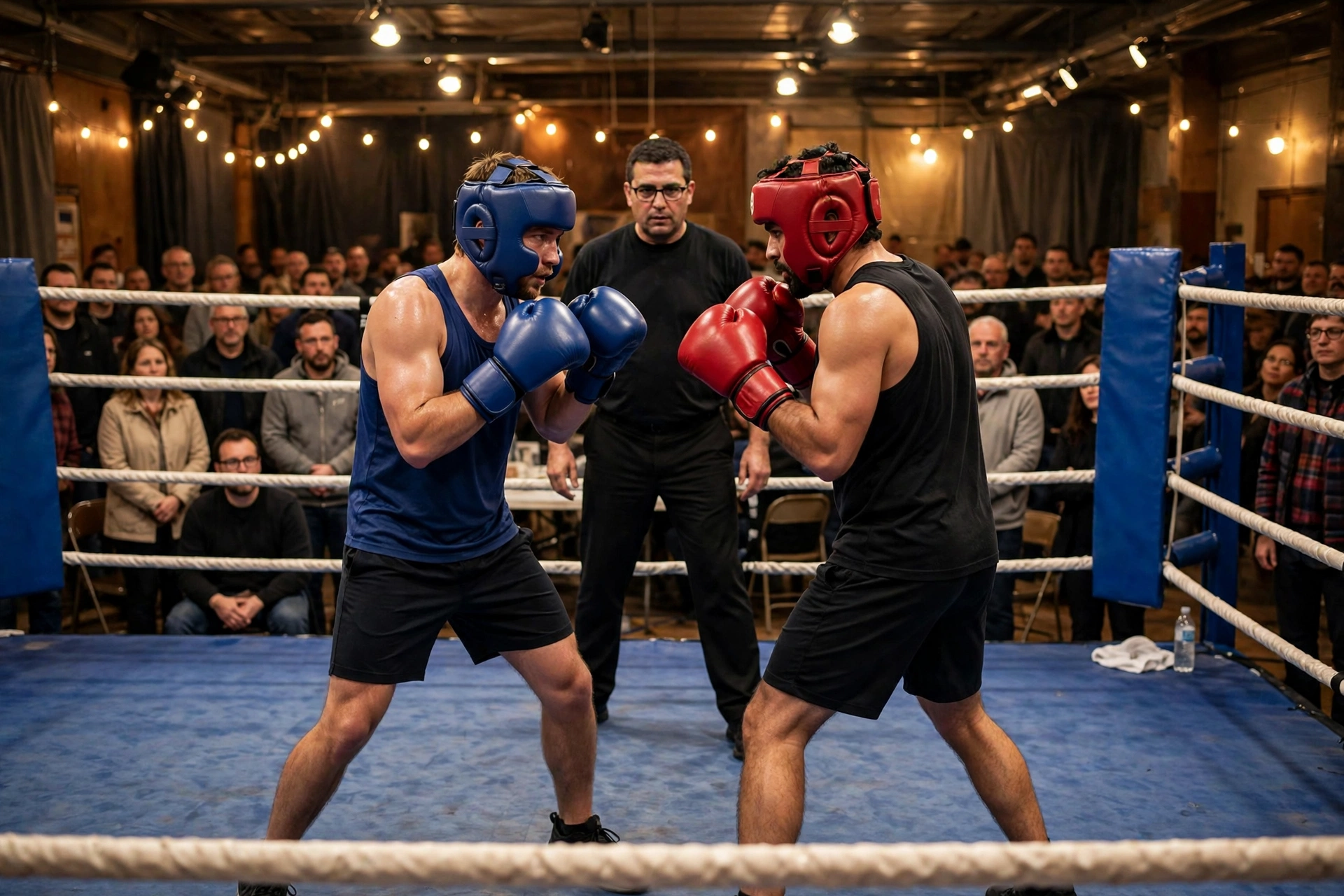
Headgear for white-collar boxing is protective headgear worn in white-collar boxing bouts, where office workers, beginners, and first-time boxers compete in charity and club events after a short period of training. It is padded headgear that guards the head, ears, and cheeks from punches during a bout. White-collar boxing is aimed at people with no prior boxing experience, so safety kit matters more than ever. Headgear helps newcomers step into the ring with a useful layer of protection while they are still learning the sport.
What Is White-Collar Boxing?
White-collar boxing is a form of amateur boxing for people who do not box as a sport, usually office workers and other beginners who train for a few weeks or months and then take part in a single bout, often to raise money for charity. The name comes from the white-collar jobs many of the first participants held, though today anyone new to boxing can take part. Bouts are usually short, with fewer rounds than a standard amateur fight.
Because the boxers are beginners, white-collar events put a strong focus on safety. Bouts are matched carefully so that the two boxers are of a similar size and experience, referees watch closely, and protective kit is taken seriously. Headgear is a normal part of that kit, along with gloves, a mouthguard, and hand wraps, and it is often required by the event organisers.
What Headgear Is Used for White-Collar Boxing?
The headgear used for white-collar boxing is much the same as amateur competition headgear: thick foam padding over the forehead, temples, cheeks, ears, and the back of the head, with an open face so the boxer can see and breathe clearly. It fastens with laces or straps at the back and a chin strap, and it is sized to fit the individual boxer. Many events supply headgear, so a first-time boxer may not need to buy their own.
Some white-collar events use headgear with a cheek bar or a nose bar for extra protection, which suits beginners who are more likely to take a punch they did not see coming. If you want to understand one of the safety technologies used in modern helmets, reading about what MIPS is for helmets is a good place to start, though boxing headgear relies on thick foam padding rather than that system. What matters most is that the headgear fits well, meets the event’s rules, and is in good condition on the night.
How Should White-Collar Boxing Headgear Fit?
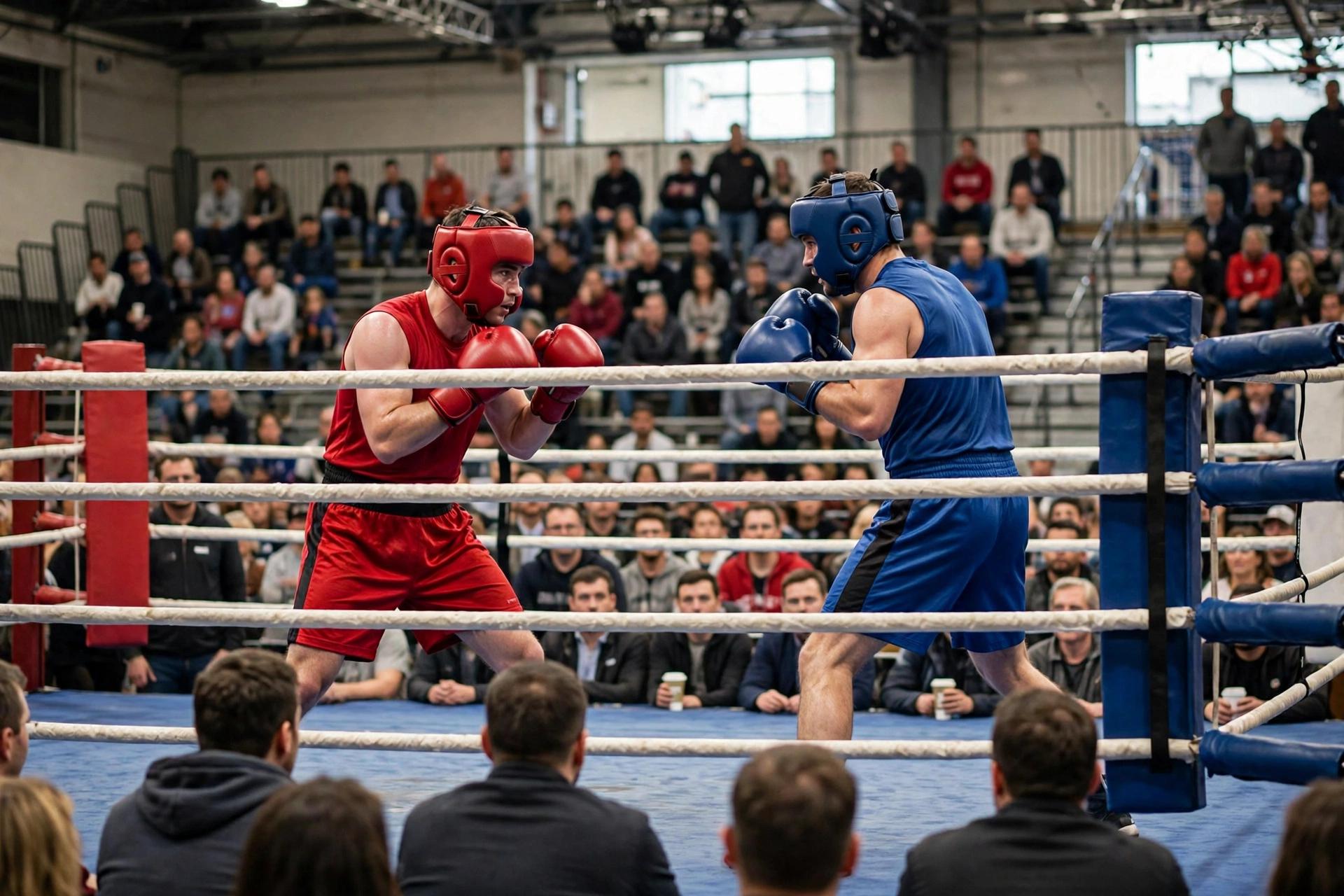
White-collar boxing headgear should fit snugly all round the head, with the padding in contact with the forehead, the temples, and the back of the head. It should sit level, with the eye opening lined up so the boxer can see clearly in every direction, including upward and to the sides. The cheek padding should sit close to the face without pressing on the eyes or blocking the view of incoming punches.
The fastenings should be secure enough that the headgear does not shift when a punch lands. Laces at the back should be tied firmly, and the chin strap should be snug but not so tight that it makes breathing or swallowing hard. A beginner should try the headgear on during training, with a mouthguard in place, so that the fit can be sorted out well before the night of the bout.
Is Headgear Required for White-Collar Boxing?
In most white-collar boxing events, headgear is required, because the boxers are beginners and the organisers want to keep the risk of cuts and bruises as low as possible. The rules of the event usually state plainly what headgear must be worn, and the referee or an official may check the headgear before the bout begins. A boxer who turns up without the right headgear may not be allowed to fight.
Some events have their own kit rules that go further than standard amateur boxing, for example by requiring a particular style of headgear or by supplying all the headgear themselves so that everyone wears the same kind. In general terms, it is worth asking the organisers early what is needed, rather than assuming, since the rules can differ from one event to another.
How Do You Look After White-Collar Boxing Headgear?
White-collar boxing headgear should be wiped down after every training session and after the bout, to remove sweat and dirt. A damp cloth with mild soap is usually enough for the outer covering, and the inside should be wiped too, then left to air dry away from direct heat. Letting the headgear dry fully before putting it away helps prevent odours and keeps the foam in good shape.
Check the headgear before each use for wear. Look for split seams, torn covering, flattened padding, or laces and straps that no longer hold firmly. Headgear that is shared between boxers at an event should be wiped down between users when possible. A headgear that is looked after will stay comfortable and protective, but it should be taken out of use once the padding has gone flat.
What Should a Beginner Know Before a White-Collar Bout?
A beginner should know that headgear helps, but it does not make boxing risk-free. It reduces cuts and bruises and softens glancing blows, yet a hard punch can still hurt and can still cause a head injury. Good defence, keeping the guard up, and listening to the coach matter just as much as the headgear. A beginner who understands this will box more carefully and enjoy the bout more.
It is also worth knowing that the bout will feel very different from training. The lights, the crowd, and the nerves can make a first-time boxer forget their technique, so the training in the weeks before the bout should include wearing the headgear, the gloves, and the mouthguard together. In general terms, a beginner who has trained in the same kit they will fight in will feel far more at ease on the night.
Do I need to buy my own headgear for white-collar boxing?
Often not. Many white-collar events supply headgear for the bout, though some boxers prefer to buy their own so they can train in it first. It is worth asking the organisers what they provide before spending money on kit.
Does white-collar boxing headgear stop concussion?
No. Headgear reduces cuts and bruises and can soften glancing blows, but it does not remove the risk of concussion or other head injury from a hard punch. Careful matching, good refereeing, and medical cover at the event matter just as much.
How long do you train before a white-collar bout?
Most white-collar programmes run for around eight to twelve weeks, in general terms, with several training sessions each week. The exact length differs by event, so it is worth checking with the organisers, but the training should cover fitness, footwork, defence, and sparring in full kit.

Olivia
Writer at Helmet Today, covering helmet reviews, fit and riding safety.