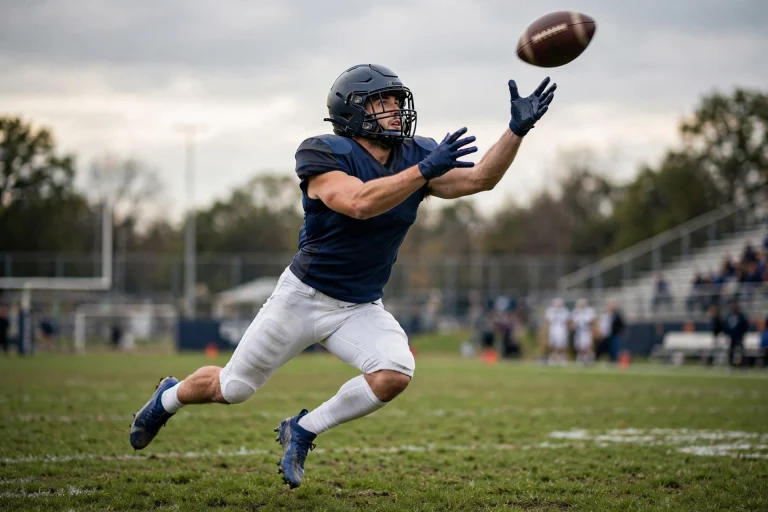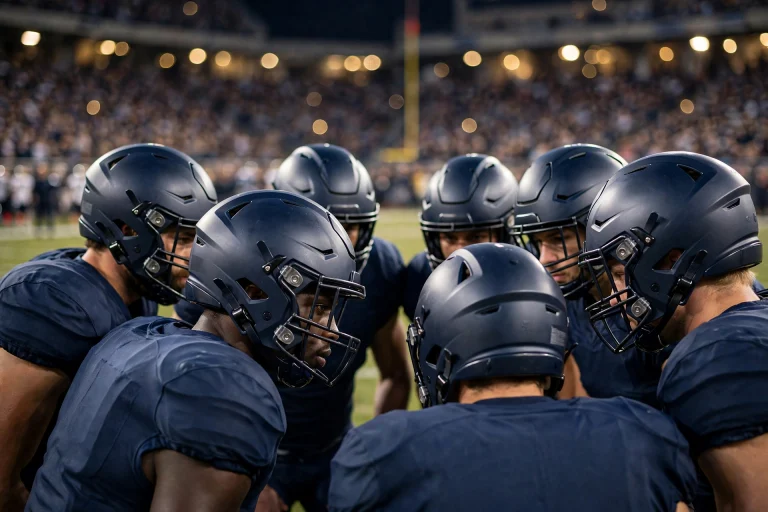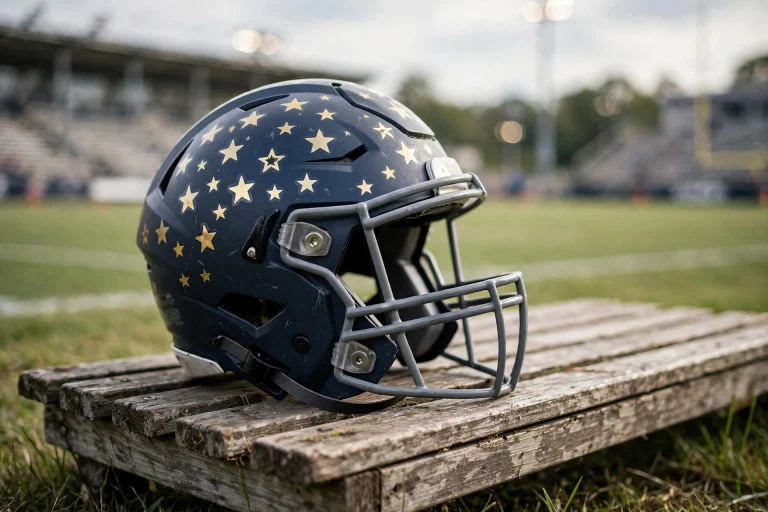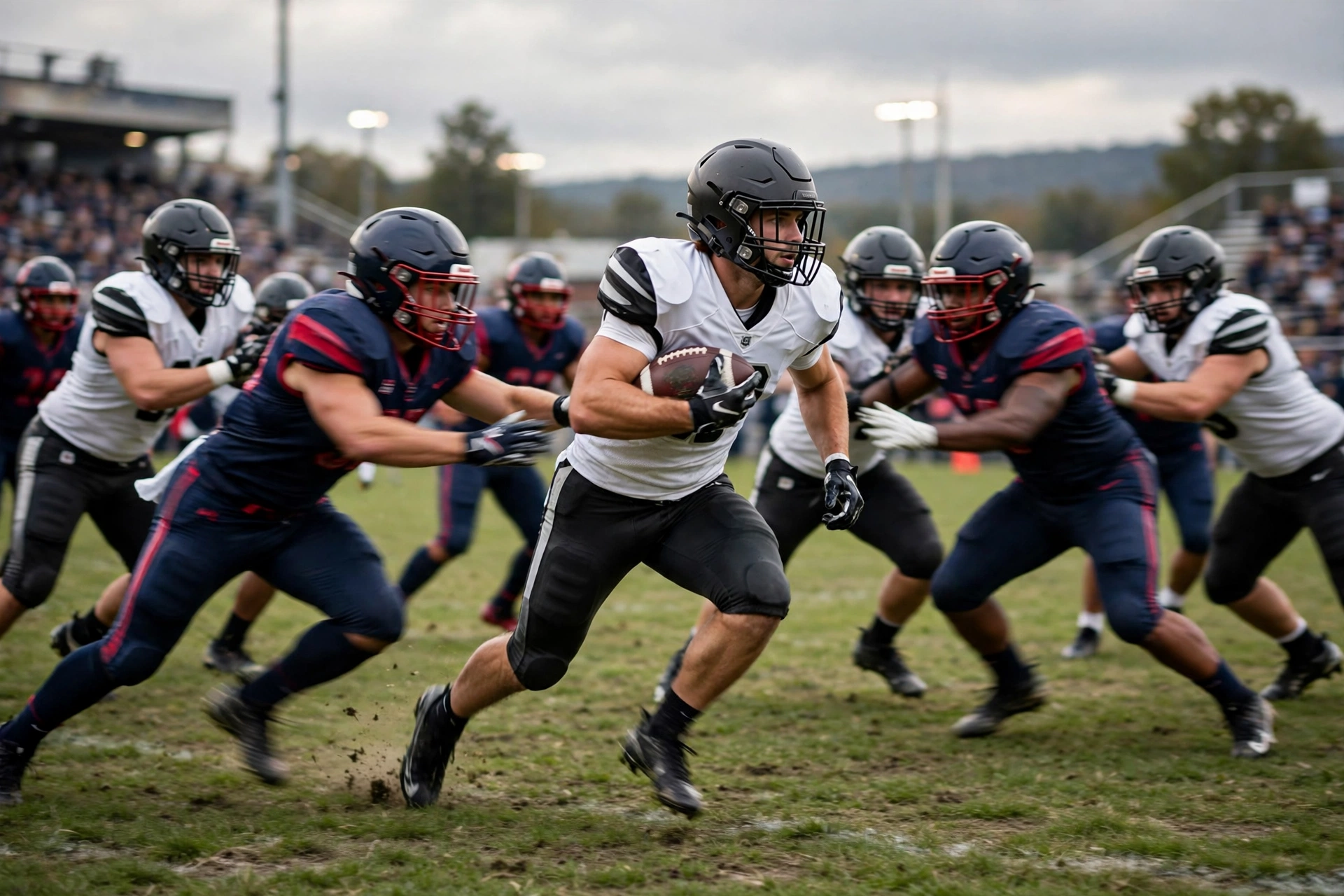
A football helmet for running backs is a standard American football helmet, chosen for a running back’s role: strong protection for a player who takes frequent hits while carrying the ball, with a facemask and fit suited to running through traffic. Running backs are tackled on most plays, often by more than one defender, so their helmet needs to stay secure through contact, protect the front and sides of the head, and still allow the clear vision needed to find a gap in the line.
There is no separate helmet made only for running backs. Players at this position wear the same certified football helmets as other skill players, but they tend to choose models and facemasks that suit how they play. A running back runs low, protects the ball, and takes hits from the front and the side, so the fit, the facemask style, and the way the helmet handles repeated contact all matter more than the brand name on the shell.
What does a running back’s helmet need to do?
A running back’s helmet needs to protect the head through repeated tackles, which is the core of the position. On most running plays the back takes the handoff, hits the line, and is brought down by defenders, sometimes with a helmet-to-helmet clash or a hard fall to the ground. The helmet’s shell and padding spread that force, and the chin strap and fit keep it in place so it can do its job on the next play as well as the first.
In general terms, the helmet also needs to stay comfortable for a full game. Running backs run, block, and catch, so they are moving on almost every snap. A helmet that is heavy, hot, or loose becomes a distraction, and a helmet that shifts on contact leaves the head less protected. Good ventilation, a secure fit, and padding that holds its shape through a season are what coaches look for when they fit a running back.
What kind of facemask do running backs wear?
Running backs usually wear a facemask with enough bars to protect the face without blocking their vision. A common choice is a mask with a horizontal bar across the eyes and bars that guard the chin and jaw, giving protection against fingers and facemask grabs while keeping the view of the field open. The exact style varies by player and by level of play, and some backs prefer a slightly more open mask for a wider view of the line.
The facemask also needs to be strong enough for the position, because running backs take contact to the face area more often than players who rarely carry the ball. Check that the mask is attached firmly, with no bent bars or loose clips, and that it sits far enough from the face to give room without pressing on the nose or chin. If a mask is bent in a game, it should be checked or replaced before the next play, because a damaged mask can fail when it is needed.
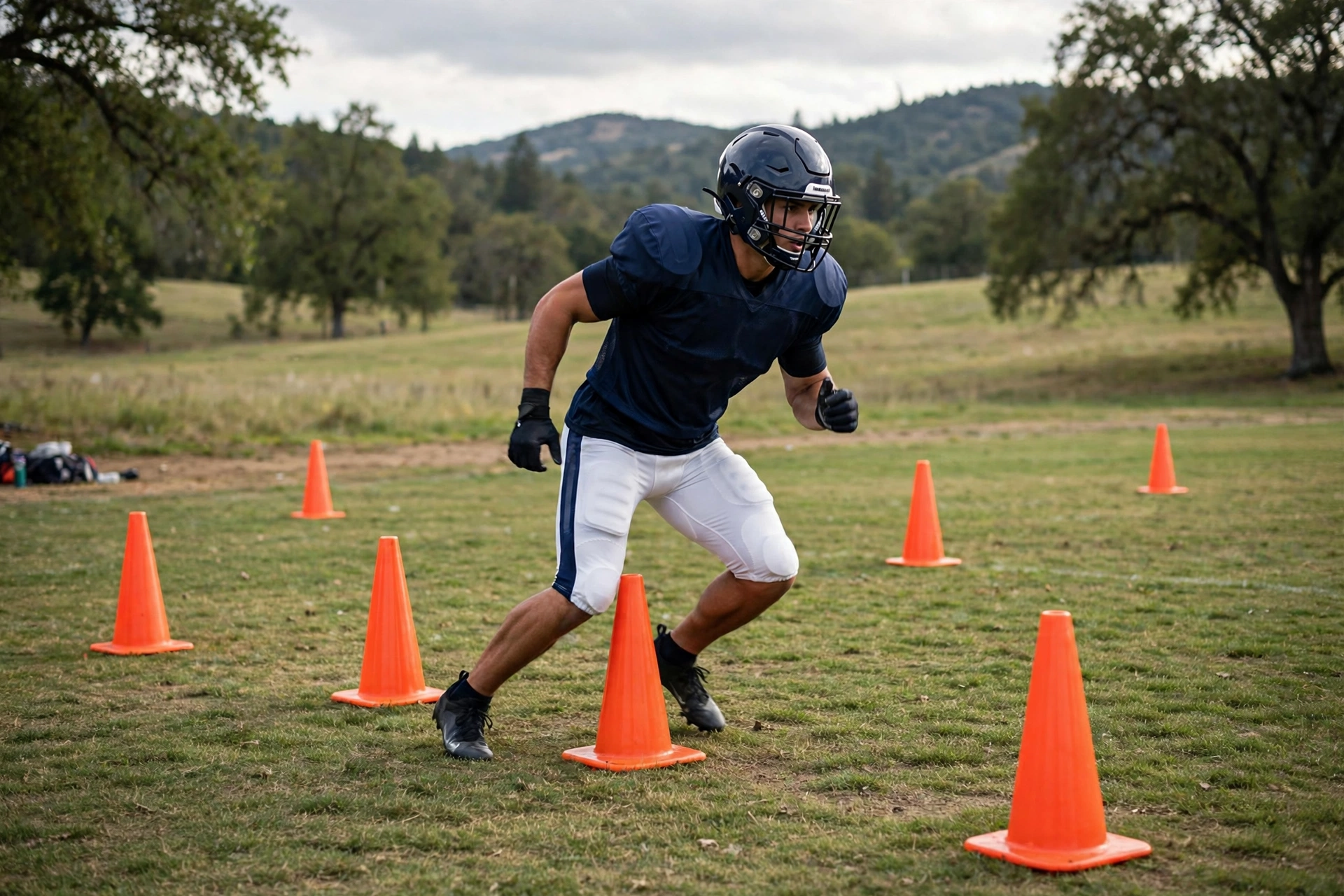
How should a running back’s helmet fit?
A running back’s helmet should fit snugly all round, sitting level on the head and low enough at the front to protect the forehead. It should not tip forward over the eyes or slide back when the player nods, and it should stay put when the player shakes their head hard. The fit is best checked with the chin strap fastened and the pads in place, because a helmet that feels fine loose in the hands can feel very different on the head.
The chin strap should be snug, with the cup sitting firmly under the chin, and the jaw pads should touch the cheeks evenly on both sides. If there is a gap on one side, the helmet is the wrong size or shape for that player. Running backs should be fitted by someone who knows the model, and the fit should be rechecked during the season, because padding compresses and heads grow, especially in younger players. A helmet that fitted in August may not fit the same way in October.
What features matter for a running back’s helmet?
Padding is the feature that matters most for a running back, because it manages the repeated contact of the position. Modern football helmets use foam or air-filled padding systems that absorb impact and can be adjusted for fit, and some use liners designed to manage rotational forces as well. Some helmets include a system designed to reduce rotational forces in a fall or impact, such as MIPS, and it is worth asking about when comparing models. The key is padding that stays firm through the season and does not flatten out after a few hard games.
Weight and ventilation matter too. A lighter helmet is easier to wear for four quarters, and good airflow keeps the player cooler on a warm day. The shell should be free of cracks and damage, and the hardware — clips, screws, and the chin strap — should be in good working order. Some players like a visor for sun and glare, but visors are an extra, and the rules of the league decide whether one is allowed, so check before adding one.
When should a running back replace their helmet?
A running back should replace their helmet after a hard hit that leaves a crack, a dent, or a loose part, or if the padding has gone soft or compressed. In general terms, a helmet that has taken a heavy knock should be checked by the equipment staff, even if it looks fine on the outside, because damage inside the shell or padding is not always visible. Many teams recondition helmets each season, checking the shell, the padding, and the hardware before the helmet goes back into use.
Age matters as well. Helmets have a working life set by the maker, and older helmets may no longer meet the standard they were made to, even if they look sound. Coaches and equipment managers track the age and condition of each helmet, and players should report any helmet that feels loose, rattles, or has a strap that will not stay fastened. When in doubt, take the helmet out of play and get it checked rather than risking another game in it.
How do running backs look after their helmet?
After a game, wipe the shell with a damp cloth, take out the padding if it can be removed, and let everything dry naturally away from direct heat. Do not leave the helmet in a hot car, as heat can damage the padding and the shell over time.
Check the helmet after every game for cracks, loose hardware, and worn straps, and report damage to the equipment staff straight away. A helmet that is looked after lasts longer and fits better.
Do running backs wear a different helmet from other players?
No, running backs wear the same certified football helmets as other players, but they often choose a facemask and fit suited to carrying the ball and taking tackles. The position shapes the choice, not the helmet itself.
Can a running back wear a visor?
In general terms, yes, if the league allows it. A clear or tinted visor can help with sun and glare, but it must be fitted correctly and allowed by the rules of the competition. Check with your coach before adding one.
How often should a running back’s helmet be checked?
It should be checked before every game and practice for cracks, loose hardware, and strap wear, and given a full check by equipment staff at least once a season. Report any damage straight away, rather than waiting for the next check.

Olivia
Writer at Helmet Today, covering helmet reviews, fit and riding safety.