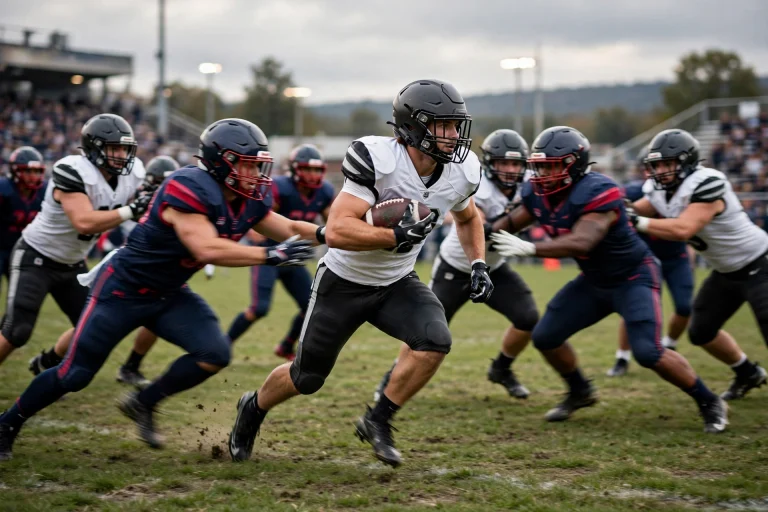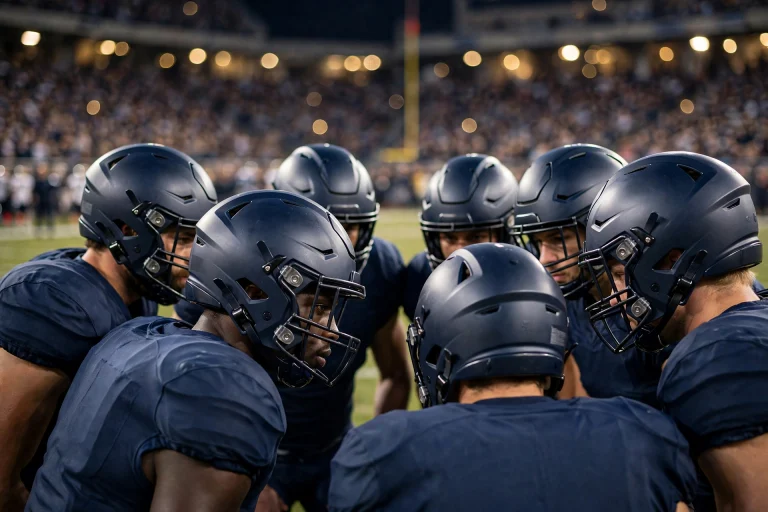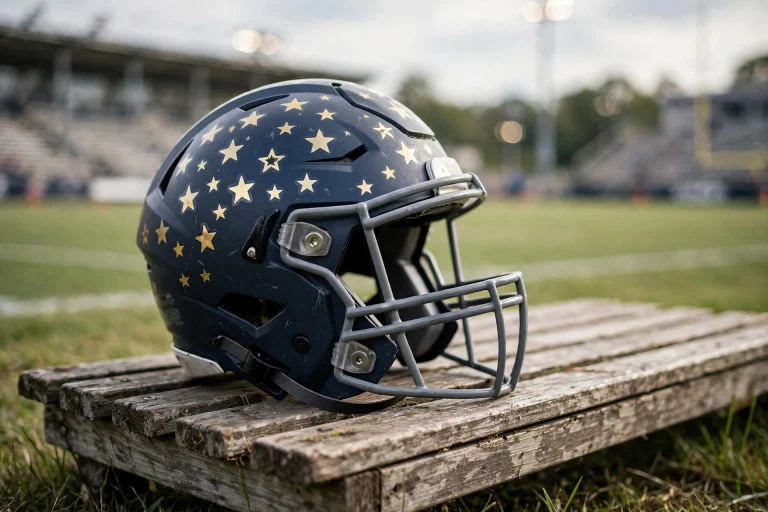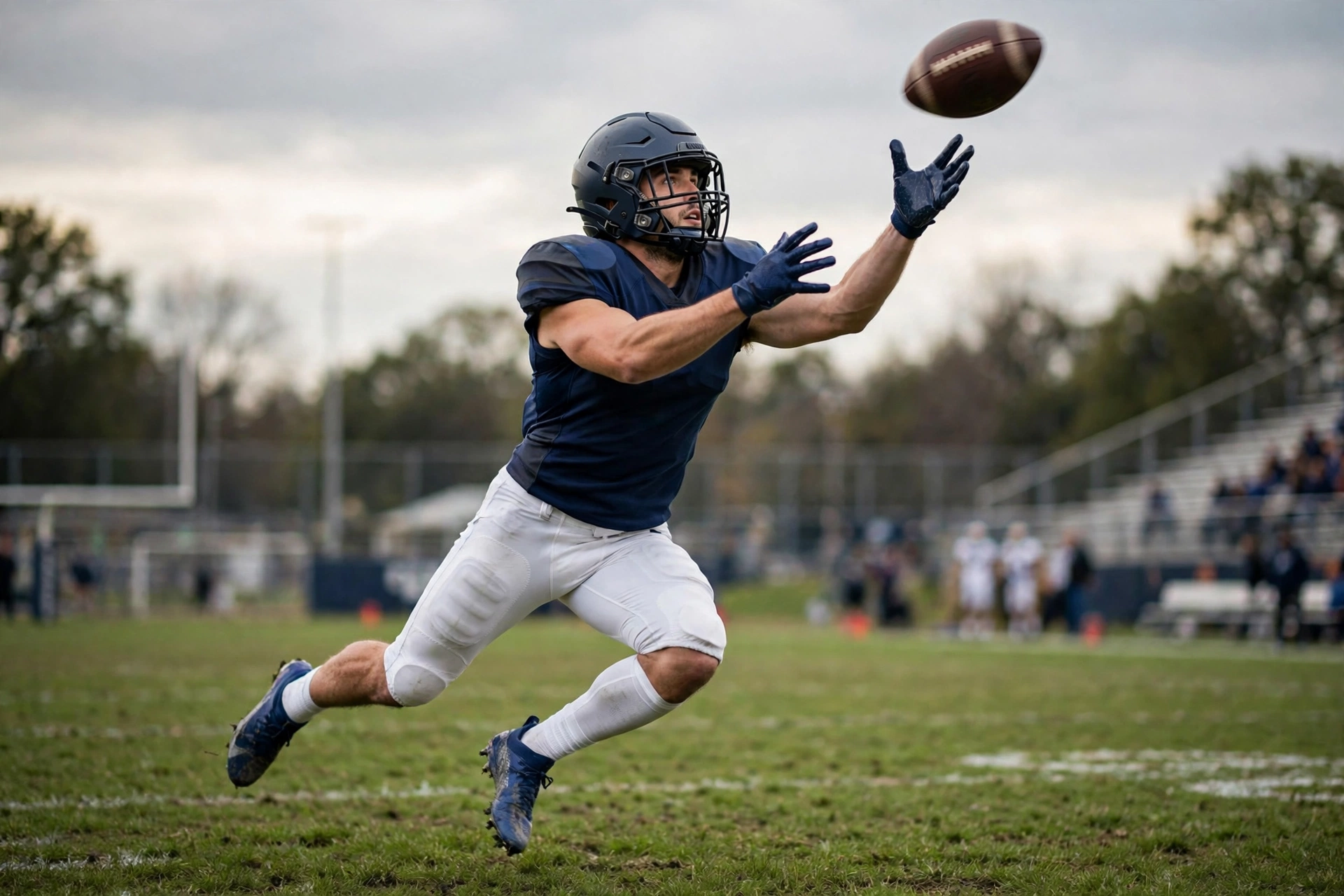
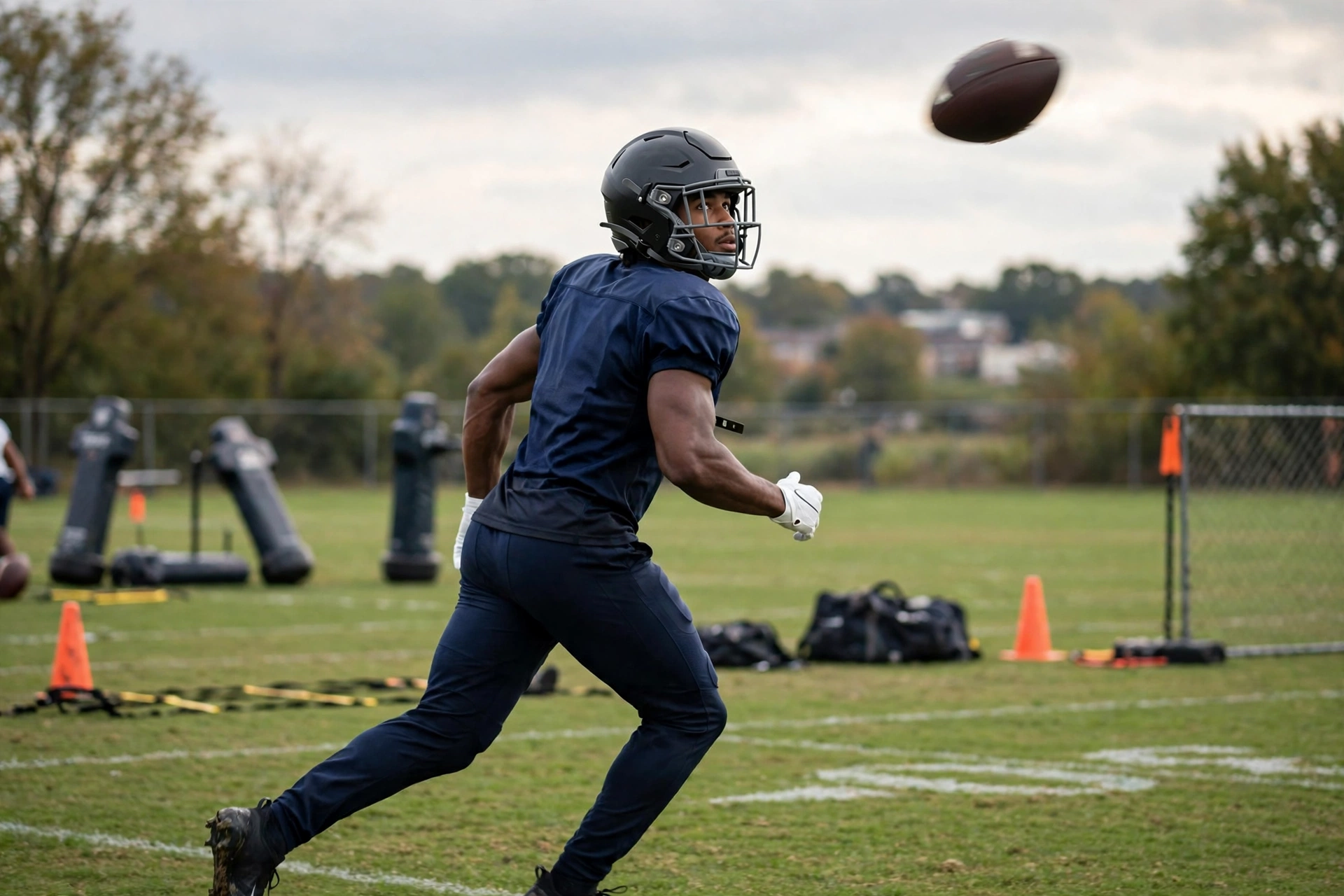
A football helmet for wide receivers is a standard American football helmet, chosen for a receiver’s role: light, well-ventilated protection that stays secure at full speed and leaves the vision clear to track the ball in the air. Wide receivers sprint downfield, jump for catches, and are often hit just as the ball arrives, so their helmet needs to protect the head through that contact without narrowing the view of the ball or slowing the player down.
There is no separate helmet made only for wide receivers. Players at this position wear the same certified football helmets as other skill players, but they tend to favour models that feel light and open, with a facemask that keeps the view wide. A receiver’s eyes are on the ball from the snap to the catch, so anything that blocks the edges of their vision or adds weight they do not need is a poor choice for the position.
What does a wide receiver’s helmet need to do?
A wide receiver’s helmet needs to protect the head during high-speed plays, especially the moment of the catch. Receivers are often hit by a defender while they are in the air or just after they secure the ball, and they can be driven hard to the ground. The helmet’s shell and padding spread that force, and a secure fit keeps the helmet in place so it can protect the head through the fall as well as the hit.
In general terms, the helmet also needs to work with the rest of the receiver’s game. Receivers run routes, change direction sharply, and jump, so the helmet should feel balanced and stable rather than heavy at the front. A helmet that bounces or shifts when the player cuts will distract them at the worst moment — when the ball is in the air. Good ventilation matters too, because receivers cover a lot of ground over a game.
What kind of facemask do wide receivers wear?
Wide receivers usually wear a fairly open facemask, with bars arranged to protect the face while keeping the view of the ball as wide as possible. A common choice has a horizontal bar across the eyes and lower bars that guard the chin, leaving the upper view open so the receiver can track a pass over their shoulder or above their head. Some receivers prefer an even more open mask, trading a little protection for a clearer view.
The facemask still needs to be strong, because receivers take contact to the face area on tackles and when they fight for a contested catch. Check that the mask is attached firmly, with no bent bars or loose clips, and that it sits far enough from the face to give room without pressing on the nose. If a mask is bent during a game, it should be checked before the next play, because a damaged mask can fail or cut the player when it is hit again.
How should a wide receiver’s helmet fit?
A wide receiver’s helmet should fit snugly all round, sitting level on the head and low enough at the front to protect the forehead. It should not tip forward over the eyes when the player jumps, and it should not slide back when they look up for a high pass. The fit is best checked with the chin strap fastened and the player moving — nodding, shaking their head, and looking up — because a helmet that feels fine standing still can shift at speed.
The chin strap should be snug, with the cup sitting firmly under the chin, and the jaw pads should touch the cheeks evenly on both sides. If there is a gap on one side, the helmet is the wrong size or shape for that player. Receivers should be fitted by someone who knows the model, and the fit should be rechecked during the season, because padding compresses and heads grow, especially in younger players. A helmet that fitted at the start of the season may need adjusting by mid-season.
What features matter for a wide receiver’s helmet?
Weight and vision are the features that matter most for a wide receiver. A lighter helmet is easier to wear through a full game of sprinting and jumping, and a facemask that keeps the view open helps the receiver track the ball. Padding still matters — the helmet must handle the hits that come with the position — so look for padding that stays firm through the season and a liner that manages impact well. Some helmets include a system designed to reduce rotational forces in a fall or impact, such as MIPS, and it is worth asking about when comparing models.
Ventilation is also important, because receivers run hard on most plays and build up heat quickly. Vents that let air flow through the helmet help the player stay comfortable and focused. The shell should be free of cracks and damage, and the hardware — clips, screws, and the chin strap — should be in good working order. Some receivers like a visor for sun and glare, but the rules of the league decide whether one is allowed, so check before adding one.
When should a wide receiver replace their helmet?
A wide receiver should replace their helmet after a hard hit that leaves a crack, a dent, or a loose part, or if the padding has gone soft or compressed. In general terms, a helmet that has taken a heavy knock should be checked by the equipment staff, even if it looks fine on the outside, because damage inside the shell or padding is not always visible. Many teams recondition helmets each season, checking the shell, the padding, and the hardware before the helmet goes back into use.
Age matters as well. Helmets have a working life set by the maker, and older helmets may no longer meet the standard they were made to, even if they look sound. Coaches and equipment managers track the age and condition of each helmet, and players should report any helmet that feels loose, rattles, or has a strap that will not stay fastened. When in doubt, take the helmet out of play and get it checked rather than risking another game in it.
How do wide receivers look after their helmet?
After a game, wipe the shell with a damp cloth, take out the padding if it can be removed, and let everything dry naturally away from direct heat. Do not leave the helmet in a hot car, as heat can damage the padding and the shell over time.
Check the helmet after every game for cracks, loose hardware, and worn straps, and report damage to the equipment staff straight away. A helmet that is looked after lasts longer and fits better.
Do wide receivers wear a different helmet from other players?
No, wide receivers wear the same certified football helmets as other players, but they often choose a lighter model with a more open facemask, suited to sprinting and tracking the ball. The position shapes the choice, not the helmet itself.
Can a wide receiver wear a visor?
In general terms, yes, if the league allows it. A clear or tinted visor can help with sun and glare, but it must be fitted correctly and allowed by the rules of the competition. Check with your coach before adding one.
How often should a wide receiver’s helmet be checked?
It should be checked before every game and practice for cracks, loose hardware, and strap wear, and given a full check by equipment staff at least once a season. Report any damage straight away, rather than waiting for the next check.

Olivia
Writer at Helmet Today, covering helmet reviews, fit and riding safety.