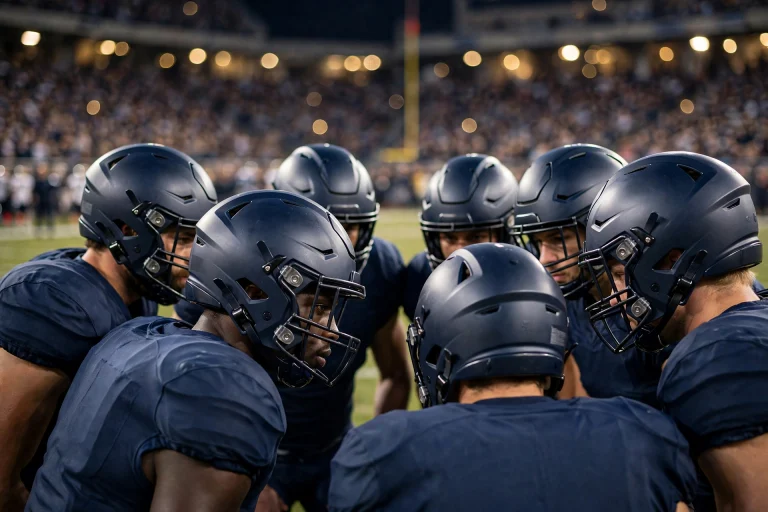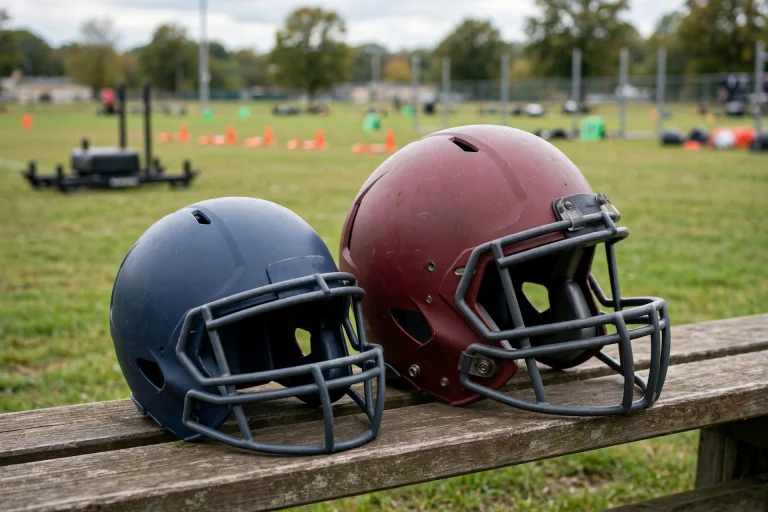
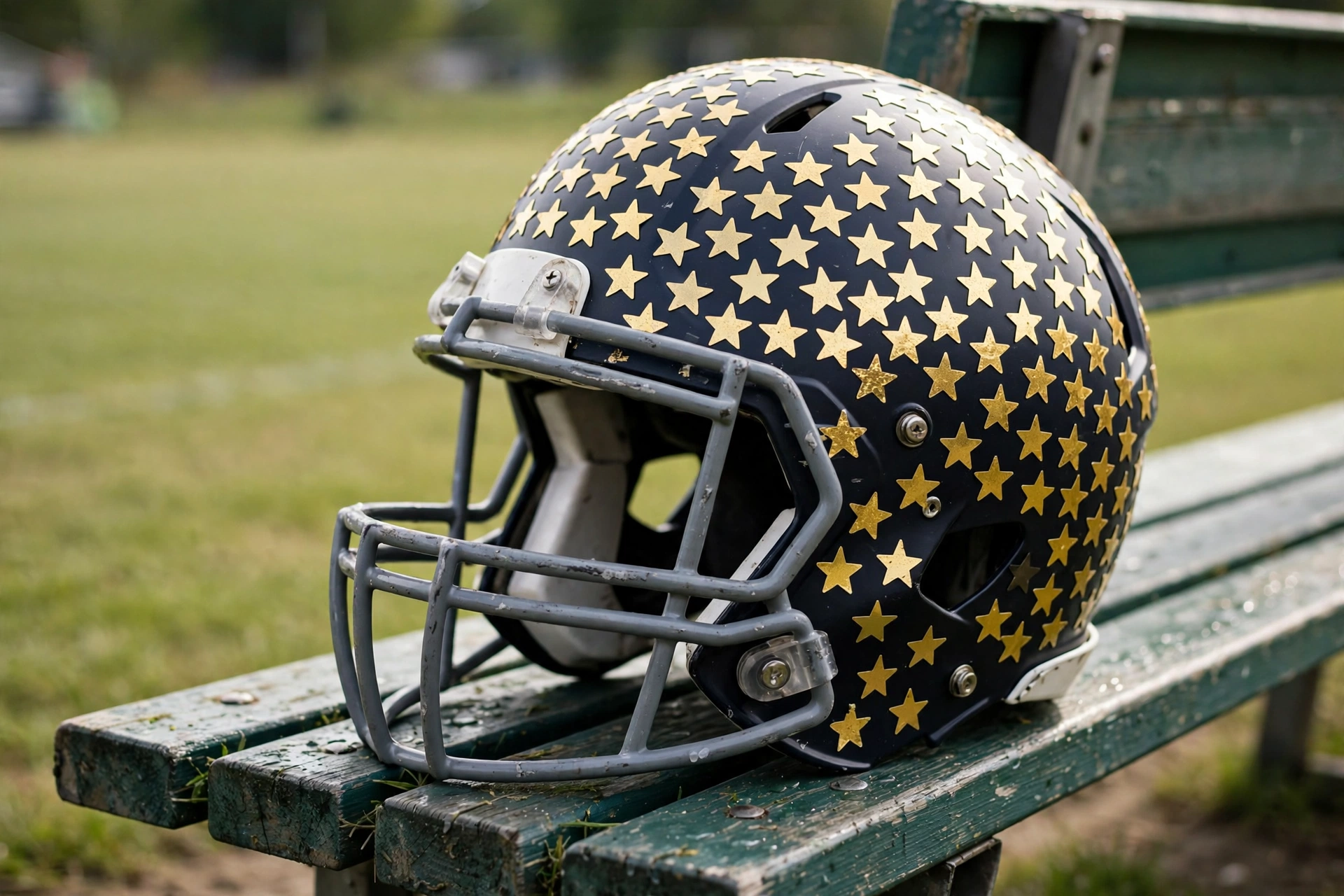
Yes, football helmet award decals and stickers are allowed in general terms, but only when they follow the rules of the league, the school, and the helmet maker. Award decals are the small stickers players earn for good plays — a star, a buckeye leaf, a paw print, or a simple dot — and they are stuck on the outside of the shell as a visible record of performance. They look simple, but they sit at the meeting point of team tradition, league rules, and helmet safety standards, so a decal that seems harmless can still cause a problem if it is the wrong size, in the wrong place, or made of the wrong material.
Decals matter because the helmet is safety equipment first and a uniform second. Anything added to the shell can, in general terms, affect how the helmet is inspected, how it fits under a facemask, or how it behaves in an impact. That is why coaches, equipment managers, and leagues all have a say. This guide explains what award decals are, who sets the rules, where stickers can and cannot go, and how teams keep the tradition going without breaking the rules or risking a player’s safety.
What Are Football Helmet Award Decals?
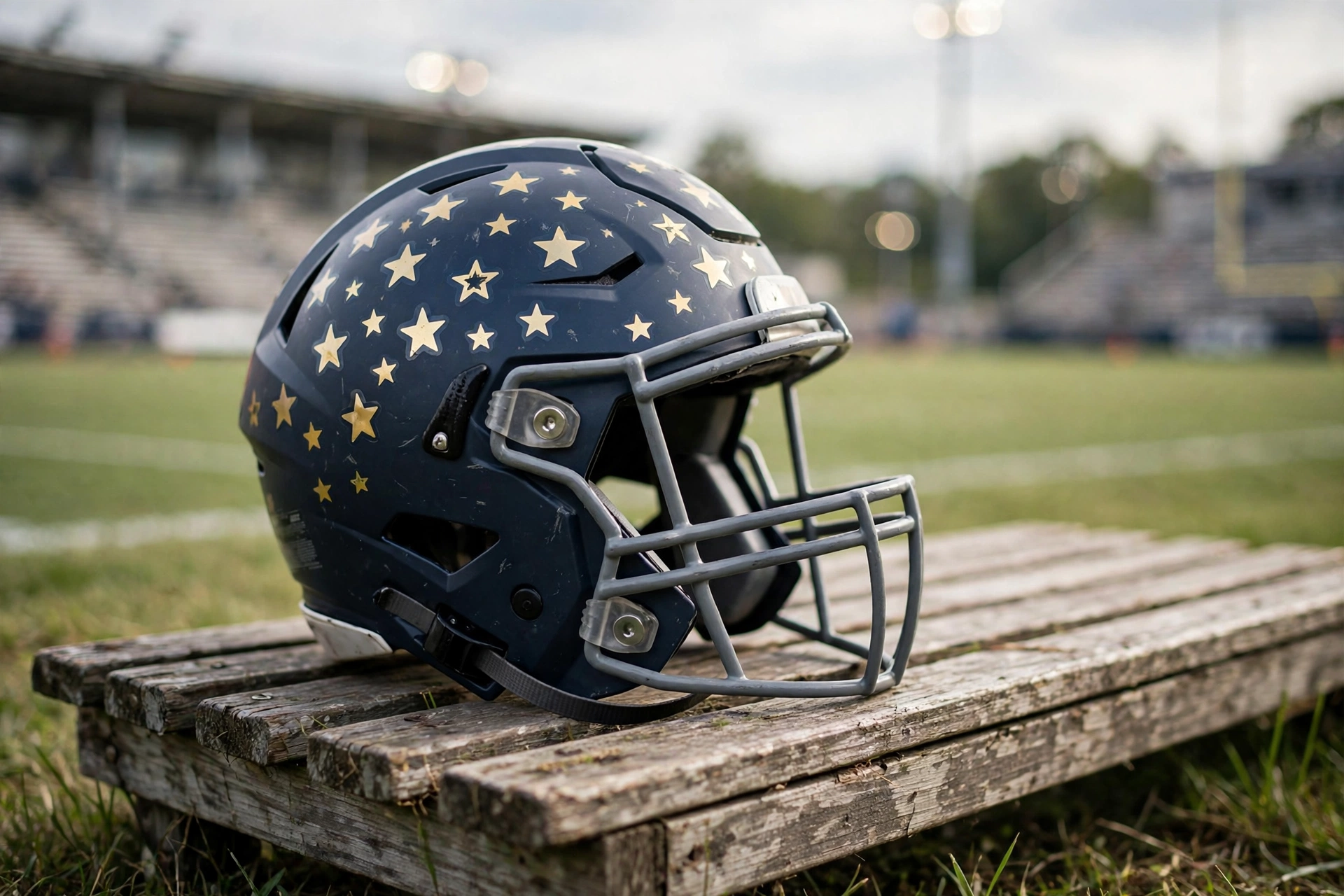
Award decals are small stickers given to players as a reward for a good play, a strong practice, or a team contribution. A defensive player might earn one for a tackle for a loss, an offensive player for a touchdown, and a special-teams player for a big return. The decals build up over the season, so a helmet covered in stickers tells the story of a player’s year at a glance. The tradition is famous at the college level, where some teams use leaves, stars, or paws, but it is just as common in high schools and youth leagues.
Most award decals are made from thin vinyl and are only a few centimetres across. They are designed to stick to the smooth, curved surface of a helmet shell and to stay put through sweat, rain, and contact. Some are plain shapes, while others carry a team logo or a simple symbol. They are not the same as the helmet’s own warning labels, certification stickers, or size markings, which must never be covered or removed. Those factory labels are part of the helmet’s safety record, and they belong to the maker, not the team.
Who Decides the Rules for Helmet Stickers?
The rules come from several places at once, and a team has to satisfy all of them. The league or governing body sets the broad rules about uniforms and equipment, including what can be added to a helmet. A school or club can add its own rules on top, and the head coach or equipment manager usually makes the final call on what actually goes on a helmet. On top of that, the helmet maker sets conditions in its care instructions: anything that damages the shell, covers a warning label, or interferes with a part of the helmet can void the maker’s guidance on safe use.
Leagues also care about what the decals show. A sticker with an offensive image, a banned logo, or an advertiser’s mark is likely to be against the rules, even if it is small. Some leagues limit the number of decals, or require them to be in team colours, so that the helmet still reads as part of a uniform rather than a personal billboard. If you are learning how modern helmets are built to manage impacts, reading about what MIPS is for helmets can help you understand one of the technologies used inside the shell.
Where Can Award Decals Go on a Helmet?
In general terms, award decals belong on the smooth, flat-ish areas of the shell, usually on the sides and the back, clear of the facemask mounts, the chin strap hardware, and the vents. The most common spot is the upper side of the shell, where the decals are easy to see and easy to count. The back of the helmet is also popular, especially for decals that mark season-long achievements rather than single plays.
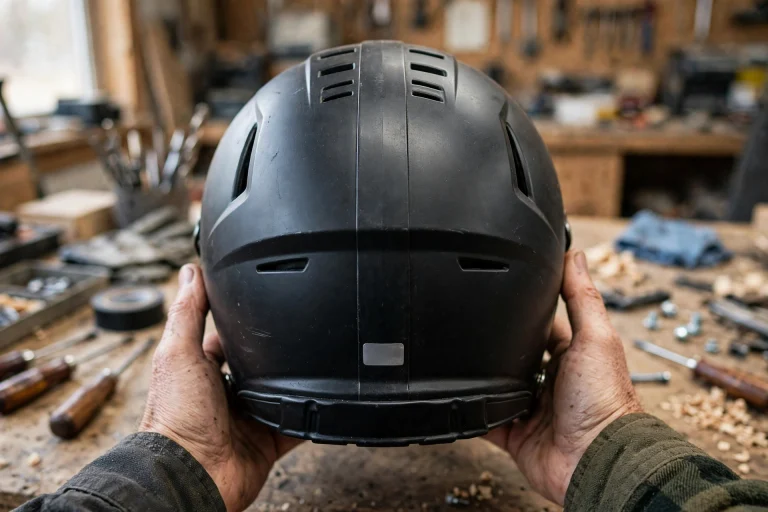
There are places decals should not go. They should never cover the maker’s warning labels, the certification sticker, or the size and model markings, because those are needed for inspection and for identifying the helmet. They should not be placed over a vent, where they could block airflow, or over a crack or dent, where they could hide damage that needs to be seen. They should also stay clear of the facemask attachment points and the chin strap clips, where a sticker could peel, bunch up, or get in the way of a proper fit.
Do Decals Affect Helmet Safety or Certification?
In general terms, a small vinyl decal on the outside of a helmet shell does not change how the helmet absorbs an impact. The shell, the padding, and the fit do that work, and a thin sticker adds almost no weight and no stiffness. The problem is not the sticker itself, but what it might hide or what it might be stuck with. A decal placed over a crack can hide damage that should have taken the helmet out of service. An adhesive that is too strong can leave a residue that makes inspection harder, and a solvent used to remove a sticker can damage the shell finish.
How Do Teams Manage Decals Through a Season?
Most teams give the job of decals to one person, usually the equipment manager or an assistant coach, so that the rules are applied the same way to every player. That person keeps the stock of decals, decides when they are handed out, and applies them — or supervises the players applying them — so that placement stays consistent. Consistency matters: if one player puts decals over a vent and another does not, the team has a problem that could have been avoided with a simple template or a quick demonstration at the start of the season.
Teams also keep a simple record of what each player has earned, so that a lost decal can be replaced and a player who transfers or changes helmet can have their decals moved to the new shell. At the end of the season, the decals are usually removed before the helmets are cleaned, inspected, and stored or sent for reconditioning. Some players keep one decal as a memento, and some teams photograph the helmets before the stickers come off, so the season’s story is not lost with the adhesive.
Frequently Asked Questions
Q: Are award decals allowed on football helmets?
A: In general terms, yes, as long as they follow league, school, and helmet-maker rules. They should be small, placed clear of labels, vents, and hardware, and made from helmet-safe vinyl.
Q: Can a decal cover a crack or a warning label on a helmet?
A: No. A decal must never hide damage or cover a warning label, certification sticker, or size marking. A helmet with a crack should be taken out of service, not covered up.
Q: Who should put award decals on a player’s helmet?
A: In general terms, the equipment manager or a coach should apply them, or supervise players doing it, so placement is consistent and the rules are followed for every helmet on the team.

Olivia
Writer at Helmet Today, covering helmet reviews, fit and riding safety.