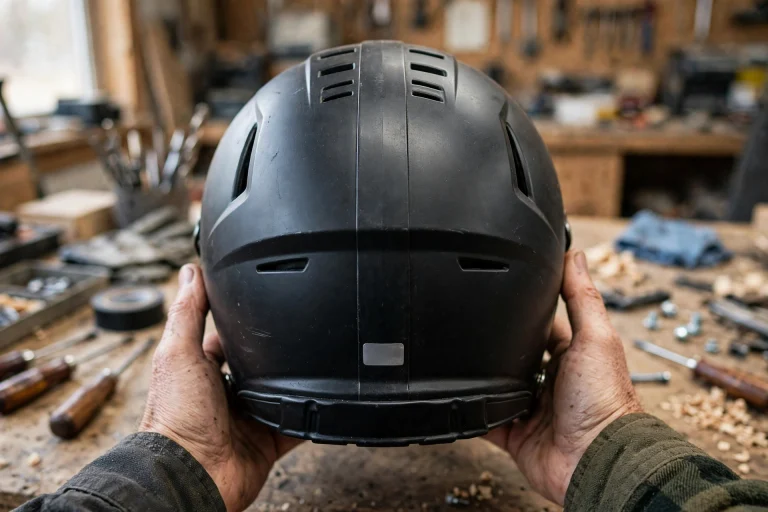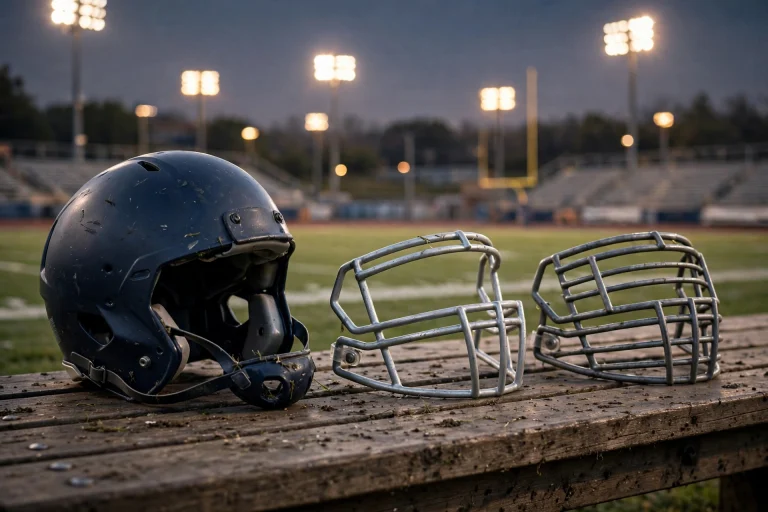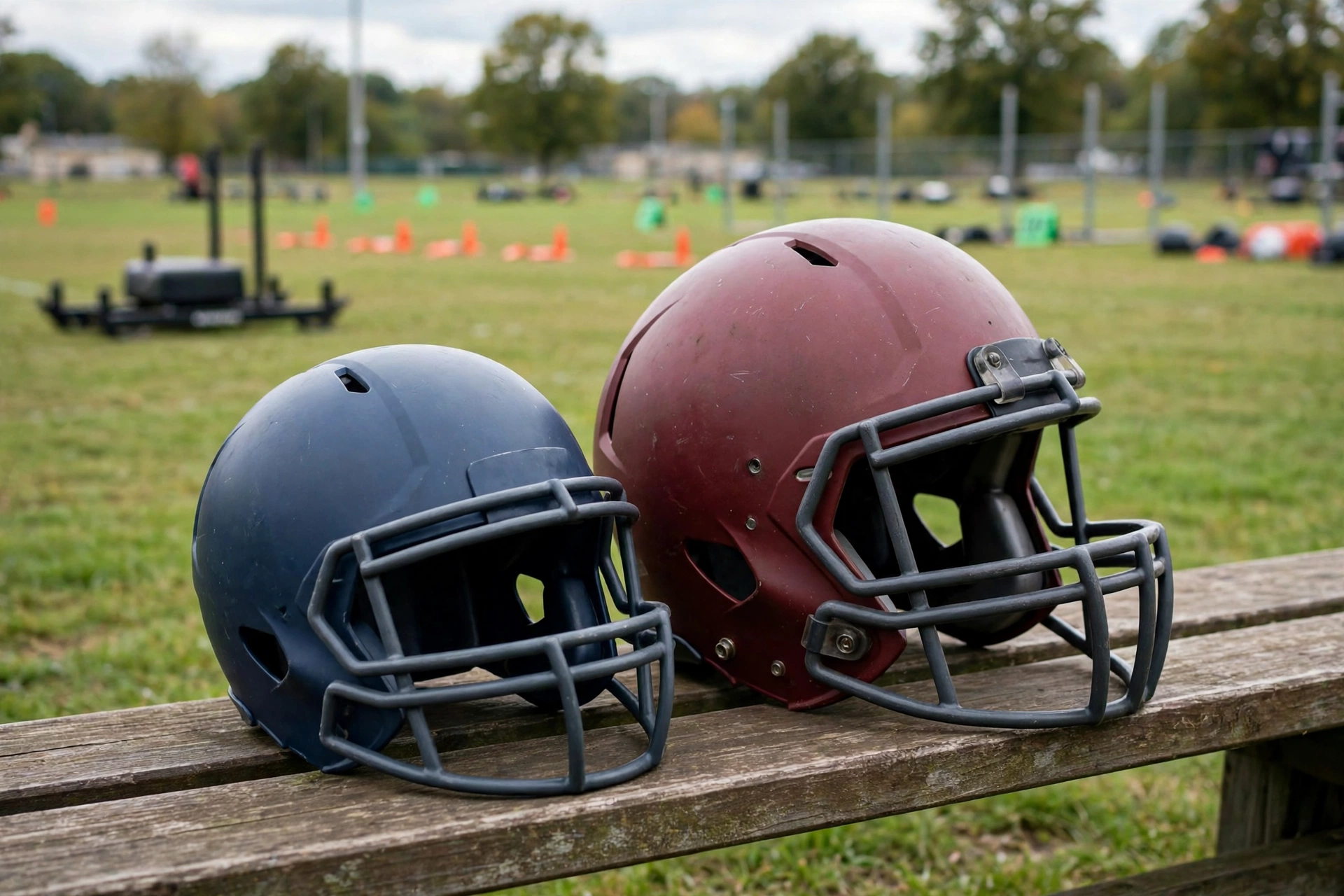
The main difference between a youth football helmet and a varsity football helmet is size and build: youth helmets are smaller, lighter shells designed for younger, smaller players, while varsity helmets are larger, heavier shells built for older, bigger players and the higher-impact game they play. The two levels use different shell sizes, padding layouts and facemask options, and a player should wear the level that matches their size and stage.
What Is the Main Difference Between Youth and Varsity Helmets?
Youth helmets are built around smaller head sizes and lighter body weights. Their shells are smaller and more compact, their padding is arranged for younger players’ head shapes, and the whole helmet weighs less, which matters for a player whose neck strength is still developing. A helmet that is too heavy can tire a young player and affect how they move their head.
Varsity helmets are built for high school and older players. Their shells are larger, their padding systems are often more adjustable and more substantial, and they are designed with the speed and physicality of the varsity game in mind. In general terms, varsity helmets also offer a wider range of facemask options, because older players at different positions have more specialised needs.
The difference is not about one level being simply better. A well-made youth helmet is the right helmet for a youth player, and a well-made varsity helmet is the right helmet for a varsity player. Problems come when the levels are mixed up: a youth player in an oversized varsity shell, or an older player squeezed into a youth shell.
How Do Size and Fit Differ Between Youth and Varsity Helmets?
Sizing is where the difference is most obvious. Youth helmets cover a smaller range of head circumferences, while varsity helmets start larger and go up further. A player who has outgrown the largest youth size may not be ready for varsity in skill terms, but does need a shell that actually fits.
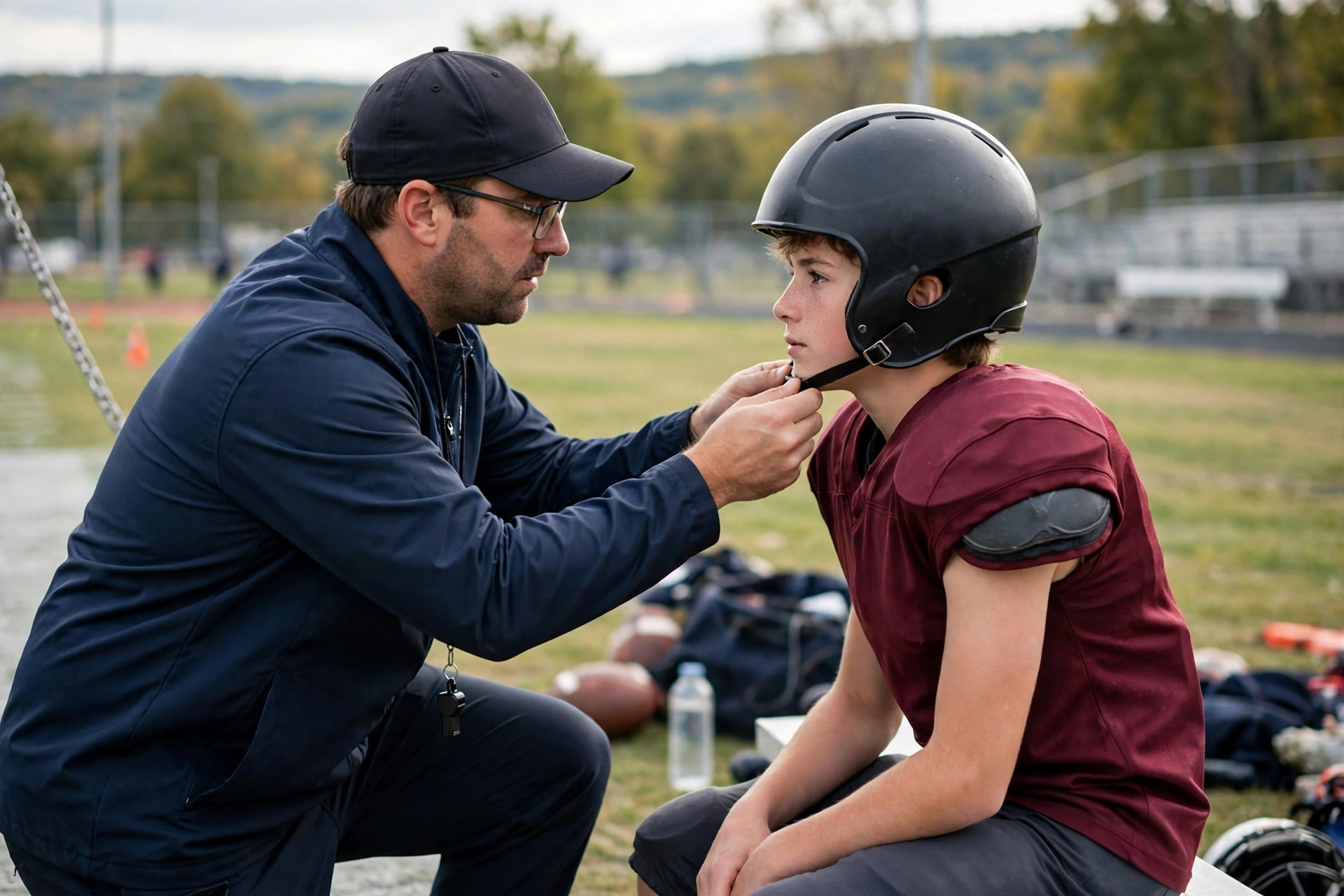
Fit checks are the same at both levels: the helmet should sit level, roughly a finger’s width above the eyebrows, snug all round with no rocking, and with jaw pads contacting the cheeks evenly. The chin strap should be centred and firm. What changes is the shell doing that job.
Growth complicates the choice. Young players can outgrow a helmet mid-season, so fit should be re-checked regularly, not just at purchase. If a helmet that fitted in August is rocking in October, or the player complains of new pressure points, measure again and check whether the next size up — possibly at the next level — is needed.
Do Youth and Varsity Helmets Have Different Facemasks and Padding?
Facemask options tend to be broader at varsity level. Youth helmets usually come with a smaller range of masks suited to younger players, with simpler, more open designs that keep weight down and vision clear. Varsity helmets offer position-specific masks, because older players’ roles are more specialised.
Padding differs too. Varsity helmets often have more adjustable padding systems, with interchangeable pads that let equipment managers fine-tune the fit. Youth helmets tend to have simpler padding, which is appropriate for younger players and easier for parents to manage, but offers less fine-tuning. In both cases the padding must be complete and undamaged — missing or flattened pads are a fit problem at any level.
Another difference is reconditioning. Varsity helmets in school programmes are often reconditioned between seasons by specialists who inspect, clean, replace parts and recertify them, following the maker’s guidance. Youth helmets owned by families are less likely to go through that process, which makes the owner’s own inspection more important: check straps, clips, padding and shell condition before every season.
Can a Youth Player Wear a Varsity Helmet, or Vice Versa?
A youth player can wear a varsity helmet if it is the size that fits them and it meets their league’s rules — size and fit decide, not the label. In practice, a smaller varsity shell can fit an older youth player who has outgrown youth sizes, and that is a normal, sensible move. What should not happen is a young player wearing a varsity helmet that is too big for them simply because it looks more advanced or was handed down.
The reverse is also true: an older, larger player should not wear a youth helmet that is too small, even if it feels familiar. A shell that is too small cannot sit correctly on the head, the padding cannot contact evenly, and the chin strap geometry will be wrong. Comfort is not the test — correct position and stability are.
Leagues and associations may also have their own rules about which helmets are permitted at each age level, so check before buying or handing down. A helmet that fits perfectly is still the wrong choice if your league does not allow it for that age group.
How Do You Choose Between a Youth and a Varsity Helmet?
Start by measuring the player’s head and checking the maker’s sizing chart for both levels. The right level is usually the one whose size range includes the player’s measurement with room for a correct, snug fit — not the largest size available, and not the level their friends are wearing. If the measurement falls between levels, a fitting with both shells side by side will settle it quickly.
Then consider the player’s stage. A younger player still growing fast may be better in a youth helmet that fits now, even if a varsity helmet might fit next year, because a helmet must fit now to protect now. An older player moving into high school football should expect a varsity helmet, but only after confirming fit and programme rules.
Finally, inspect any hand-me-down carefully. Check the shell for cracks or dents, padding for flattening or damage, straps and clips for wear, and the facemask for bent bars or loose hardware, plus the maker’s guidance on age and reconditioning. If anything is doubtful, replace it. A new, correctly fitted helmet at the right level is always better than a free helmet that does not fit.
Whichever level you choose, remember that the helmet is a system: shell, padding, facemask and chin strap working together, with modern liner designs managing different kinds of impact, as explained in this guide to what MIPS is for helmets.
Frequently Asked Questions
Q: At what age should a player switch from youth to varsity helmet?
A: There is no single age, because the switch depends on head size and fit rather than birthday. In general terms, players move to varsity helmets as they grow into high school football and outgrow youth sizes, but the deciding test is always measurement and fitting.
Q: Is a varsity helmet safer than a youth helmet?
A: Not in itself. Each level is designed for the players it serves, and a correctly fitted youth helmet protects a youth player better than an oversized varsity helmet that rocks and slides. Safety comes from correct size, correct fit, good condition, and a helmet that meets your league’s rules.
Q: Can I buy a varsity helmet so my child grows into it?
A: That is not recommended. A helmet that is too big now will not sit or stay in place correctly, and the player may have outgrown other parts of it by the time their head catches up. Buy the helmet that fits now, re-check fit regularly, and move up when the fitting shows it is time.

Olivia
Writer at Helmet Today, covering helmet reviews, fit and riding safety.