NOCSAE certification means a football helmet model has been tested to a safety standard set by the National Operating Committee on Standards for Athletic Equipment, and that samples of that model met the standard’s impact performance requirements when tested — in general terms, it is the stamp that tells leagues, schools and parents the helmet passed an independent standard, not just the maker’s own claims. Most organised football leagues require NOCSAE-certified helmets, so checking for certification is one of the first things to do before buying or using a helmet.
What Is NOCSAE Certification?
NOCSAE is an independent standards body for athletic equipment. It writes performance standards for helmets and other protective gear, and manufacturers have their helmet models tested against those standards. A helmet model earns certification when tested samples meet the standard’s requirements, and certified helmets carry a NOCSAE mark on the shell.
The key point is that certification applies to the model as tested, in the condition it was tested in. That is why the whole helmet matters, not just the shell: the padding, facemask, chin strap and hardware are part of the helmet as certified, and changing parts for ones the maker did not intend can affect whether the helmet still matches its certified configuration. Always use parts made for your helmet model.
Certification is also why leagues write NOCSAE into their rules. Rather than each league running its own laboratory tests, leagues can require a recognised standard and trust that certified models have been through the same independent process. If a league requires NOCSAE-certified helmets, a helmet without that certification should not be used in that league, however good it looks.
What Does NOCSAE Testing Actually Check?
In general terms, NOCSAE helmet testing checks how the helmet manages impact. Test helmets are fitted to a headform and dropped or struck in controlled ways, with instruments measuring how much of the impact reaches the headform. The standard sets limits on those measurements, and a model passes only if its test results stay within them across the required test conditions.
Testing covers more than a single straight-on hit. Helmets are tested at different locations on the shell and under different conditions, because real impacts do not all arrive at the same spot. The standard also covers stability and retention — whether the helmet stays in place — because a helmet that shifts during play cannot protect as intended.
It is worth understanding what this testing is not. It is a laboratory standard, not a guarantee about any single real-world hit, and it does not rank helmets from best to worst for every possible impact. Two certified helmets can perform differently in a specific incident; certification tells you that both met the same minimum bar, not that they are identical. Modern helmet designs also include liner systems that manage rotational forces, as explained in this guide to what MIPS is for helmets.
How Do You Check Whether a Helmet Is NOCSAE Certified?
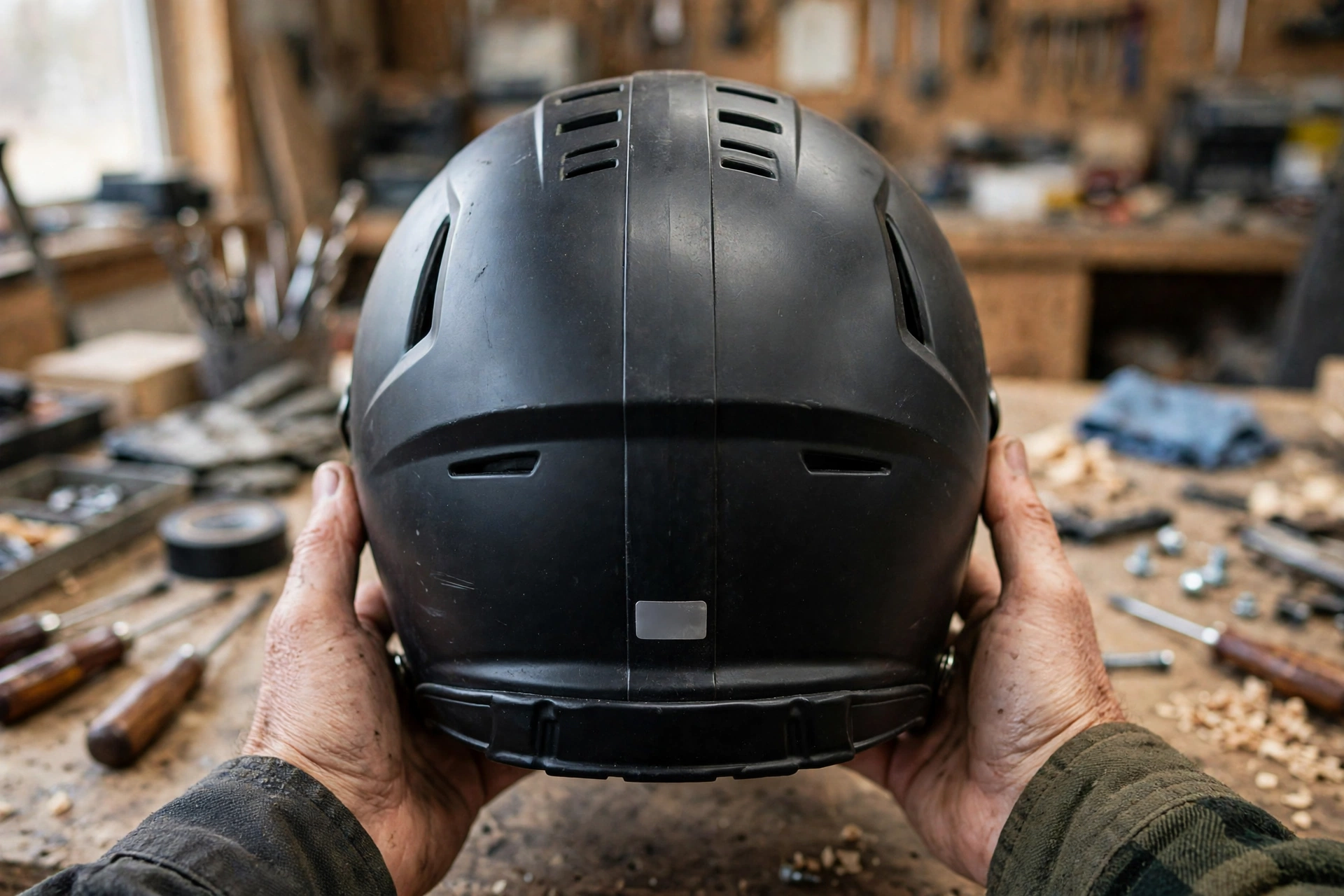
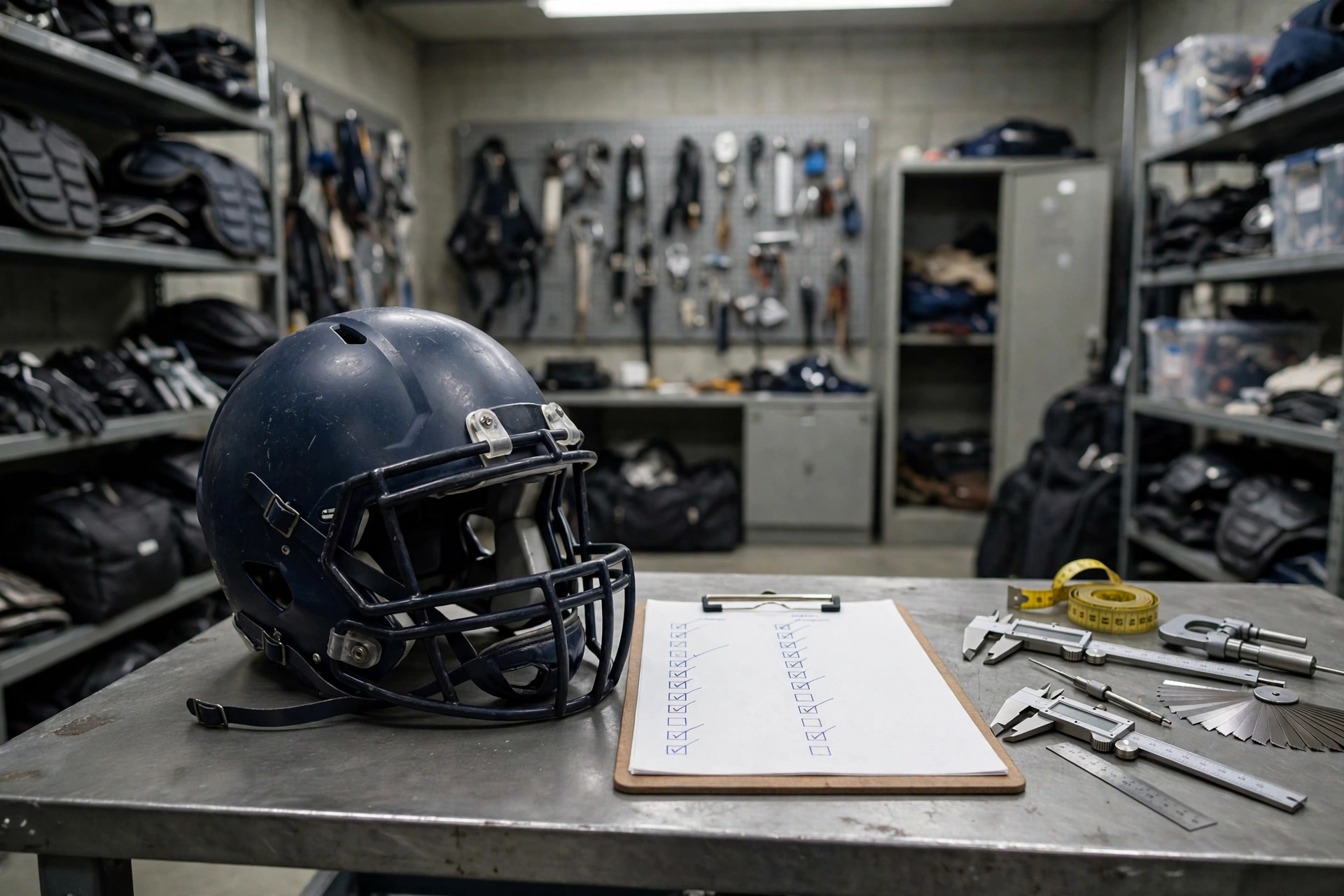
Start with the helmet itself. Look for the NOCSAE mark on the shell, usually on the back or inside, along with the maker’s labels showing the model, size and date information. On a new helmet, the mark should be present and legible. On a used helmet, check that the mark has not been removed, painted over, or worn away — if you cannot confirm certification, treat the helmet as unconfirmed and ask the maker or your equipment manager.
Next, check the helmet’s condition against its certified state. The padding should be complete and original to the model, the facemask and chin strap should be the correct parts for that model, and the shell should be free of cracks, dents and unauthorised modifications such as drilled holes or repainting. Modifications can void certification in practical terms, because the helmet no longer matches the model that was tested.
Finally, check your league’s requirements. Some leagues and associations publish lists of permitted helmets or require specific certification marks, and school programmes often have an equipment manager who verifies every helmet before the season. If you are buying for a school or league programme, ask that person to confirm the model before purchase.
Does NOCSAE Certification Mean a Helmet Cannot Fail?
No. Certification means the model met a defined standard under test conditions; it does not mean the helmet is indestructible, and it does not mean a player cannot be injured while wearing one. Football is a contact sport, and no helmet can prevent every injury. A certified helmet reduces risk by managing impact within tested limits — it does not eliminate risk.
Certification also depends on the helmet staying in the condition it was certified in. A helmet that is damaged, worn out, fitted badly, or missing parts will not perform as tested, even though its sticker is still on the shell. That is why regular inspection matters as much as the original certification: check the shell, padding, straps, clips and facemask before every season, and after any hard impact that concerns you.
Age and use matter too. Helmets do not last forever, and makers give guidance on service life and reconditioning. A helmet that is many seasons old or has been reconditioned outside the maker’s process may no longer match its certified state. When in doubt, follow the maker’s guidance and your programme’s equipment policy.
What Should You Do If a Helmet Loses Certification or Is Recertified?
Helmets can lose their certified status in practical terms if they are damaged, modified, or reconditioned incorrectly, and some helmet models are withdrawn from certification lists over time. If your programme tells you a helmet is no longer certified, or you discover damage or modification that breaks its certified configuration, stop using it for organised play until the situation is resolved.
Reconditioning is the usual route back for programme helmets. Specialist reconditioners inspect the helmet, replace worn parts, clean and test it, and recertify it where the process allows, following the maker’s and the standards body’s requirements. This is not a home repair job: reconditioning involves testing and documentation that an individual cannot replicate in a garage, and a helmet reconditioned outside the proper process should not be assumed certified.
For a family-owned helmet, the practical answer is usually replacement rather than reconditioning, because the cost and logistics of proper reconditioning rarely make sense for a single helmet. Keep the purchase records and the maker’s information, check the certification mark when buying, and replace any helmet whose certification you cannot confirm or whose condition you doubt.
Frequently Asked Questions
Q: Is every football helmet sold NOCSAE certified?
A: No. Most helmets made for organised football are certified, but not every helmet-shaped product is, and some novelty or costume helmets carry no certification at all. Always check for the NOCSAE mark and confirm the model with the maker or your league before using a helmet for football.
Q: Does a NOCSAE sticker guarantee the helmet is still safe years later?
A: Not on its own. The sticker shows the model passed the standard when tested, but the helmet’s current condition, fit, parts and age all affect how it performs now. Inspect the helmet regularly, follow the maker’s guidance on service life, and replace helmets that are damaged or whose certification can no longer be confirmed.
Q: Can I add aftermarket parts to a NOCSAE-certified helmet?
A: Only parts made for your helmet model should be used, because certification covers the helmet as tested. Aftermarket parts that the maker did not intend for that model, or modifications such as drilling or repainting the shell, can take the helmet outside its certified configuration.

Olivia
Writer at Helmet Today, covering helmet reviews, fit and riding safety.