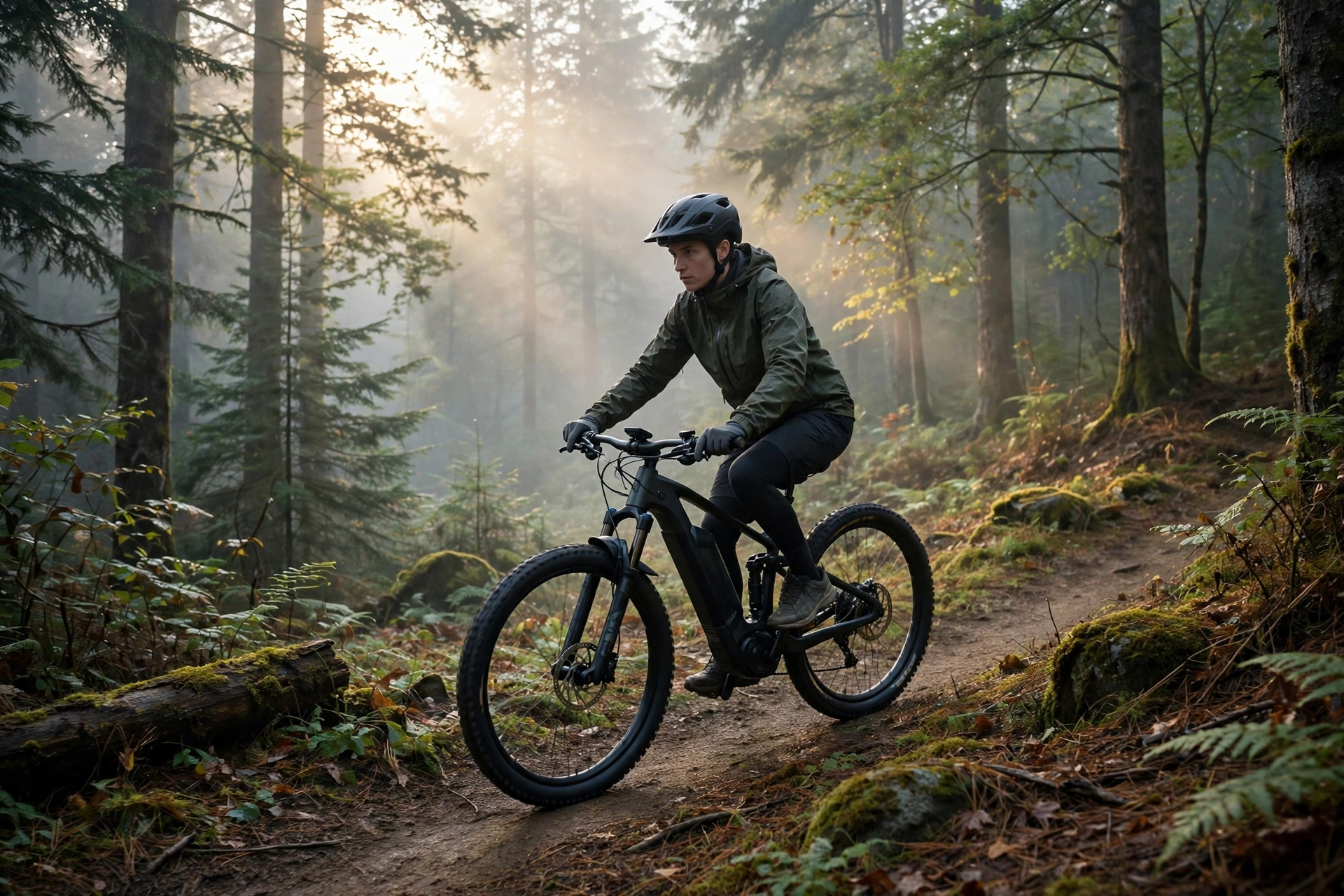
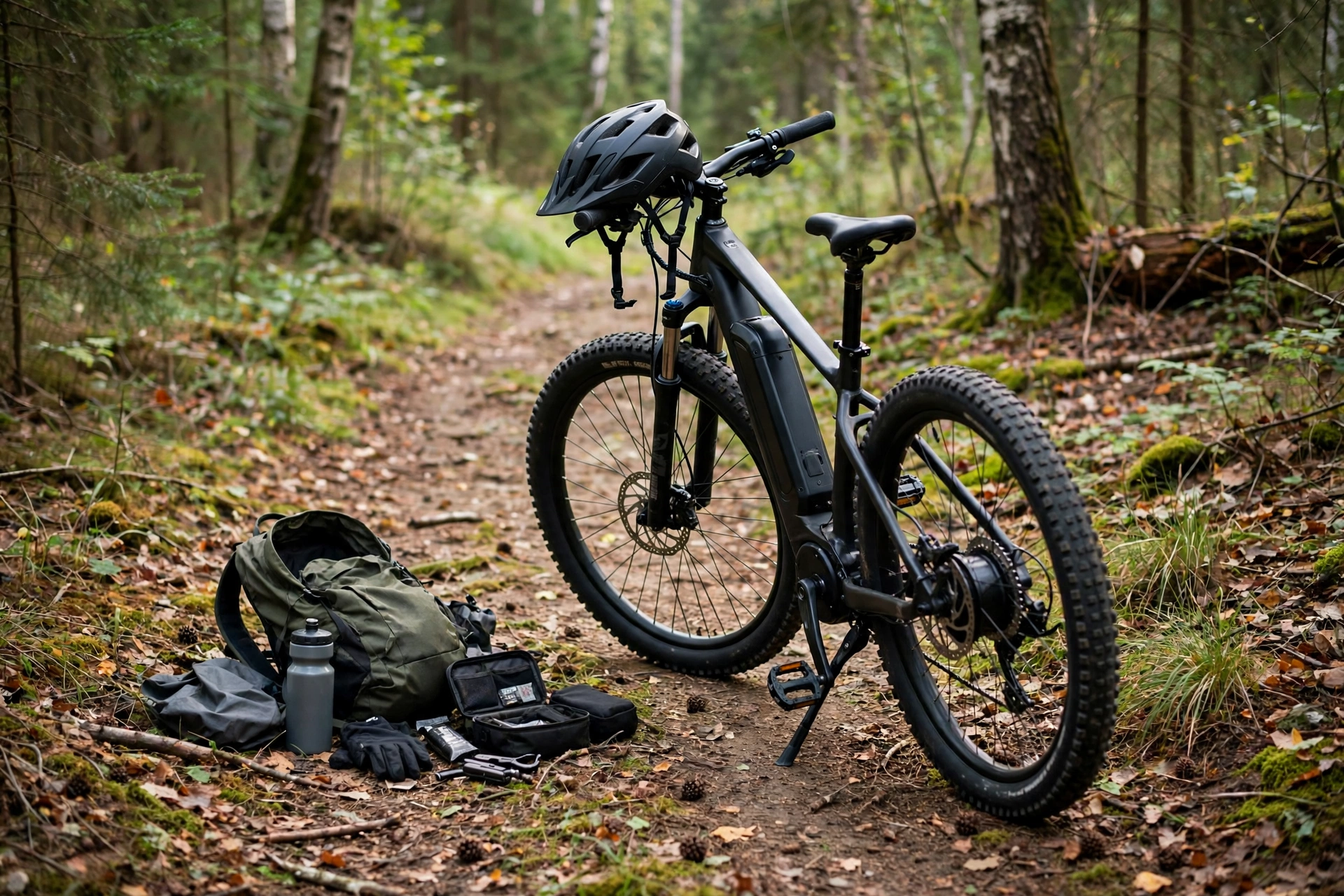
For hunting and trail riding, the best e-bike helmet is generally a well-ventilated mountain bike style helmet with good rear and side coverage, a secure fit that stays put on rough ground, and a peak or visor for sun and branches — chosen to suit the speeds and terrain you actually ride, and checked against any local e-bike or hunting-area rules that apply where you ride. Trail and hunting rides demand more coverage and toughness than a smooth road commute, but less weight and bulk than a full downhill helmet.
Why Does an E-Bike Helmet Matter for Hunting and Trail Riding?
E-bikes go faster with less effort than a regular bike, and on trails that speed arrives on loose gravel, roots, mud and ruts. A fall at trail speed can send a rider into the ground or into a branch before they have time to react. A helmet designed for trail riding is built with that kind of fall in mind, with coverage that extends further down the back and sides of the head than a typical road helmet.
Hunting rides add their own risks. You may ride in the dark or at first light, on narrow tracks you have not ridden before, carrying a pack that changes your balance, and stopping and starting often. Each of those moments is a chance for a slow-speed tip-over on uneven ground — the kind of fall that still hurts when your head meets a rock or a stump.
Distance matters too. Hunting and trail rides are often long, and a helmet that is uncomfortable after an hour will tempt a rider to loosen straps or push it back on the head. The right helmet for this riding is one you can wear all day without thinking about it.
What Coverage and Fit Should You Look for on Trails?
Coverage is the first thing to compare. Trail-oriented helmets generally extend lower at the back of the head and further around the sides than road helmets, protecting more of the skull in the sideways and backward falls common off-road. If you ride steep, technical trails, you may want even more coverage, while gentler rail-trails suit a lighter trail helmet.
Fit is just as important. The helmet should sit level, about a finger’s width above the eyebrows, snug all round with no rocking, and with the chin strap firm and centred. Try it on with anything you wear underneath — a thin skull cap in cold weather, for example — because a helmet fitted in summer may fit differently over winter layers. Shake your head hard: the helmet should move with your head, not slide over it.
The retention system — the dial or cradle at the back — should be easy to adjust with one hand and even with gloves on, because trail riders often adjust on the move. Check that the straps form a clean V around each ear and meet under the chin without twisting.
How Do Ventilation, Weight and Comfort Affect Long Rides?
Ventilation is a real trade-off on trails. More vents mean cooler riding on climbs, but very open helmets can let in twigs, insects and cold wind. Trail helmets usually strike a middle ground: enough vents to keep you cool on a long climb, with mesh or shaping that keeps debris out.
Weight matters more the longer you ride. A heavy helmet strains the neck on rough ground and becomes tiring on a full day out, especially with a pack. In general terms, a lighter trail helmet is easier to wear all day, but do not chase lightness at the cost of coverage.
Comfort details add up over a long ride. Padding that wicks sweat and can be removed and washed, a peak that adjusts without tools, and a design that does not press on the forehead or ears after hours in the saddle all matter. Sunglasses should fit comfortably under the peak without pushing the helmet out of position, and if you wear hearing protection or ear warmers while hunting, check that they work with the helmet.
What Extras Help on Hunting and Trail Rides?
A peak or visor is almost standard on trail helmets, and it earns its place on hunting rides: it shades the eyes from low sun, deflects branches on overgrown tracks, and sheds rain. An adjustable peak lets you tilt it up for climbing in low light and down for sun.
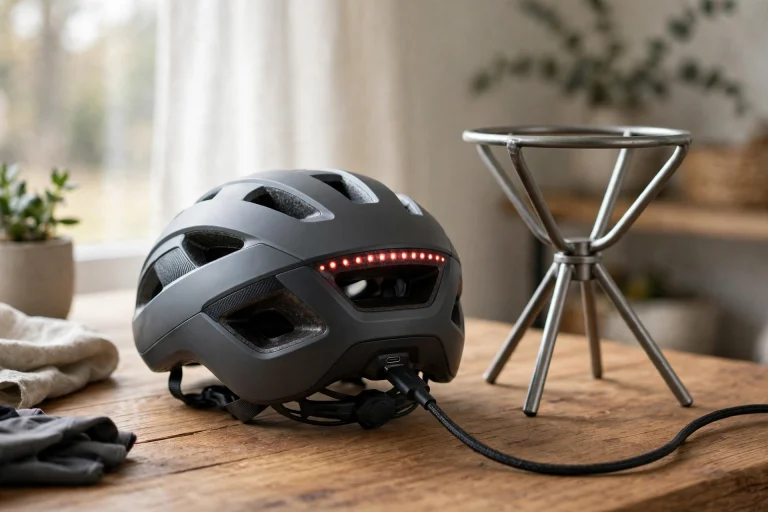
Visibility extras are worth considering because hunting rides often start before dawn or end after dusk. A helmet in a bright colour is easier for other trail users to see, and some helmets offer mounts for lights, which can be a practical addition for pre-dawn rides. Whatever light you use, make sure it mounts securely and does not unbalance the helmet.
Other extras to weigh include mounts for action cameras and compatibility with goggles for dusty or muddy conditions. Neither is essential, but both should be checked against the helmet’s design rather than added with improvised mounts. Modern helmet designs also include liner systems that manage different kinds of impact, as explained in this guide to what MIPS is for helmets.
One caution applies specifically to hunting: check the rules for the land you ride on. Some hunting areas, wildlife management areas and trail systems have their own rules about e-bikes, motorised access, seasons and permitted routes, and those rules vary by place and by land manager. Confirm before you ride that e-bikes are permitted where you plan to go.
How Do You Care for a Helmet Used Off-Road?
Trail and hunting use is hard on helmets. Mud, dust, sweat, rain and knocks all accumulate, so clean the helmet regularly with mild soap and water, remove and wash the pads where the maker allows, and let everything air-dry fully before storage. Never use harsh solvents or high heat to dry a helmet, since both can damage the shell and liner.
Inspect the helmet after any fall, however minor it seems, and at the start of each season. Look for cracks in the shell, dents or compressed foam, frayed straps, a retention dial that no longer holds, and a peak that is loose or broken. A helmet that has taken a hard impact should be replaced, even if the damage is not obvious.
Frequently Asked Questions
Q: Can I use a regular road bike helmet for hunting and trail riding?
A: A road helmet is better than no helmet, but a trail-oriented helmet suits this riding better because it offers more rear and side coverage for off-road falls and usually includes a peak for sun and branches. If you regularly ride rough trails, a trail helmet is the more appropriate choice.
Q: Do I need a special e-bike helmet, or will any bike helmet do?
A: Any well-fitted bike helmet designed for the kind of riding you do is a sound choice, and some helmets are rated for the higher speeds e-bikes can reach. Check the maker’s guidance for your helmet and any local e-bike rules that apply where you ride.
Q: How often should I replace a helmet used for hunting and trail riding?
A: Replace it after any hard impact, and follow the maker’s guidance on service life for normal use. Trail helmets take more knocks, mud and weather than road helmets, so inspect yours regularly and replace it sooner if the shell, foam, straps or retention system show wear or damage.

Olivia
Writer at Helmet Today, covering helmet reviews, fit and riding safety.