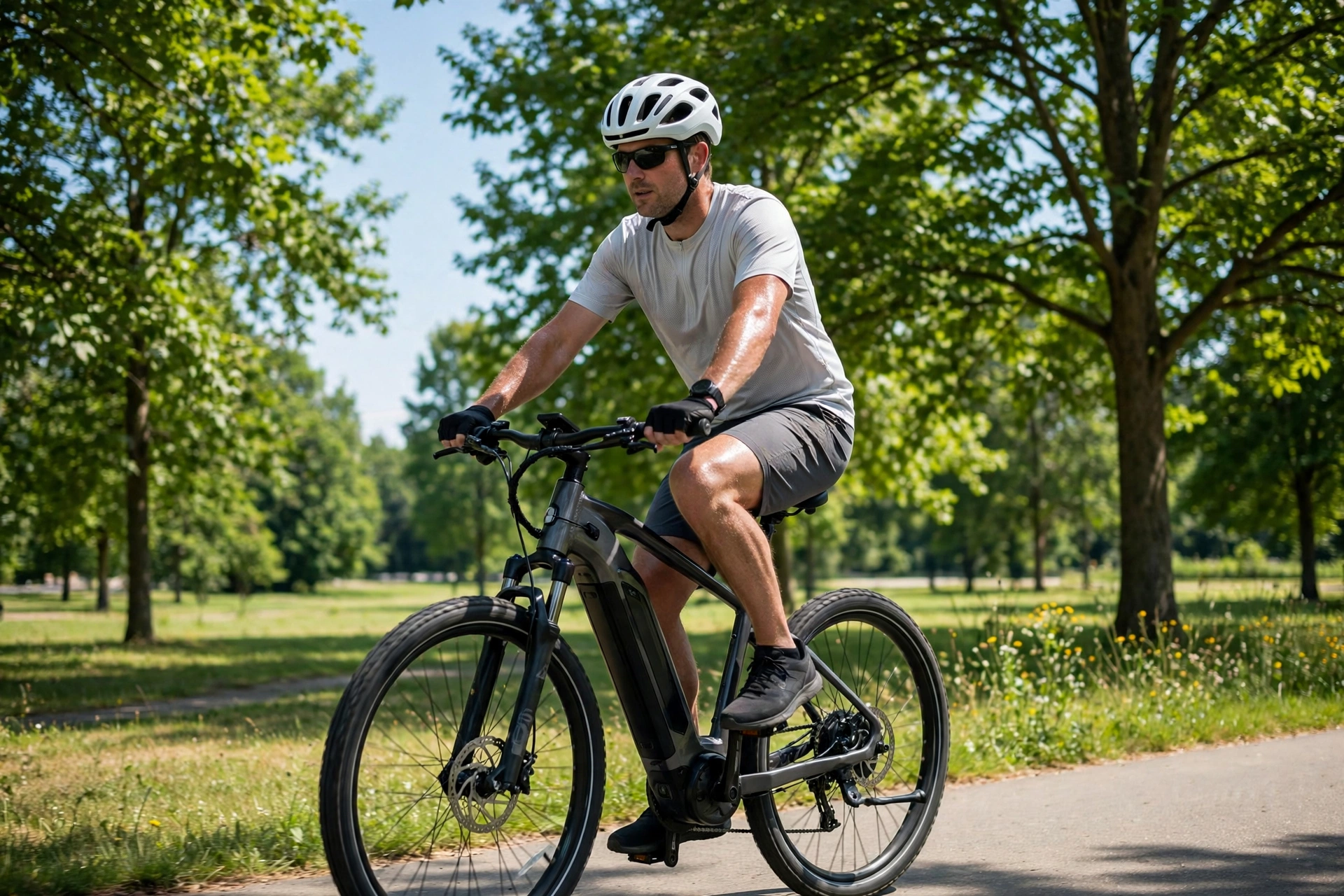
The best e-bike helmet for summer heat is one with large, well-placed vents and a fit that lets air flow over your head rather than trapping it. In general terms, look for plenty of front intake vents, rear exhaust vents, and a light-coloured shell, then pair it with smart riding habits like pre-cooling and taking shade breaks.
Summer riding on an e-bike can feel deceptively easy because the motor does the hard work, but the sun, the helmet, and the speed all add heat. A helmet that feels fine for ten minutes in a shop can turn into a sweatbox after half an hour in direct sun. Ventilation is therefore not a luxury feature on a summer e-bike helmet: it is the difference between a ride you enjoy and one you cut short.
How Does Helmet Ventilation Actually Work?
Good ventilation works like a chimney. Air enters through vents at the front of the helmet, flows over your scalp through internal channels, and exits through vents at the back. The shape of those channels matters as much as the number of holes: a helmet with many small vents but no clear internal path can still feel stuffy, while a helmet with fewer, well-connected vents can feel noticeably cooler.
Speed changes the picture too. At e-bike cruising speeds, air moves fast enough that even modest vents can work well, but when you slow down at junctions or climb a hill, airflow drops sharply. That is why heat often hits hardest on the slow parts of a ride, not the fast ones. A helmet designed with rear exhaust vents keeps some air moving even at lower speeds, which helps on those sticky sections.
What Should You Look for in a Summer E-Bike Helmet?
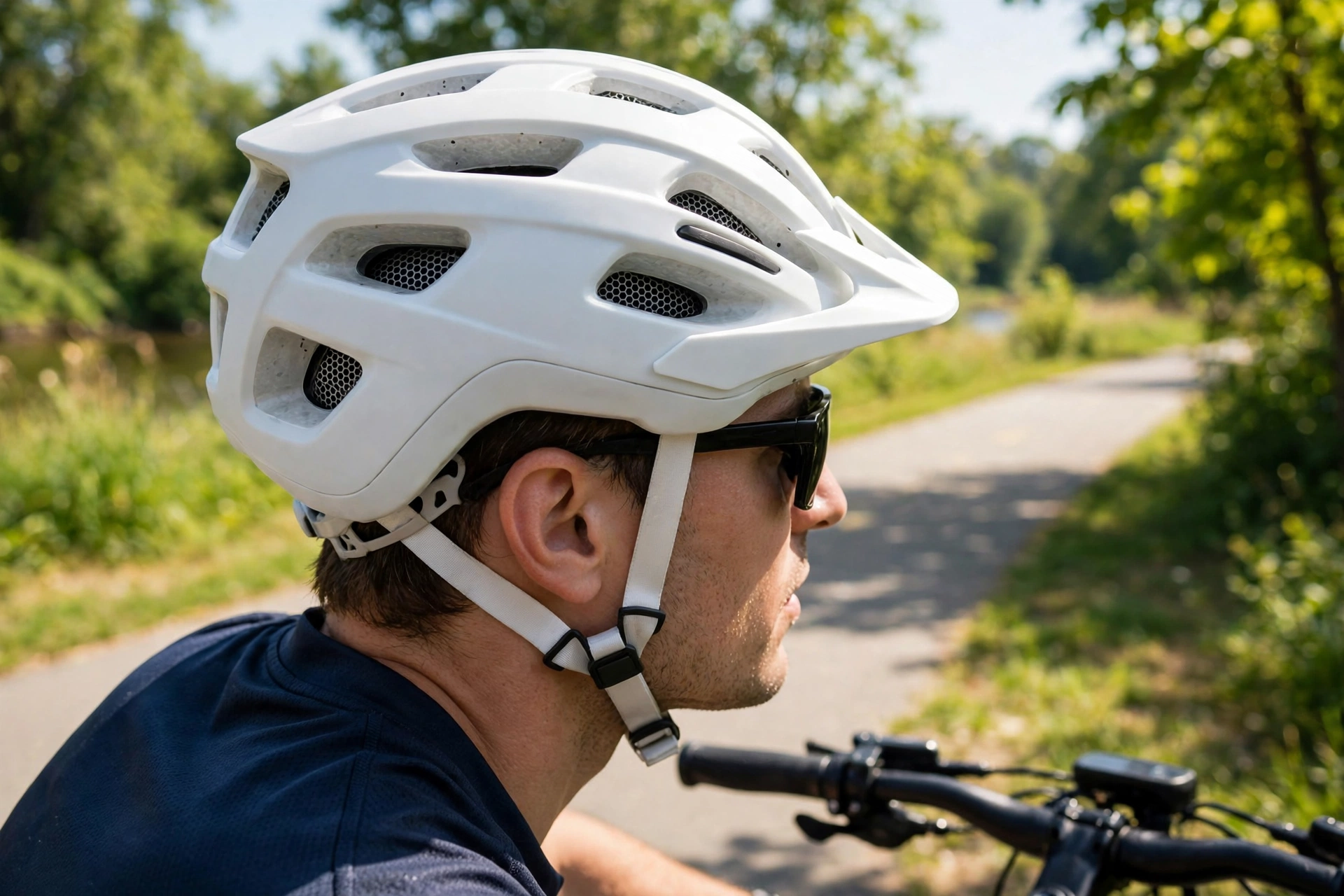
Start with vent count and placement, but judge them with your eyes, not just the marketing. Large front vents above the brow, a clear channel running front to back, and several rear exhaust vents are a good sign. Hold the helmet up to the light if you can: you should be able to see daylight through the vent path, which suggests air can genuinely pass through.
Colour matters more than many riders expect. A white or light-coloured shell reflects sunlight and stays noticeably cooler to the touch than a black shell left in the same sun. If you love a dark colour, consider a helmet with a light-coloured top panel, or simply store it in the shade whenever you stop.
Weight and coverage deserve a balance check. E-bike helmets often offer extra coverage at the back and sides, which is valuable at higher speeds. In summer, that extra coverage can also trap more heat, so look for a model that keeps the coverage but adds vents low on the sides and back. A fit dial that you can loosen slightly on the move is also handy, since a tiny bit of extra space can improve airflow without making the helmet unsafe, as long as it still sits snugly and level.
How Can You Stay Cool on Hot Rides?
Timing is the easiest win. Ride earlier in the morning or later in the evening when you can, and plan routes with shade and water stops on the hottest days. If you must ride at midday, slow down a little: the motor can maintain speed, but your body still produces heat, and a gentler pace means less sweat building up under the helmet.
What you wear under the helmet matters too. A thin, moisture-wicking skull cap or headband can pull sweat away from your scalp and keep it out of your eyes, and it also protects the helmet pads from soaking up salt and sunscreen. Avoid thick cotton caps, which hold moisture and add warmth. A light bandana soaked in cool water before a ride can help on very hot days, though it will dry out quickly.
Hydration is part of helmet comfort, even if it sounds unrelated. When you are dehydrated, you feel hotter and sweat less efficiently, so a helmet that felt fine on a hydrated ride can suddenly feel unbearable. Carry water, sip regularly rather than waiting until you feel thirsty, and take a proper break in the shade if you start feeling dizzy or unusually hot.
Does a More Ventilated Helmet Mean Less Protection?
Not necessarily. Ventilation and protection are designed together: the shell and foam around the vents still have to meet the same safety standards as a less vented helmet. A well-designed vented helmet keeps its protective structure intact by placing vents where they do not weaken the key impact zones. What matters is that the helmet is certified and fits correctly, not how many holes you can count.
That said, there is a practical trade-off to watch. Extremely open helmets can let in more sun, insects, and trail debris, which is annoying on a summer ride. Some riders solve this with a thin mesh liner or a cap under the helmet, though anything added underneath should be thin enough not to change the fit. If you want to understand the safety systems inside modern helmets, our guide to what MIPS means for helmets explains one common liner system in plain terms.
In general terms, choose the most ventilated helmet that still gives you the coverage you want for your riding. A commuter on quiet streets may be happy with a very open design, while a rider on fast mixed-traffic roads may prefer a little more coverage and accept slightly less airflow.
How Do You Care for a Helmet in Summer?
Sweat, sunscreen, and sun exposure all wear a helmet down over time. Rinse or wipe the pads regularly, and wash removable pads by hand with mild soap, letting them air-dry fully before you put them back. Never use harsh cleaners or solvents on the shell or foam, and never dry a helmet on a radiator or in a hot car boot, since heat can distort foam and weaken adhesives.
Storage matters in summer. Do not leave your helmet hanging on handlebars in direct sun for hours, and do not store it in a car on a hot day if you can avoid it. A cool, dry spot indoors keeps the foam, straps, and fit system in better shape for longer. Check the straps and buckle now and then too: sweat and salt can stiffen webbing, and a quick rinse keeps the adjustment working smoothly.
Finally, inspect your helmet at the start of the season. Look for cracks, dents, or crushed foam, and replace the helmet after any significant impact, even if the damage is not obvious. A helmet that has done its job once should not be asked to do it again.
Frequently Asked Questions
Q: Are white helmets really cooler than black ones in summer?
A: In general terms, yes. A light-coloured shell reflects more sunlight and feels cooler to the touch than a dark shell in the same conditions. The difference is most noticeable when the helmet sits in direct sun, for example during a stop.
Q: Can I drill extra vents into my helmet to improve airflow?
A: No, never drill or cut into a helmet. Modifying the shell or foam can weaken its structure and may void its certification. If your helmet feels too hot, look for a better-ventilated model instead.
Q: Should I loosen my helmet a lot on very hot days?
A: Only slightly, and only if it still sits level and snug. A helmet that rocks or slides is not protecting you properly. If you need a big loosening to stay comfortable, the helmet may be the wrong size or shape for you.

Olivia
Writer at Helmet Today, covering helmet reviews, fit and riding safety.