Yes, you can ride an e-bike comfortably while wearing glasses, but the helmet has to fit around your frames rather than pressing on them. In general terms, look for a helmet with a roomy front opening, adjustable straps that sit clear of your temples, and enough space that your glasses do not slide, fog, or dig in during a ride.
Riding an e-bike adds speed and wind to the usual cycling mix, so a poor helmet-and-glasses combination shows up fast: frames that bounce, lenses that mist over at a stop, or pressure behind the ears after twenty minutes. The good news is that most of these problems come down to fit, not to your prescription. A careful try-on, with your actual glasses on, usually tells you within minutes whether a helmet will work for daily riding.
Why Do Some E-Bike Helmets Bother Glasses Wearers?
The trouble usually starts at the temples. Many helmets taper inward toward the front, and the retention system or strap anchors can sit exactly where your glasses arms rest. When the helmet is tightened, it pushes the arms into the side of your head, which can cause soreness, headaches, and frames that creep down your nose as you ride.
Vent placement matters too. Vents positioned right above the brow can channel cool air straight onto the back of your lenses, which is pleasant on a warm day but can make lenses fog when you slow down or stop. In general terms, a helmet with vents set slightly higher, or with a small brow pad that breaks up direct airflow, tends to be kinder to glasses wearers.
What Should You Check When Trying On a Helmet With Glasses?
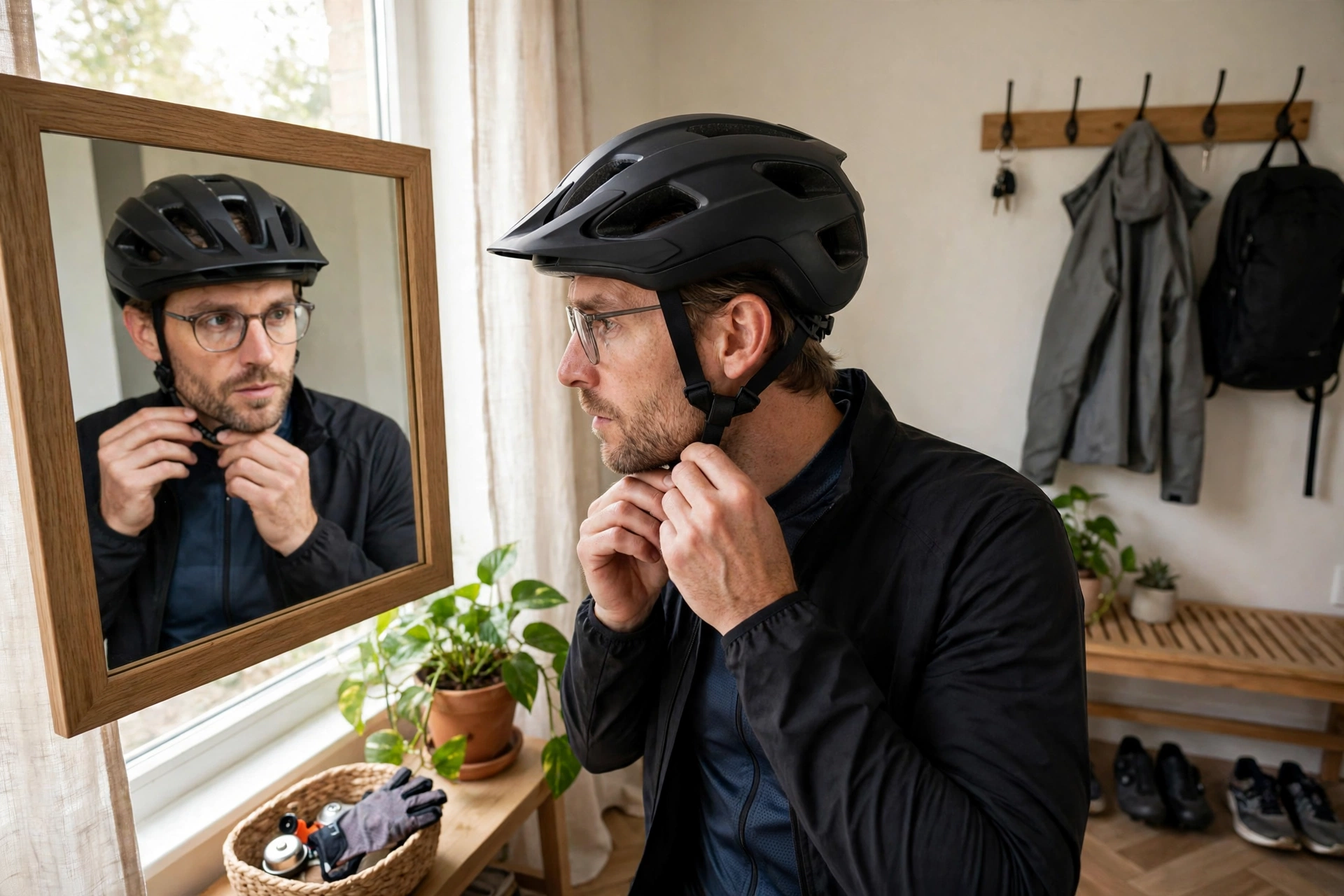
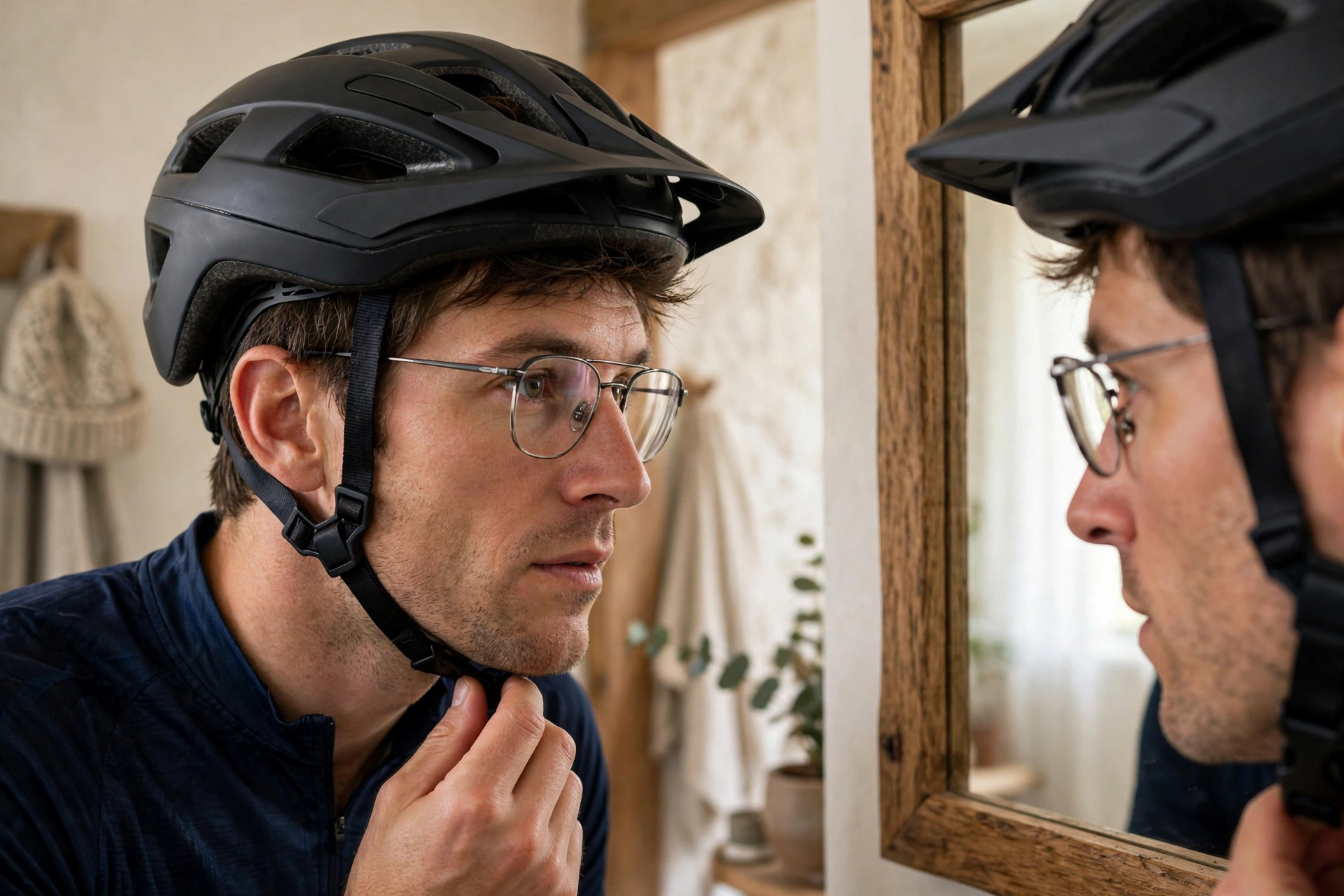
Always try a helmet on while wearing the glasses you actually ride in, not a spare pair. Put your glasses on first, then the helmet, and tighten the fit system as you would for a ride. Your glasses should stay level and comfortable, with no new pressure at the temples or behind the ears. Shake your head gently from side to side: the helmet and the glasses should move together, not fight each other.
Check the strap routing next. The front straps should pass in front of your ears without crossing the glasses arms, and the buckle should sit under your chin without pulling the helmet forward. If the straps constantly drag your frames out of position, that helmet is probably not the right shape for you, even if it feels fine for the first minute.
Also look at how much room there is around the brow. You should be able to glance up, down, and sideways without the helmet rim cutting into your field of view or touching the top of your frames. Sunglasses wearers should repeat the whole check with their riding sunglasses too, since sport frames are often thicker and sit differently from everyday glasses.
Do You Need a Visor, Goggles, or Special Lenses for E-Bike Riding?
Most glasses wearers do fine with their regular glasses under a standard e-bike helmet, and a built-in visor is optional rather than essential. A short visor can help keep sun and light rain off your lenses, which is handy on a commute. A long visor, on the other hand, can push air down onto your glasses and make fogging worse, so try before you buy if a visor matters to you.
Goggles are worth considering only if you ride at higher assist speeds in cold or dusty conditions, or if your glasses do not give you enough wind protection. Over-the-glasses goggles exist, but they add bulk and can be awkward with a helmet, so treat them as a specialist option rather than a default. For most everyday riders, well-fitting glasses plus a helmet with sensible venting are enough.
Photochromic or clip-on sunglasses can be a simpler upgrade than new eyewear. They let you keep the frames you know fit your helmet while adapting to bright conditions. Whatever you choose, make sure the combination still lets you see clearly at junctions and in low light, because vision matters more than any single feature.
How Can You Stop Glasses Fogging Under a Helmet?
Fogging happens when warm, moist air from your breath and skin meets cooler lenses, and it is most common when you stop after a fast stretch or climb a hill slowly. The simplest fix is airflow: keep moving gently rather than stopping dead, and lift the front of the helmet slightly at a red light if your fit system allows it. Even a small gap can clear lenses quickly.
Anti-fog wipes and sprays can help, but results vary, so test any product on a short ride before relying on it for a commute. In general terms, keeping your lenses clean matters just as much: a thin film of grime gives moisture something to cling to, so a quick daily wipe often reduces fogging more than any special coating.
Helmet choice helps too. A helmet with rear exhaust vents tends to pull air through rather than trapping warm air around your face, which keeps lenses clearer. If fogging stays a serious problem, a helmet with a slightly more open front profile, or glasses that sit a little further from your face, may solve it without any extra gear.
What About MIPS and Other Safety Features for Glasses Wearers?
Safety features work the same way whether or not you wear glasses, so do not trade protection for frame comfort. A low-friction liner, such as the system described in our guide to what MIPS means for helmets, sits inside the helmet and is designed to reduce rotational forces in certain angled impacts. It should not change how your glasses fit, but it is worth checking during a try-on, since some liners alter the internal shape slightly.
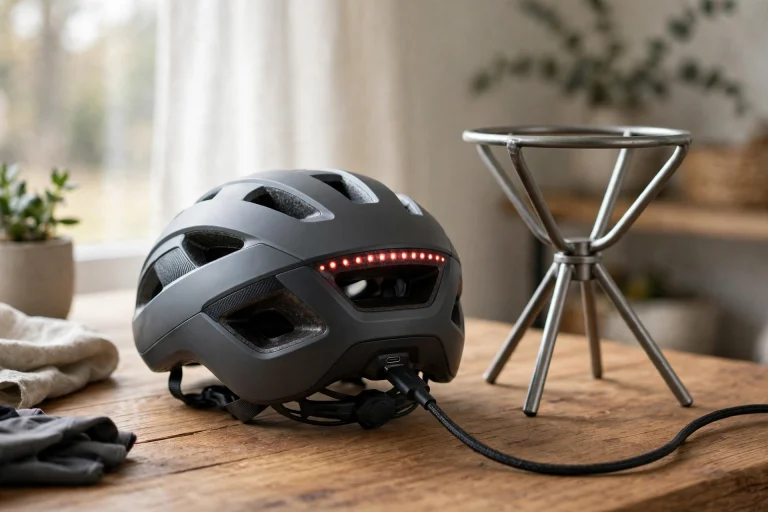
Other features worth having on an e-bike helmet include good rear coverage, a reliable fit dial that you can adjust with one hand, and a rear light mount or built-in light for visibility. None of these should interfere with your glasses, but a rear light that sits low on the helmet can sometimes clash with a ponytail or a hood, so check the whole setup together.
Finally, remember that a helmet only protects you if you actually wear it every ride. If your glasses make a particular helmet miserable, you are less likely to reach for it, and that is a safety problem in itself. Comfort and protection are not opposites here: the helmet that fits your glasses well is the one you will keep wearing.
Frequently Asked Questions
Q: Can I wear any e-bike helmet with glasses?
A: In general terms, most helmets can work with glasses, but the fit varies a lot by head shape and frame style. Always try the helmet on with your own glasses before buying, and check for temple pressure, strap interference, and a clear field of view.
Q: Should I buy a bigger helmet size to fit my glasses?
A: No, sizing up is usually a mistake. A helmet that is too large will move around and may not stay in place in a fall. Choose your correct head size and look for a model whose shape leaves room around your frames instead.
Q: Do I need prescription cycling glasses for e-bike riding?
A: Not necessarily. Many riders use their everyday glasses quite happily. Prescription cycling glasses or inserts are worth considering if your everyday frames fog badly, slip constantly, or do not give enough wind protection at speed.

Olivia
Writer at Helmet Today, covering helmet reviews, fit and riding safety.