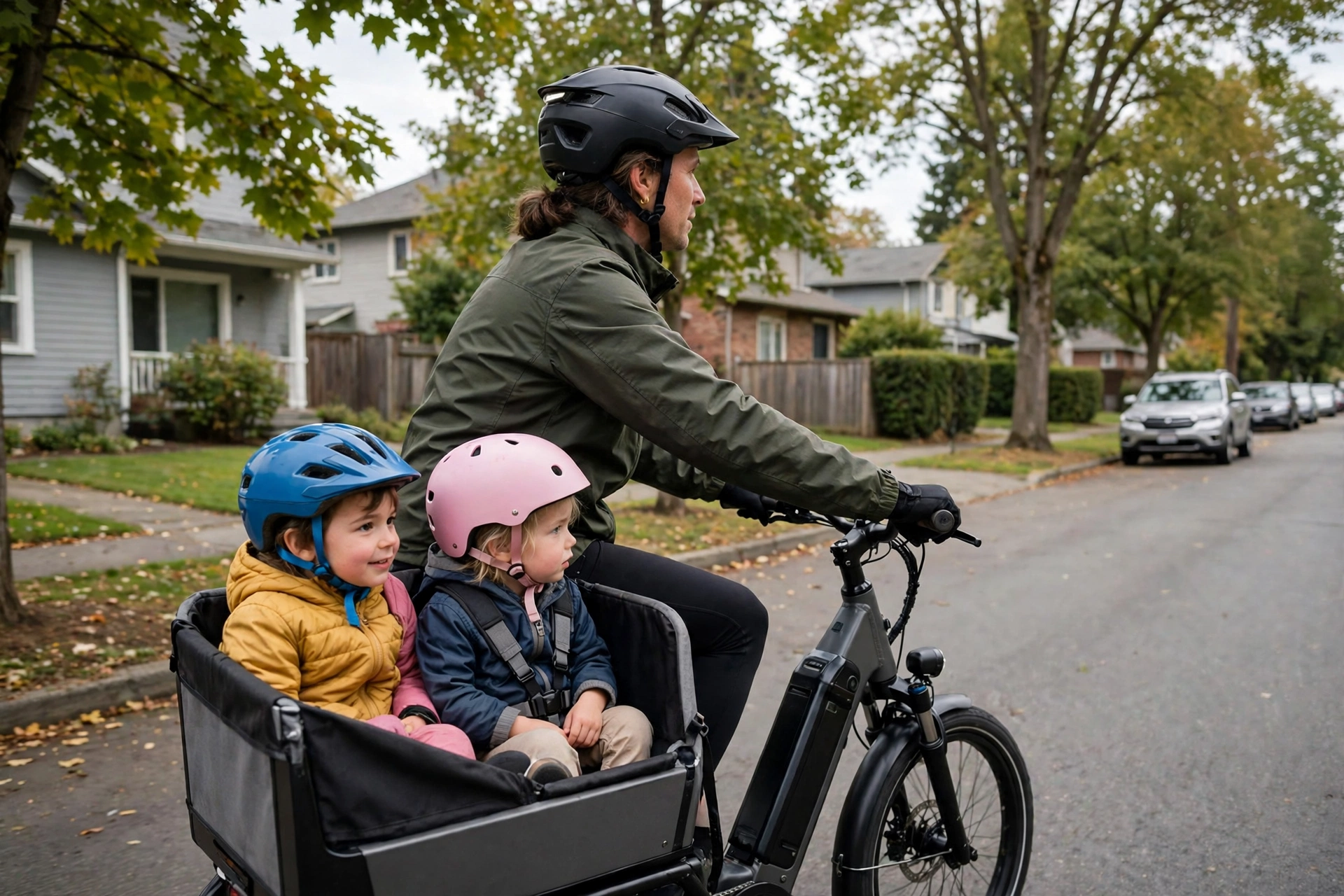
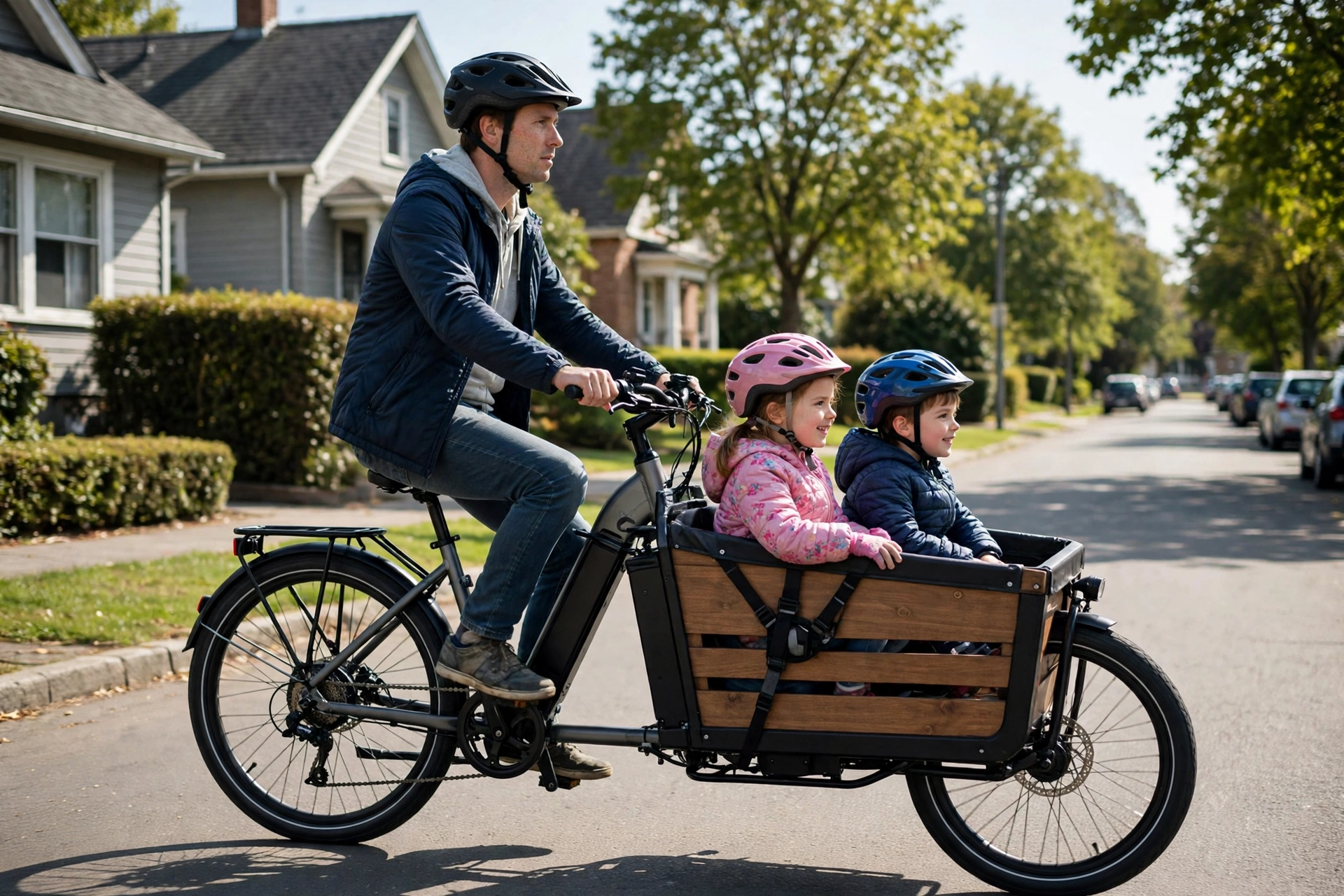
Parents riding a cargo bike with kids should wear a well-fitting e-bike helmet with good rear and side coverage, and every child on board should wear a correctly fitted kids helmet too. In general terms, choose a helmet you will actually wear on every school run, check the fit for both adult and child before each ride, and add visibility gear so other road users see the whole bike, not just you.
A cargo bike changes the riding equation. You are heavier, longer, and slower to manoeuvre than on a regular bike, and you are carrying precious passengers who cannot protect themselves. That makes helmet choice a family decision, not just a personal one: your helmet, each child’s helmet, and the way the bike is loaded all work together to keep everyone safer.
What Makes a Good E-Bike Helmet for Cargo Bike Parents?
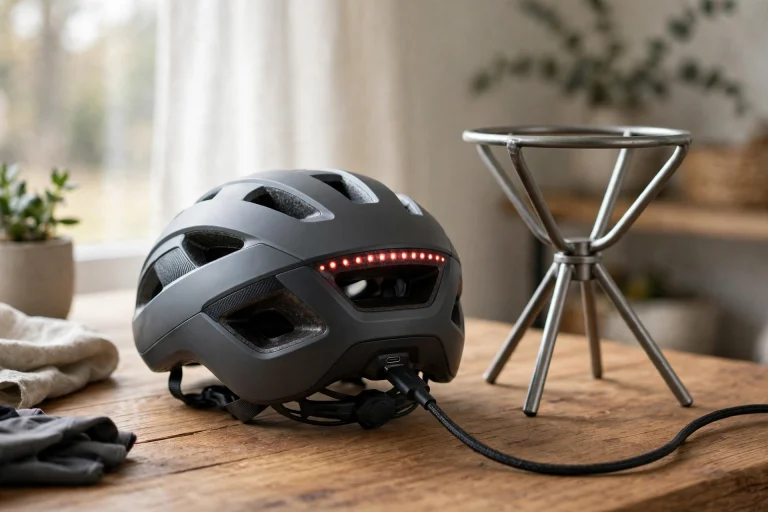
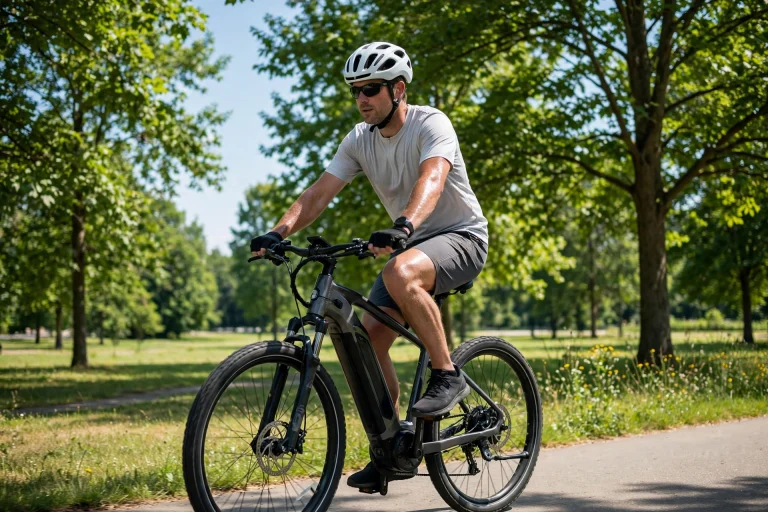
Coverage is the first priority. Cargo bikes travel at e-bike speeds in traffic, and a helmet with generous coverage around the back and sides of the head offers more protection than a minimal, highly vented road helmet. Look for a model designed for commuting or e-biking rather than racing, since these tend to balance coverage, comfort, and visibility for everyday riding.
Visibility comes next, because a long cargo bike can surprise drivers who only glance for a single cyclist. A bright-coloured helmet, a rear light, or reflective details help the whole outfit stand out. Some parents also add a flag or reflective panels to the cargo box itself, which helps drivers judge the bike’s full length when overtaking.
Comfort decides whether the helmet actually gets worn. School runs happen in rain, heat, and rush, so a helmet that pinches, fogs your glasses, or needs constant adjustment will quickly be left at home. A reliable fit dial, straps you can adjust with gloves on, and pads you can wash easily are worth more than exotic features you never use.
What Helmet Does Each Child on a Cargo Bike Need?
Every child riding on or in a cargo bike should wear a helmet made for their age and head size, fitted correctly every time. A toddler in a front box and an older child on a rear seat need different sizes, and a helmet handed down from an older sibling only works if it still fits the younger child’s head properly. In general terms, the helmet should sit level, cover the forehead, and stay put when you gently push it from the sides.
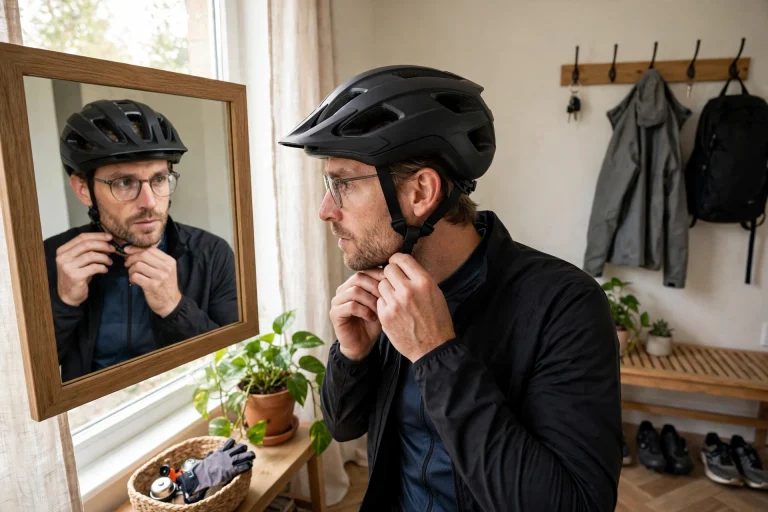
Fit checks matter more for children because their heads grow fast. Check the fit at the start of each season and after any growth spurt, and re-check the straps every ride: children wriggle, and a strap that was snug last week can be loose today. Teach older children to do their own quick check, with the helmet level and the chin strap snug enough that only a finger or two fits underneath.
Comfort matters for children just as much as for adults. A helmet that is hot, itchy, or heavy will lead to protests and, eventually, to rides without one. Let children choose the colour where you can, keep the pads clean, and make helmet-wearing a non-negotiable part of the ride routine, like seatbelts in a car.
How Should You Ride Differently With Kids on Board?
Slow down and plan ahead. A loaded cargo bike brakes over a longer distance and turns more slowly than an unloaded bike, so leave extra space at junctions, approach corners gently, and brake earlier than you think you need to. In general terms, ride as if your passengers are more vulnerable than you, because they are: they cannot brace, steer, or jump clear.
Loading matters too. Keep heavier items low in the box, secure loose bags so they cannot shift mid-ride, and make sure nothing pokes above the box sides where it could catch on a gate or a passing vehicle. Children should sit with their hands inside the box, not trailing over the sides, and any seat belts or harnesses fitted to the box should be used on every ride.
Route choice is a safety feature in itself. A slightly longer route on quiet streets or a cycle path is usually better than a shorter one on a busy road, especially with children aboard. If you must use a busy road, ride predictably, signal early, and take the lane position that keeps you visible rather than hugging the kerb where drains and parked cars create hazards.
Do Parents and Children Need Matching Safety Features?
Not matching, but each helmet should be appropriate for its rider. Adult and child helmets are built to different standards and sizes, so buying identical models is rarely possible or necessary. What matters is that each helmet fits, is certified for cycling, and is in good condition, not that the family set looks coordinated.
One feature worth understanding for both adult and child helmets is the low-friction liner found in many modern designs. Our guide to what MIPS means for helmets explains how this kind of liner is designed to reduce rotational forces in certain angled impacts. It is a useful feature to look for, but it never replaces correct fit, which remains the single most important factor for any rider, adult or child.
Also check the little things that add up on family rides: a rear light on the adult helmet for visibility, a peak or visor that keeps sun out of your eyes without blocking your view of the children, and a helmet that works with your glasses if you wear them. Small comfort details are what turn a helmet from a chore into a habit.
How Do You Keep Family Helmets in Good Condition?
Check every helmet regularly for cracks, dents, crushed foam, and frayed straps, and replace any helmet after a significant impact, even if the damage is not obvious. Children’s helmets take more knocks from being dropped, kicked, and left in the garden, so inspect them more often and store them indoors rather than in a shed or on the bike.
Cleaning is simple: wipe the shell with a damp cloth, wash removable pads by hand with mild soap, and let everything air-dry fully before the next ride. Never use solvents, and never dry a helmet on a heater or in a hot car. Teach children to treat their helmets gently, not as toys, and replace a helmet that has been badly dropped onto concrete, since foam can be damaged without visible cracks.
Finally, keep a spare in mind. Children outgrow helmets, and a helmet that fitted perfectly in spring may be too tight by autumn. Checking the fit monthly during growth years is a small habit that keeps the whole family protected.
Frequently Asked Questions
Q: Do children need helmets on a cargo bike if they sit inside a box?
A: In general terms, yes. A box protects against weather and small bumps, but not against a fall or a collision. A correctly fitted kids helmet is still the right choice for every child on board, whatever the cargo bike design.
Q: Can my child wear my old adult helmet if it fits?
A: Only if it genuinely fits their head correctly, sits level, and stays stable, and even then a kids helmet is usually a better shape for a smaller head. Never use a helmet that is too large and padded out to fit, since it may not stay in place in a fall.
Q: Should parents wear a helmet even on short, slow school runs?
A: Yes. Most falls happen close to home, at low speed, and when you least expect them. Wearing your helmet on every ride also sets the example that makes children accept theirs without argument.

Olivia
Writer at Helmet Today, covering helmet reviews, fit and riding safety.