To stop a ski helmet slipping back when you wear goggles, fit the helmet first without the goggles, then clip the goggle strap over the helmet’s rear clip and tighten the helmet’s fit system until the helmet stays put when you nod and shake your head — in general terms, a helmet that slips back is almost always too loose, the wrong shape, or worn with the goggle strap pulling it backwards.
Slipping is more than an annoyance. A helmet that rides back leaves your forehead exposed, lets cold air and snow in at the front, and sits out of position for the impact it is meant to manage. The good news is that the fix is usually a fitting adjustment, not a new helmet.
Why Does a Ski Helmet Slip Back When Goggles Go On?
The goggle strap is the usual culprit. A wide elastic strap stretched around a smooth helmet shell creates a backward pull, especially if the strap sits high on the back of the helmet or the helmet’s rear is rounded. Add a bit of sweat, a balaclava that changes the fit, or a helmet that was already borderline loose, and the whole thing creeps backwards on the first few runs.
Fit problems underneath make it worse. If the helmet is a size too big, or shaped differently from your head — round where you are oval, for example — it has nothing to grip with, and the goggle strap just finishes the job. A helmet that fits well without goggles will usually behave with them; a helmet that only just stays put bare will not.
How Should the Goggle Strap Sit on the Helmet?
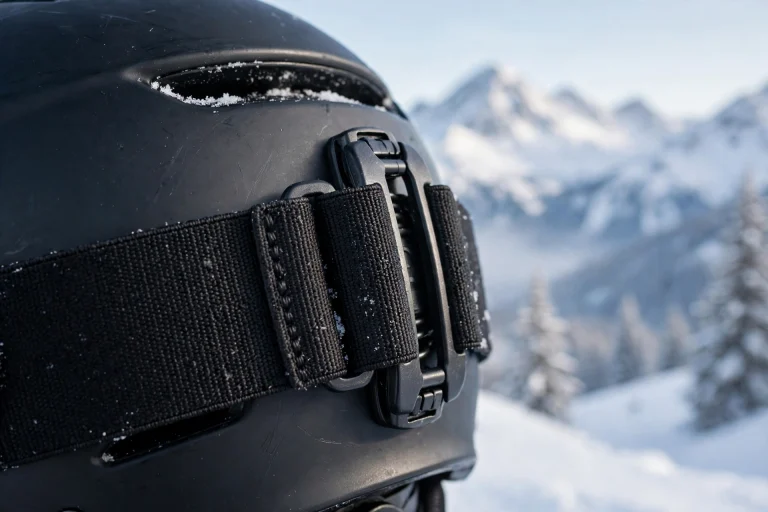
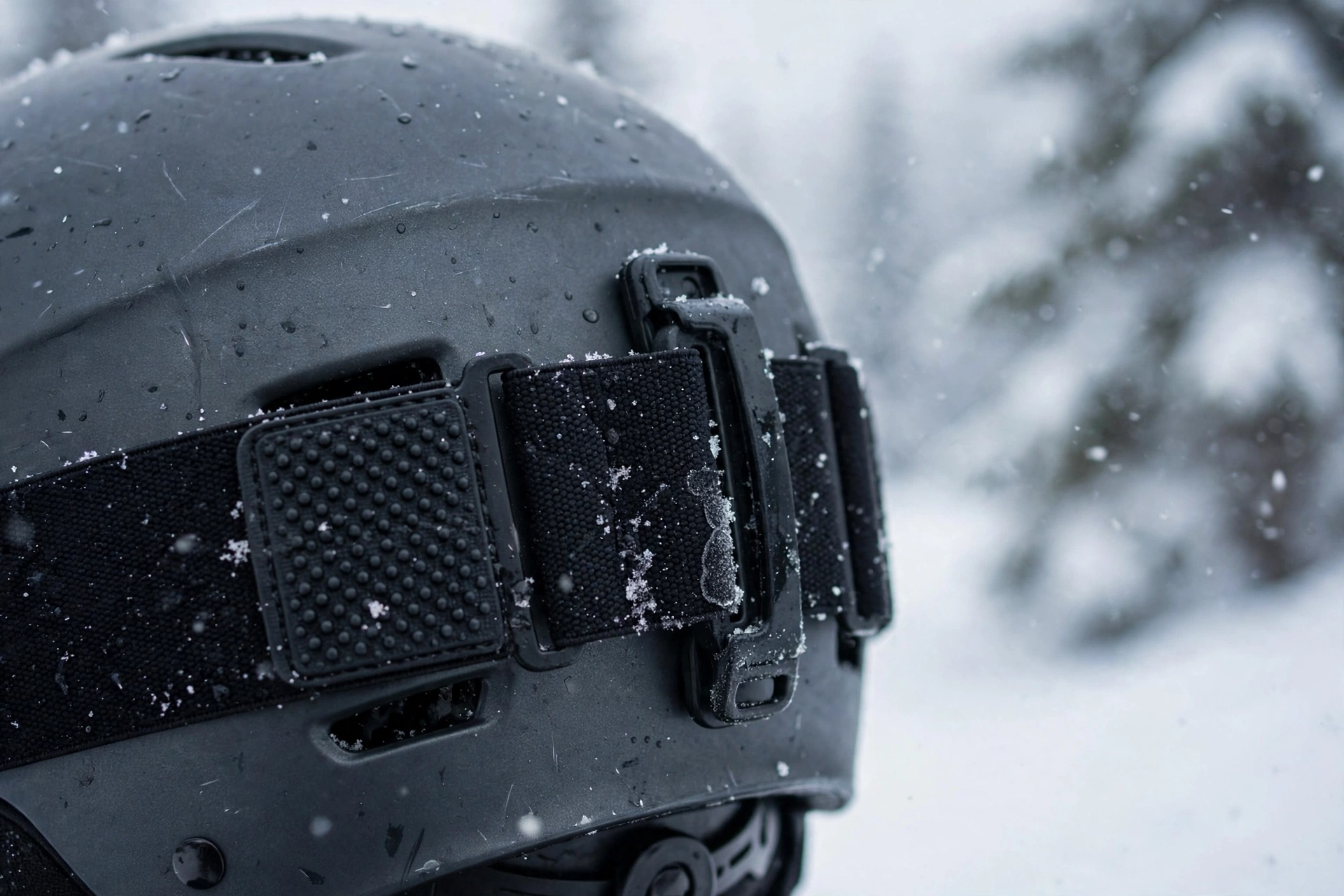
Use the goggle clip. Most ski helmets have a clip or a small gate at the back, and it exists precisely to stop the strap sliding up and pulling the helmet back. Thread the strap through or under the clip so it is anchored at the widest part of the shell, not riding high towards the crown.
Keep the strap level. The strap should run horizontally around the helmet, at roughly the same height front and back, rather than angled upwards at the rear. An upward angle turns every head movement into a backward tug. Adjust the strap length so it is snug but not stretched to its limit — an over-tight strap pulls harder, not better.
Check the strap’s grip. Some goggle straps have a silicone gripper strip on the inside; if yours does, make sure it faces the helmet, not outwards. If your strap is old and the elastic has gone slack, it will need more tension to stay put and will pull unevenly — a fresh strap is a cheap fix.
What Fit Adjustments Stop the Helmet Moving?
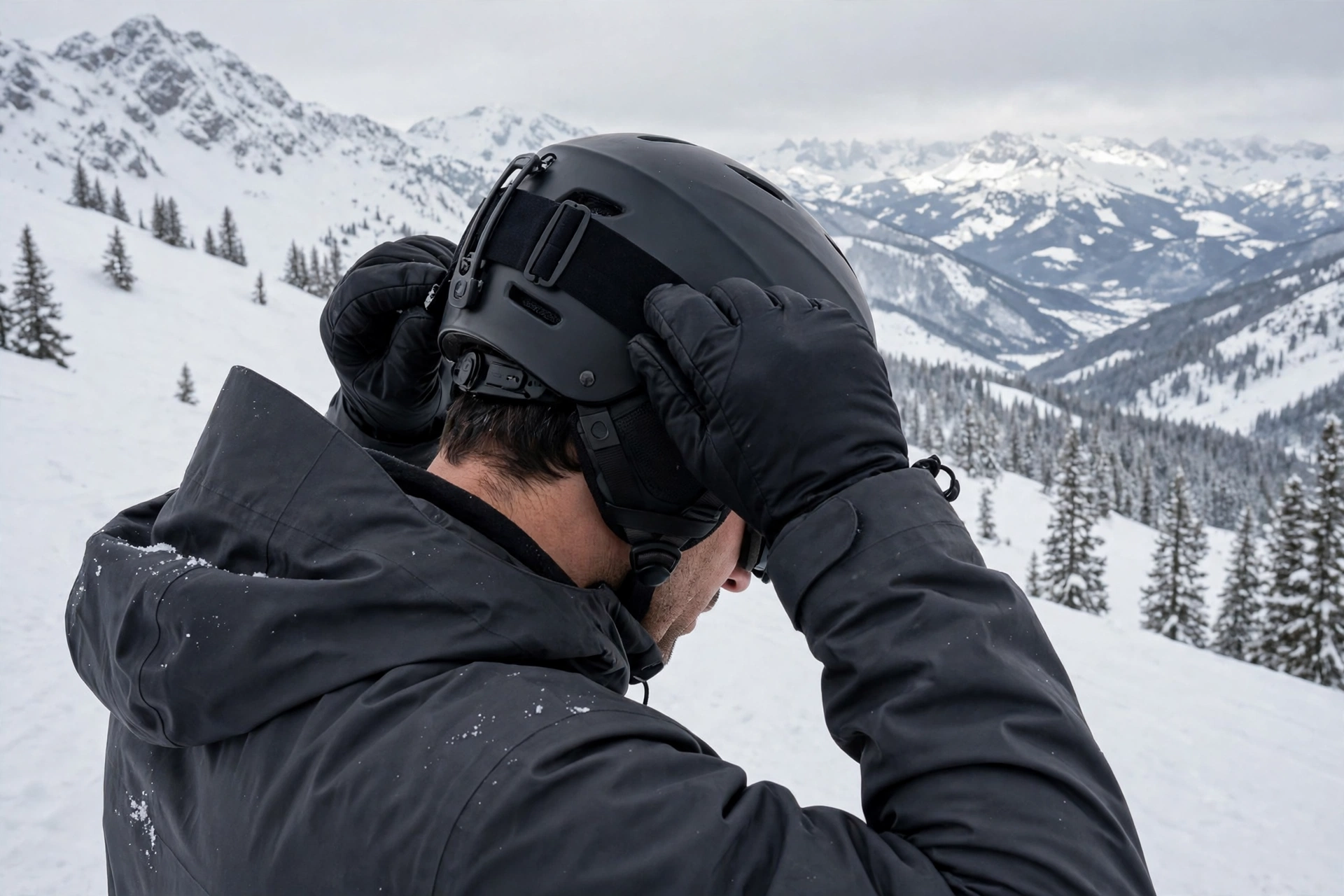
Start with the fit system. Most modern ski helmets have a dial or a sliding adjustment at the back; tighten it until the helmet feels snug all the way round, like a firm handshake, with no single pressure point. Then do the shake test: fasten the chin strap, shake your head hard side to side and nod vigorously. The helmet should move with your head, not independently of it.
Set the chin strap properly. It should sit snug under the chin with room for about one finger, and the side dividers should sit just below the ears. A loose chin strap lets the helmet rock backwards; an over-tight one just hurts without adding stability.
Check the helmet’s position before every run, not just in the morning. Helmets settle as liners compress and as you sweat. A quick press down at the front and a tug at the back on the lift takes seconds and catches creep before it becomes a problem.
- Level: front edge just above the eyebrows, not tipped back
- Snug: even pressure all round, no rocking on a hard head shake
- Anchored: goggle strap through the rear clip, running level
- Re-checked: position checked again after the first run of the day
Could the Wrong Size or Shape Be the Real Problem?
If adjustments do not hold, suspect size. Measure around your head just above the eyebrows and ears and compare it with the maker’s size chart for your exact model — sizes vary between brands, so your measurement matters more than the label. If you are between sizes, the smaller one with the fit system loosened is usually the better starting point than the larger one tightened to its limit.
Shape matters as much as size. Heads are not all the same oval, and helmet shells are moulded differently. A helmet that pinches at the temples but feels loose front to back is the wrong shape, not the wrong size, and no amount of strap adjustment will fix it. Trying a different brand’s shell is the honest answer here.
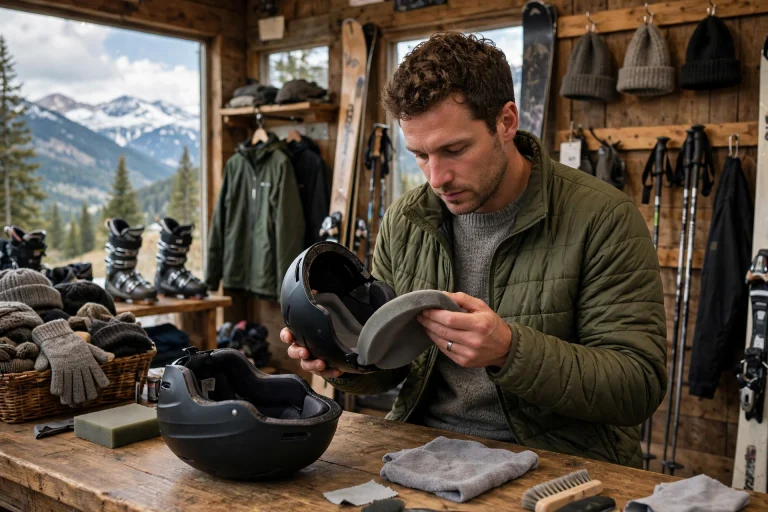
Also consider the liner. Liners compress with use, and a helmet that fitted perfectly last season may have loosened as the padding packed down. Replacement liner pads, where the maker sells them, can restore a snug fit for far less than a new helmet.
What About Goggle and Helmet Compatibility?
Helmets and goggles are designed as a system, and mismatched pairs cause trouble. A goggle frame that is too tall pushes the helmet up at the front, which tips it backwards; a frame that is too small leaves a gap that lets the strap sit wrong. In general terms, buying the same brand’s helmet and goggles, or at least checking the pair together in a shop, avoids most of this.
The interface at the front matters too. The top of the goggle frame should meet the helmet’s brow without a gap and without pushing the helmet up. If you can fit a finger between goggle and helmet, cold air will get in and the strap geometry will be off. Foam on the goggle frame should sit against your face, not against the helmet shell.
If you are choosing new gear, try helmet and goggles together, with whatever balaclava you actually ski in, and do the shake test with the full set-up on. A combination that passes that test in the shop will usually behave on the mountain. Rotational impact protection, such as the system explained in this guide to what MIPS is for helmets, only works as designed when the helmet stays in its fitted position, which is another reason a slipping helmet deserves fixing rather than tolerating.
Frequently Asked Questions
Q: Will a tighter chin strap stop my helmet slipping back?
A: Only partly. A snug chin strap helps, but if the shell is too big or the goggle strap is pulling it backwards, tightening the chin strap just makes it uncomfortable without fixing the cause. Fix the shell fit and the strap route first, then set the chin strap to finish the job.
Q: Should the goggle strap go under or over the helmet?
A: Over the helmet, anchored through the rear goggle clip, is the standard set-up for skiing. Under-helmet strap wear is a freestyle and park choice that changes the fit and can push the helmet out of position, so stick with the over-helmet route unless you have a specific reason not to.
Q: My helmet only slips on warm spring days — why?
A: Warmth changes the fit: sweat reduces friction, liners compress when damp, and you may have removed a layer you wore in winter. Tighten the fit system a notch on warm days, and re-check after the first run, when sweat and movement have settled the helmet into its real position.

Olivia
Writer at Helmet Today, covering helmet reviews, fit and riding safety.