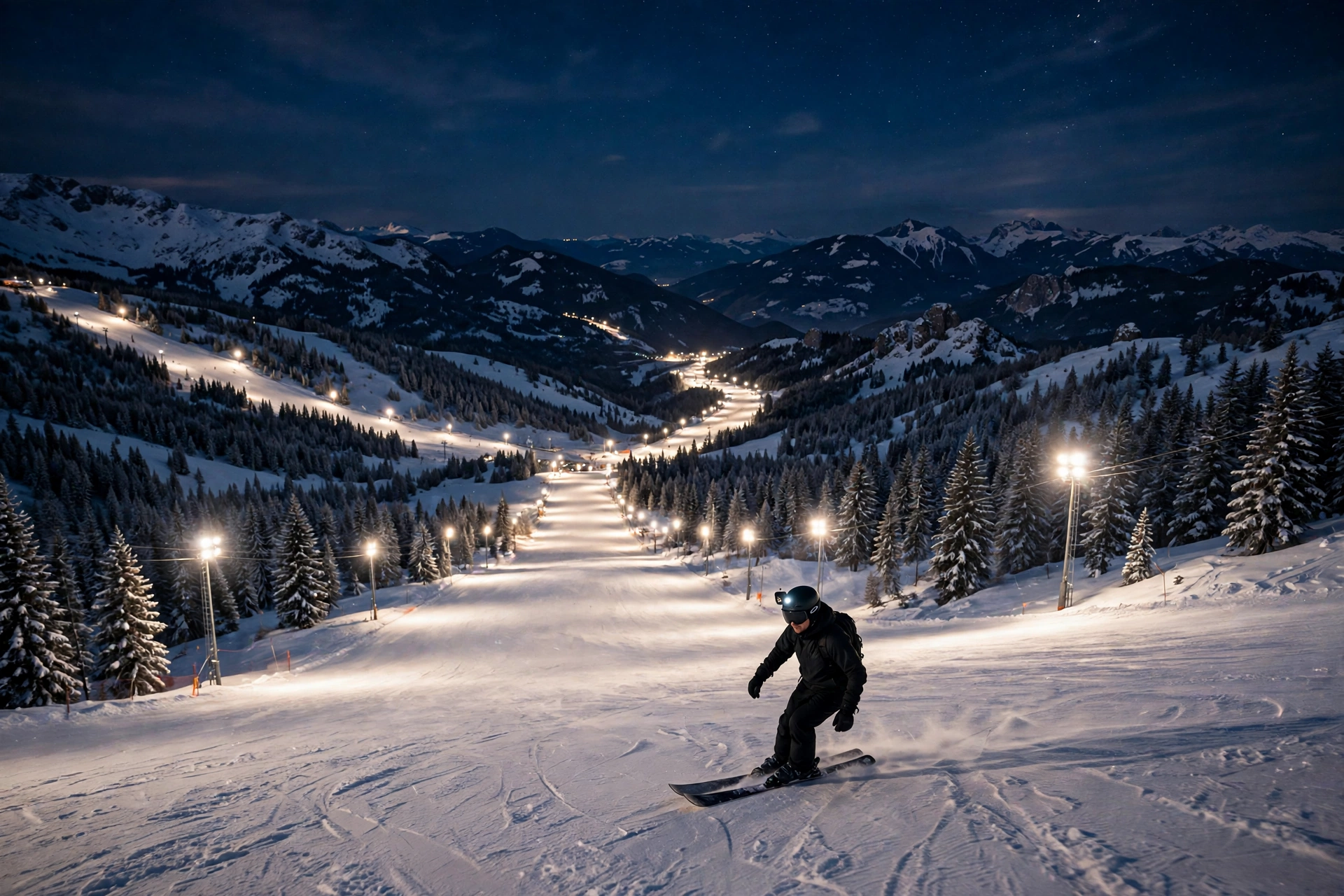
To attach a light to a ski helmet for night skiing, use a helmet-specific mount — a strap mount through the vents, a clip-on mount on the goggle strap, or an adhesive mount on a flat section of shell — and position the light centrally above the goggles so it points where you look — in general terms, a secure, centred mount with a light designed for helmets beats any improvised fix that can shift, snag, or fall off mid-run.
Night skiing changes what you need from your kit. Resort floodlights cover the groomed runs, but tree lines, ungroomed edges, and the walk back to the car are dark, and a helmet light puts light exactly where your head turns. Done well, it is a genuine safety upgrade; done badly, it is a distraction.
What Kind of Light Works Best on a Ski Helmet?
A compact headlamp-style light is the usual choice. Look for one with a wide flood beam rather than a narrow spotlight — you need to see the snow texture and the edges of the run, not a distant point.
Weight matters more than brightness. A heavy light mounted high on the helmet changes the helmet’s balance and can make it feel top-heavy, especially on a long evening. In general terms, a light weighing about the same as a small headlamp is comfortable; a big torch strapped on top is not.
Battery life and cold performance matter too. Batteries lose capacity in the cold, so a light rated for several hours at room temperature may last much less on a freezing night. Carry a spare battery in a warm pocket, and check the light’s charge before you leave the lodge, not on the first lift.
What Are the Mount Options, and Which Should You Choose?
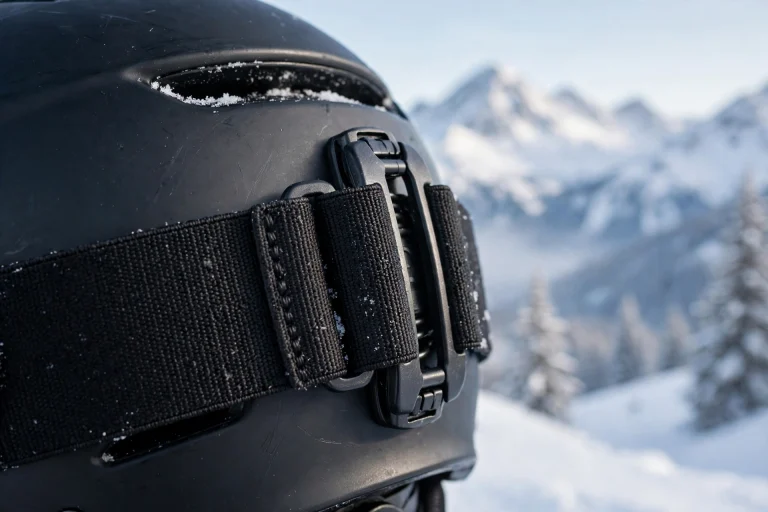
Strap mounts are the simplest. These thread through the helmet’s vents or around the shell with an elastic or webbing strap, and they suit lights that already have a headlamp-style bracket. They are easy to remove, leave no mark on the helmet, and work on most vent layouts — but check that the strap does not block a vent you need or sit over the fit system dial.
Clip-on mounts attach to the goggle strap or the helmet’s edge. They are quick to fit and remove, and they keep the light low and centred, but they depend on the clip matching your helmet’s shape, so try before you buy where possible.
Adhesive mounts stick to a flat section of the shell and give the most solid, rattle-free fixing. The trade-off is permanence: the mount stays on the helmet, adhesive can damage some shell finishes if removed, and it must sit on a flat area — a curved crown will not hold it. Never drill into a helmet shell to fit a mount; drilling damages the shell’s structure and can void its certification.
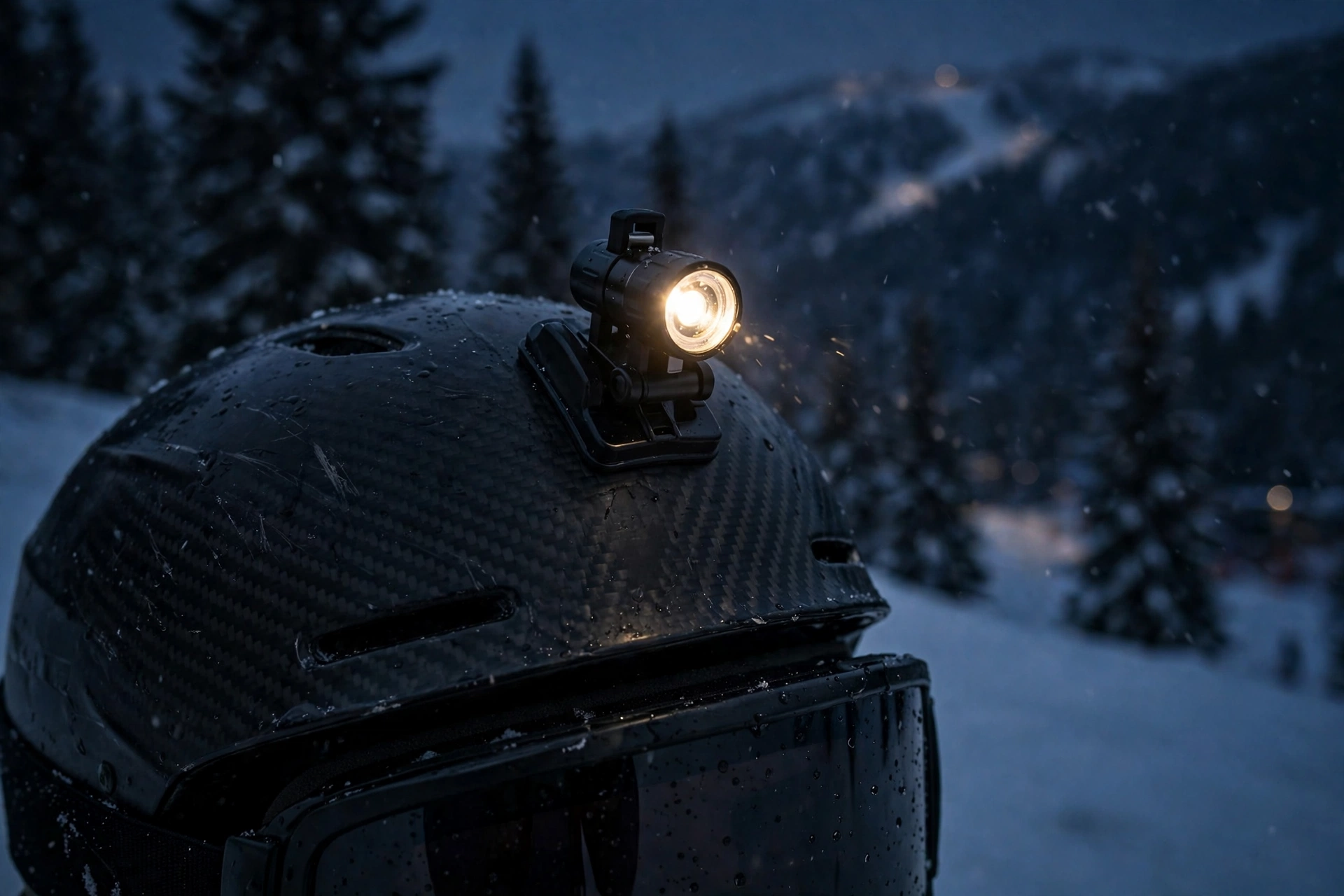
Where Exactly Should the Light Sit?
Centrally, just above the goggles. A centred light follows your gaze: where you look, the beam goes, which is exactly what you want when checking snow texture or picking a line. A light mounted to one side creates an offset beam that feels wrong and leaves a shadow on the other side.
Keep it low on the shell. Mounting high on the crown raises the centre of gravity and makes the helmet feel top-heavy; mounting just above the brow keeps the weight close to your head and the beam angle natural. Tilt the light slightly downwards so the beam lands a few metres ahead, not on the horizon.
Check the beam does not hit your goggles. A light angled wrong can reflect off the top of the goggle lens or the helmet’s brim and throw glare back into your eyes. Test the set-up in the dark before your first night run, and adjust the tilt until the snow ahead is lit and your lenses stay clear.
What Safety Rules Apply to Helmet Lights?
First, the mount must not compromise the helmet. No drilling, no screws into the shell, and no mount that covers a large area of the shell or interferes with the fit system, chin strap, or goggle clip. If a mount needs the helmet to be modified, it is the wrong mount.
Second, think about other skiers. A very bright light pointed at head height can dazzle people coming the other way, especially on narrow runs. Use the lowest brightness that lets you see, dip or switch off the light in lift queues and crowded areas, and never aim it deliberately at another person’s face.
Third, check resort rules. Some resorts restrict helmet lights on floodlit runs, and some night events have their own lighting rules. A quick check at the lift office avoids an awkward conversation with ski patrol — and in general terms, a light is a supplement to resort lighting and your own judgement, not a replacement for either.
- No drilling: never put screws or holes into a helmet shell
- Centred and low: above the goggles, close to the head
- Secure: shake-test the mount before every night session
- Considerate: low brightness in queues and around other skiers
How Do You Keep a Helmet Light Working All Evening?
Manage the battery. Start with a full charge, carry a spare in an inside pocket where body heat keeps it warm, and swap before the light dims rather than after — a fading beam on a dark run is worse than a short stop to change batteries. In very cold conditions, keep the spare battery warm and the light itself as sheltered as possible.
Protect the light from snow and knocks. Falling in powder can bury a light, and a branch can knock a clip-on mount loose. After a fall, check the mount and the beam angle before continuing — a light that has shifted to point at the sky is no use to anyone. The helmet’s impact protection, including the rotational-force management explained in this guide to what MIPS is for helmets, depends on the helmet staying in position, so a mount that drags the helmet around in a fall should be reconsidered.
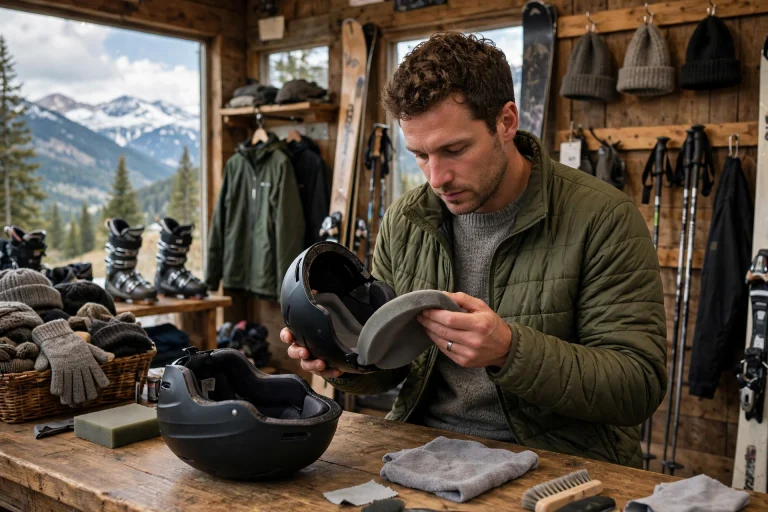
At the end of the night, remove strap and clip mounts, wipe the light dry, and store it separately from the helmet so a damp light does not sit against the liner. Check the mount area on the shell for wear each time you refit it, and replace any strap that has stretched or frayed.
Frequently Asked Questions
Q: Can I use an ordinary headlamp on my ski helmet?
A: Yes, in general terms, if it mounts securely and sits centrally above the goggles. A headlamp’s strap can thread through helmet vents, but check that it does not block vents or the fit system, and shake-test it before skiing — a headlamp made for running may not stay put at skiing speeds.
Q: Will a helmet light dazzle other skiers?
A: It can, if it is very bright and aimed at head height. Use the lowest useful brightness, angle the beam slightly down at the snow, and switch it off or dim it in lift queues and crowded areas to avoid dazzling others.
Q: Is it safe to glue a mount to my helmet?
A: An adhesive mount on a flat section of shell is widely used and, in general terms, does not damage the helmet’s structure the way drilling does. Check the adhesive maker’s guidance for your shell material, place it on a flat area, and never remove it by force if you later change your mind.

Olivia
Writer at Helmet Today, covering helmet reviews, fit and riding safety.