To pack a ski helmet in a suitcase without damage, put it in the centre of the case surrounded by soft clothing, fill the inside of the shell with socks or base layers so it holds its shape, and keep heavy, hard objects away from it — in general terms, a helmet travels safely when nothing can press on, crush, or scratch the shell, and when the liner is supported from the inside.
Helmets are bulky, awkwardly shaped, and easy to damage in transit, so many skiers carry them separately or stuff them in a boot bag and hope. With a little packing method, a helmet can travel safely in an ordinary suitcase and arrive ready for the first run.
Should You Pack a Helmet in a Suitcase at All?
In general terms, yes, if you pack it properly. A suitcase gives a helmet a rigid outer shell of its own, which protects it better than a soft duffel where other bags can press on it. The risk is not the suitcase itself but what shares the case with it: boots, bindings, and hard bottles are the enemies.
Hand luggage is the safest option where size allows, since you control how it is handled and it avoids the hardest knocks of the hold. If the helmet must go in checked luggage, pack it as described below and accept that a helmet bag inside the suitcase adds a useful extra layer.
Consider a dedicated helmet bag if you travel often. A padded helmet bag keeps the shell clean, stops straps tangling, and makes the helmet a single neat unit inside the suitcase. It is not essential — soft clothing does the same job — but it makes packing faster and more repeatable.
How Do You Prepare the Helmet Before Packing?
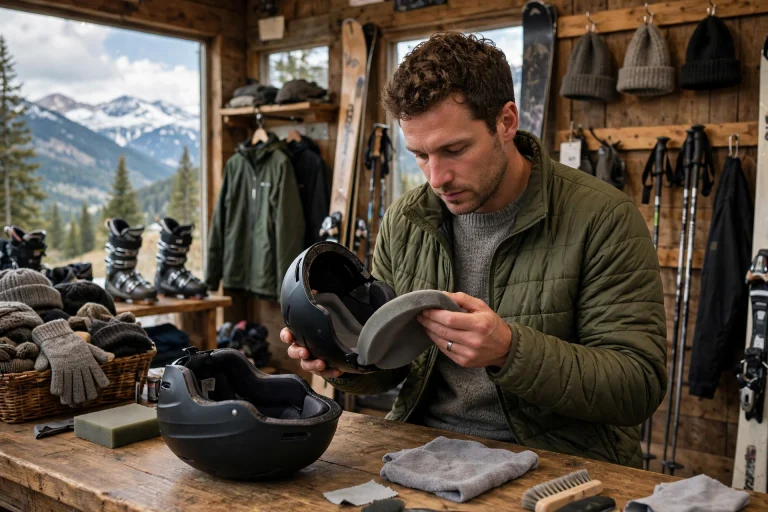
Clean and dry it first. A damp liner packed into a sealed case will smell by arrival and can grow mould on a longer trip, so air-dry the helmet fully after your last session before the trip, or at least overnight before packing. Wipe the shell clean so grit does not scratch it in transit.
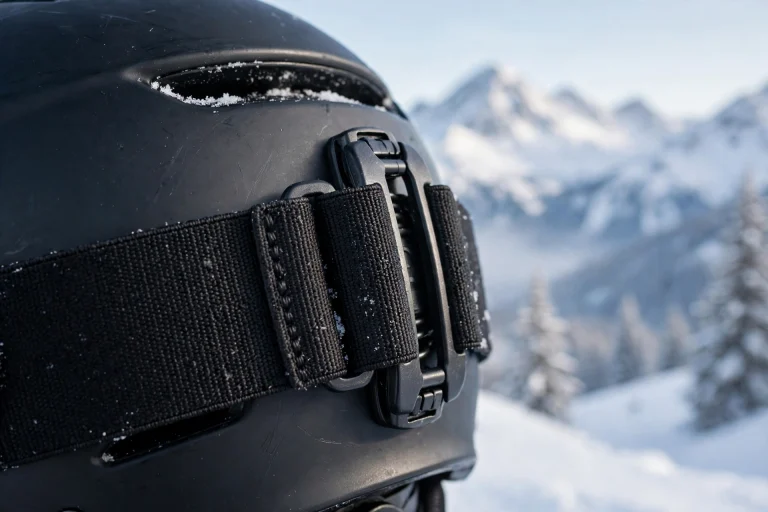
Remove loose extras. Take out any detachable ear pads you want to protect separately, unclip anything that can snag, and tuck the chin strap inside the helmet so its buckle cannot scratch the shell or catch on clothing. If your goggles travel with the helmet, put them in their own soft case — a loose goggle lens against a helmet shell scratches both.
Stuff the shell gently. Fill the inside of the helmet with soft items — socks, a base layer, a neck gaiter — so the liner is supported and the shell cannot be pressed inwards. Do not overstuff: the filling should support the shape, not force the shell outwards.
Where Should the Helmet Sit in the Suitcase?
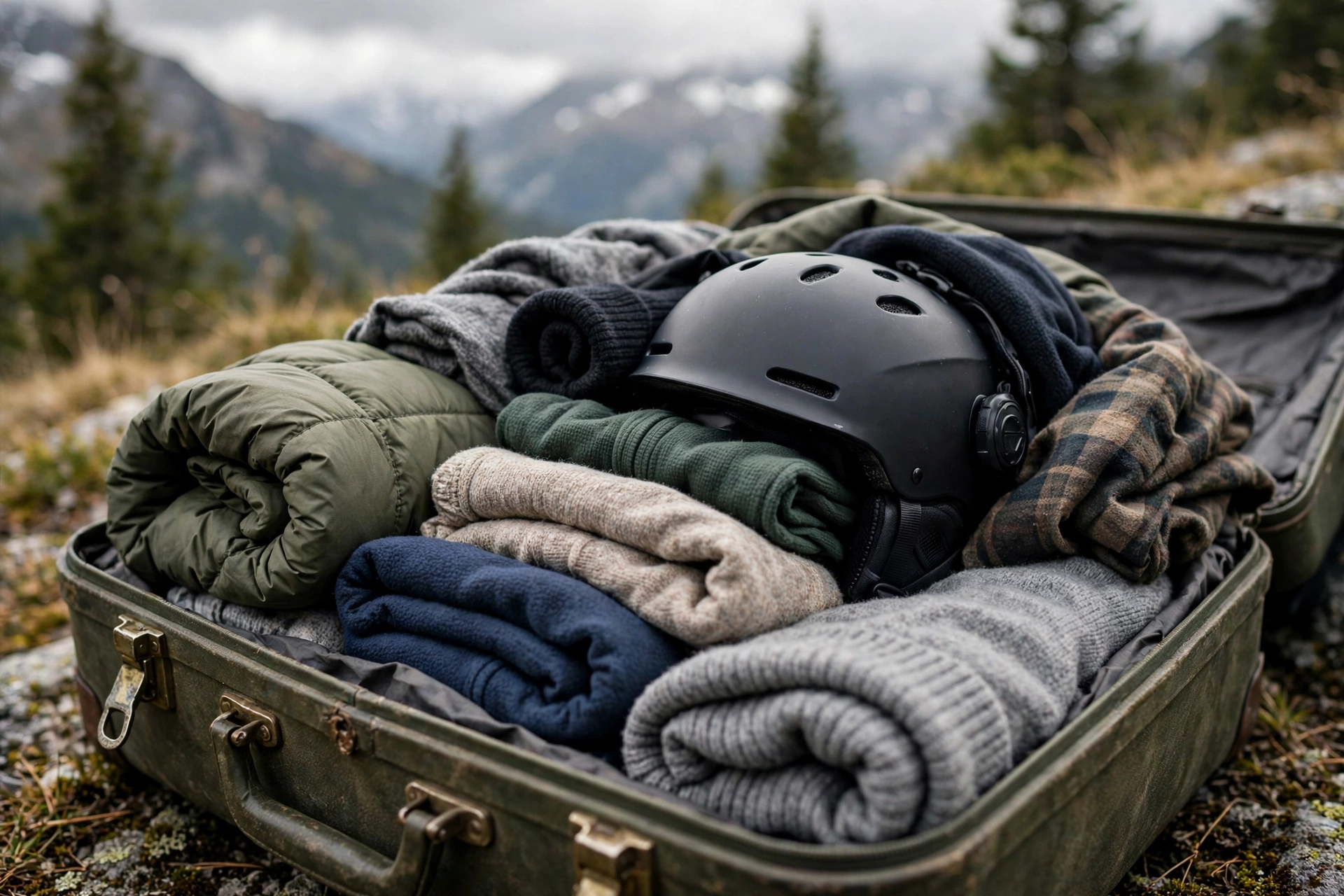
In the centre, surrounded on all sides by soft clothing. Pack a layer of clothing at the bottom of the case, place the helmet crown-down or on its side in the middle, then pack soft layers around and over it. The goal is a cushion of fabric on every side, so no hard object touches the shell directly.
Keep heavy items away from it. Boots, if they must share the case, go at the opposite end or in a separate compartment, never resting on top of the helmet. Bottles, chargers, and metal objects should be in side pockets or wrapped in clothing at the edges of the case, not loose near the helmet.
Do not wedge the helmet into a gap that is too small. Forcing a helmet into a tight space bends straps, compresses the liner unevenly, and can crack a shell if the case is then sat on. If the helmet only fits by force, it belongs in a separate bag, not in that case.
What Mistakes Damage Helmets in Transit?
Pressure is the main one. A suitcase packed to bursting, sat on to close, or stacked under heavier bags in a car boot can crush a shell or permanently compress liner foam. Pack the case so it closes without force, and keep it on top of heavier luggage rather than underneath.
Heat is the quieter risk. Leaving a case in a hot car boot or near a heater can soften foam and glue, and a helmet left in a sun-baked car all day is a common way to shorten its life. Keep luggage in the shade and out of hot boots where possible.
Scratches and strap damage come from loose hard objects. A buckle, a zip pull, or a boot edge rattling against the shell for a whole journey will mark it, and a strap caught in a zip can tear. Tucking straps away and wrapping hard items solves most of this.
- Centre it: soft clothing on all sides, nothing hard touching the shell
- Support it: soft filling inside the shell to hold its shape
- Close without force: never sit on a case to shut it over a helmet
- Keep it cool: out of hot car boots and direct sun
What Should You Check When You Arrive?
Inspect the helmet before your first run. Look over the shell for cracks, dents, or deep scratches, check the liner for compression or displacement, and test the fit system, chin strap, and buckle. If anything looks damaged — especially a crack in the shell or crushed foam — do not ski in it; a damaged helmet may not protect as designed.
Air it out. Even a well-packed helmet benefits from a few hours out of the case before skiing, so the liner dries fully and regains its shape. Hang it in the room, not on a radiator, and let it breathe overnight if you arrive the day before skiing.
Re-check the fit with your usual layers. Travel can shift liner pads slightly, and you may be wearing a different balaclava from the one you fitted at home. Do the usual shake test with goggles on before the first lift — and remember that the helmet’s protection, including the rotational-force management explained in this guide to what MIPS is for helmets, depends on a correct, stable fit on the mountain, not just in the shop.
Frequently Asked Questions
Q: Can I pack my ski boots and helmet in the same suitcase?
A: You can, but keep them apart: boots at one end of the case, the helmet centred and cushioned by clothing, with nothing hard resting on the shell. If the case is small, the boots belong in a separate bag rather than squeezed against the helmet.
Q: Is a helmet bag worth buying for air travel?
A: In general terms, yes if you fly with a helmet often. A padded helmet bag protects the shell, keeps straps tidy, and makes the helmet easy to pack and unpack — but soft clothing packed carefully around the helmet does the same job for occasional trips.
Q: What if my helmet gets crushed in transit?
A: Inspect it carefully: look for shell cracks, dents, or crushed foam, and check the fit. If you find damage, or the helmet took a heavy blow, replace it rather than risking it — internal foam damage is not always visible, and a compromised helmet may not perform as designed.

Olivia
Writer at Helmet Today, covering helmet reviews, fit and riding safety.