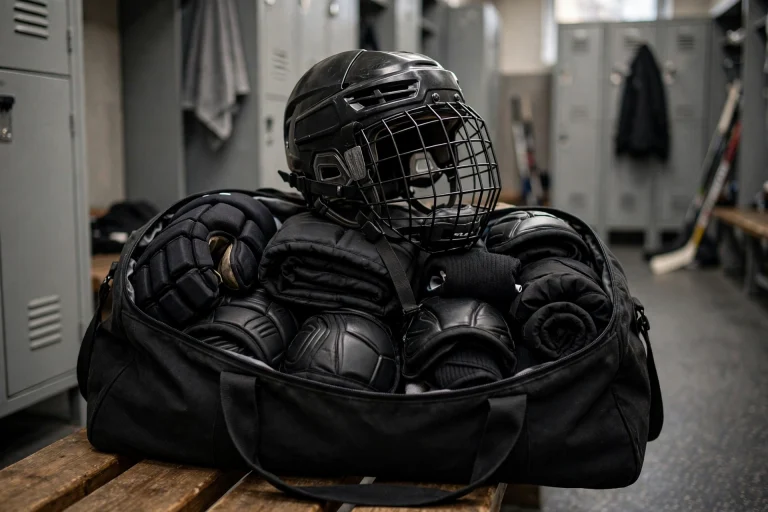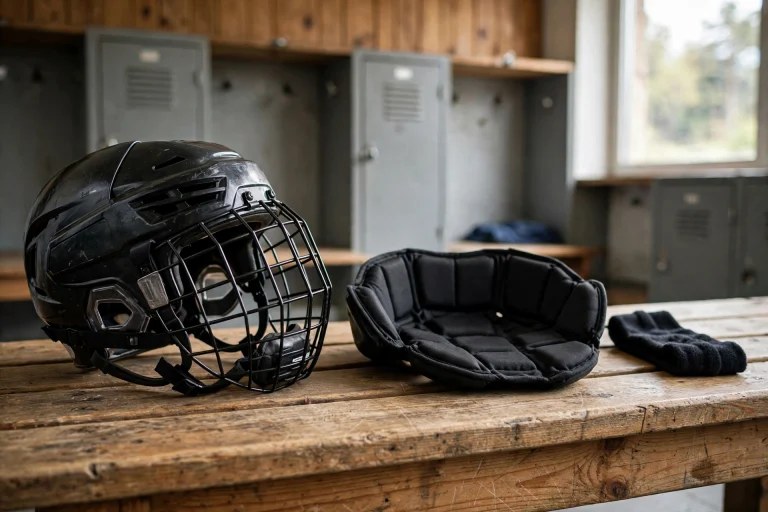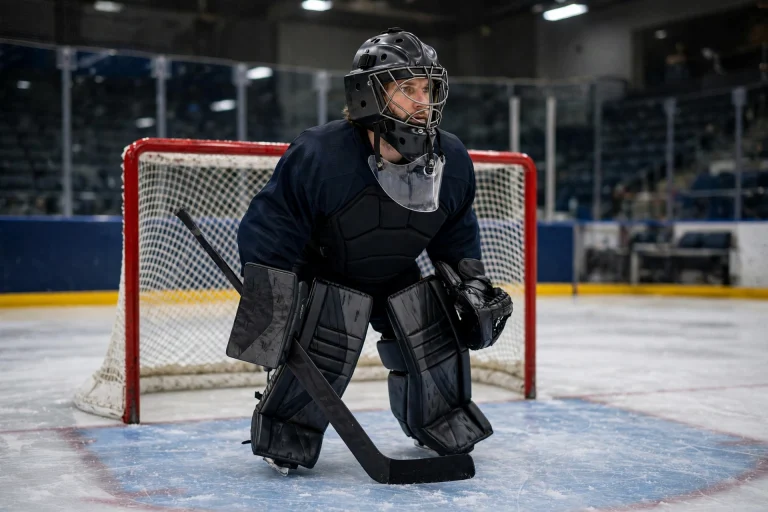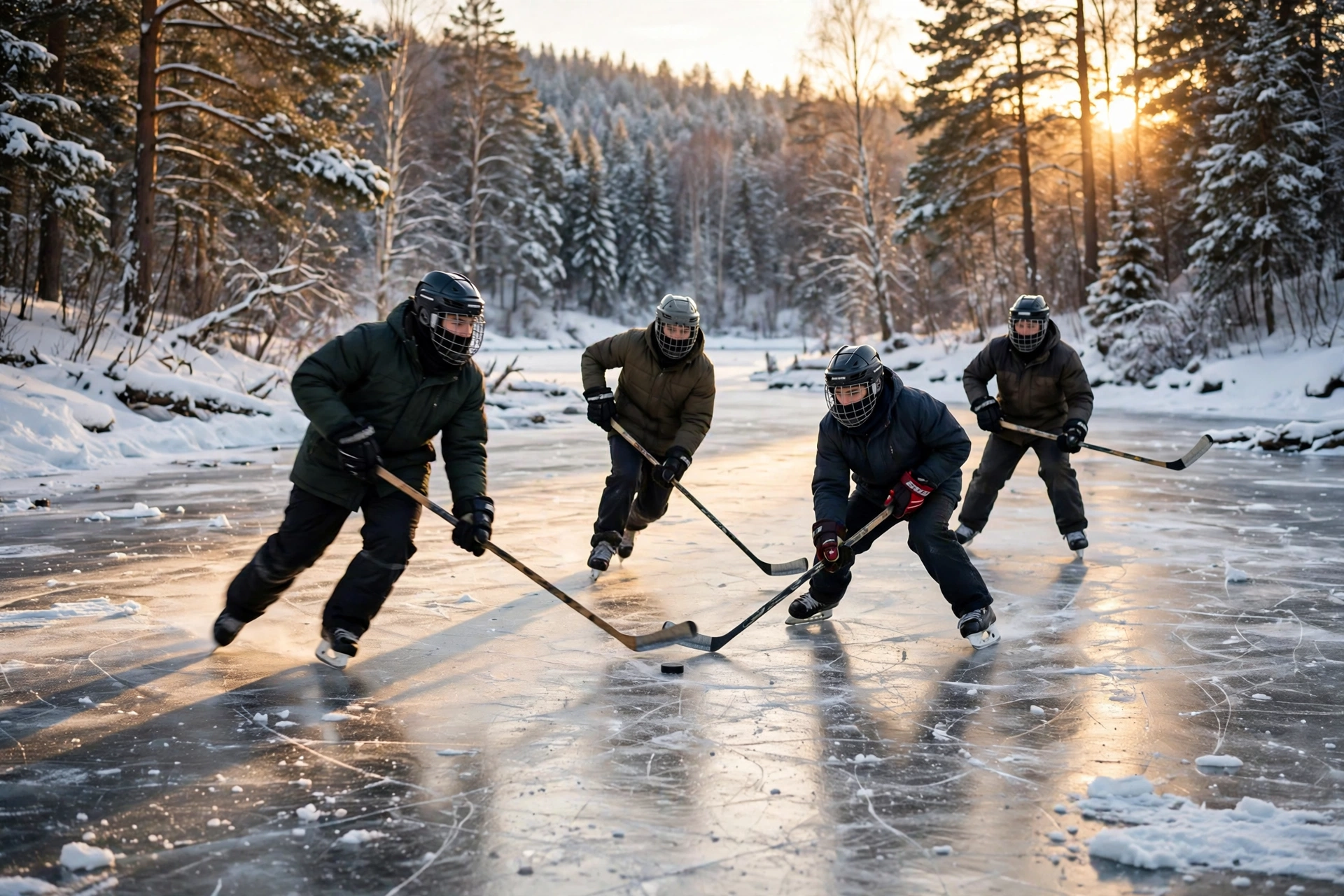
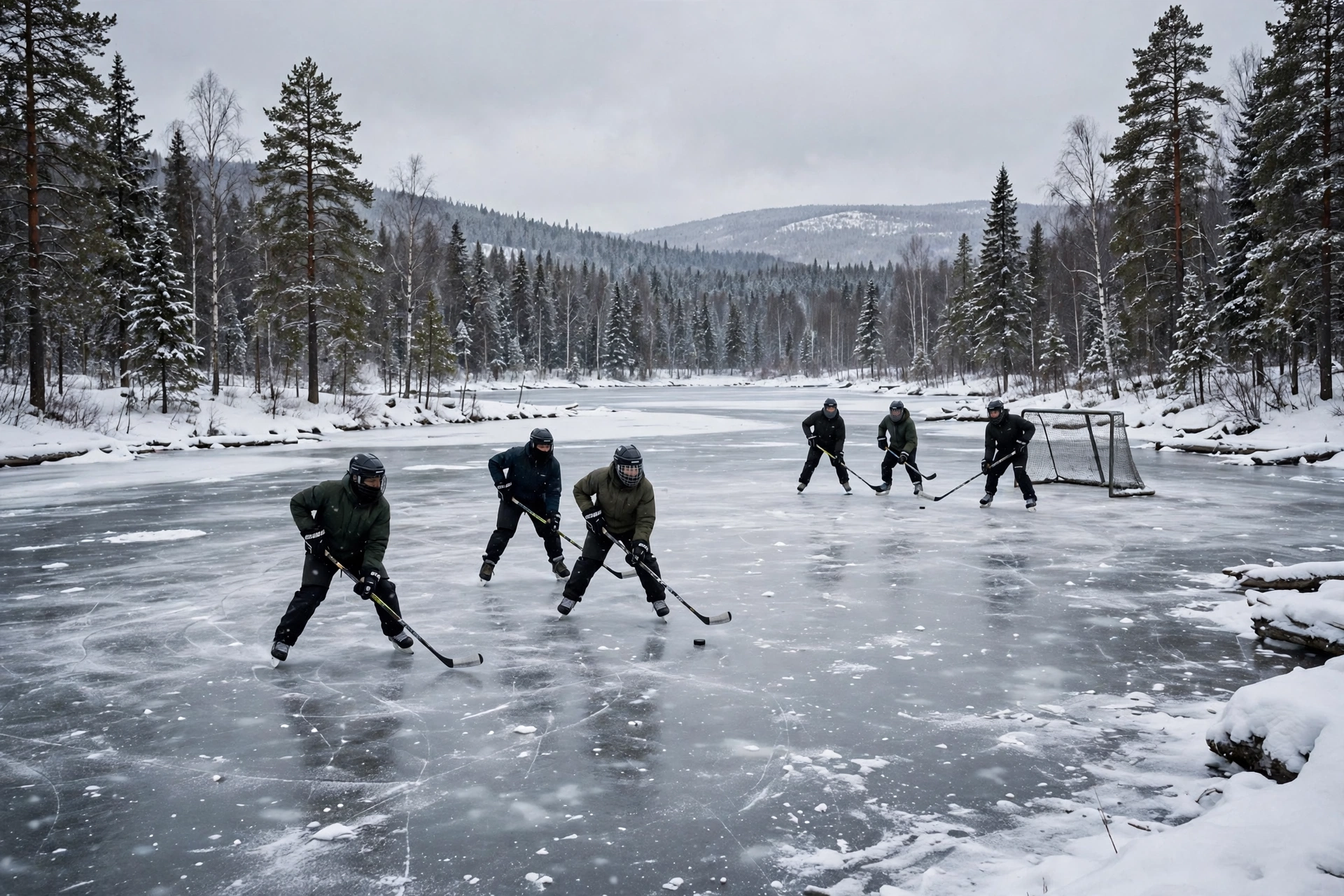
For outdoor pond hockey, staying warm in a hockey helmet means adding a thin balaclava or skull cap underneath, keeping the helmet snug so cold air cannot get in, and choosing a helmet with good ear coverage. Pond hockey is played in the open air, often in well-below-freezing temperatures with wind across the ice, so the ears and forehead are the first places to feel the cold. A helmet that fits well on its own in a rink may feel draughty on a pond, and a few small changes make a big difference to comfort.
This guide explains how to stay warm in a hockey helmet during outdoor pond hockey, in general terms, from the layers you wear underneath to the way you fit and care for the helmet in cold weather.
Why Does Pond Hockey Feel Colder Than Rink Hockey?
Pond hockey feels colder than rink hockey for a few simple reasons. First, there are no walls or a roof to block the wind, so cold air blows across the ice and straight at your head. Second, the temperature on an outdoor pond is often well below freezing, while an indoor rink is usually kept warmer. Third, pond hockey sessions often last longer than a rink game, with fewer breaks and no warm changing room nearby.
The helmet plays a part in this. A hockey helmet is designed to protect the head, not to insulate it, and the vents that keep you cool in a rink let cold air in on a pond. The good news is that you do not need a different helmet for pond hockey: the same helmet will work outdoors if you add the right layers underneath and fit it properly, closing the gaps where cold air gets in without making it so tight that it becomes uncomfortable.
What Should You Wear Under the Helmet?
A thin balaclava is the best layer to wear under a hockey helmet for pond hockey. It covers the head, ears, and neck in one piece, adds warmth without much bulk, and fits smoothly under the helmet shell. Choose a thin, close-fitting balaclava made from a warm, moisture-wicking fabric, and avoid thick or bulky ones — a balaclava that is too thick will change the fit of the helmet and can make it sit too high on your head.
A skull cap or a thin thermal beanie is a good alternative if you do not like a balaclava: it covers the top of the head and the ears and is easy to pull on and off. Some players wear a thin headband across the forehead and ears, the lightest option, though it leaves the top of the head exposed. Whatever you choose, it should sit flat under the helmet with no folds or bunching, because a fold under the padding can create a pressure point.
Try the layer on with the helmet before you head to the pond. Put the balaclava or cap on, then put the helmet on over it and check the fit: it should still sit level and snug, and not rock when you shake your head. If the helmet feels too tight with the layer on, loosen the helmet’s size adjustment or use a thinner layer.
How Do You Fit a Helmet for Cold-Weather Play?
Fitting a helmet for pond hockey starts with the same rules as any other fitting: it should sit level, feel snug all the way around, and stay put when you shake your head. The difference outdoors is that the layer underneath changes the fit, so you should always fit the helmet with the balaclava or cap on, not without it. A helmet fitted without the layer will feel loose once the layer is added, and a helmet fitted with a thick layer may be too tight when you take the layer off.
Check the ear coverage carefully: the helmet’s ear loops should sit over your ears, and the balaclava should cover the ears fully underneath, with no gap for cold air to find. Some players add a thin ear band under the helmet for extra coverage, as long as it sits flat and does not push the helmet out of position.
Do not over-tighten the chin strap to compensate for a loose fit: it should be snug but comfortable, with room for about one finger underneath. If the helmet is loose even with the layer on, adjust the size dial or the fit pads rather than the strap.
How Do You Handle Fog, Ice, and Cold Hands?
Warm breath in cold air can fog a visor quickly, and on a pond there is no warm room to clear it in. A balaclava that covers the nose and mouth can direct warm breath upwards onto the visor, which makes fogging worse — so either pull the balaclava down below your nose while you play, or use a visor with an anti-fog coating. Some players prefer a cage outdoors, because it does not fog at all, though it offers less wind protection for the face.
Ice can also build up on the outside of the helmet and the cage in very cold weather, especially when snow is falling, so check the helmet during breaks and brush off any ice or snow. Keep the helmet out of the snow when you take it off, and do not leave it sitting on the ice between games.
Your hands matter too, because cold hands make it harder to adjust the helmet or tighten the strap. Warm gloves that still let you work the buckle are worth having, and keeping a spare pair of dry gloves in your bag is a good idea.
What Else Keeps You Warm on the Pond?
Staying warm on a pond is about the whole body, not just the head. A warm base layer, a good hockey jersey or jacket, and warm socks inside your skates all help, because a warm body keeps the head warmer too. Take breaks and keep moving between shifts, since standing still on the ice in cold wind is when the cold bites hardest, and a warm drink in a flask at the side of the pond makes a long session much more enjoyable.
Finally, look after the helmet in cold weather. Do not store it in a freezing car overnight, because the cold can make the padding stiff and the shell more brittle. Bring it indoors between sessions, let it dry fully, and check the straps and buckles, which can become stiff in the cold. If you want to learn more about the impact technology in modern helmets, reading about what MIPS is for helmets is a useful background read.
Frequently Asked Questions
Q: Can I wear a thick winter hat under my hockey helmet?
A: In general terms, no. A thick hat changes the fit of the helmet, making it sit too high and too loose, which reduces protection. Use a thin balaclava or skull cap that fits flat under the shell instead.
Q: Does a balaclava under the helmet make it unsafe?
A: A thin balaclava that fits smoothly under the helmet does not make it unsafe, as long as the helmet still sits level and snug. The problem comes only when a bulky layer changes the fit, so check the fit with the layer on before you play.
Q: How cold is too cold for pond hockey?
A: There is no single temperature that suits everyone, but in general terms, wind chill matters more than the thermometer reading. If exposed skin goes numb quickly or the wind is biting, take breaks often, cover up well, and stop if you feel too cold to play safely.

Olivia
Writer at Helmet Today, covering helmet reviews, fit and riding safety.