In general terms, yes — a hockey goalie should wear throat protection with their mask, either a dangling throat guard (a “dangler”) attached below the chin or a padded bib-style protector worn under the chest protector, because the mask alone leaves the front and sides of the neck exposed to pucks, sticks, and skates. Many youth leagues also require it, so check your league’s rules before deciding it is optional.
This guide explains what a throat guard protects against, the types available, how the rules generally treat them, and how one should fit.
What Does a Throat Guard Protect a Goalie Against?
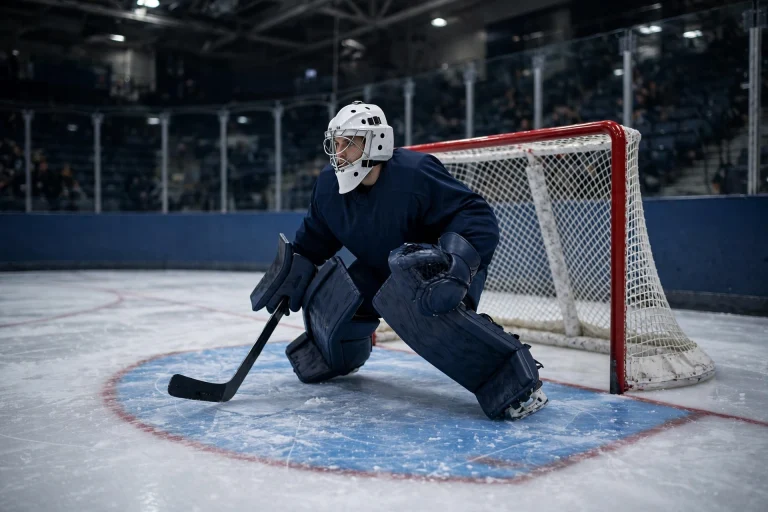
A goalie mask covers the face and head, but it ends at the chin and jaw. Below it, the throat, the front of the neck, and the collarbone area are covered only by the top of the chest protector — and there is a gap between the two whenever the goalie moves, drops into the butterfly, or looks down at a puck in their skates.
Into that gap can come exactly the things goalies face all game: a rising shot, a deflection, a stick blade during a scramble, or a skate in a goalmouth pile-up. Shots do not have to be hard to be serious in that area — the throat has no padding of its own, and even youth-level pucks arrive with real force.
A throat guard closes the gap. It is not a substitute for a certified mask or a properly fitted chest protector; it is the piece that makes the three work as one system, so a puck cannot slip between mask and chest pad.
What Types of Throat Protection Do Goalies Wear?
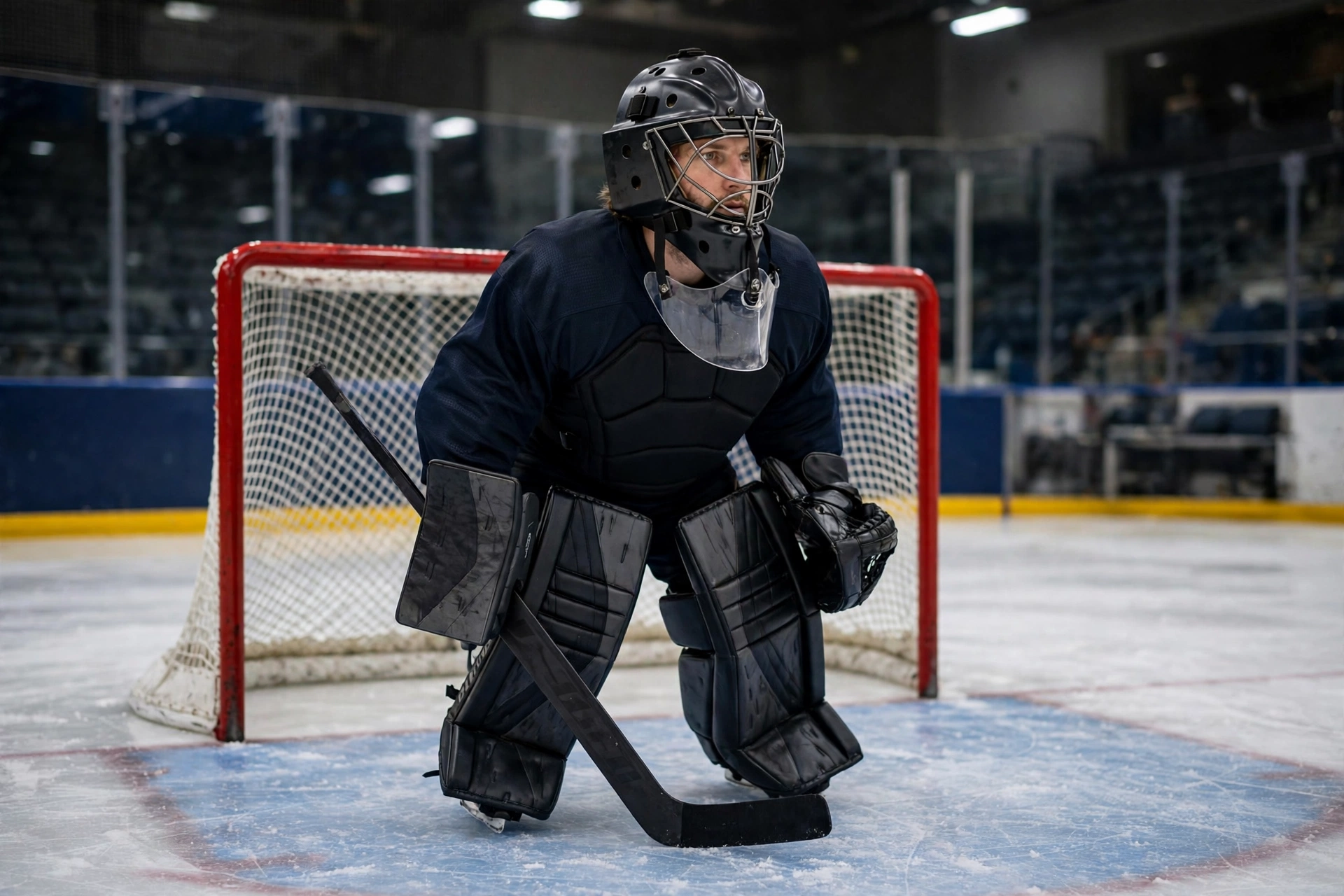
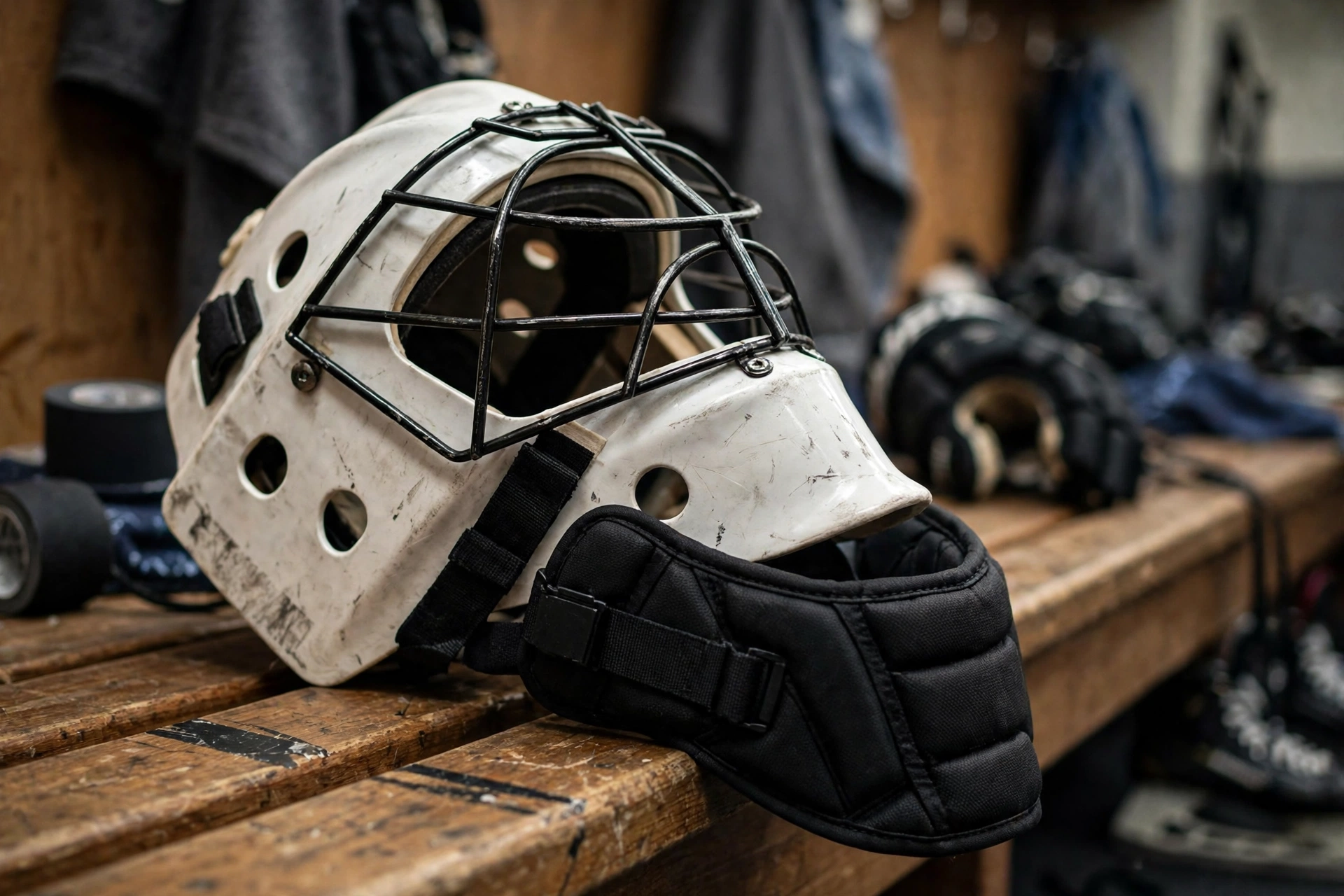
The most common is the dangler: a clear or smoked plastic shield that hangs from the bottom of the mask on short laces or straps, covering the front of the throat. It moves with the mask because it is attached to it, it is light, and it does not interfere with breathing or turning the head.
The alternative is a bib-style throat protector — padded fabric protection worn around the neck, usually integrated with or tucked under the chest protector. Bibs cover more area, including the sides of the neck and the collarbones, and many goalies wear one, a dangler, or both together.
- Dangler: clear plastic, hangs from the mask, covers the front of the throat
- Bib protector: padded, worn round the neck, covers front, sides, and collarbones
- Built-in protection: some chest protectors carry a raised collar section — check the coverage gap still closes when you move
Whichever type is chosen, it should be made for hockey goalies. A field-hockey or lacrosse item, or a homemade guard, is not designed for puck impacts.
Do League Rules Require Goalies to Wear a Throat Guard?
Rules vary by country, league, and age group, and they change — so treat anything general, including this guide, as background and check the current rulebook for the league you play in. In general terms, many youth hockey programmes require throat protection for goalies, and some require the bib style specifically or require that a dangler be a certain type.
At higher and adult levels the requirement is less uniform, and some goalies choose to play without a dangler. That choice existing at the top level does not make it a sensible model for youth players, whose leagues usually decide the question for them anyway.
Officials can and do check goalie equipment before games. A goalie whose league requires throat protection and who arrives without it may not be allowed to play until it is sorted — one more reason to treat the guard as standard kit rather than an accessory to remember.
How Should a Goalie Throat Guard Fit?
A dangler should hang so it covers the throat completely, overlapping the top of the chest protector slightly, without a gap appearing when the goalie looks down, turns their head, or drops into the butterfly. Attach it with the laces or straps the maker provides, snug enough that it does not swing wildly, loose enough that it can move rather than lever against the mask.
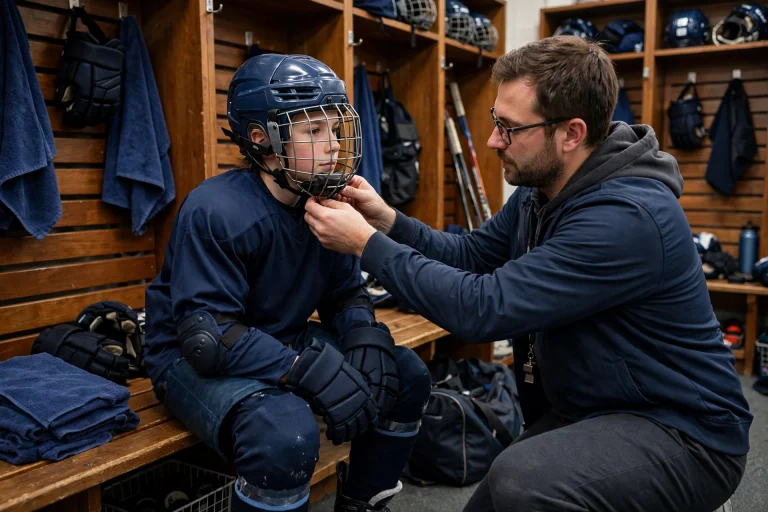
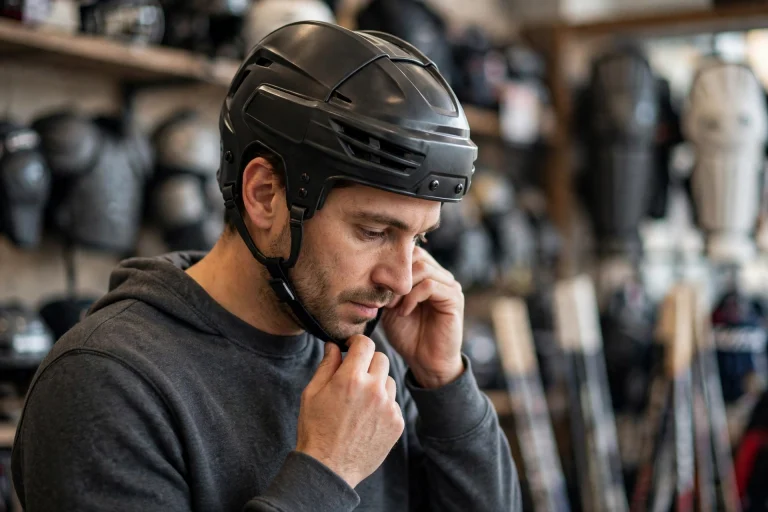
Test it in full gear, not in the shop with the mask alone. Put on the chest protector, then the mask and guard, and move: look down at your skates, turn side to side, drop and recover. The gap the guard exists to close opens widest in exactly those movements.
A bib protector should sit snugly around the neck without choking or riding up into the jaw, and its lower edge should tuck under the chest protector so there is no uncovered band. If your goalie complains it is hot or annoying, adjust the fit before removing it — an unworn guard protects nothing.
Does a Throat Guard Affect How the Mask Protects?
No — provided it is a proper goalie guard attached as the maker intends. A dangler hangs below the mask’s shell and does not change how the mask absorbs impact to the face and head. The mask’s own job is impact protection, including managing the angled, twisting forces described in this guide to what MIPS is for helmets; the guard simply covers skin and throat the shell never reached.
Two cautions matter. First, never modify the mask itself — drilling holes or altering the shell or cage to attach a guard compromises the certified design. Use the attachment points and hardware the mask already has. Second, replace a cracked dangler: clear plastic that has taken a hard shot and whitened or cracked has done its job and should be swapped, like any other piece of protective equipment.
Seen as a system — certified mask, throat guard closing the gap, chest protector fitted underneath — a goalie is covered from the crown to the chest with no soft target left between them. That completeness is the whole point.
Frequently Asked Questions
Q: Can a goalie wear just a dangler, or is a bib better?
A: Either is widely used, and some goalies wear both. A dangler covers the front of the throat and moves with the mask; a bib covers more, including the sides of the neck and collarbones. What matters is that the gap between mask and chest protector is closed in every position — and that your league accepts the type you choose.
Q: My child finds the throat guard uncomfortable. What helps?
A: Check the fit first: a dangler adjusted to hang at the right length, or a bib sitting properly under the chest protector, is usually forgotten within a game or two. Trying the other style often solves it. Treat it like the mask itself — part of the kit, fitted properly, worn every time.
Q: Does a throat guard need to be certified like the mask?
A: Requirements differ by league, which is why checking your rulebook matters. Buy a guard made and sold specifically for ice hockey goalies by a recognised maker, attach it exactly as directed, and replace it if it cracks. Homemade or borrowed-from-another-sport guards are not a safe substitute.

Olivia
Writer at Helmet Today, covering helmet reviews, fit and riding safety.