To store a hockey helmet in a gear bag without damage, put it in its own padded compartment or a helmet bag, keep heavy gear from pressing on it, and let it dry fully before you close the bag. A hockey helmet is tough on the outside, but the shell, the padding, and the visor or cage can all be damaged by hard knocks, crushing weight, and damp storage. A few simple habits in how you pack your gear bag will keep the helmet in good shape season after season.
This guide explains how to pack a hockey helmet in a gear bag, in general terms, so it stays protected between games and practices. It covers where the helmet should sit in the bag, what to keep away from it, and how drying and cleaning fit into good storage.
Where Should the Helmet Sit in the Gear Bag?
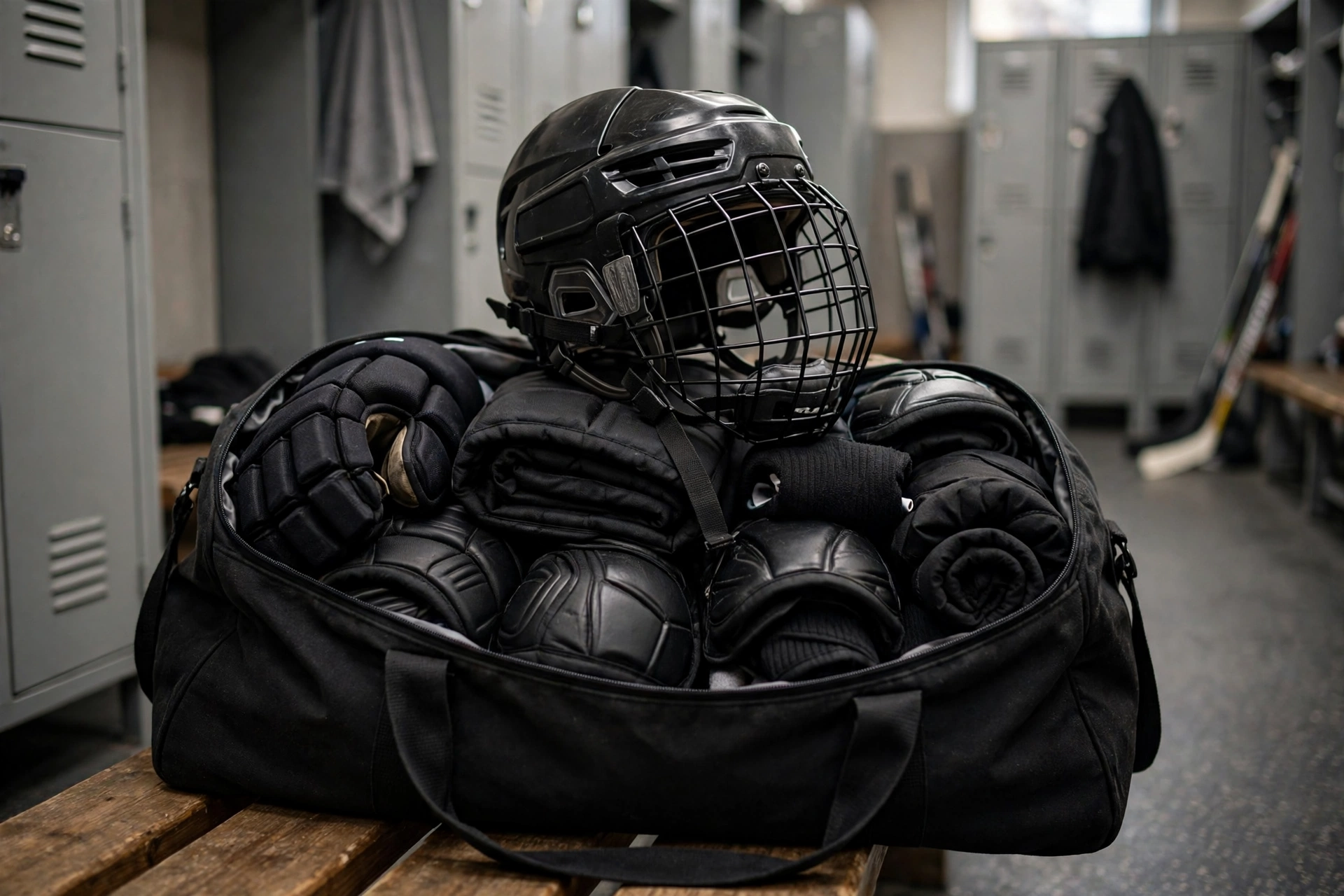
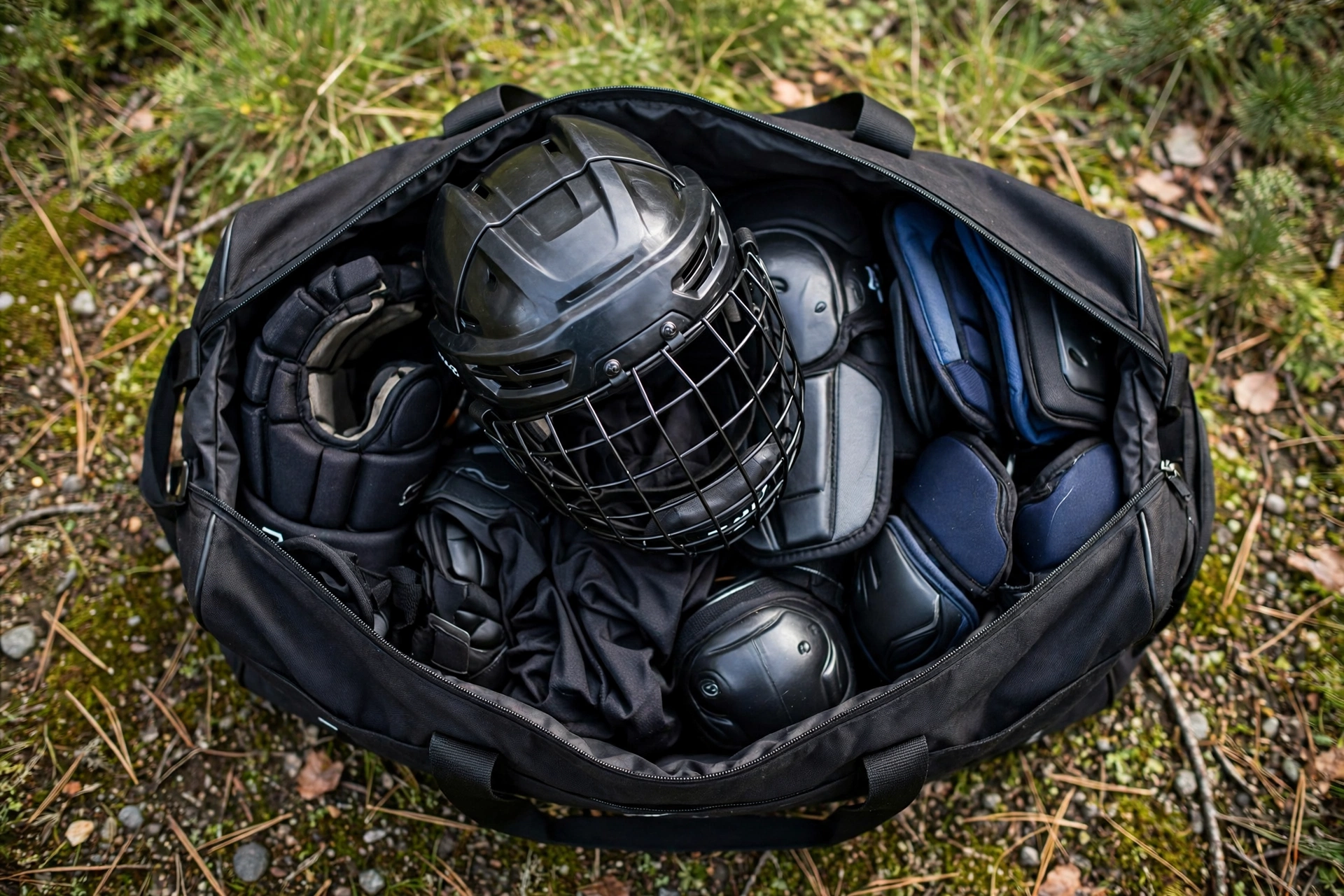
The helmet should sit at the top of the bag or in its own separate compartment, never at the bottom under everything else. Skates, shin guards, and other heavy gear can press down on the helmet and distort the shell or crush the padding, especially over a long period in a car boot or a kit room. If your bag has a dedicated helmet pocket or a padded section, use it — that is what it is there for.
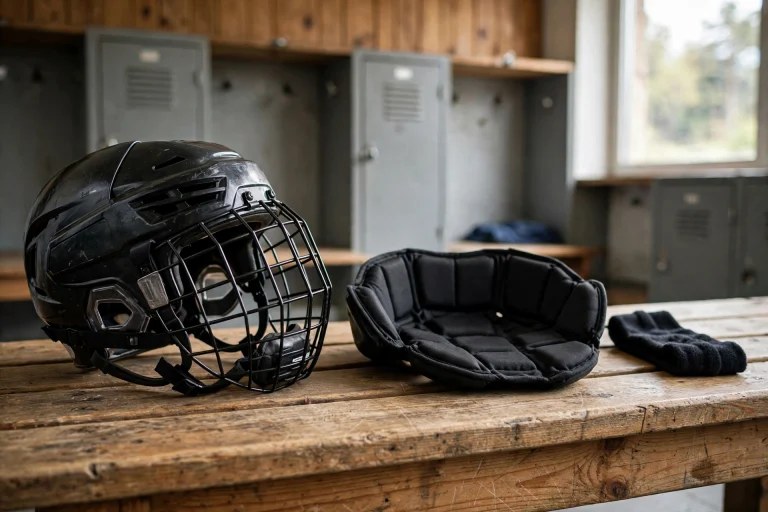
If your bag has no separate compartment, put the helmet in last, on top of the other gear, so nothing heavy rests on it. Placing it shell-down with the opening facing up can help it keep its shape. A separate padded helmet bag is even better: it keeps the helmet away from the rest of your gear, protects it from scratches, and many are small enough to fit inside a larger gear bag.
What Gear Should You Keep Away From the Helmet?
Skates are the biggest threat to a helmet in a gear bag. The blades are sharp and the boots are heavy, and a skate that shifts in transit can scratch the shell, tear the padding, or dent a visor. Keep skates in their own skate guards and in a separate pocket or compartment, away from the helmet. If your bag has a skate pocket at the end, use it every time.
Wet and sweaty gear is the next problem. Damp gloves, socks, and base layers pressed against a helmet will pass moisture and smell into the padding, and a damp helmet stored in a closed bag will stay damp for a long time. Keep wet clothing in a separate mesh pocket or laundry bag, and never pack a wet helmet straight into a closed bag if you can avoid it.
Small hard items such as pucks, water bottles, and tape rolls can also cause damage if they roll around loose. A puck bouncing against a helmet shell can crack a visor or chip the finish, and a bottle leaking onto the padding will leave it soaked. Keep loose items in the bag’s side pockets or in a small pouch, rather than letting them float free around the helmet.
How Do You Dry a Helmet Before Storing It?
Drying the helmet before storage is one of the most important habits you can build. After a game or practice, take the helmet out of the bag as soon as you get home and let it air dry in an open room with good airflow — near an open window or a fan is ideal. A helmet left to dry in the open will be dry by the next morning, while one left sealed in a bag may still be damp days later.
Do not dry a helmet with direct heat. A radiator, a hair dryer on high, or a car dashboard in strong sun can warp the shell and damage the foam padding, so stick to room-temperature air drying. If the padding is very wet, take it out if your helmet allows it, and dry the pads separately.
A quick wipe helps as well. Before you leave the rink, wipe the inside of the helmet with a clean dry cloth or a towel to remove the worst of the sweat. This takes a few seconds and makes a real difference to how fresh the helmet stays. If you want to learn more about the impact protection built into modern helmets, reading about what MIPS is for helmets is a useful background read.
Should You Use a Cage or Visor Protector in the Bag?
If your helmet has a visor, it is worth protecting in the bag. A visor can scratch easily when it rubs against other gear, and a scratched visor is hard to see through on the ice. A soft cloth bag or a visor cover, slipped over the visor before packing, will stop most scratches. Some players use a microfibre cloth tucked over the visor as a simple cover, which works well and costs nothing.
A cage is tougher than a visor, but it can still be bent if heavy gear presses on it, so check it for bends each time you unpack — and if it has bent, take it to a shop or replace it rather than forcing it back, because a cage that has been bent and straightened may be weaker. When packing, turn the helmet so the visor or cage faces away from hard items, or put a soft towel between the helmet and the nearest hard gear.
How Should You Store the Gear Bag Between Games?
Where you keep the bag matters as much as how you pack it. Store the gear bag in a cool, dry place with good airflow, such as a garage shelf or a kit room, rather than in a damp basement or a hot car. A bag left in a car in summer heat can reach temperatures that damage the helmet shell and the padding, and a bag left in a damp place will grow smells and mould.
Leave the bag partly open when you store it at home, so air can circulate and any remaining moisture can escape. If you have the space, take the helmet out of the bag entirely and store it on a shelf — this is the best option for long breaks between seasons. For a long off-season break, clean the helmet and the bag, dry everything fully, and store them separately in a dry place.
Check the helmet each time you unpack it, before you put it on. Look for cracks in the shell, loose padding, a bent cage, or a scratched visor, and check that the chin strap and buckles still work. A quick check before each game catches problems while there is still time to fix them.
Frequently Asked Questions
Q: Can I put my hockey helmet at the bottom of my gear bag?
A: It is not a good idea. Heavy gear piled on top can crush the padding and distort the shell over time. Put the helmet on top of the other gear, or in its own compartment or a separate helmet bag.
Q: Should I keep my helmet in the gear bag between seasons?
A: In general terms, no. For a long break, take the helmet out, clean it, dry it fully, and store it on a shelf in a cool, dry place. A closed gear bag traps moisture and smells over a long period.
Q: Will a wet helmet dry out if I leave it in the bag?
A: Very slowly, and not well. A closed bag traps moisture, so the padding stays damp and smells develop. Always take the helmet out after a game and let it air dry in the open before you pack it away again.

Olivia
Writer at Helmet Today, covering helmet reviews, fit and riding safety.