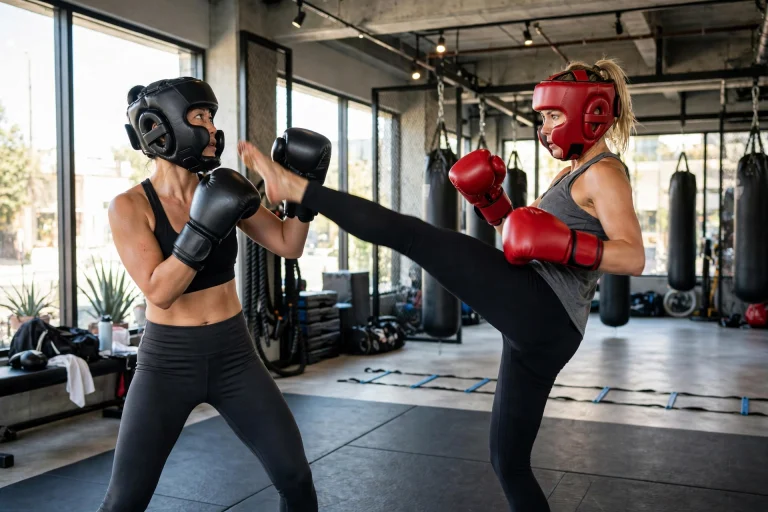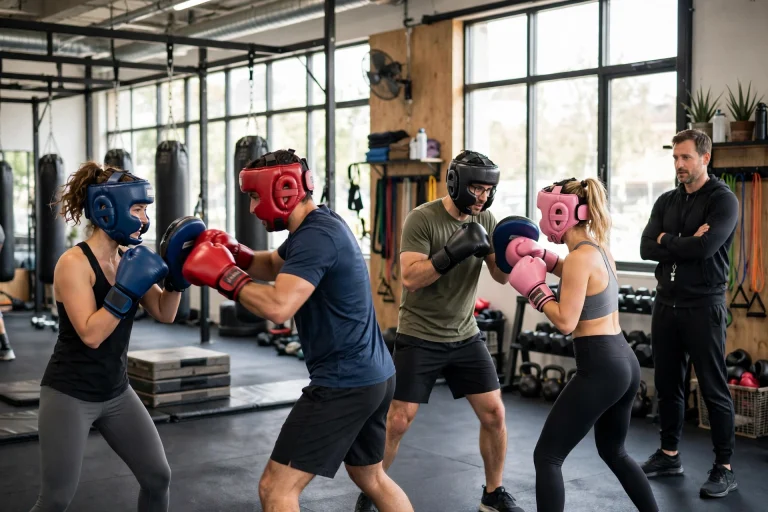
Headgear for boxing coaches is, in general terms, not something coaches usually wear, because a coach is not the one being punched — but there are specific training situations where a coach does wear headgear, and understanding those situations helps explain what protective gear a coach actually needs. Most of the time a coach works from outside the ropes or from the corner, holding pads, giving instructions and watching their fighter, and for that work clear vision, clear speech and freedom of movement matter far more than head protection. When a coach steps in as a sparring partner, however, headgear becomes just as relevant for them as for any other boxer.
Why Do Boxing Coaches Not Usually Wear Headgear?
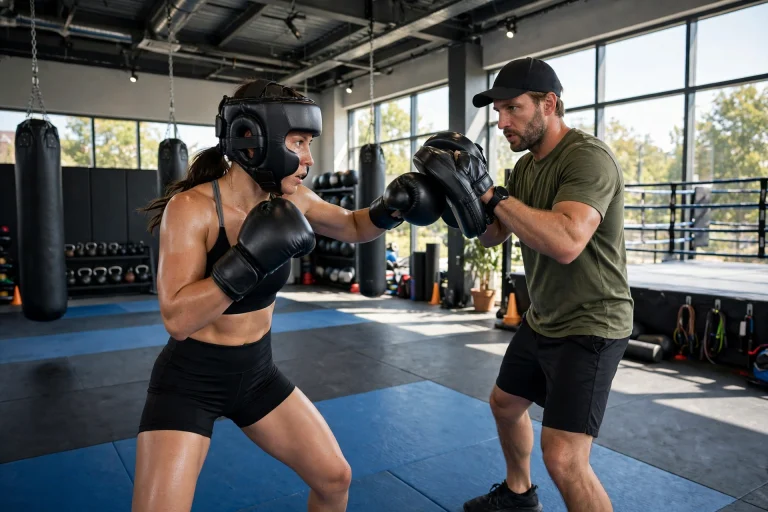
A boxing coach’s normal job does not involve taking punches to the head. During pad work, the coach holds mitts and calls combinations while the boxer punches the pads, not the coach. During bag work and shadow boxing, the coach watches, corrects and encourages from a safe distance. During a bout, the coach is in the corner between rounds, giving advice, wiping the fighter down and checking on their condition. In none of those roles is the coach a target, so headgear would only get in the way.
Headgear narrows the field of view, muffles the voice and traps heat, and those are real disadvantages for a coach who needs to see the whole ring, speak clearly and stay alert for a full session. A coach also needs to move quickly around the ring, demonstrate footwork and catch a fighter’s attention with a word or a gesture, and headgear makes all of that harder. For that reason, coaches normally rely on other kinds of protection for their working day, and they save headgear for the moments when they are actually going to be hit.
When Might a Coach Wear Headgear?
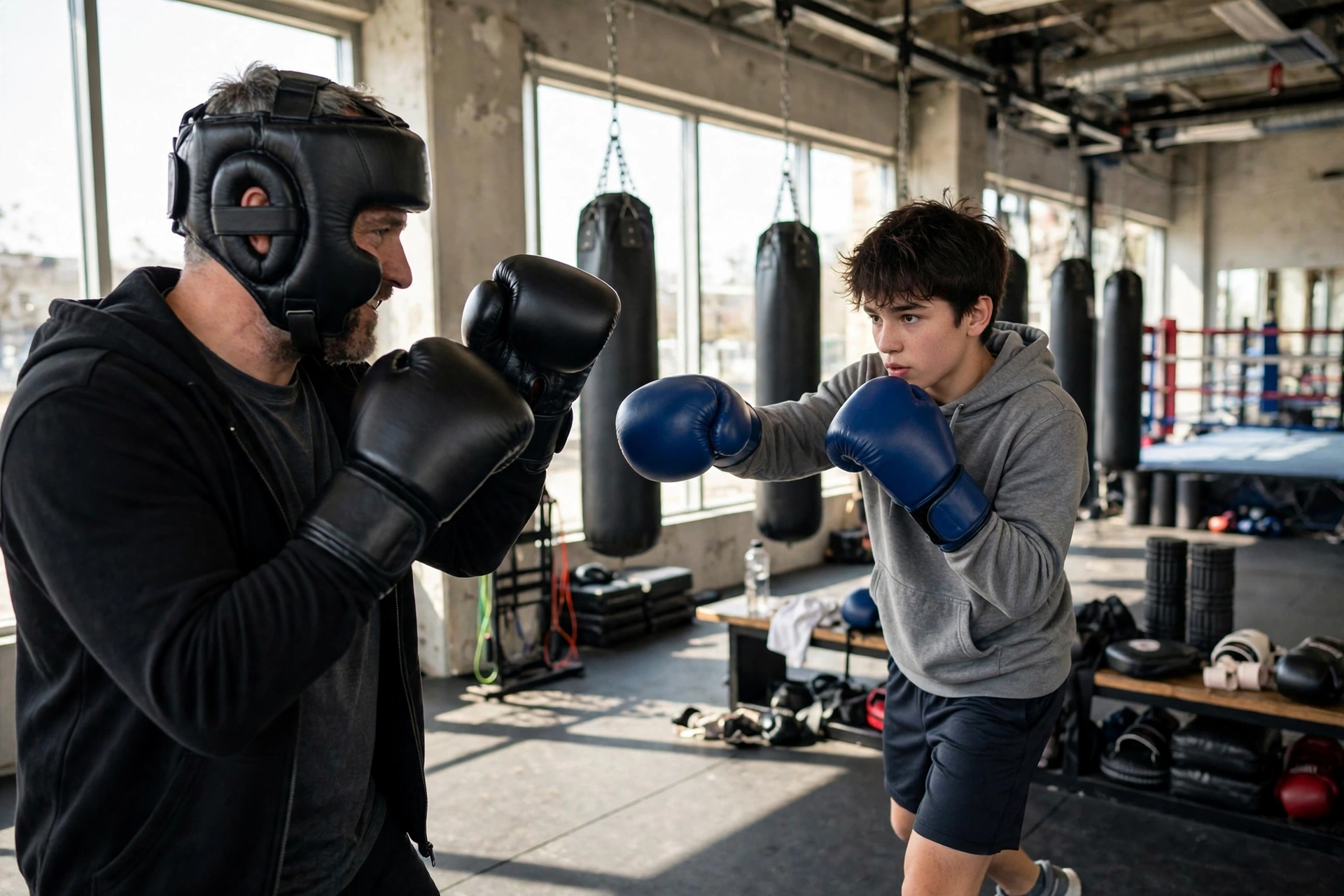
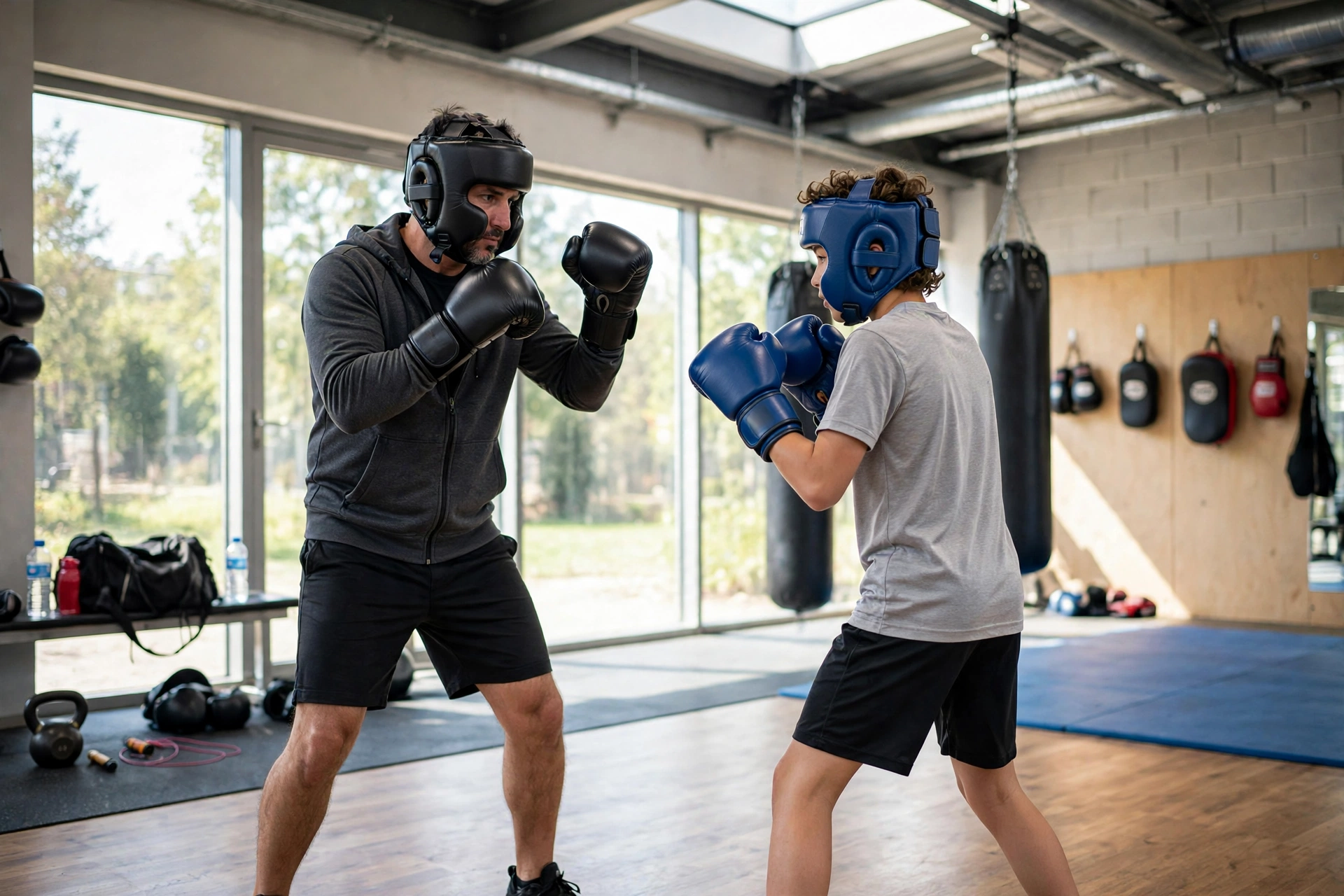
A coach might wear headgear when they step in as a sparring partner, which happens more often in small gyms where there are not many boxers of a similar size and level. In that situation the coach is no longer just an instructor: they are taking punches, moving under fire and demonstrating defence in real time, and they need the same protection as any sparring partner. Headgear, gloves, a mouthguard and sometimes a body protector are the sensible kit for that role, and the same rules about fit and condition apply.
Coaches may also wear headgear during certain drills, such as controlled body sparring that creeps up towards the head, or when working with a powerful puncher who is still learning control. In general terms, the test is simple: if there is a realistic chance of being hit on the head, wear headgear; if there is not, leave it off. A good coach models that judgement for their students, because it teaches beginners to think about risk in the same practical way rather than treating protective gear as either always on or always off.
What Protective Gear Does a Boxing Coach Use Instead?
The protective gear a boxing coach uses most is the pair of focus mitts or pads they hold, which absorb the force of punches and protect their hands and arms. Good mitts, held correctly, are the coach’s main defence during pad work, and learning to hold them well is a skill in itself. Coaches also use hand wraps or inner gloves under their mitts, and they often wear comfortable, supportive footwear so they can move safely around the ring without slipping.
How Should a Coach Choose Headgear for Sparring?
When a coach does need headgear, the same rules apply as for any boxer. It should fit snugly without squeezing, stay in place when the head moves sharply, and leave the eyes clear so the coach can still see punches coming and read their partner’s movement. The chin strap should fasten firmly, and the padding should feel even all the way around, with no hard spots or gaps. A coach who is sparring to teach may prefer headgear with good visibility, because they need to watch their partner’s technique closely and react to it. For background on how helmet technology manages impact forces, see what MIPS is for helmets.
How Should a Coach Look After Their Headgear?
A coach’s headgear may be used less often than a boxer’s, but it still needs the same care. After any session in which it has been worn, wipe it inside and out with a clean damp cloth and leave it somewhere with good airflow until it is fully dry. Do not leave it damp in a kit bag, because that encourages odour and can weaken the material over time. In general terms, mild soap and water are enough, and harsh chemicals should be avoided because they can damage the padding and the outer cover.
Check it regularly, even if it has been sitting on a shelf for a while. Look for padding that has gone flat or lumpy, stitching that has come undone, and straps that no longer hold. Headgear that has been stored badly may also have lost its shape, and if it no longer fits snugly it should be replaced rather than used. A coach who keeps their headgear in good condition sets a useful example: students notice when a coach’s kit is cared for, and they are more likely to look after their own gear in the same way.
What Can Coaches Teach About Headgear?
Coaches teach more about headgear by example than by lecture. When a coach puts headgear on before sparring, it tells students that protection is normal, not a sign of weakness. When a coach checks the fit of a student’s headgear before a round, it shows that fit matters. And when a coach stops a round because someone’s headgear has slipped, it teaches that safety comes before finishing a drill. Those small habits add up, and they shape how a whole gym thinks about protection.
A coach can also teach students that headgear has limits. It can soften blows and reduce cuts and bruising, but it cannot remove the risk of concussion entirely, because it cannot stop the brain from moving inside the skull when the head is struck. That is why a good coach sets the level of contact, watches the pace of a round, and insists on control, especially for beginners. Headgear is one layer of safety, and the coach’s judgement about when to use it, and when to stop a session, is another layer that matters just as much.
Do boxing coaches wear headgear during pad work?
Usually not. During pad work the coach holds mitts and is not being punched, so headgear would only narrow their vision and muffle their voice. They wear it when they step in as a sparring partner.
What gear should a boxing coach wear in the corner?
In the corner a coach needs no headgear, in general terms. They need comfortable footwear, clear vision and a clear voice, plus the towels, water and basic supplies for looking after their fighter between rounds.
Should a coach spar without headgear to show toughness?
No. A coach who spars without headgear when there is a real chance of being hit sets a poor example and takes an unnecessary risk. Wearing headgear when it is needed is part of good coaching.

Olivia
Writer at Helmet Today, covering helmet reviews, fit and riding safety.