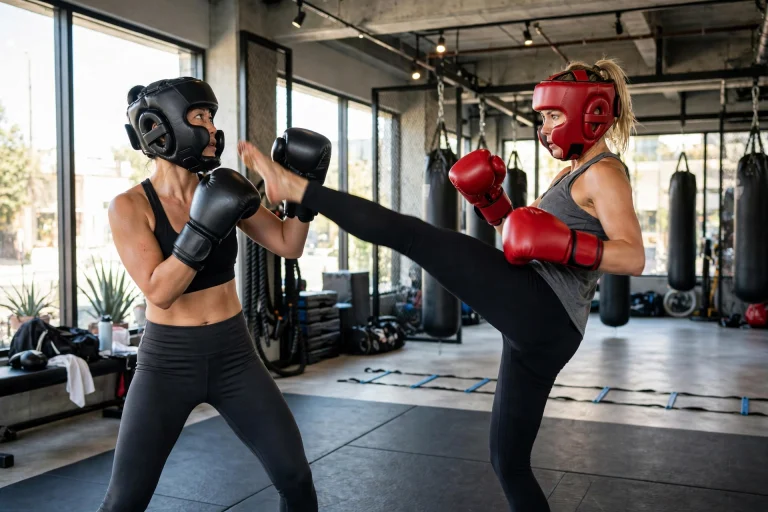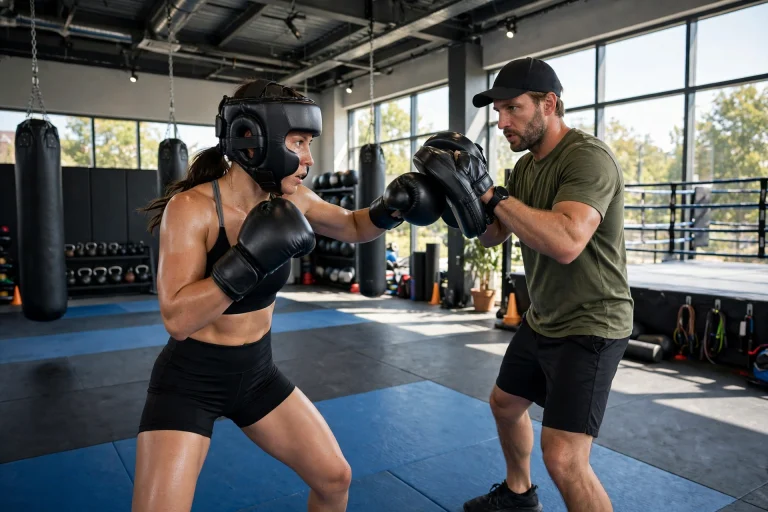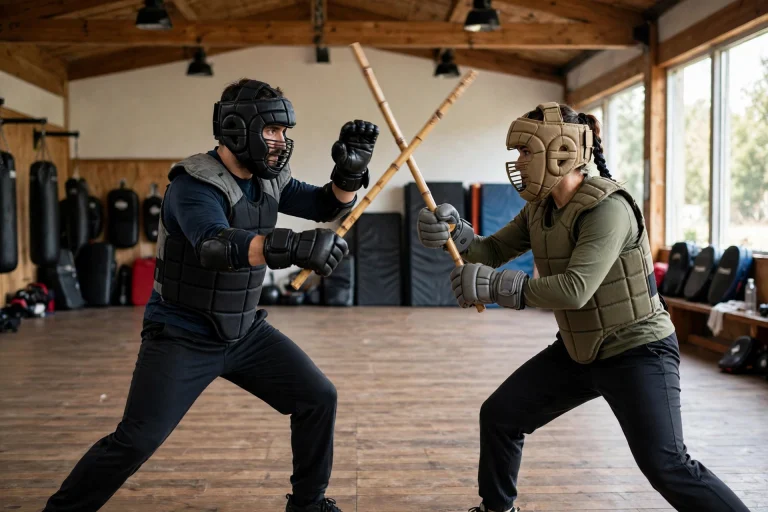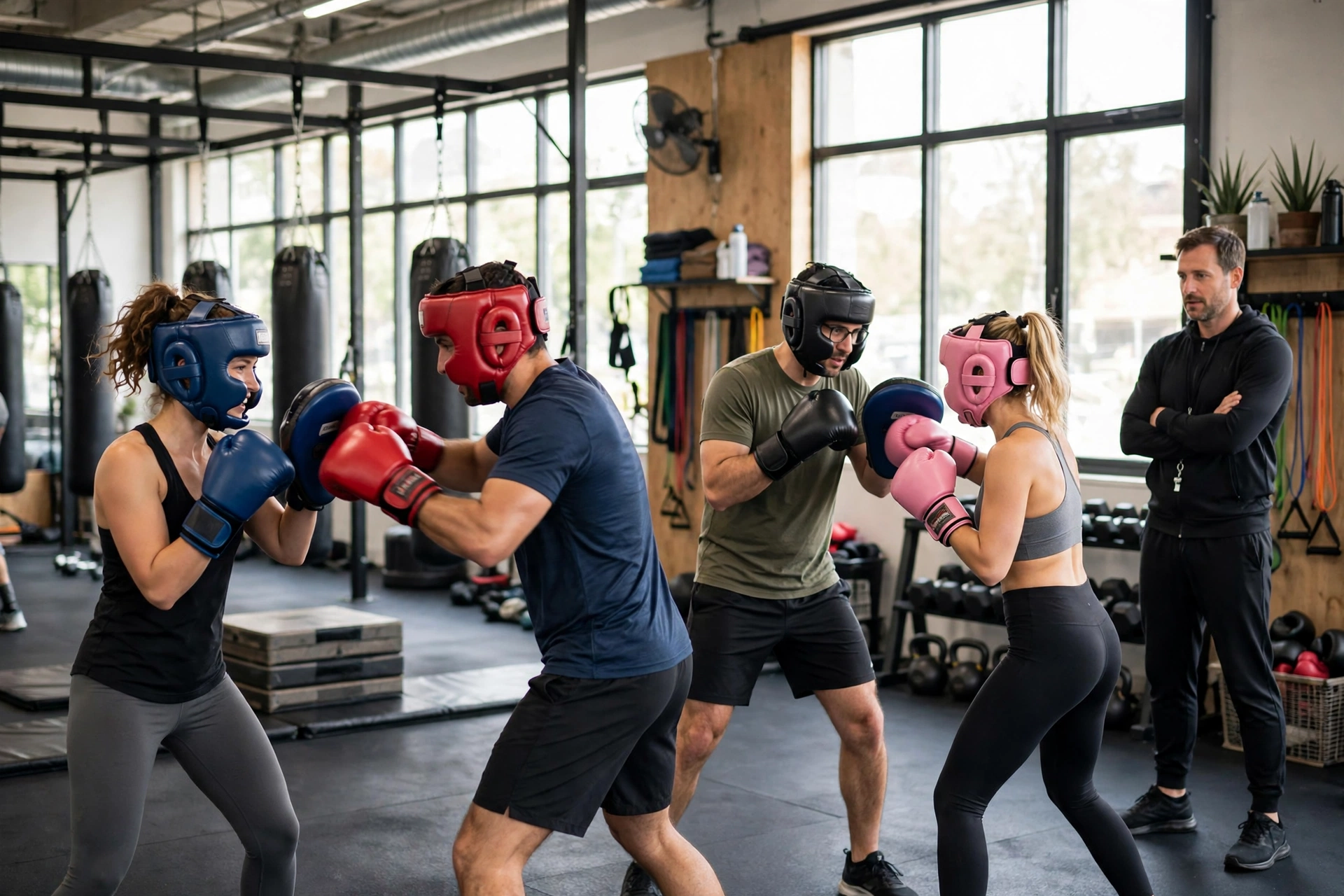
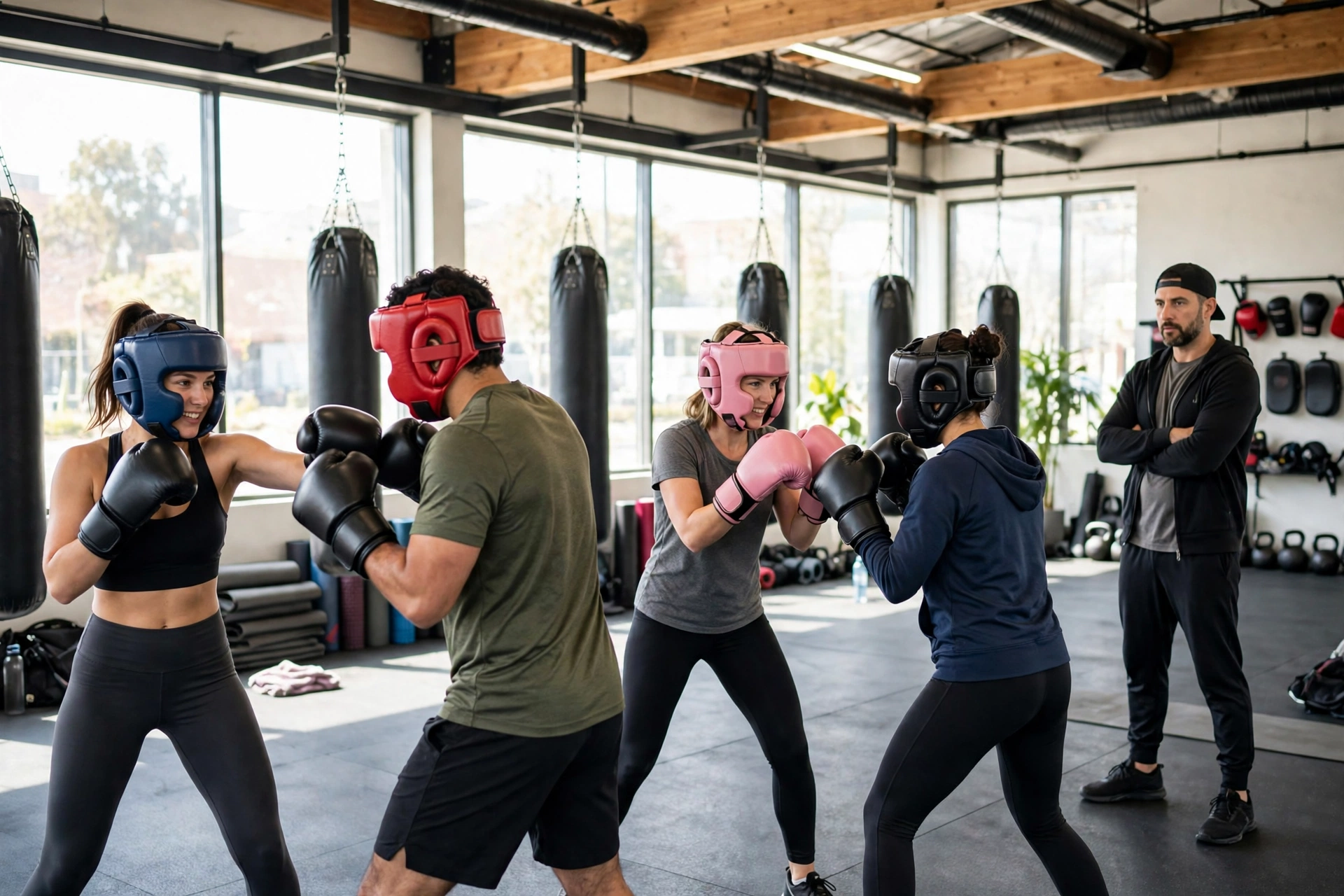
Headgear for fitness boxing classes is padded headgear worn during the partner drills and light sparring parts of a boxing-based fitness class, and in general terms it is there to soften accidental contact, reduce cuts and bruising, and give beginners the confidence to try boxing movements without worrying about a stray punch. Most of a fitness boxing class is non-contact — bag work, pad work, shadow boxing and conditioning — and headgear is not needed for any of that. It becomes relevant only when two people are working together at close range and there is a realistic chance of a punch landing on the head.
What Is a Fitness Boxing Class?
A fitness boxing class is a group workout built around boxing movements, aimed at general fitness rather than at preparing for a bout. A typical class includes a warm-up, rounds on the heavy bag, pad work with a partner, shadow boxing, footwork drills and bodyweight conditioning such as skipping, squats and core work. The emphasis is on getting fitter, learning basic technique and having fun, and the pace is set so that people of different fitness levels can take part together.
Unlike a competitive boxing gym, a fitness boxing class does not usually include hard sparring, and many classes include no sparring at all. When partner work is involved, it is usually cooperative: one person holds pads while the other punches them, or partners take turns practising a combination at a slow, controlled pace. That is very different from a bout, where the aim is to land punches on an opponent, and it means the protective gear needed for a fitness class is much lighter than the kit a competitive boxer uses.
When Is Headgear Needed in a Fitness Class?
Headgear is needed in a fitness boxing class only for the parts of the session where contact with the head is possible. That usually means light, supervised partner drills where a punch might miss a pad or a block, or short rounds of very light sparring that the instructor has chosen to include. In those moments, headgear gives beginners a margin of safety and helps them relax enough to learn, rather than flinching at every movement.
For the rest of the class, headgear should be left off. Bag work, pad work, shadow boxing and conditioning do not involve anyone punching at your head, so wearing headgear for them would only add heat, weight and discomfort. A good instructor will say clearly when headgear is needed and when it is not, and will not ask a class to wear it for a whole session just for the sake of it. If a class never includes partner contact, headgear may never be needed at all, and that is perfectly normal.
What Should Fitness Boxing Headgear Be Like?
Headgear for a fitness boxing class should be light, comfortable and easy to put on and take off, because it may only be worn for a short part of a session. In general terms, it should cover the forehead, temples and cheeks, and it should fasten securely under the chin, but it does not need the heavy padding used for hard competitive sparring. A design that is too bulky will feel hot and distracting, and a beginner who is uncomfortable is less likely to enjoy the class or to come back.
Visibility matters as well. A fitness class moves quickly from one station to another, and participants need to see their partner, their coach and the space around them. Headgear that narrows the field of view or slips down over the eyes is a poor choice, however well padded it is. The best headgear for this setting is the simplest one that fits well, stays in place and lets the wearer see and breathe freely, and it should work comfortably with a mouthguard if the instructor asks for one.
How Should the Headgear Fit?
Fit is the most important thing about any headgear, and fitness boxing is no exception. It should sit snugly on the head without squeezing, and it should not move when the wearer turns, ducks or steps side to side. The chin strap should be fastened firmly enough to hold the headgear in place, but not so tightly that it is uncomfortable. A quick test is to shake the head gently and open the mouth wide: if the headgear stays put, the fit is probably right. For background on how helmet technology manages impact forces, see what MIPS is for helmets.
Because fitness classes include people of many shapes and sizes, a class that provides headgear should have a range of sizes available, and participants should be helped to choose the right one rather than just given whatever is nearest. If you are buying your own, try it on in person and move in it before you decide, because a size that looks right on a chart may feel very different when you are actually moving. Headgear that fits well is easy to forget about, which is exactly what a beginner needs while they are learning new movements.
How Do You Care for Class Headgear?
Headgear used in a fitness class picks up sweat quickly, especially when it is shared between participants, so hygiene matters. After use, wipe it inside and out with a clean damp cloth and leave it somewhere with good airflow until it is fully dry. Do not leave it damp in a closed bag or a locker, because that encourages odour and can weaken the materials. In general terms, mild soap and water are enough for cleaning, and harsh chemicals should be avoided because they can damage the padding and the outer cover.
Is Headgear Enough to Keep a Fitness Class Safe?
Headgear helps, but it is not enough on its own, and it should never be treated as a guarantee of safety. It can soften an accidental punch and reduce cuts and bruising, but it cannot stop the brain from moving inside the skull when the head is struck, so it cannot remove the risk of concussion entirely. That is true of all padded headgear, and it is worth remembering even in a light fitness setting where contact is meant to be minimal.
What keeps a fitness boxing class safe is mainly the way it is run: a qualified instructor, clear instructions, a sensible pace, and partner work that is cooperative rather than competitive. Participants should tell the instructor if they feel unwell, if a drill feels too intense, or if their headgear does not fit, and they should never be pressured into harder contact than they are comfortable with. Headgear is one layer of protection, and a well-run class, with good supervision and honest communication, is the layer that matters most.
Do I need headgear for my first fitness boxing class?
Probably not for the whole class. Most of a first class is bag work, pad work and conditioning, which need no headgear. Bring it or borrow it only if the instructor says partner contact is planned.
Is fitness boxing headgear the same as competition headgear?
Not usually. Fitness class headgear is often lighter and simpler, because contact is light and brief. Competition headgear is built for harder, longer sparring and usually has thicker padding.
Can I wear my own headgear to a fitness boxing class?
Yes, in general terms, as long as it fits well and is in good condition. Check with the instructor first, because some classes provide headgear and prefer everyone to use the same type.

Olivia
Writer at Helmet Today, covering helmet reviews, fit and riding safety.