Headgear for combat sports referees is, in general terms, not something referees usually wear, because a referee’s job is to watch, control and protect the fighters, not to take part in the fighting — but there are rare situations where a referee needs protection, and it helps to understand what a referee actually wears and why. A referee moves around the ring or cage, stays close to the action, gives instructions and steps in to stop a bout when a fighter is hurt. For that work, clear vision, a clear voice and freedom of movement matter far more than head padding, and headgear would make the job harder rather than safer.
Why Do Referees Not Usually Wear Headgear?
A referee is not a target in a fight. The fighters are aiming at each other, not at the official, and the referee’s skill lies in positioning: staying close enough to see what is happening and to step in quickly, while staying out of the line of punches, kicks and elbows. A good referee reads the fighters’ movement, anticipates where the action will go, and moves to a safe angle before a flurry starts. That positioning is their main protection, and it is learned through training and experience.
Headgear would also work against the referee’s job in practical ways. It narrows the field of view, which makes it harder to see a foul, a low blow or a fighter in trouble at the edge of the ring. It muffles the voice, which makes it harder to give loud, clear commands such as break, stop or time. And it traps heat, which matters during a long event with many bouts. For those reasons, referees in boxing, MMA, kickboxing and similar sports normally work without headgear, wearing instead a clean shirt or uniform, comfortable shoes and, in some cases, gloves.
When Might a Referee Need Protection?
There are rare moments when a referee can be caught by a stray blow, usually when stepping in to separate fighters in a clinch or to stop a bout while punches are still being thrown. Fighters who are tired, hurt or caught up in the moment may not stop at once, and a referee who moves in quickly can take an accidental elbow or a glancing punch. That risk is real, but it is handled mainly through positioning, timing and training, rather than by wearing headgear for a whole event.
In some amateur or youth events, organisers may ask officials to wear extra protection, and in some training situations a referee practising their positioning during live sparring might wear headgear as a precaution. In general terms, though, the rules of most combat sports do not require referees to wear headgear, and the expectation is that a trained referee can stay safe through awareness and movement. If a referee ever feels that a particular bout or a particular pair of fighters puts them at unusual risk, they should raise it with the event supervisor rather than improvising their own kit.
What Protective Gear Does a Referee Use?
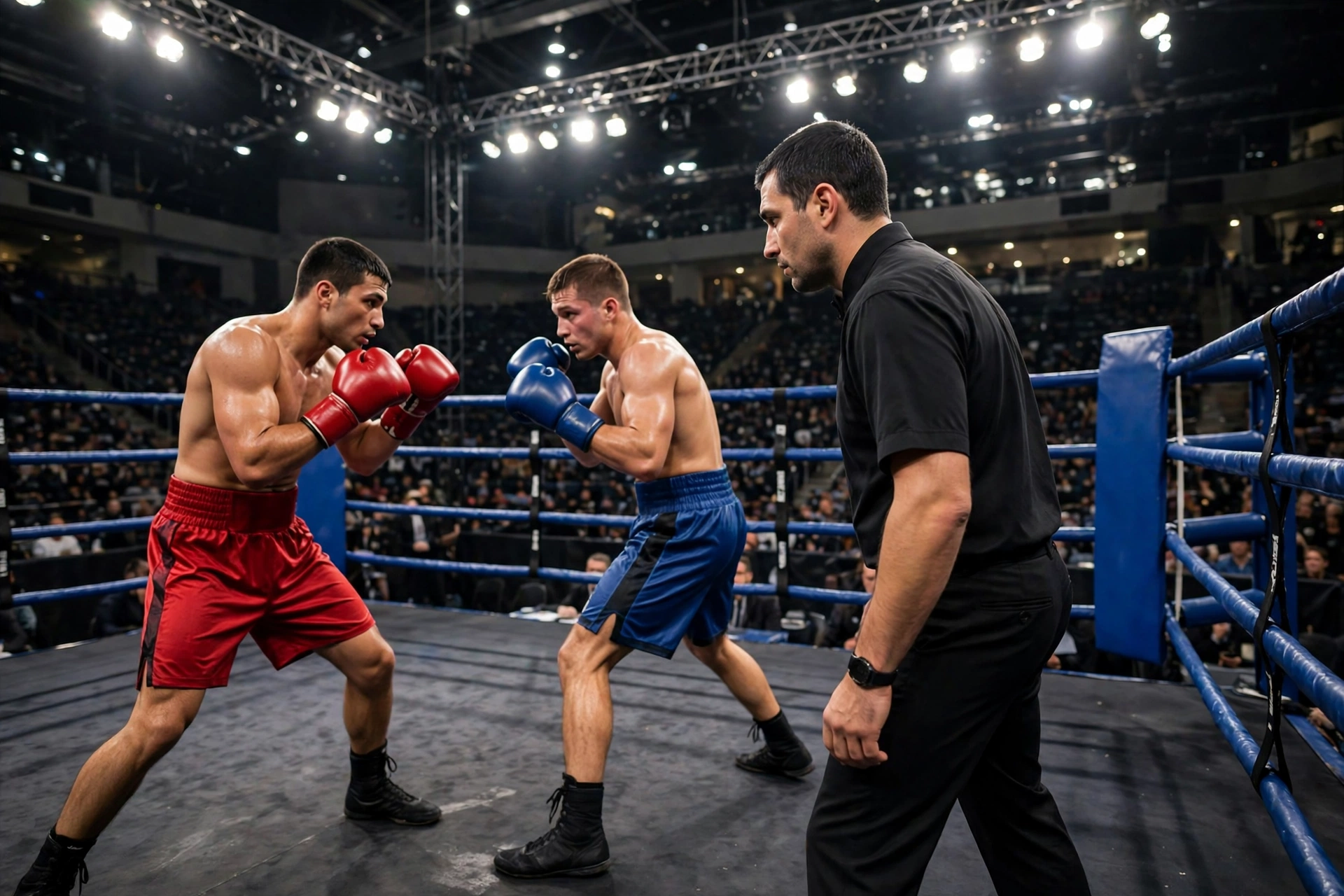
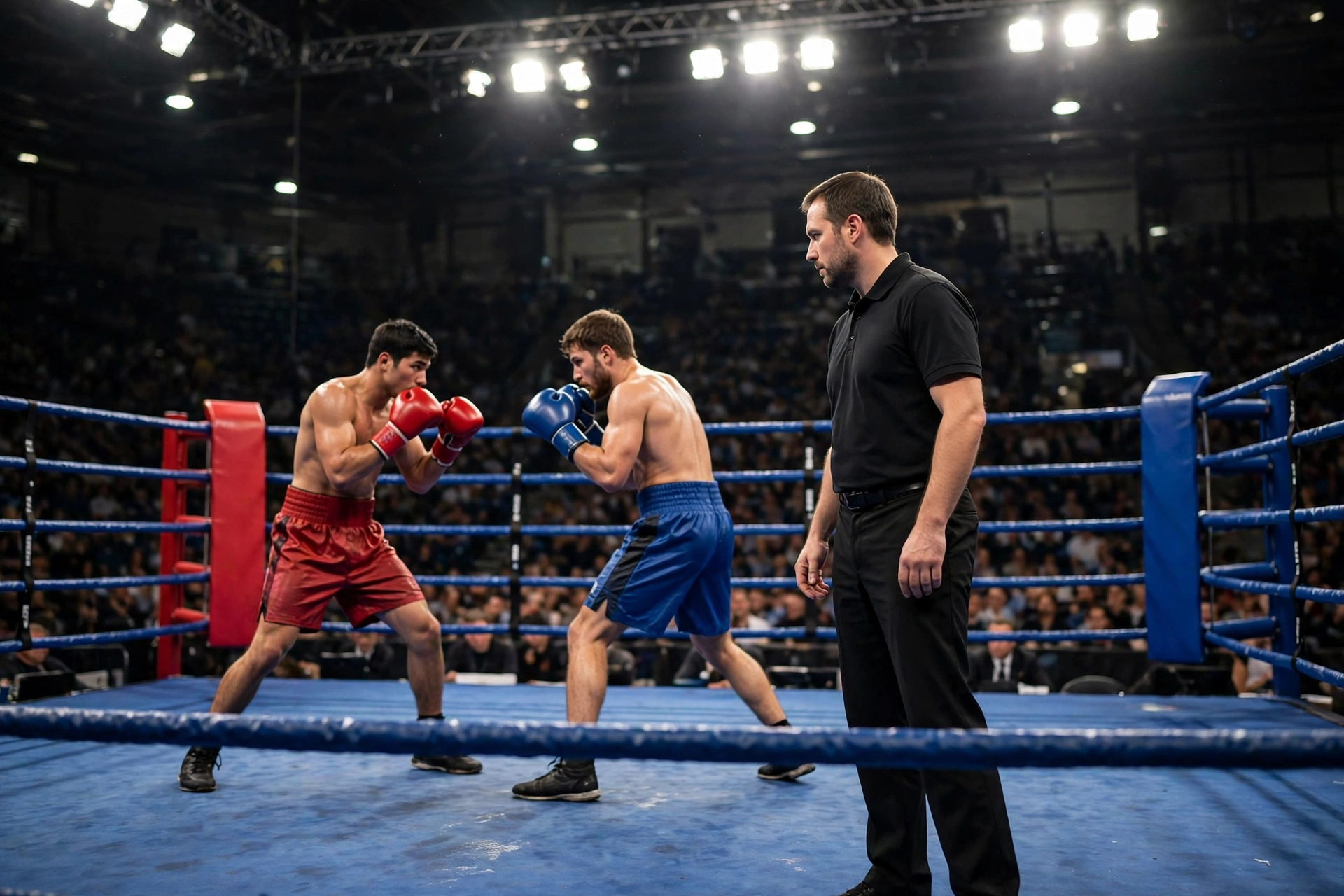
The gear a referee actually uses is chosen for visibility, authority and safety on their feet. Most referees wear a plain, distinctive shirt so fighters, corners and the audience can pick them out at a glance, and they wear flat, comfortable shoes with good grip so they can move quickly around the ring or cage without slipping. In many combat sports, referees also wear thin gloves, which protect their hands when they handle fighters, check gloves or separate a clinch, and which keep the interaction hygienic.
Some referees carry a small towel or wear a belt or badge that marks their role, and they may wear a mouthguard in sports where they are likely to be very close to the action, although that is a personal choice rather than a general rule. What matters most is not any single item of kit, but that the referee can move freely, see clearly and be heard. A referee who is weighed down by unnecessary protection is slower to step in, and stepping in quickly is often what protects a hurt fighter.
How Do Referees Stay Safe Without Headgear?
Referees stay safe mainly through training, positioning and communication. Before a bout, they check the fighters, the gloves, the mouthguards and the ring or cage, and they brief both corners on the rules. During the bout, they keep moving, stay at an angle where they can see both fighters, and avoid standing directly behind a fighter who is about to be hit. When they need to separate a clinch, they speak first, move in from the side, and use their hands to create space before stepping between the fighters. For background on how helmet technology manages impact forces, see what MIPS is for helmets.
What Should a New Referee Know About Headgear?
A new referee should know that headgear is the fighters’ equipment, not theirs, and that their first job is to check it properly. Before a bout, a referee should make sure each fighter’s headgear, where it is required, fits snugly, is fastened correctly and is in good condition, with no torn padding or broken straps. If headgear slips during a bout, the referee should pause the action and have it fixed, because loose headgear can block a fighter’s vision and can be a hazard in itself.
New referees should also learn the rules about headgear for the sport and the level they are officiating, because those rules vary. In general terms, some amateur and youth competitions require headgear, while many professional bouts do not, and the referee is expected to know which applies before the fighters enter the ring. Checking the rules in advance, asking the event supervisor when unsure, and treating headgear checks as part of the pre-fight routine are all habits that make a new referee more reliable and more trusted by fighters and coaches alike.
Does a Referee Ever Wear Headgear in Training?
In training, a referee may wear headgear when they are practising positioning during live sparring, especially if they are learning to move in close to the action. That is a sensible precaution, because a trainee referee is still learning where to stand and may end up in the wrong place more often than an experienced official. Wearing headgear in that setting lets them practise without worrying about a stray blow, and it lets the fighters spar at a realistic pace without holding back for the official’s sake.
Even in training, though, the goal is to learn to stay safe through positioning rather than through padding. A referee who relies on headgear instead of learning to move well will still be in the wrong place when it matters. The best approach is to use headgear as a safety net while learning, and to treat every session as a chance to improve awareness, footwork and timing. That way, when the referee works a real event without headgear, the habits that keep them safe are already in place.
Do combat sports referees wear headgear?
Usually not. Referees need clear vision, a clear voice and freedom of movement, and headgear would make all three harder. They stay safe mainly through positioning and training.
Can a referee be hit during a fight?
Yes, occasionally, usually by a stray blow when stepping in to separate fighters or stop a bout. That risk is handled through positioning, timing and clear commands rather than headgear.
Should a referee check fighters’ headgear before a bout?
Yes, where headgear is required. The referee should check that it fits snugly, is fastened correctly and is in good condition before the bout starts.

Olivia
Writer at Helmet Today, covering helmet reviews, fit and riding safety.