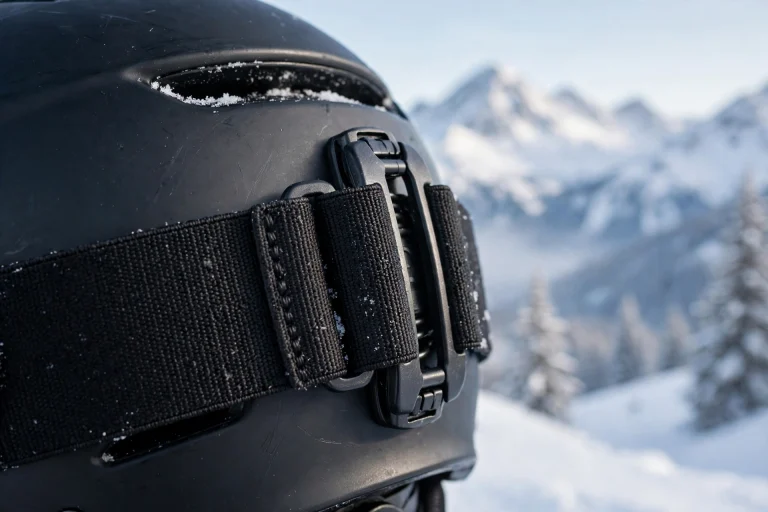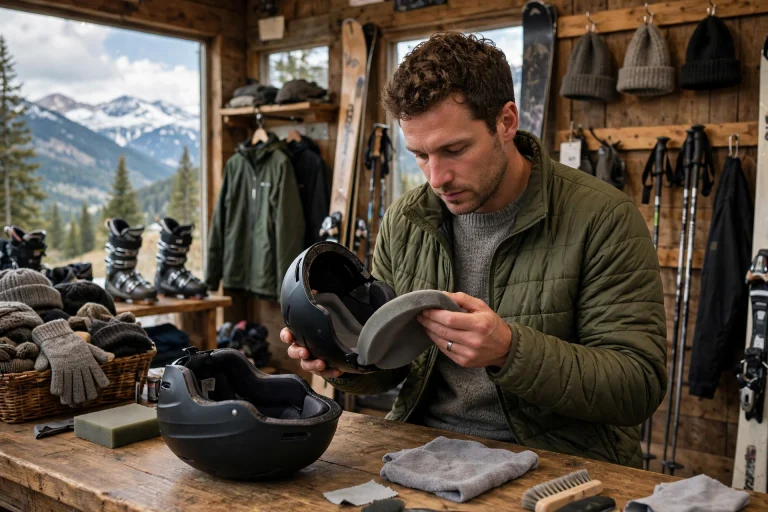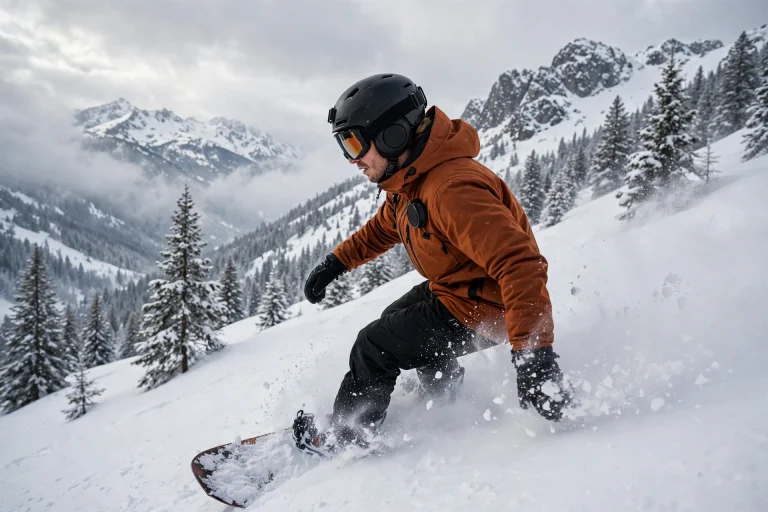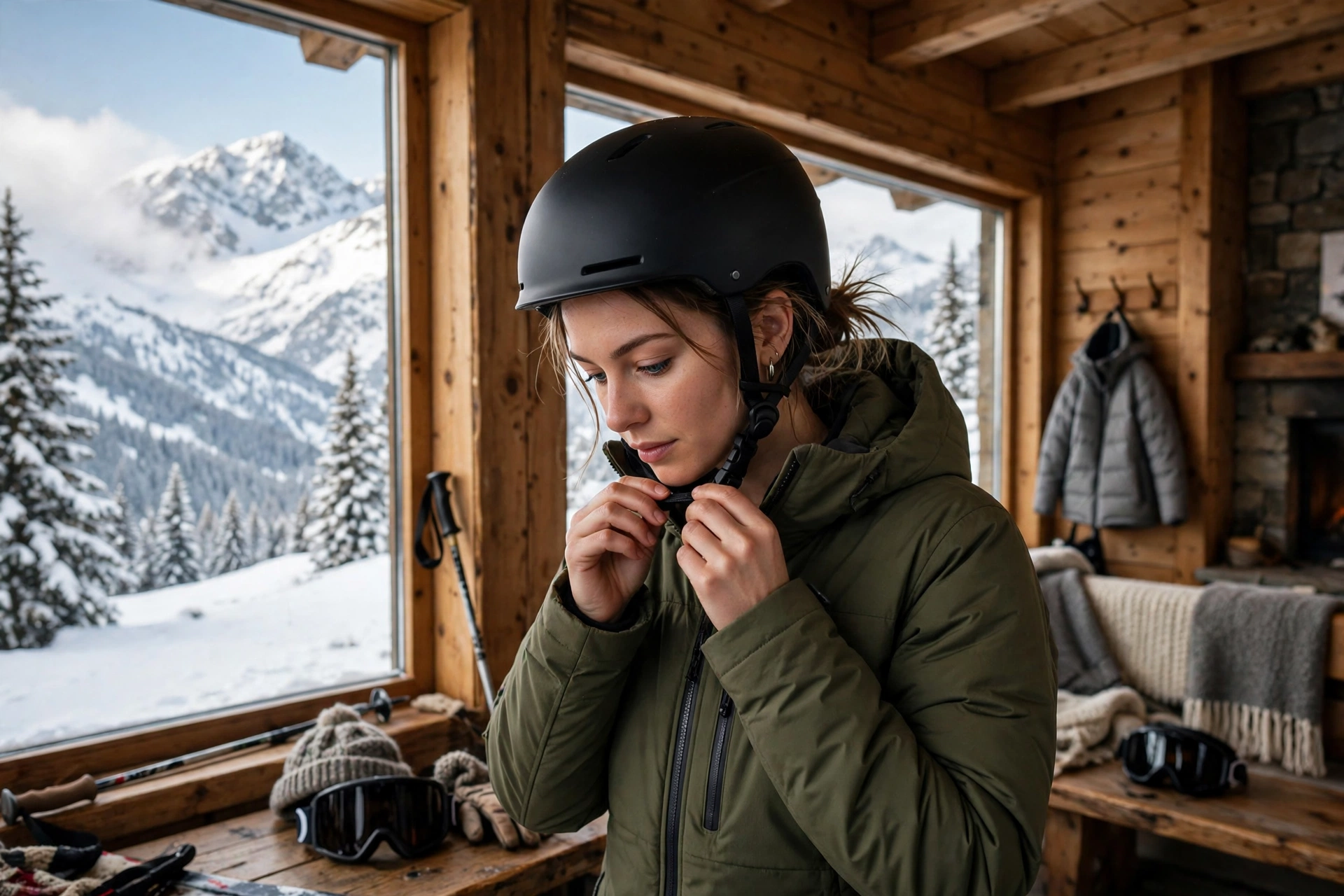
In general terms, a ski helmet is too tight if it squeezes, leaves red pressure marks, or gives you a headache within a short time, and too loose if it slides, wobbles, or moves over your eyes when you shake your head. The right fit feels snug all round, stays put without hurting, and sits level on your head — and learning to tell the difference before you buy is one of the most useful skills a skier can have.
This guide walks through the simple checks that reveal a bad fit, explains what to adjust before you give up on a helmet, and covers the warning signs that mean a helmet should be replaced rather than tolerated.
How Should a Ski Helmet Fit When It Is the Right Size?
A correctly fitting ski helmet sits level on your head, covering your forehead down to just above your eyebrows, with the sides and back covering the skull evenly. It should feel snug all the way round, with the liner in contact with your head everywhere, but without any single point of pressure. When you shake your head from side to side and nod up and down, the helmet should move with your head, not slide around on it.
The chin strap is part of the fit, not an afterthought. Fastened snugly, it should hold the helmet in place without choking you, and you should be able to fit roughly two fingers between the strap and your chin. If the strap is loose, the helmet can come off or shift in a fall; if it is so tight that it hurts your jaw, you will end up loosening it on the mountain, which defeats the purpose.
What Are the Signs a Ski Helmet Is Too Tight?
The clearest sign of a helmet that is too tight is pain. A band of pressure across the forehead, sore spots at the temples, or a headache that starts soon after putting the helmet on all point to a fit problem. Red marks that stay visible for a while after you take the helmet off are another warning, especially if they sit in the same place every time. Some pressure when you first put a new helmet on is normal, because liners settle slightly, but real pain is not something to push through.
A tight helmet also causes practical problems on the mountain. It can press your goggles into your face, squeeze the temples of your glasses, and make you reluctant to wear it properly, with the strap undone or the helmet pushed back. A helmet you do not want to wear is a helmet that will not protect you, so a tight fit is a safety issue as well as a comfort one.
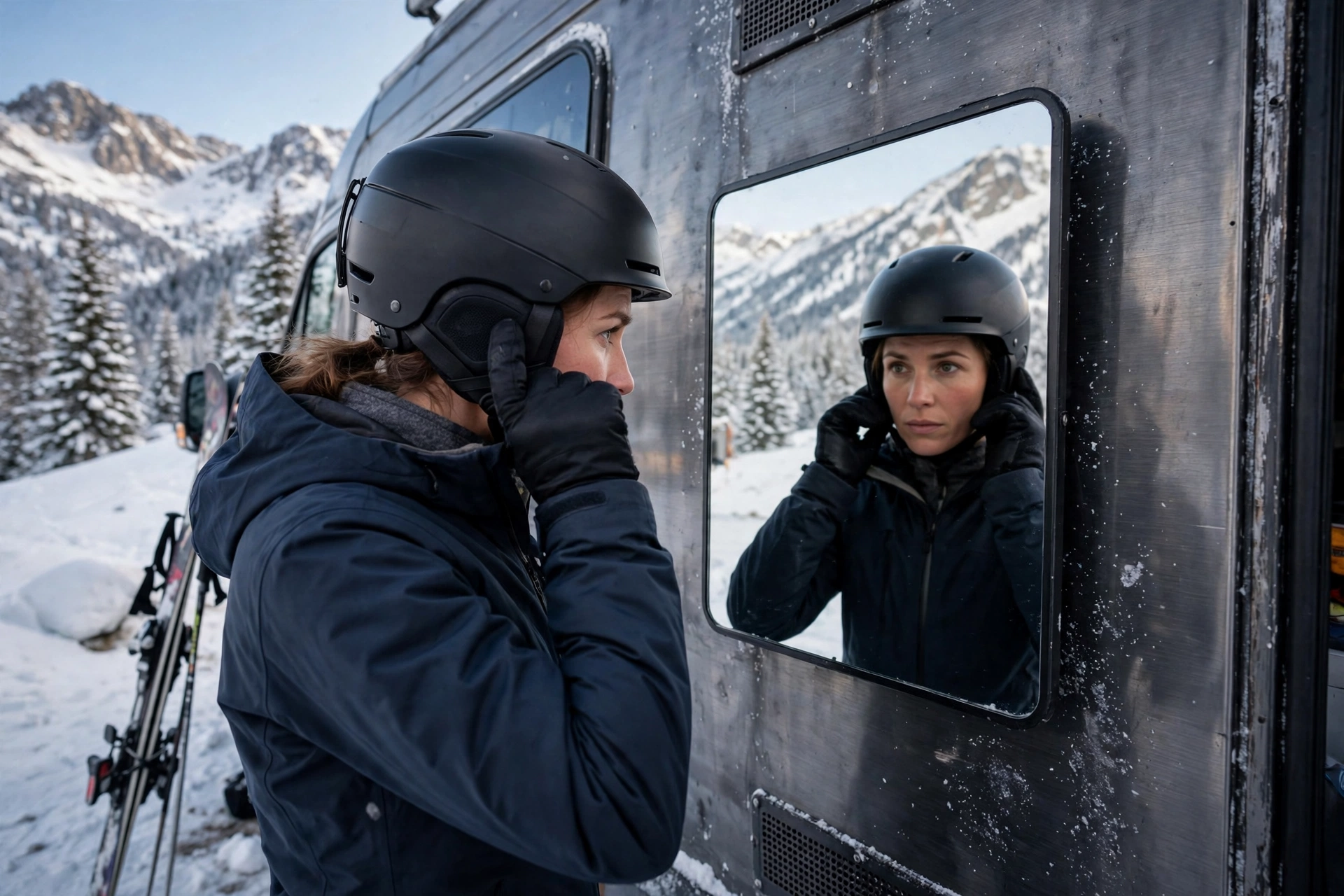
What Are the Signs a Ski Helmet Is Too Loose?
A loose helmet is often easier to spot, because it moves. If the helmet slides forward over your eyes when you nod, rocks side to side when you shake your head, or can be twisted easily on your head with one hand, it is too big or the fit system is not adjusted properly. A helmet that moves in normal use will move much more in a fall, when it matters most.
Other signs include a gap between the liner and your head, especially at the sides or back, and a chin strap that has to be pulled very tight to keep the helmet in place. If you can fit your fingers easily between the liner and your skull, or if the helmet sits high on your head like a cap rather than covering your forehead properly, the size is wrong. In general terms, a loose helmet also feels less stable at speed, and the extra movement can be distracting on steeper runs.
How Do You Do a Proper Ski Helmet Fit Check at Home?
Start with the size guide, but treat it as a starting point, not a verdict. Measure around your head just above your eyebrows and ears, and compare the result with the maker’s chart. Then try the helmet on without a hat or thick balaclava underneath, because bulky layers change the fit and will not be worn the same way every day. Put the goggles on as well, since the helmet and goggle combination is what you will actually ski in.
Run through a short checklist. The helmet should sit level, not tilted back. The front edge should sit just above your eyebrows. Shaking your head should move the skin on your forehead slightly, showing the helmet is gripping rather than sliding. The chin strap should be snug with about two fingers of room. There should be no gap between the top of the goggles and the front of the helmet, because that gap, sometimes called the gaper gap, exposes your forehead to cold and sunburn.
Can You Fix a Tight or Loose Helmet, or Should You Replace It?
Small fit problems can often be fixed. A fit dial, thicker or thinner cheek pads, and careful chin strap adjustment can turn a slightly loose helmet into a good one, and a liner that feels firm at first may soften slightly with use. Some shops can also swap padding to fine-tune the fit, and that is worth asking about before you buy a different size.
But there are limits. No adjustment fixes a helmet that is a full size too small or too large, and no amount of padding makes up for a shell that does not match your head shape. If the shell itself is wrong, change the helmet, not the padding. Likewise, a helmet that has been in a serious impact, has cracked foam, or has a damaged strap or buckle should be replaced, not adjusted, because its protective ability may be compromised even if it still fits. Rotational forces in angled impacts are a separate part of protection, and low-friction liner designs explained in this guide to what MIPS is for helmets are worth considering when you choose a replacement.
As a rule, if you can fix the fit with the helmet’s own adjustment system and the helmet is undamaged, keep it. If you need to force it, pad it heavily, or tolerate pain or movement, replace it. A helmet is only useful when it fits well enough that you forget you are wearing it, and that is a standard worth holding.
Frequently Asked Questions
Q: Should a new ski helmet feel tight at first?
A: In general terms, a new helmet should feel snug, not painful. Liners settle slightly with use, so a firm first fit is normal, but sharp pressure, headaches, or red marks that linger mean the size or shape is wrong, and that will not improve enough with wear.
Q: Is a loose helmet dangerous, or just uncomfortable?
A: A loose helmet is a safety problem, not just a comfort one. A helmet that slides or rotates can leave parts of your head exposed in a fall and may not absorb impact the way it was designed to. If it moves when you shake your head, it is too loose for the slopes.
Q: Do I need a different size if I wear a balaclava?
A: In general terms, try the helmet with the layers you actually ski in. A thin balaclava usually makes little difference, but a thick hat under a helmet changes the fit and can make a well-fitting helmet too tight. Size the helmet for your normal setup, not for the thickest layer you might wear once.

Olivia
Writer at Helmet Today, covering helmet reviews, fit and riding safety.