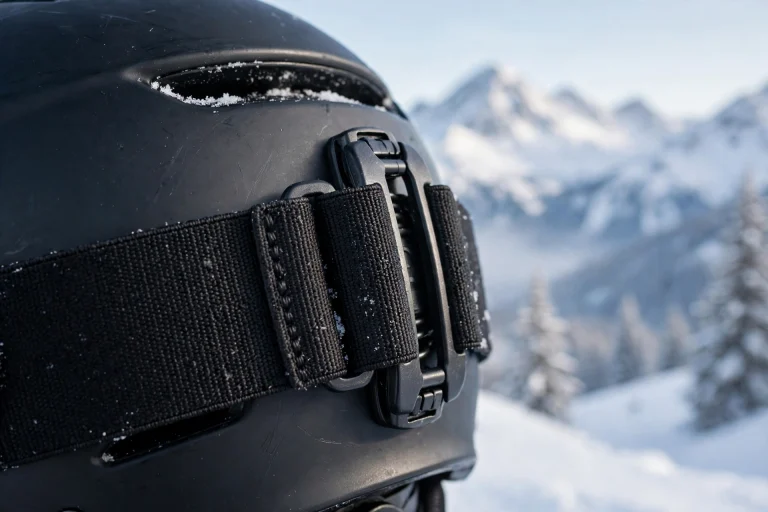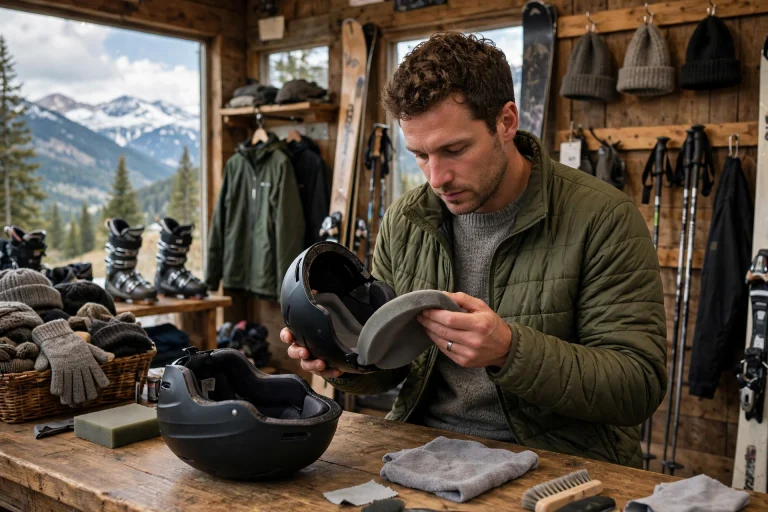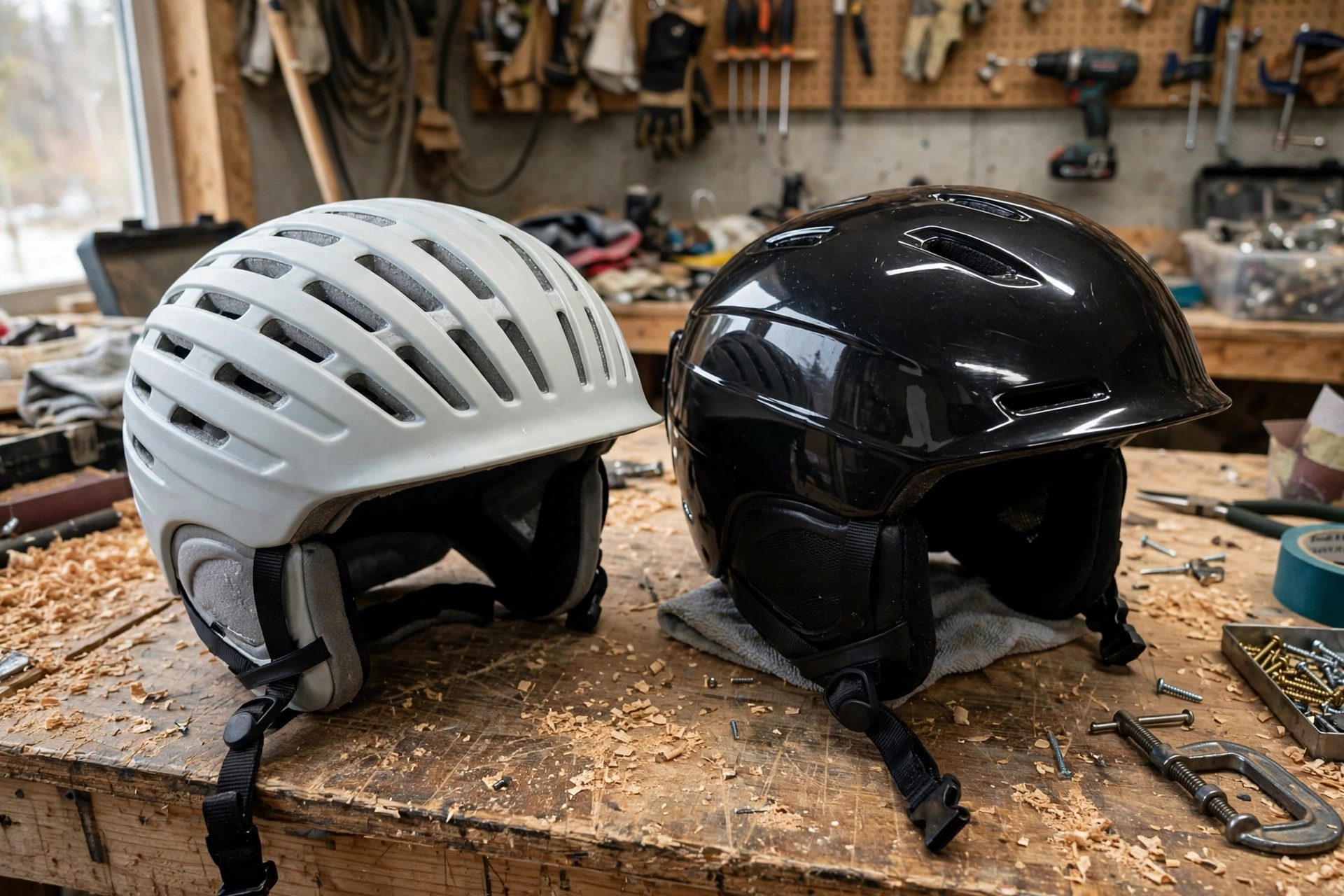
In general terms, in-mold ski helmets are made by fusing a thin outer shell directly to the foam liner in one moulding step, which keeps them light, while injection-molded helmets use a thicker, separately made hard shell, which tends to be tougher and more resistant to knocks. Neither method is automatically better — the right choice depends on how you ski, how much weight matters to you, and how hard you are on your gear.
This guide explains how each construction method works, how they compare on weight, durability, ventilation, and cost, and which type suits different kinds of skiers, so you can read a product description and know what you are actually buying.
How Is an In-Mold Ski Helmet Made?
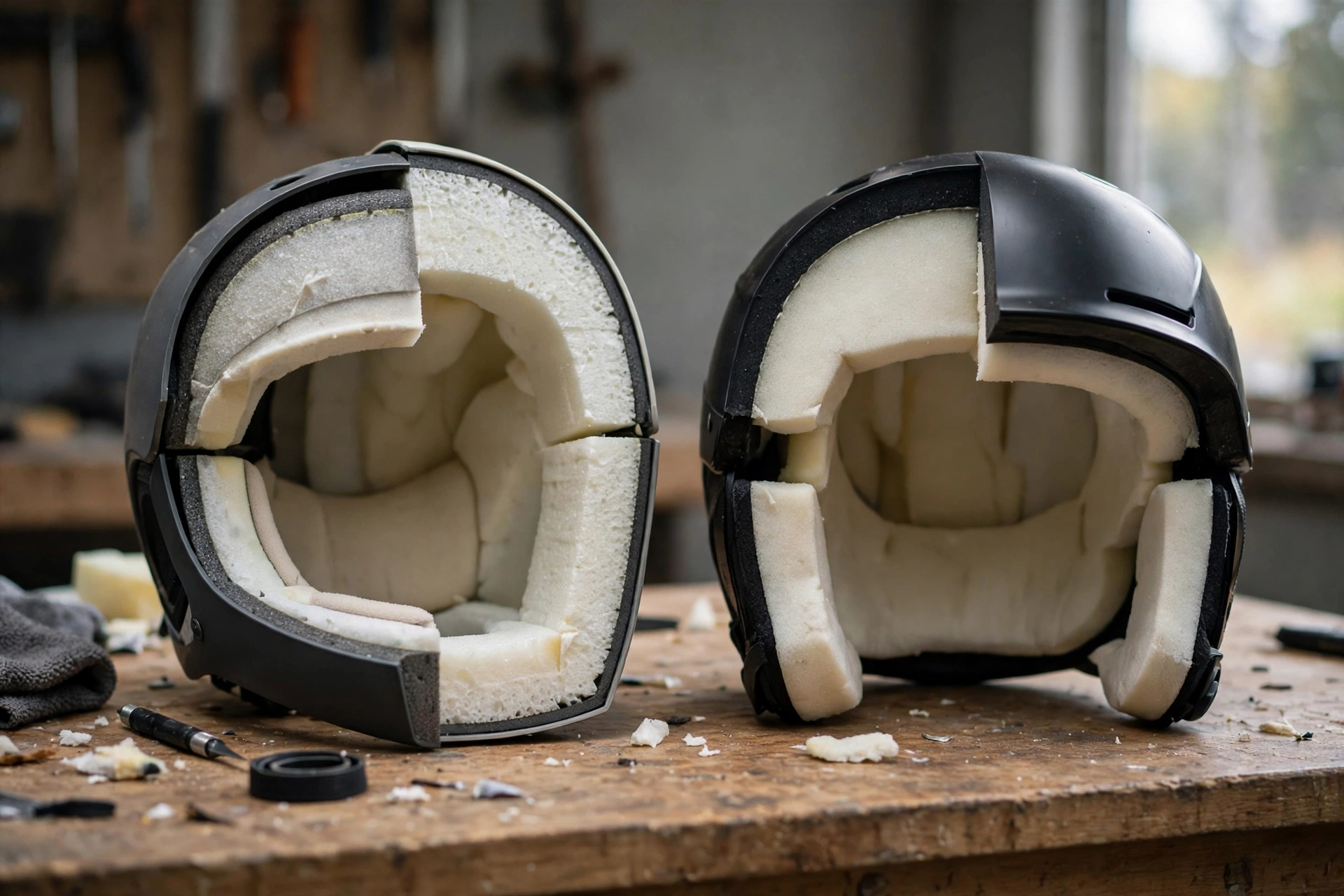
An in-mold helmet is made by placing the foam liner, usually expanded polystyrene, into a mould together with a thin polycarbonate shell, and bonding them in a single process. The shell and foam become one fused piece, rather than two separate parts glued together. The result is a helmet with a very thin, light outer skin that is inseparable from the liner inside.
The main advantage of this method is weight. Because the shell is thin and the bonding is efficient, in-mold helmets are in general terms among the lightest ski helmets available, and that matters on long days, when even a small weight saving reduces neck fatigue. The fused construction also allows for complex shapes and large vents, because the mould can form the shell and foam together around the vent channels.
The trade-off is that a thin shell is easier to dent, scratch, and crack from everyday knocks. Dropping an in-mold helmet on a hard surface, banging it against a ski edge in a bag, or stacking heavy gear on top of it can mark the shell more easily than a thicker hard shell would. The damage is often cosmetic, but deep dents or cracks in the shell or foam mean the helmet should be inspected carefully, and replaced if the protective structure is affected.
How Is an Injection-Molded Ski Helmet Made?
An injection-molded helmet, sometimes called a hard shell helmet, starts with a separate outer shell made by injecting molten plastic, usually ABS, into a mould. That hard shell is then fitted over the foam liner, and the two parts are bonded or assembled together. The shell is much thicker and more rigid than the thin skin of an in-mold helmet.
The main advantage here is durability. A thick ABS shell resists dents, scratches, and everyday abuse far better than a thin in-mold shell, which makes injection-molded helmets popular with ski schools, rental fleets, and skiers who throw their gear in the car without a second thought. In general terms, they also tend to cost less to make, so they often sit at the more affordable end of the range.
The trade-off is weight and ventilation. A thick shell is heavier, and because the shell and liner are separate parts, shaping large, complex vent channels is harder. Injection-molded helmets can still be well ventilated, but in general terms they are less likely to match the lightest in-mold designs on either weight or airflow. For skiers who prioritise toughness and value over grams, that is a fair exchange.
Which Is Lighter, and Does the Weight Difference Matter?
In general terms, in-mold helmets are lighter, and the difference is noticeable when you hold the two types side by side. The exact gap varies by model and size, but it is enough that many skiers can feel it as soon as they pick a helmet up, and feel it again at the end of a long day, when a heavier helmet contributes to neck and shoulder tiredness.
Whether that matters depends on how you ski. For all-day resort skiing, backcountry touring where you are also climbing uphill, and younger or smaller skiers for whom helmet weight is a larger share of body weight, a lighter helmet is a real benefit. For short sessions, gentle slopes, or skiers who are not sensitive to weight, the difference may not matter enough to outweigh other factors.
Which Shell Type Lasts Longer in Everyday Use?
For pure resistance to knocks, scratches, and rough handling, injection-molded helmets usually win. Their thick shells shrug off the kind of treatment that would dent a thin in-mold shell: being tossed in a boot bag, knocked against ski edges, or dropped on a car park surface. If you are hard on gear, or the helmet will be used by children who are not gentle with equipment, that toughness is worth a lot.
Some helmets now combine the two methods, with a hard shell in high-wear areas and in-mold construction elsewhere. These hybrid designs aim to give the lightness of in-mold where it matters and the toughness of a hard shell where knocks happen most. If you see the word hybrid in a product description, it usually means this kind of mix, and it is worth asking the maker which parts use which method.
How Do In-Mold and Injection-Molded Helmets Compare on Ventilation and Price?
Ventilation in general terms favours in-mold construction, because the fused shell and foam can be moulded around larger and more numerous vent channels. That gives in-mold helmets an edge for skiers who run warm, ski in spring conditions, or wear glasses that fog easily. Injection-molded helmets can still ventilate well, but their vent designs are more constrained by the separate hard shell, so check the vent layout rather than assuming.
Price in general terms favours injection-molded construction, because ABS shells are cheaper to produce in volume. That makes hard shell helmets a strong choice for beginners, growing children who will need a new size soon, and anyone buying for a family. In-mold helmets often sit higher in the range, though the gap has narrowed as in-mold manufacturing has become more common.
Neither price nor ventilation tells you anything about impact protection on its own. Both construction types can meet the same safety standards, and certification is about the tested performance of the finished helmet, not the method used to make it. When you compare models, look at the certification, the fit, and the features, and treat the shell type as a guide to weight and toughness. Protection against twisting forces in angled falls is a separate design question, and low-friction liner designs explained in this guide to what MIPS is for helmets can appear in either shell type.
Frequently Asked Questions
Q: Is an in-mold helmet safer than an injection-molded one?
A: In general terms, no. Safety depends on the finished helmet’s tested performance and its fit, not on the shell method alone. Both types can meet the same standards, so choose based on fit, weight, and durability, and check the certification rather than assuming one method is safer.
Q: Do in-mold helmets break more easily?
A: Their thin shells dent and scratch more easily from everyday knocks, but that is usually cosmetic. Any helmet, whatever its shell type, should be replaced after a serious impact or if the foam is cracked or crushed, because the protective liner may be compromised.
Q: Which type is better for a child who skis?
A: In general terms, an injection-molded helmet is often the practical choice for children, because it withstands rough handling and usually costs less, which matters when a child will outgrow it. If weight is a concern, a light in-mold model that fits well is also a good option.

Olivia
Writer at Helmet Today, covering helmet reviews, fit and riding safety.