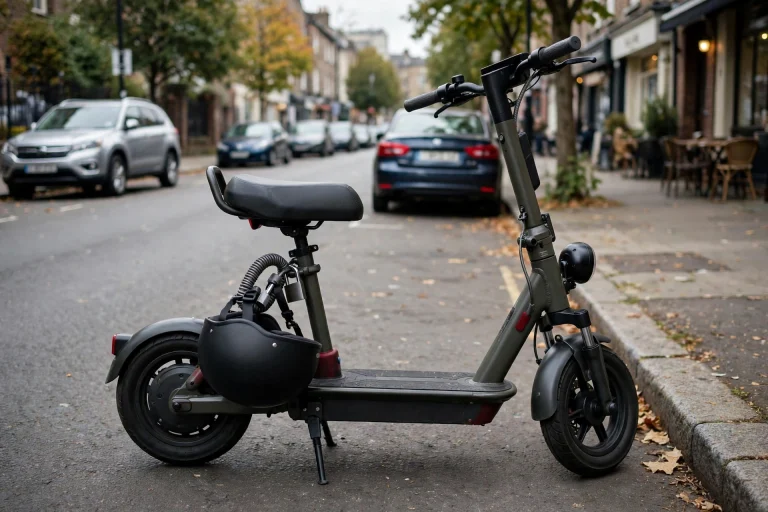
To fix a scooter helmet that is too loose, first tighten the fit system and chin strap and check the sizing pads, then re-test with a hard head shake — in general terms, a helmet that still rocks, slides, or lifts off after every adjustment is the wrong size, and no amount of tightening will make it safe.
A loose scooter helmet is common, because scooters are often ridden in short trips with a helmet grabbed quickly, and a helmet that felt fine in the shop can loosen as pads compress. The fix is usually quick — but it is worth doing properly, because a loose helmet can shift or come off in exactly the moment you need it.
How Do You Know If a Scooter Helmet Is Too Loose?
Do the shake test. Put the helmet on, fasten the chin strap snugly, then shake your head hard from side to side and nod vigorously. The helmet should move with your head, not independently of it. If it rocks, slides over your eyes, or rotates, it is too loose.
Check for gaps. Slide a finger between the liner and your head at the forehead, temples, and back. A snug helmet leaves little room; a loose one lets a finger in easily at several points. Also check the brow: the front edge should sit just above your eyebrows and stay there when you look up and down.
Notice it on the ride. A helmet that needs constant pushing back into place, that lifts at speed, or that bounces on rough pavement is telling you the fit is wrong. Wind lift at scooter speeds is a strong signal — a well-fitting helmet stays put without you thinking about it.
What Adjustments Should You Try First?
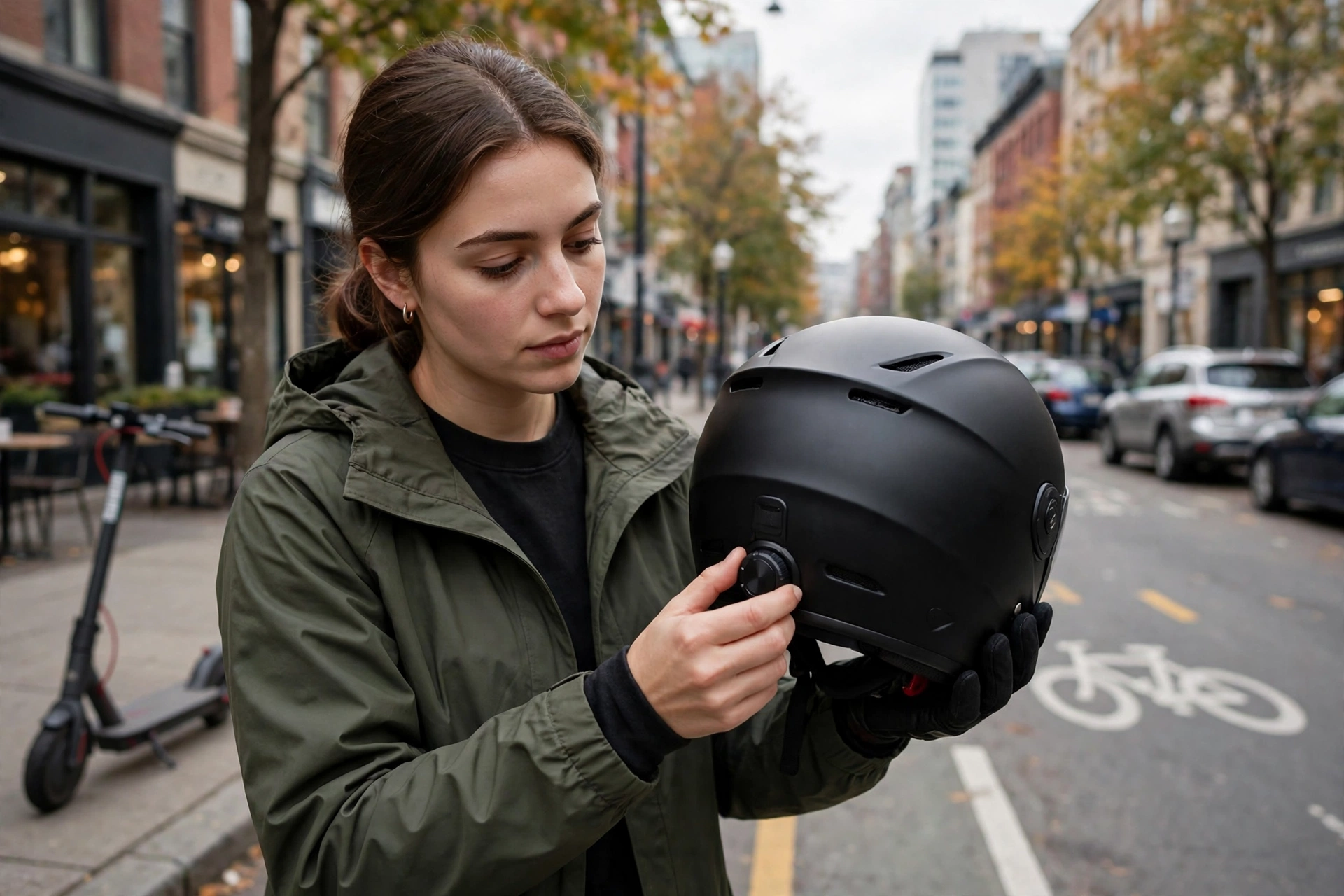
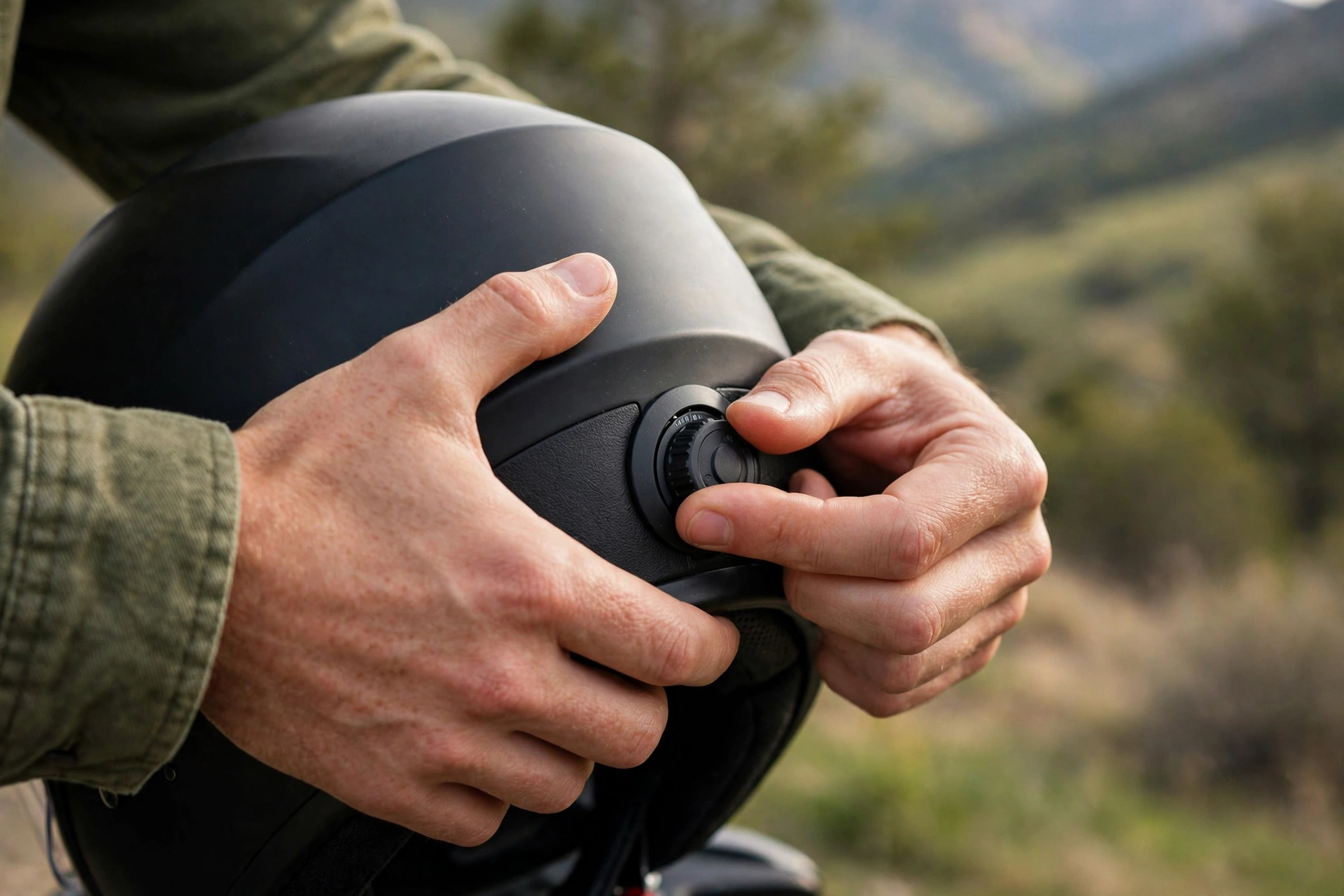
Start with the fit system. Most scooter helmets have a dial or slider at the back; tighten it gradually until the helmet feels snug all the way round, with even pressure and no single hot spot. Tighten in small steps and shake-test after each one — overtightening hurts without adding stability.
Next, set the chin strap. It should sit snug under the chin with about one finger of room, and the side straps should form a neat shape just below the ears. A loose chin strap lets the helmet rock; a strap that is fastened but slack is doing nothing at all.
Check the sizing pads. Many helmets come with interchangeable pads of different thicknesses, and swapping to thicker pads — especially at the sides or back — can take up slack without changing the shell size. If your helmet came with spare pads, try them before anything else.
What If Adjustments Do Not Fix the Looseness?
Consider the shell size. If the fit system is at its tightest and the helmet still rocks, the shell is too big for your head. Pads and dials adjust within a size; they cannot turn a large shell into a medium one. Measure around your head just above the eyebrows and ears and compare it with the maker’s size chart for your exact model.
Consider head shape too. A helmet that is loose front-to-back but tight at the temples is the wrong shape, not the wrong size, and a different brand’s shell may fit you far better in the same nominal size. Trying another brand is not fussiness — it is how you find a helmet that actually fits.
Check for worn pads. Liners compress with use, sweat, and time, and a helmet that fitted well a year ago may have loosened as its pads packed down. Replacement pads from the maker can restore the original fit for a small cost, and are worth trying before replacing the whole helmet.
- Dial first: tighten the fit system in small steps, shake-testing each time
- Strap second: snug chin strap, side straps just below the ears
- Pads third: thicker sizing pads to take up slack inside the shell
- Size last: if everything is at its limit, the shell is too big
Can You Add Anything to Make a Loose Helmet Fit?
Thicker pads are the legitimate fix. Maker-supplied pads in a thicker size are designed for the helmet and do not interfere with its structure. A thin skull cap or balaclava can also take up a small amount of slack, and is reasonable for a minor looseness — but it should not be used to rescue a helmet that is a whole size too big.
Do not improvise with foam, towels, or folded cloth stuffed into the helmet. Improvised padding compresses unevenly, shifts during a ride, can interfere with the fit system, and may change how the helmet behaves in an impact. If the gap needs more than a proper pad to fill, the helmet does not fit.
Also avoid wearing a thick beanie to fill a loose helmet. It changes the fit unpredictably, can push the helmet up and out of position, and in warm weather it overheats you — a poor solution to a problem that has a proper one.
When Is a Loose Helmet a Safety Problem, Not Just an Annoyance?
Whenever it moves in a fall. A helmet that shifts on impact may not cover the area it needs to cover, and one that comes off entirely offers no protection at all. That is the line between “slightly loose” and “must fix before the next ride” — and it is why the shake test matters more than how the helmet feels standing still.
The helmet’s impact management, including the rotational-force protection explained in this guide to what MIPS is for helmets, is designed around the helmet staying in its fitted position. A helmet that rotates freely on your head cannot do that job as designed, however good its certification.
If you cannot achieve a stable fit with the dial, strap, and pads, stop using the helmet for riding and replace it with one that fits. A scooter helmet is ridden in traffic, at speed, among cars — it is not the place to accept a fit you know is wrong.
Frequently Asked Questions
Q: My helmet fitted fine last year but feels loose now — why?
A: In general terms, liner pads compress with use and sweat, which loosens the fit over time. Try replacement pads from the maker first; if the shell itself still rocks with fresh pads, the helmet has reached the end of its well-fitting life.
Q: Should I buy a size down if I am between sizes?
A: Usually yes — the smaller size with the fit system loosened is a better starting point than the larger size tightened to its limit, since pads compress and a tight-at-first helmet settles, while a loose helmet rarely tightens up. Try both sizes with a shake test before deciding.
Q: Does a loose helmet still protect me at all?
A: A slightly loose helmet is better than none, but a helmet that rocks, slides, or can lift off is seriously compromised, since it may not be covering the right area when an impact happens. Fix the fit or replace the helmet before relying on it in traffic.

Olivia
Writer at Helmet Today, covering helmet reviews, fit and riding safety.