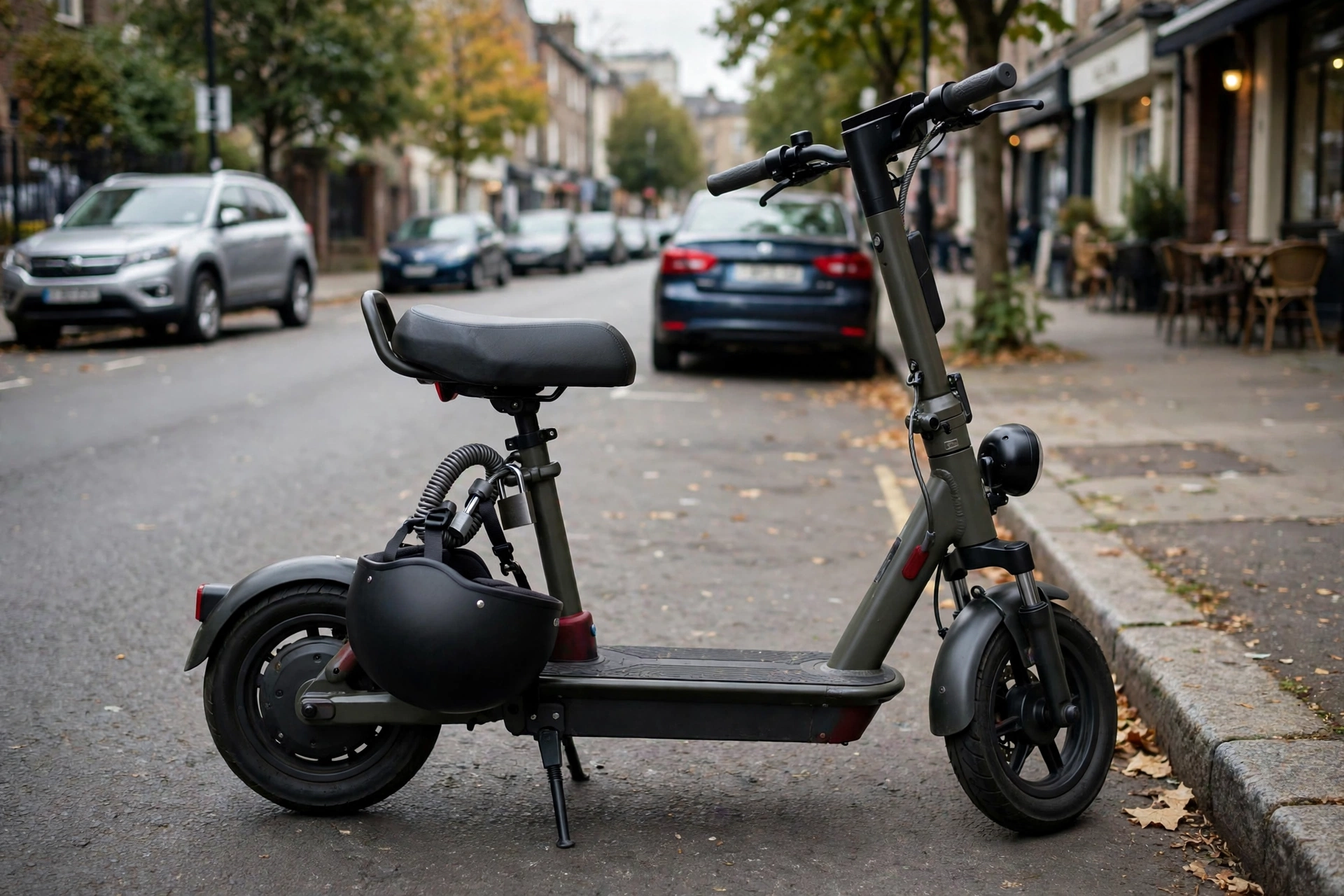
To lock a scooter helmet to the scooter, thread a cable lock or a helmet lock through the helmet’s chin strap or D-ring and secure it to a fixed part of the scooter — in general terms, locking through the strap is more secure than hanging the helmet on a hook, because a strap cannot be slipped off without cutting it, while a helmet simply hung on a hook can be lifted away.
Scooter helmets get stolen because they are left loose: draped over a handlebar, hung on a mirror, or balanced on the seat while the rider runs an errand. A small lock and a consistent habit solve most of that risk for very little money or weight.
What Locking Options Work for a Scooter Helmet?
A cable lock is the most versatile option. A thin, lightweight cable threads through the helmet’s chin strap or D-ring and around a fixed part of the scooter — the frame, the steering column, or a dedicated lock point — and locks with a combination or key. Cable locks are cheap, light enough to carry daily, and fit almost any helmet and scooter combination.
A dedicated helmet lock is a neater alternative. These are small locks, sometimes built into the scooter or sold as a clamp that mounts on the handlebar or frame, designed to grip the helmet’s D-ring or strap. They are tidier than a cable and quicker to use, but they suit specific helmet and scooter shapes, so check compatibility before buying.
Some scooters have built-in helmet hooks or under-seat storage with a lock. A hook alone is not security — a helmet on a hook can be lifted off — but a lockable under-seat compartment is genuinely secure, provided the helmet fits inside it and the compartment lock is reliable. Use the compartment where it works; use a cable where it does not.
Where Should You Attach the Lock on the Helmet?
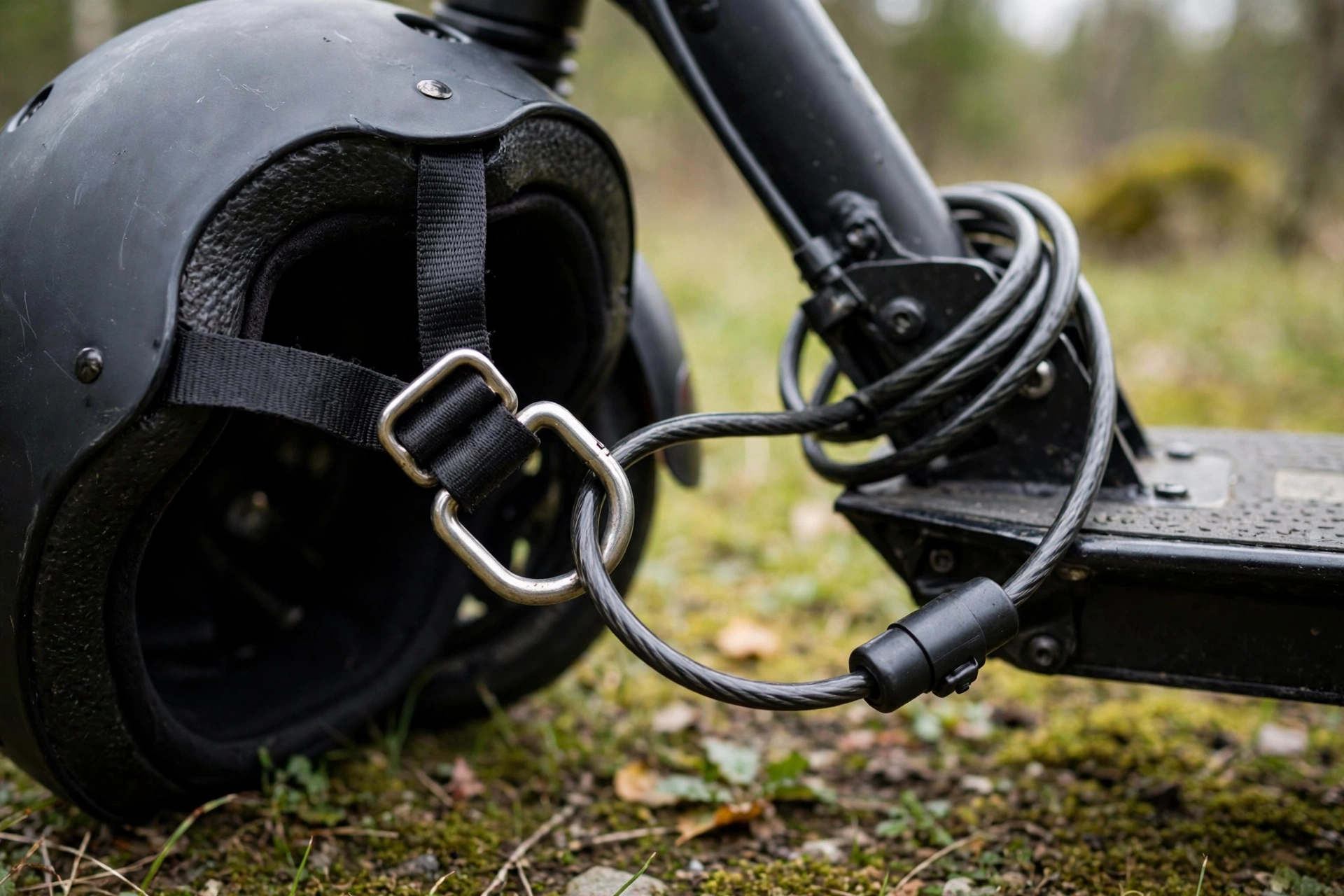
Through the chin strap or D-ring, always. The strap is the one part of the helmet that cannot be removed without cutting, so a lock through it holds the helmet itself, not just a detachable part. Thread the cable through the D-ring if your helmet has one, or through the strap loop near the buckle if it does not.
Do not lock through a vent. Vents are openings in the shell, and a cable through a vent can be slipped out by flexing the shell or, worse, can crack the shell if pulled hard. Vents are for air, not for security, and a thief who knows helmets will not be stopped by a vent-threaded cable.
Do not lock through the visor or goggle strap either. Visors detach, straps stretch and can be cut easily, and neither holds the helmet’s main structure. The chin strap is the anchor point; everything else is decoration from a security point of view.
Where Should You Attach the Lock on the Scooter?
To a fixed, structural part: the frame, the steering column, or a dedicated lock point. These cannot be removed without tools, so a lock attached to them holds the helmet to the scooter itself rather than to a part that can be unbolted or slipped off.
Avoid handlebar ends, mirrors, and accessories. Mirrors unscrew, grips slide off, and accessory mounts unbolt — a lock attached to any of these secures the helmet to something the thief can simply remove. The same applies to luggage racks that bolt on: check whether the rack is truly fixed before trusting it.
Keep the helmet close to the scooter’s body where possible. A helmet dangling on a long cable swings, bangs against the scooter, and invites a grab; a helmet locked short and tight against the frame is harder to cut free and less likely to be damaged by swinging. Tuck the strap so it does not trail on the ground.
What If You Have No Lock With You?
Carry the helmet with you. It is the only fully secure option without a lock, and for short errands it is usually less trouble than it seems — most shops, cafes, and offices accept a helmet carried in hand, and a helmet bag makes it neater to carry.
If carrying is genuinely impractical, use the least-bad option: lockable under-seat storage if your scooter has it, or, failing that, place the helmet out of sight — inside a top box or bag — rather than displayed on the handlebars. A helmet that cannot be seen is less likely to be taken than one advertised on a mirror.
Never leave a helmet unlocked on the scooter “just for a minute.” Most helmet theft is opportunistic, and a minute is all it takes. The habit of locking or carrying every time, without exceptions, is what actually protects the helmet.
- Through the strap: D-ring or chin strap loop, never a vent
- To the frame: a fixed structural part, not a mirror or accessory
- Short and tight: no dangling cable or swinging helmet
- No lock, no leave: carry the helmet rather than leaving it loose
Does Locking a Helmet Damage It?
Not if done properly. A cable through the strap puts no stress on the shell or foam, and a helmet locked short against the frame suffers less damage than one swinging loose or dropped on the pavement. The risk comes from locking through vents or visors, which can crack or bend, and from leaving a locked helmet to bang against the scooter in wind.
Check the helmet after locking it regularly. Look for strap wear where the cable rubs, and check the shell for scuffs where it contacts the scooter. A small pad or cloth between helmet and frame prevents most scuffing, and replacing a worn strap loop is cheaper than replacing a stolen helmet.
Remember that a lock protects the helmet, not the rider — but a rider without a helmet is a rider who either does not ride or rides unprotected. Keeping your helmet is part of keeping yourself safe, and the helmet’s protection, including the rotational-force management explained in this guide to what MIPS is for helmets, only helps if the helmet is still yours when you need it.
Frequently Asked Questions
Q: Is a cable lock enough to stop helmet theft?
A: In general terms, yes for opportunistic theft, which is most helmet theft — a cable through the strap stops anyone simply lifting the helmet away. A determined thief with cutters can defeat any light cable, so for high-risk areas, a thicker cable or carrying the helmet is the safer choice.
Q: Can I lock my helmet by its D-ring?
A: Yes — the D-ring is an ideal anchor point, since it is part of the chin strap system and cannot be removed without cutting the strap. Thread the cable through the D-ring and around a fixed part of the scooter’s frame.
Q: What if my scooter has no good lock point?
A: Use the steering column or the frame itself, which are structural on almost every scooter, or carry the helmet with you. Avoid mirrors, grips, and bolt-on accessories as anchor points, since they can be removed.

Olivia
Writer at Helmet Today, covering helmet reviews, fit and riding safety.