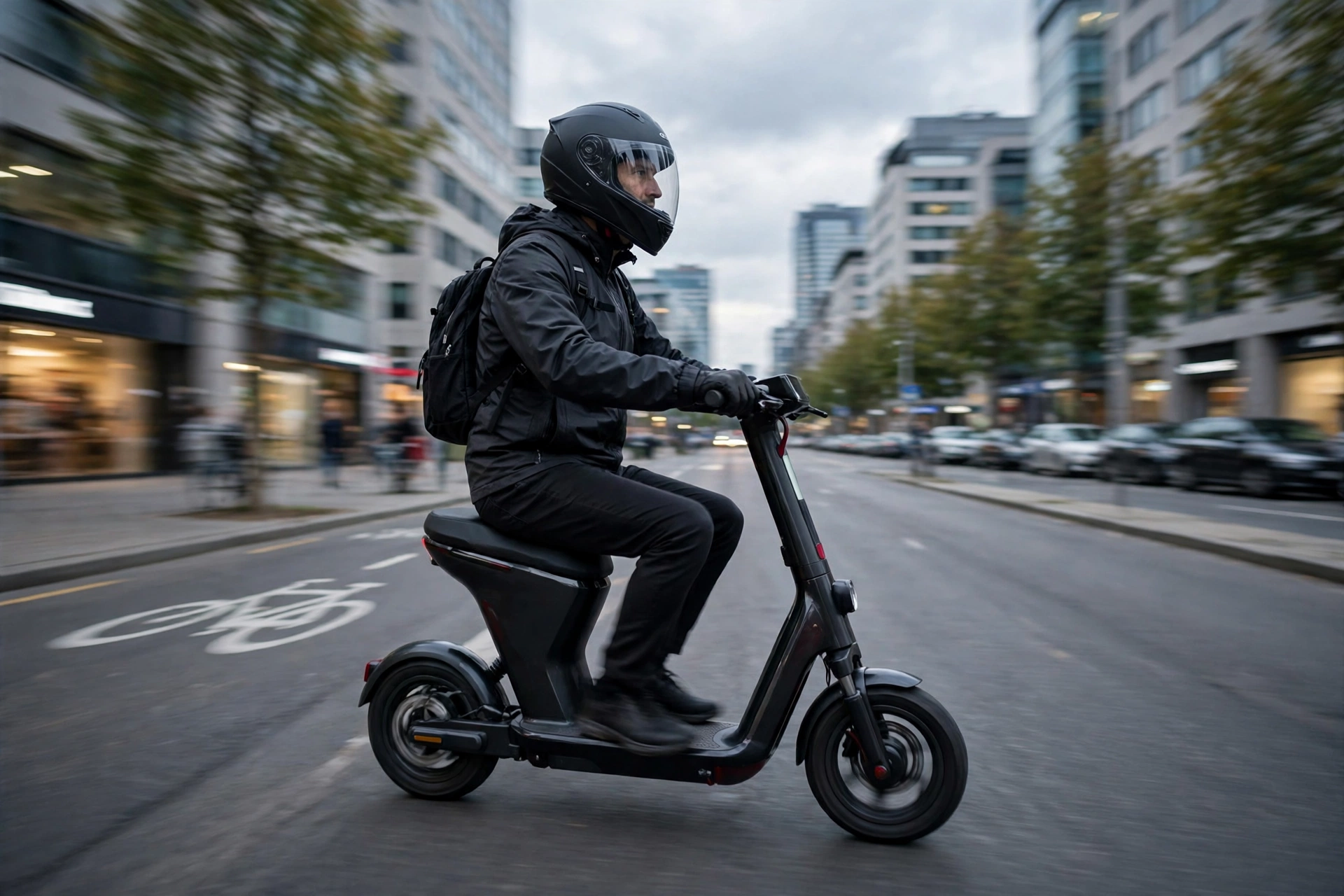
For a 25 mph commuter scooter, choose a helmet certified for higher-speed riding — in general terms, a full-coverage urban or open-face motorcycle-style helmet fits this speed better than a basic bicycle helmet, because at 25 mph you carry far more momentum, face stronger wind, and share the road with faster traffic.
Twenty-five miles per hour feels unremarkable on a scooter until you think about it as a speed: it is faster than most city cyclists travel, it puts you in traffic lanes rather than at the kerb, and a fall at that speed is a different event from a tumble at walking pace. The helmet should match the speed, not just the vehicle.
Why Does 25 MPH Change the Helmet Choice?
Impact energy rises with speed. A fall at 25 mph involves substantially more energy than one at 12 mph, so the helmet’s coverage and construction matter more. A helmet designed for low-speed cycling may not be rated for the forces involved at scooter commuting speeds, and its coverage — especially at the back and sides — may be thinner than you want.
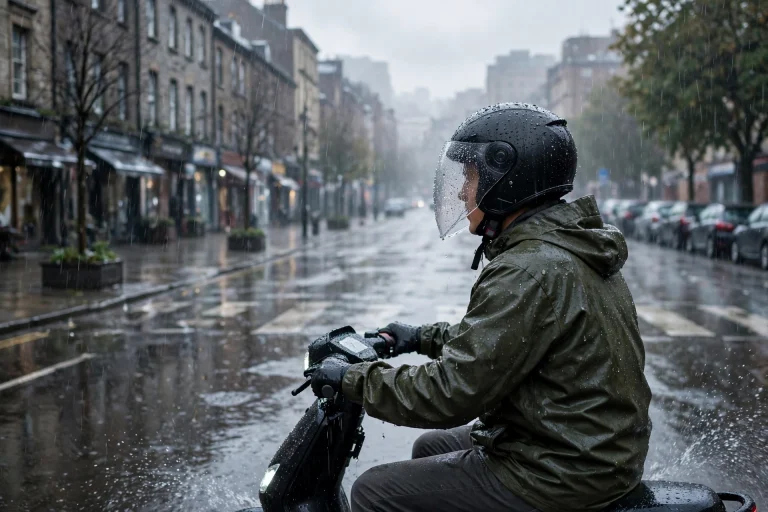
Wind becomes a real factor too. At 25 mph, sustained wind pushes on the helmet, dries your eyes, and carries insects and grit into your face. A helmet with a visor or shield, or one worn with good eyewear, handles this far better than an open, heavily vented helmet designed for slow riding.
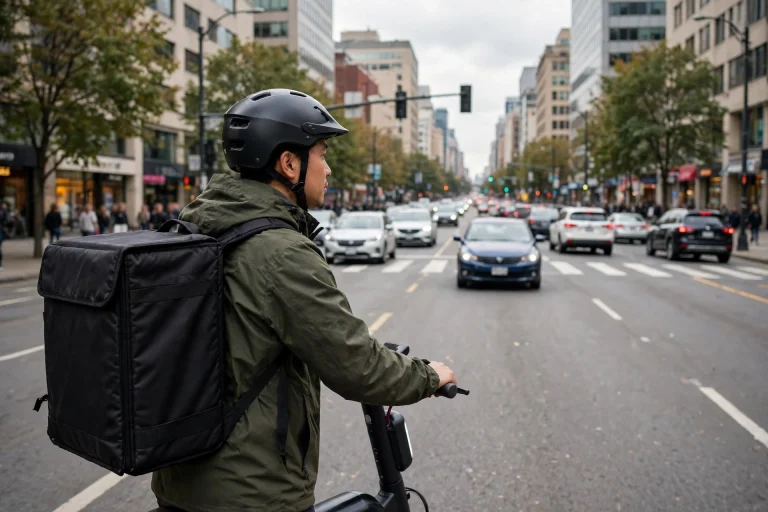
Traffic position changes as well. At 25 mph you ride with cars, not beside them, and drivers judge you as a faster vehicle. A helmet that is visible — bright, reflective, or fitted with a rear light — helps drivers place you correctly, which matters as much as impact protection on a commute.
What Helmet Types Suit a 25 MPH Commuter Scooter?
An open-face motorcycle-style helmet is a strong choice. It covers the ears, jaw sides, and back of the head more fully than a bicycle helmet, often includes a visor or shield, and is designed for sustained speeds well above 25 mph — so it has margin at your commuting speed rather than being at its limit.
A full-coverage urban or e-bike helmet rated for higher speeds is another option. Some makers now produce helmets specifically for faster e-bikes and scooters, with more coverage than a bicycle helmet and better ventilation than a motorcycle helmet. Check the certification carefully: the standard it meets matters more than the marketing label.
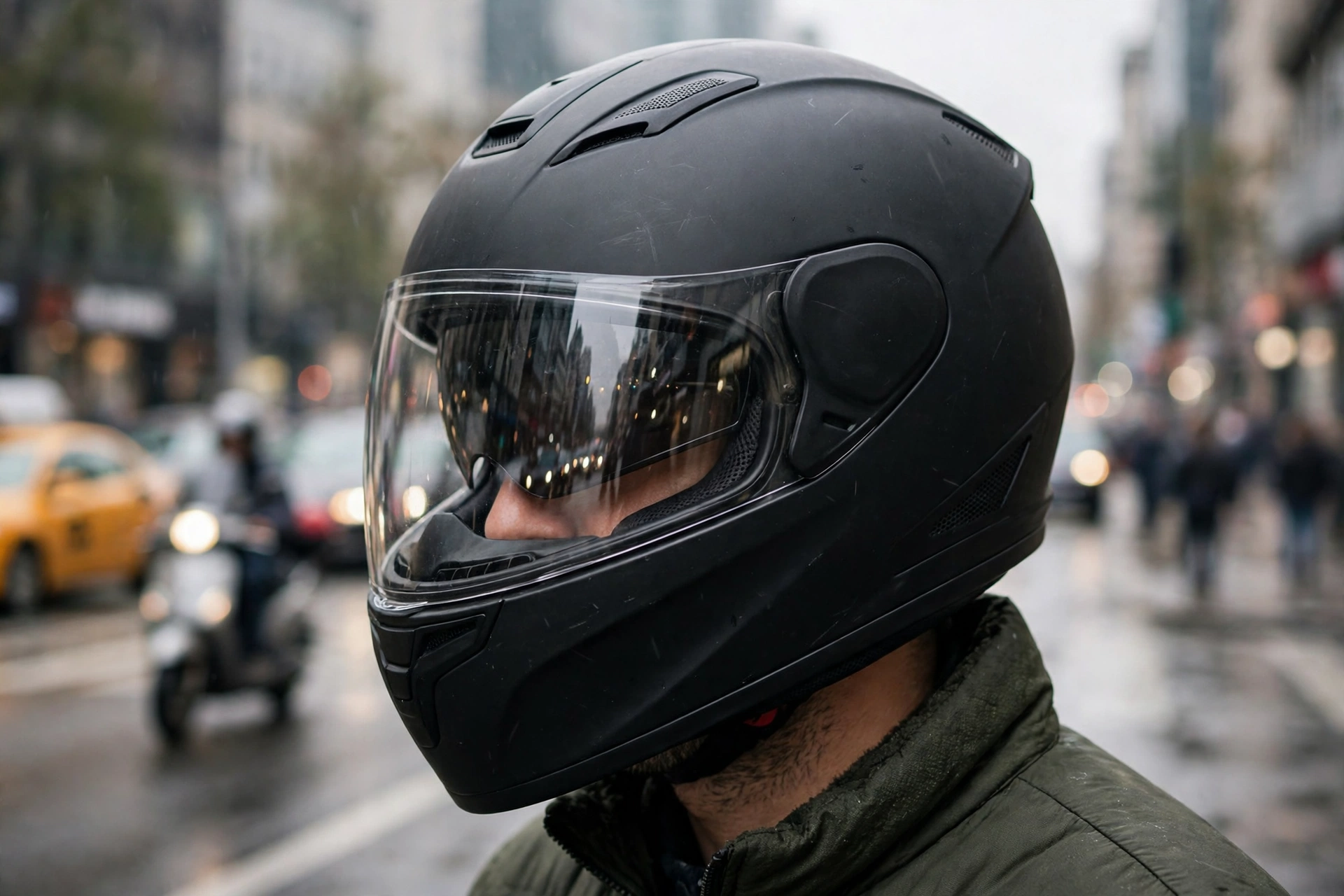
A full-face helmet is the maximum-coverage option. It protects the chin and face fully, which matters at higher speeds, but it adds weight, heat, and reduced hearing — trade-offs that some commuters accept and others find tiring on a daily ride. For a fast commute on busy roads, it is a defensible choice; for a short, slow trip, it is more than most riders need.
What Features Matter Most at Commuting Speed?
Coverage first: ears, temples, and the back of the head should all be covered, not just the crown. A helmet that leaves the sides and back exposed may meet a low-speed standard but leaves the areas most likely to strike the ground in a scooter fall less protected.
Stability second. The helmet must stay planted at 25 mph without lifting or buffeting. Test it at speed before committing — a helmet that feels fine standing still can lift badly in the wind, and a lifting helmet distracts you and sits out of position when you need it most.
Vision and hearing third. A visor should be clear, distortion-free, and easy to clean, and it should not fog in cool or wet weather. Ear coverage should cut wind noise without sealing off traffic sound entirely — you still need to hear vehicles, horns, and sirens around you.
- Coverage: ears, temples, and back of head covered, not just the crown
- Stability: no lift or buffeting at sustained commuting speed
- Visor: clear, fog-resistant, and easy to clean
- Visibility: bright colour, reflective details, or a rear light
What About Certification and Local Rules?
Certification is where the choice gets concrete. Bicycle helmet standards are written around cycling speeds and fall types; motorcycle standards are written around higher speeds and different impacts. At 25 mph, a helmet meeting a motorcycle or higher-speed e-bike standard is, in general terms, the more appropriate choice — but the exact requirement depends on how your area classifies your scooter.
Check your local rules before buying. Some places classify faster scooters as mopeds or motorcycles and require a motorcycle-standard helmet; others treat them like bicycles. Your local regulations decide what is legally required, and riding with the wrong standard can mean a fine as well as a safety gap.
Do not trust a helmet’s looks. A helmet shaped like a motorcycle helmet but certified only to a bicycle standard is still a bicycle-standard helmet. Read the certification label inside the helmet, not the product photos, and buy from a reputable maker.
How Should Fit and Comfort Work for Daily Commuting?
Fit is non-negotiable at any speed, and more so at 25 mph. The helmet should sit level, feel snug and even, and pass the shake test with the strap fastened — and it should still feel comfortable after half an hour, since a commuter helmet is worn daily, not occasionally. A helmet that pinches after twenty minutes will tempt you to leave it at home.
Think about the whole commute: carrying the helmet into the office, storing it, wearing it in rain. A helmet with a quick-release buckle, a washable liner, and a reasonable weight is easier to live with daily, and a helmet that is easy to live with is a helmet that actually gets worn.
Finally, remember that the helmet is one part of a system. Gloves, a bright jacket, lights, and defensive riding all matter, and the helmet’s impact technology — including the rotational-force management explained in this guide to what MIPS is for helmets — works best when the helmet is correctly fitted, certified for the speed, and worn on every ride without exception.
Frequently Asked Questions
Q: Is my bicycle helmet enough for a 25 mph scooter?
A: In general terms, no — a bicycle helmet is designed around lower cycling speeds and lighter coverage, while 25 mph commuting involves higher energy and more wind. A fuller-coverage helmet rated for higher speeds is the more appropriate choice, and your local rules may require it.
Q: Do I need a full-face helmet at 25 mph?
A: Not necessarily. An open-face motorcycle-style helmet or a higher-speed-rated urban helmet covers the head well at this speed; a full-face helmet adds chin and face protection but also weight and heat, so it is a choice about your route and comfort, not a universal requirement.
Q: Will a motorcycle helmet be too hot for commuting?
A: It can be in summer, but many open-face motorcycle helmets ventilate reasonably, and the trade-off is coverage at speed. Try the helmet on a warm day before committing, and look for models with adjustable vents if heat is a concern on your route.

Olivia
Writer at Helmet Today, covering helmet reviews, fit and riding safety.