To measure a skate helmet for a teen, wrap a soft tape around the head just above the eyebrows and ears, compare the number with the maker’s size chart, and then check the fit on the head, since the tape alone never tells the whole story. In general terms, teens fall between child and adult sizes, so measuring properly avoids both a helmet that is too tight and one that wobbles.
Teenagers grow fast, and a helmet that fitted last year may not fit now. They are also at the age where they start choosing their own gear and caring how it looks, which means a helmet that fits well and looks acceptable is far more likely to be worn. This guide covers measuring, fitting, and keeping a teen’s helmet right as they grow.
How Do You Measure a Teen’s Head for a Helmet?
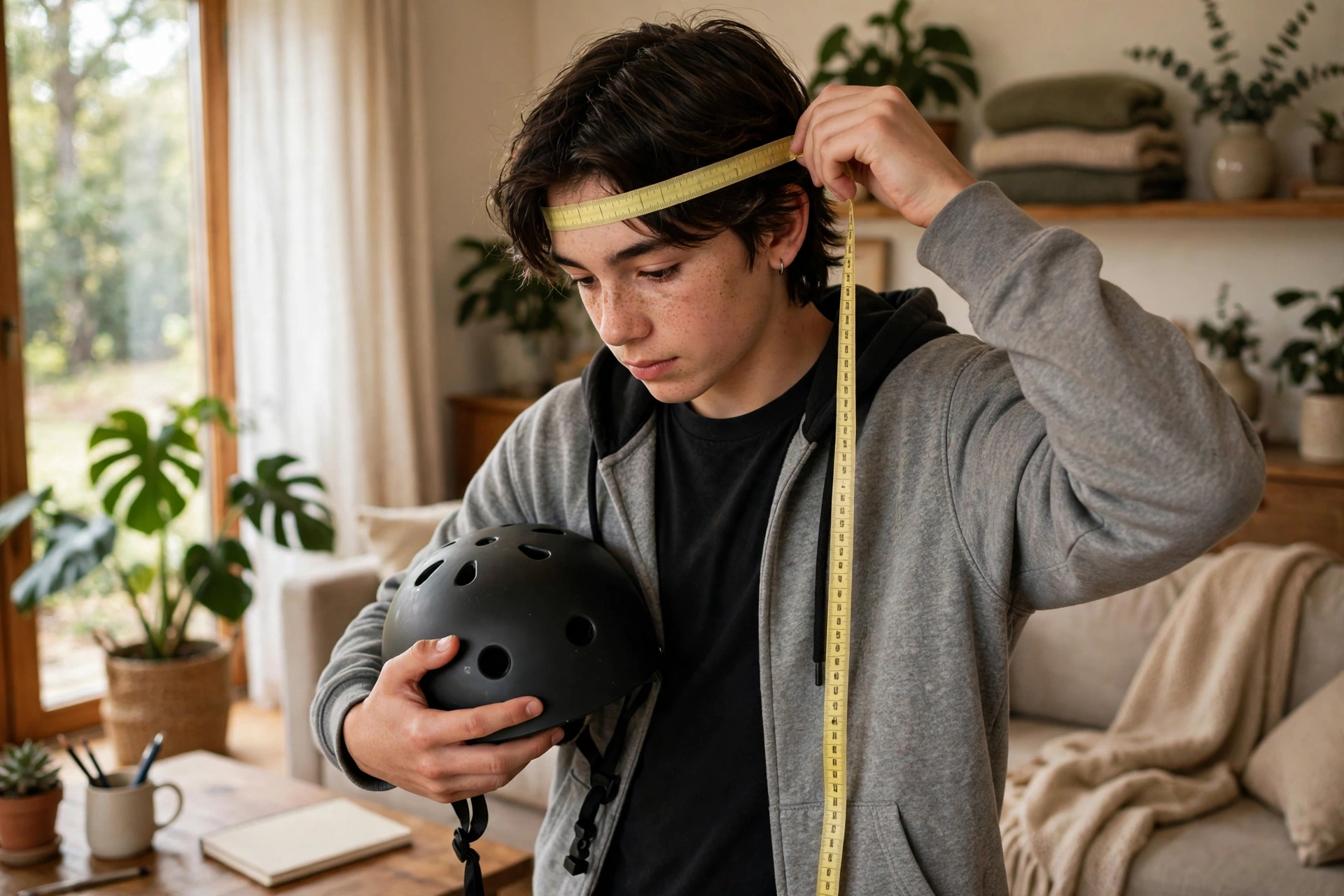
Use a soft measuring tape, or a piece of string you measure afterwards with a ruler. Wrap it around the head at its widest point, just above the eyebrows and ears, and keep it level all the way around. Take the measurement twice, since hair and tape tension can change the result by a centimetre or more.
Compare the number with the size chart of the specific helmet you are considering, not with a generic chart. Brands shape their shells differently, and a medium in one brand can fit like a large in another. If your teen falls between sizes, try both sizes if you can, since shell shape matters as much as the number.
Measure with the hairstyle your teen will actually skate in. Thick hair, braids, or a bun can add noticeable bulk, and a helmet measured over loose hair may fit differently once hair is tied up. Fit the helmet the way it will be worn, every time.
What Does a Correct Fit Look Like on a Teen?
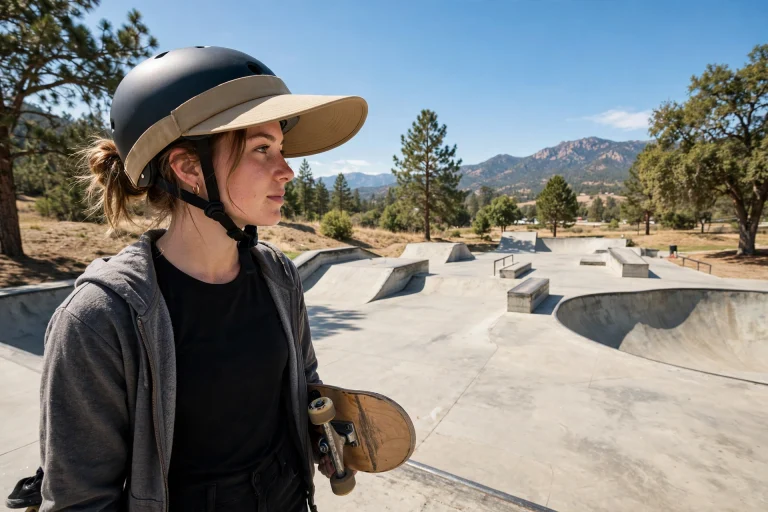
The helmet should sit level on the head, about two fingers above the eyebrows, and feel snug all the way around without squeezing. When your teen shakes their head gently, the helmet should move with the head, not slide over it. If it rocks forward, it is too loose or sitting too high.
Next, adjust the straps. The side straps should form a V under each ear, and the chin strap should be snug enough that you can fit no more than two fingers beneath it. Ask your teen to open their mouth wide: the helmet should pull down slightly, which shows the strap is doing its job.
Finally, check comfort over time. A helmet that feels fine for a minute in the shop can develop a pressure point after half an hour of skating. If possible, have your teen wear it around the house for a while before the first session, and adjust the padding if one spot presses.
Should Teens Wear Adult or Kids’ Helmets?
Most teens fit adult sizes, but the right answer depends on head measurement, not age. A smaller teen may still fit a large kids’ size, while a taller teen may need an adult medium or large. Let the tape and the fit decide, not the label on the box.
Adult helmets are usually shaped for adult heads, which are longer front to back, while kids’ helmets are rounder. If an adult helmet presses at the forehead but feels loose at the sides, or vice versa, try a different brand or size rather than forcing the fit. Head shapes vary, and the right helmet is the one that matches your teen’s shape.
Multi-sport helmets certified for skating and cycling are a practical choice for teens who do more than one activity, since one helmet can cover skating, cycling, and scootering. Just make sure the certification is genuine and the fit is right for skating, which is the activity with the most frequent falls.
How Often Should You Re-measure a Teen’s Helmet?
Check the fit every few months during growth spurts, and at least once a season otherwise. Teens can outgrow a helmet in a single school year, and the change is gradual enough that nobody notices until the helmet is clearly too small. A quick fit check takes a minute and prevents months of skating in a helmet that no longer protects properly.
Watch for the signs of a helmet that has become too small: it sits high on the forehead, the straps need constant tightening, or your teen complains of pressure at the sides. A helmet that has become too loose, because padding has compressed, shows the opposite signs: rocking, sliding, and a chin strap that never seems tight enough.
When a helmet no longer fits, replace it rather than adding extra padding to compensate. Extra padding can mask a poor fit and may shift in a fall. A fresh helmet in the right size is the safer and usually the more comfortable option.
How Do You Get a Teen to Actually Wear the Helmet?
Let them choose the colour and style within the range of certified helmets that fit. A teen who picked their own helmet is far more likely to wear it than one handed a helmet they dislike. The protection is the same whatever the colour, so this is an easy win.
Set the rule early and apply it consistently: no helmet, no board. Teens test boundaries, and a rule that bends once will bend again. If their friends skate without helmets, acknowledge that honestly, but hold the line, since peer pressure is not a safety argument.
It also helps to understand the features your teen cares about. If they ask about a slip liner or a particular brand’s technology, read what MIPS for helmets means together, so the conversation is about real features rather than marketing. A teen who understands their gear respects it more.
Frequently Asked Questions
Q: What if my teen is between two helmet sizes?
A: Try both sizes, since shell shapes differ between brands. In general terms, choose the size that sits level and snug without pressure points, and use the adjustable padding or fit system to fine-tune it.
Q: Can a teen use a helmet they have outgrown if it still buckles?
A: No, a helmet that sits high on the forehead or squeezes the sides no longer fits, even if the buckle still closes. Replace it with the correct size rather than forcing a helmet that has been outgrown.
Q: How long should a teen’s skate helmet last?
A: Replace it after any hard impact, and also when the fit changes through growth or wear. In general terms, a teen skating regularly may need a new helmet every year or two, simply because they grow and the padding wears.

Olivia
Writer at Helmet Today, covering helmet reviews, fit and riding safety.