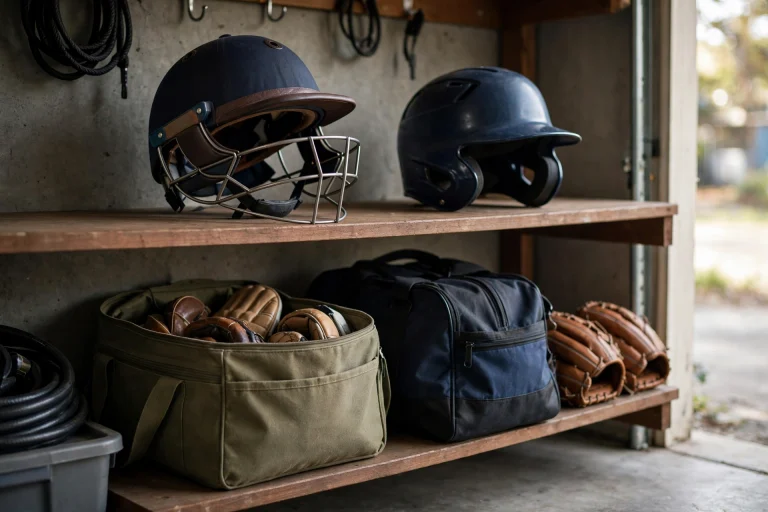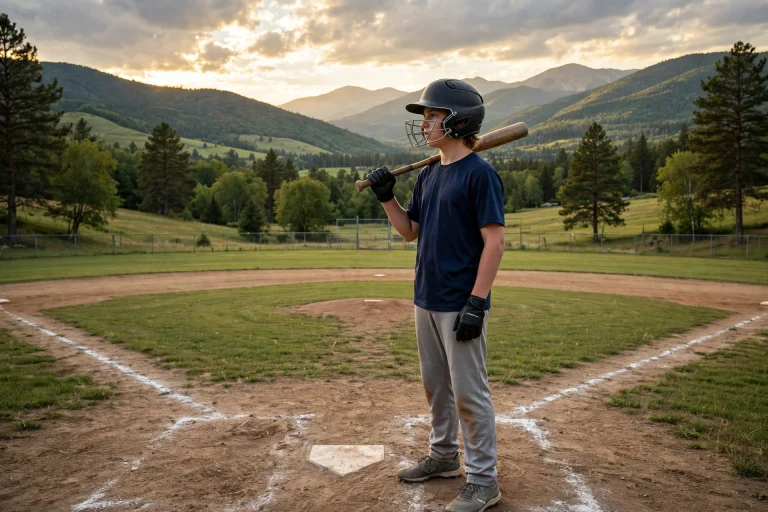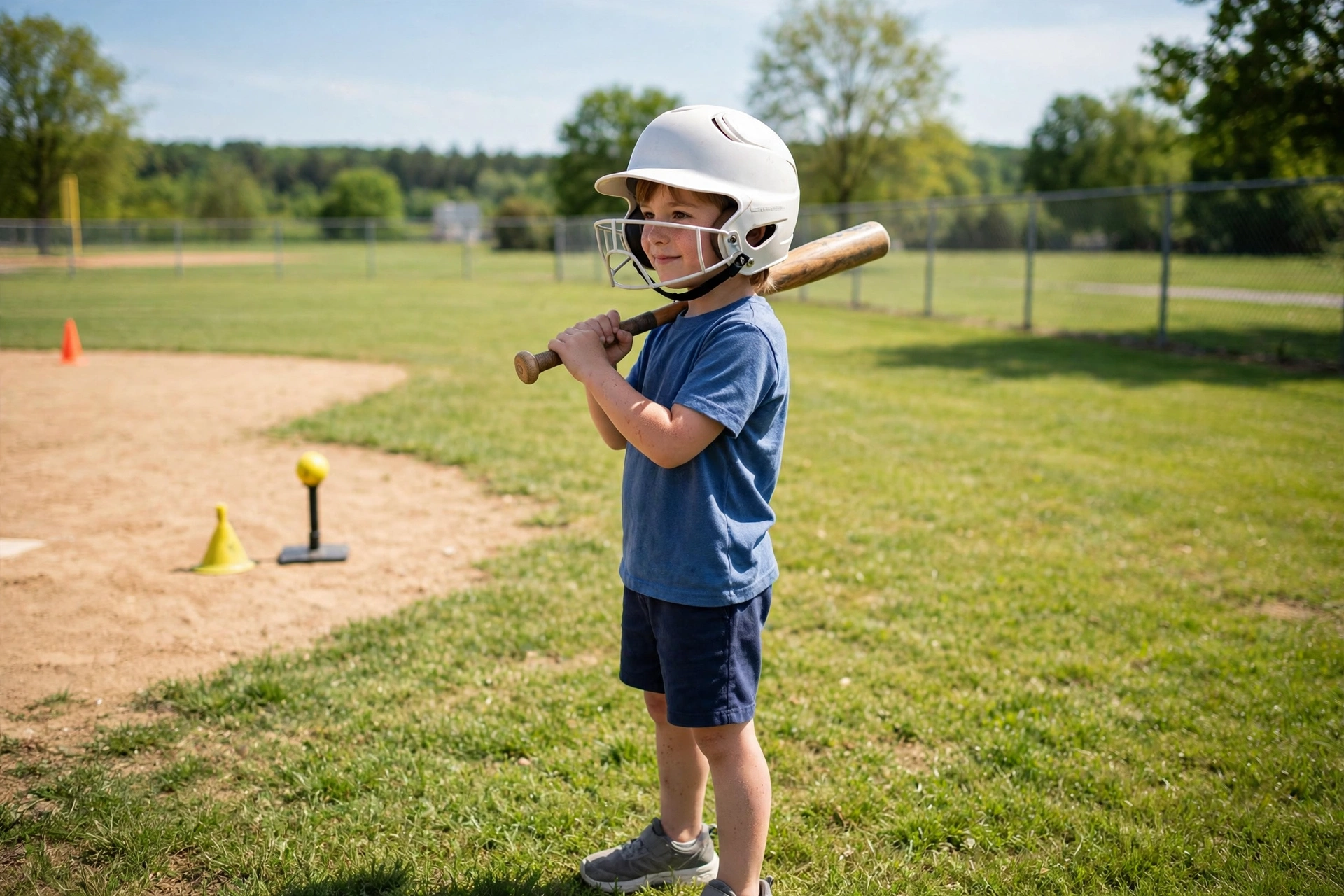
In general terms, T-ball is the youngest players’ introduction to baseball, and a T-ball helmet is a lightweight batting helmet sized for small heads, usually with ear protection and often with a face guard — if your child is starting T-ball, they will need one, and it should fit snugly, sit level, and be comfortable enough that they want to wear it. For first-time parents, the helmet is often the first piece of kit to buy, and it can feel confusing — but the basics are simple.
This guide covers what a T-ball helmet is, how to choose and fit one, and what else first-time parents need to know.
What Is T-Ball and Why Do Players Need Helmets?
T-ball is baseball adapted for very young children, typically aged four to seven. Instead of a pitched ball, the ball sits on a tee, and the batter hits it from a stationary position. The game is designed to teach hitting, running, and fielding in a fun, low-pressure way, without the challenge of a moving pitch.
Even though there is no pitching, helmets are still essential. Batters can hit the ball unpredictably, fielders throw the ball around, and young children are still learning coordination and awareness — a thrown ball, a swung bat, or a collision at a base can all cause a head injury. In general terms, every youth league requires helmets for batters and base runners, including in T-ball.
Helmets also teach good habits early. A child who grows up wearing a helmet every time they bat will see it as a normal part of the game, not an optional extra, and that habit will carry through as they move up to coach-pitch and player-pitch baseball.
What Kind of Helmet Does a T-Ball Player Need?
A T-ball helmet is a youth batting helmet in a small size, designed for young children’s heads. It covers the head and ears, fastens with a chin strap, and is light enough for a small child to wear comfortably. Many T-ball helmets come with a face guard already fitted, which adds protection for the face and is common at this age.
Size is the key difference from older players’ helmets. T-ball helmets come in the smallest youth sizes, and some brands offer a specific tee-ball size. Always check the manufacturer’s size chart and measure your child’s head — do not guess from age, because head sizes vary widely among young children.
Check your league’s rules before buying. Some leagues specify a face guard, a double ear flap, or a particular standard, and some leagues provide helmets for players. If your league provides helmets, you may still prefer to buy your own for fit, hygiene, and comfort — a helmet that fits your child and that they like is one they will wear happily.
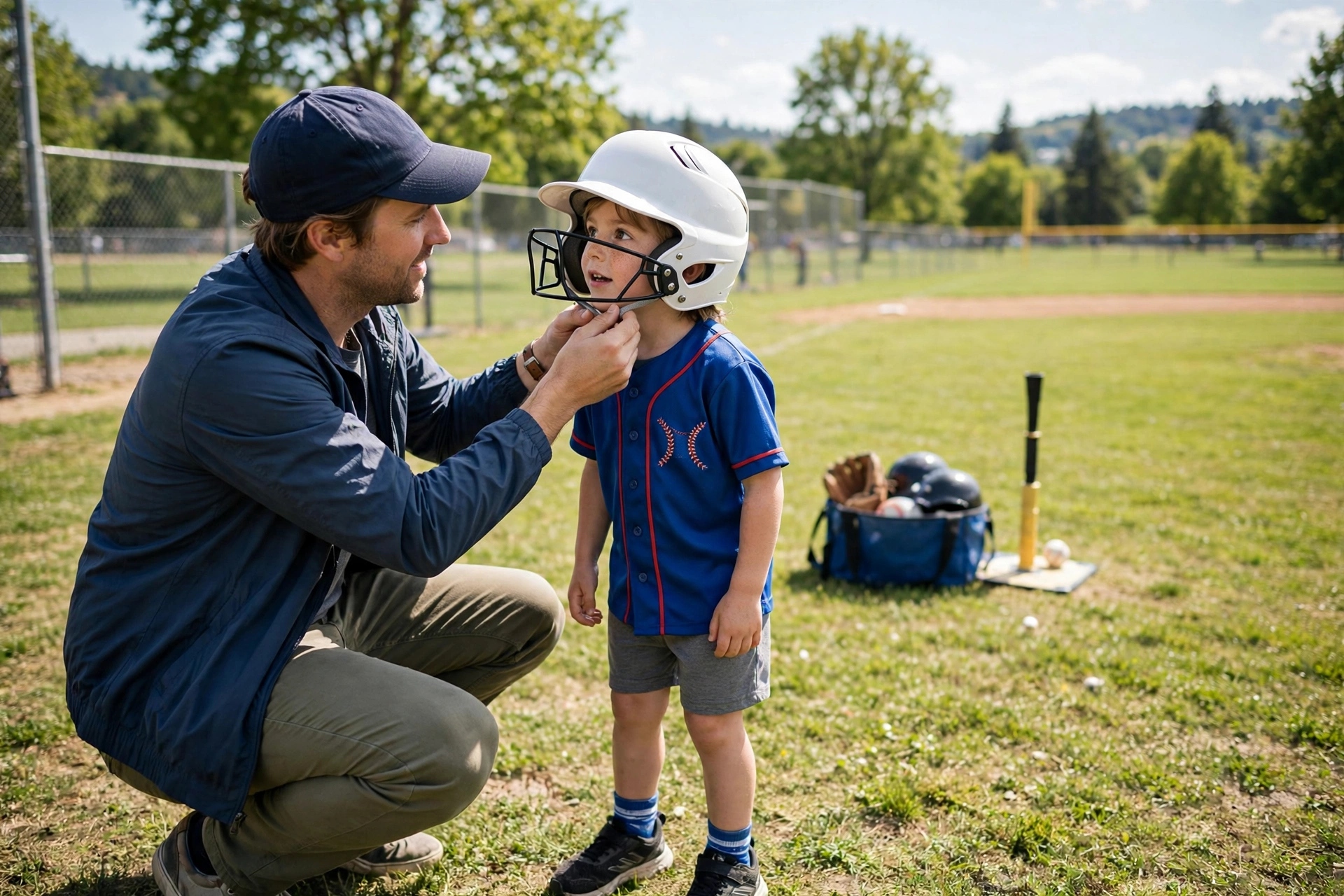
How Do You Fit a T-Ball Helmet?
Fitting a young child’s helmet takes patience, and it is worth doing properly. Put the helmet on level, covering the forehead to just above the eyebrows, and check that it feels snug all round with no rocking when your child shakes their head. Fasten the chin strap firmly but comfortably — a strap that is too loose lets the helmet slide, and one that is too tight will make your child want to take it off.
Let your child move in the helmet: run, swing a bat, and bend down. A helmet that feels fine standing still but slides when moving is not fitted properly. If it slides, try different padding, a different size, or a different brand — head shapes vary, and a helmet that suits one child may not suit another.
Involve your child in the choice. Let them pick a colour they like, and let them practise wearing the helmet at home before the first game. A child who likes their helmet and is used to wearing it will be far happier in it than one who is handed an unfamiliar helmet on game day.
What Else Should First-Time T-Ball Parents Know?
First, check the helmet regularly. Young children grow fast, so check the fit at the start of every season and during the season if your child has a growth spurt. Also inspect the helmet for damage — cracks in the shell, bent face guard bars, or worn straps — and replace it if there is any doubt.
Second, label the helmet. T-ball dugouts are full of similar small helmets, and a name label inside the helmet or on the strap prevents mix-ups. It also helps your child recognise their own helmet, which matters when they are learning to look after their own kit.
Third, keep it clean and dry. Wipe the helmet after games, let it air-dry, and store it in a cool, dry place — not in a hot car or a damp bag. A clean, well-kept helmet lasts longer and is more pleasant for your child to wear.
How Can Parents Make T-Ball Fun and Safe?
The most important thing is to keep it fun. T-ball is about learning, playing, and enjoying the game, not about winning. Praise effort, encourage participation, and let your child enjoy wearing their kit — including their helmet — as part of being on a team.
Safety habits start here too. Teach your child to wear their helmet every time they bat or run, to keep it fastened, and to tell a coach if it feels uncomfortable or broken. Those habits, learned at T-ball age, will protect them as they grow into faster, harder versions of the game. And remember that fit is what makes any helmet’s protection work — including systems that address angled impacts, as explained in this guide to what MIPS means for helmets.
Frequently Asked Questions
Q: Does my child need their own helmet for T-ball?
A: In general terms, yes — every league requires helmets for batters and runners. Some leagues provide them, but your own helmet usually fits better and is more hygienic and comfortable.
Q: What size helmet does a T-ball player need?
A: Measure your child’s head around the forehead just above the eyebrows and match it to the manufacturer’s size chart. Do not guess from age — head sizes vary widely among young children.
Q: Should a T-ball helmet have a face guard?
A: Many T-ball helmets come with one, and some leagues require it. A face guard adds protection for young players who are still learning coordination, and it is a sensible choice at this age.

Olivia
Writer at Helmet Today, covering helmet reviews, fit and riding safety.