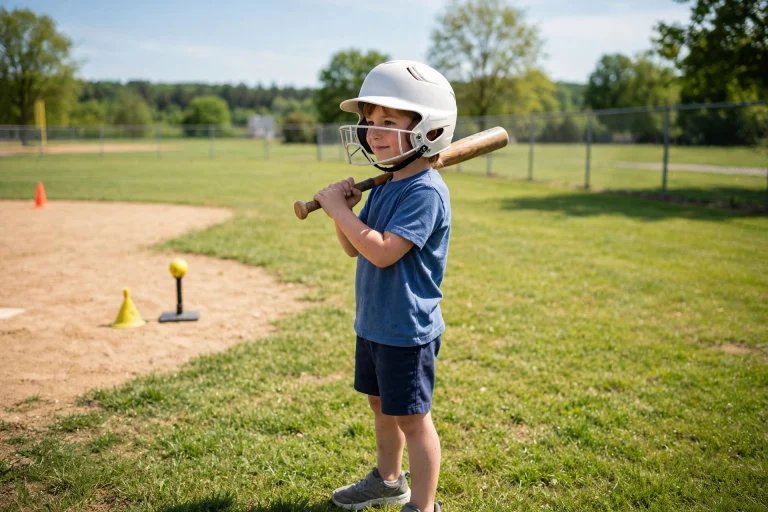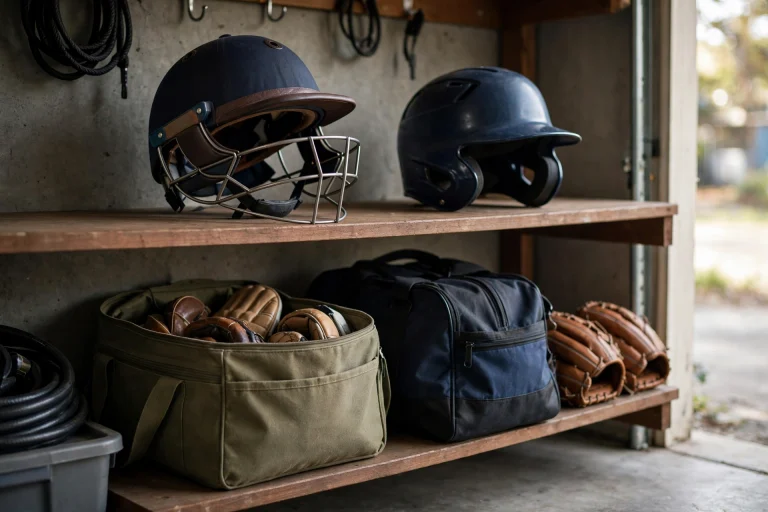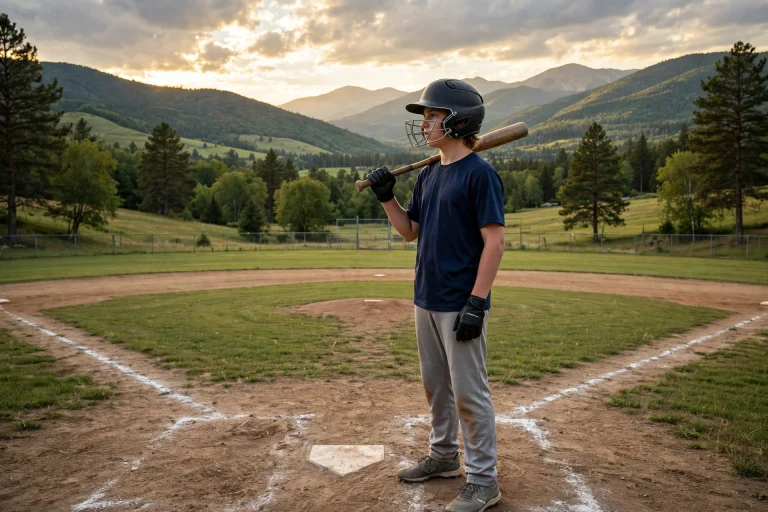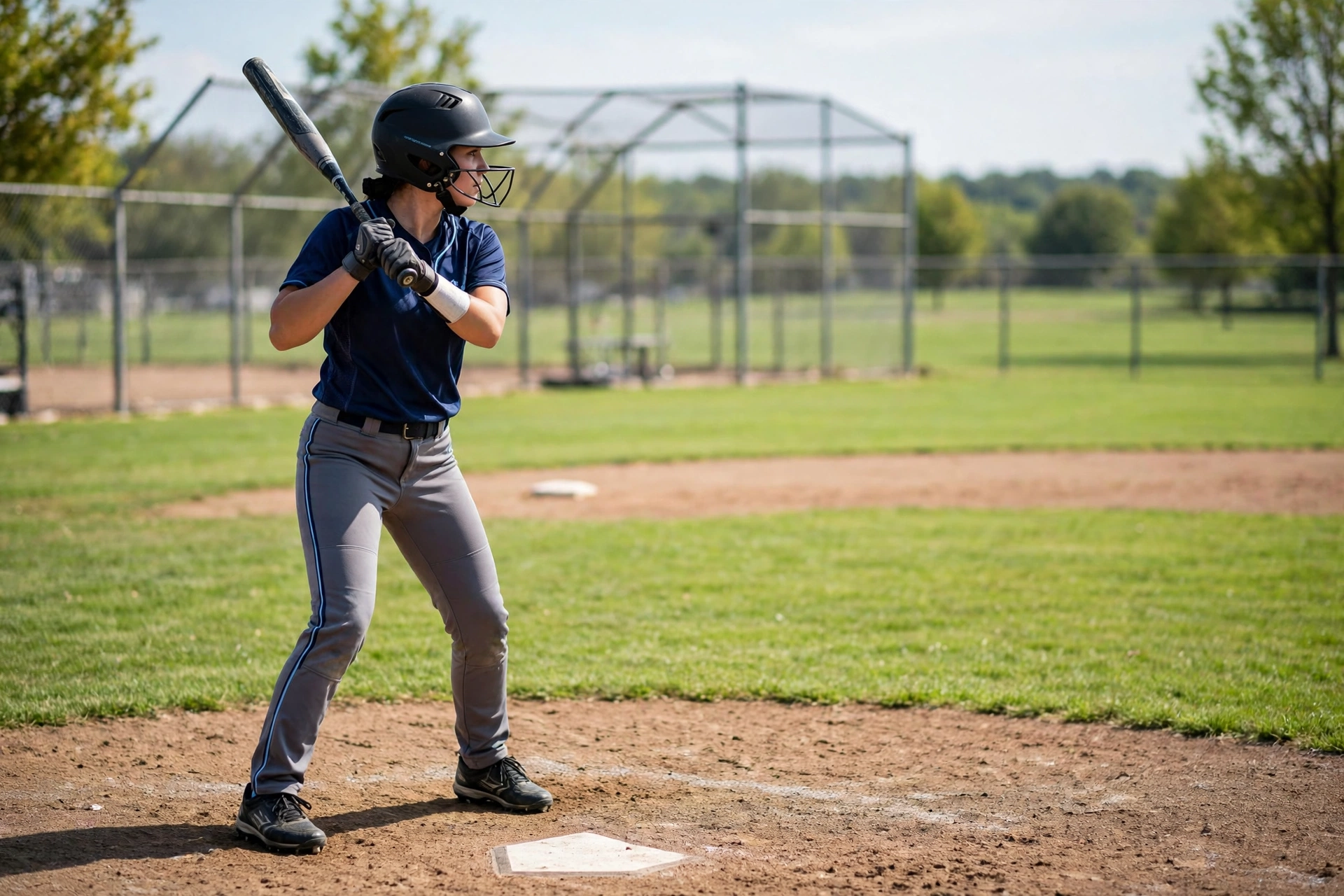
A helmet for fastpitch softball players is a batting helmet with a face guard, worn to protect the head and face from fast pitches, foul balls, and the bat itself. Fastpitch softball is played with a ball thrown underarm at high speed from a short distance, so the batter has very little time to react, and a ball that gets away can reach the head in a fraction of a second. The helmet is the batter’s main line of defence, and in most organised leagues it is required kit.
Unlike a slowpitch game, where the ball arcs gently towards the plate, a fastpitch delivery comes in flat and quick, and the batter stands close to the pitcher. That closeness is what makes the helmet so important. A pitch that slips, a foul tip, or a ball that bounces up off the plate can all strike the head or face, and a well-fitting helmet with a guard in front of the face is built to take that kind of knock.
What is a fastpitch softball helmet?
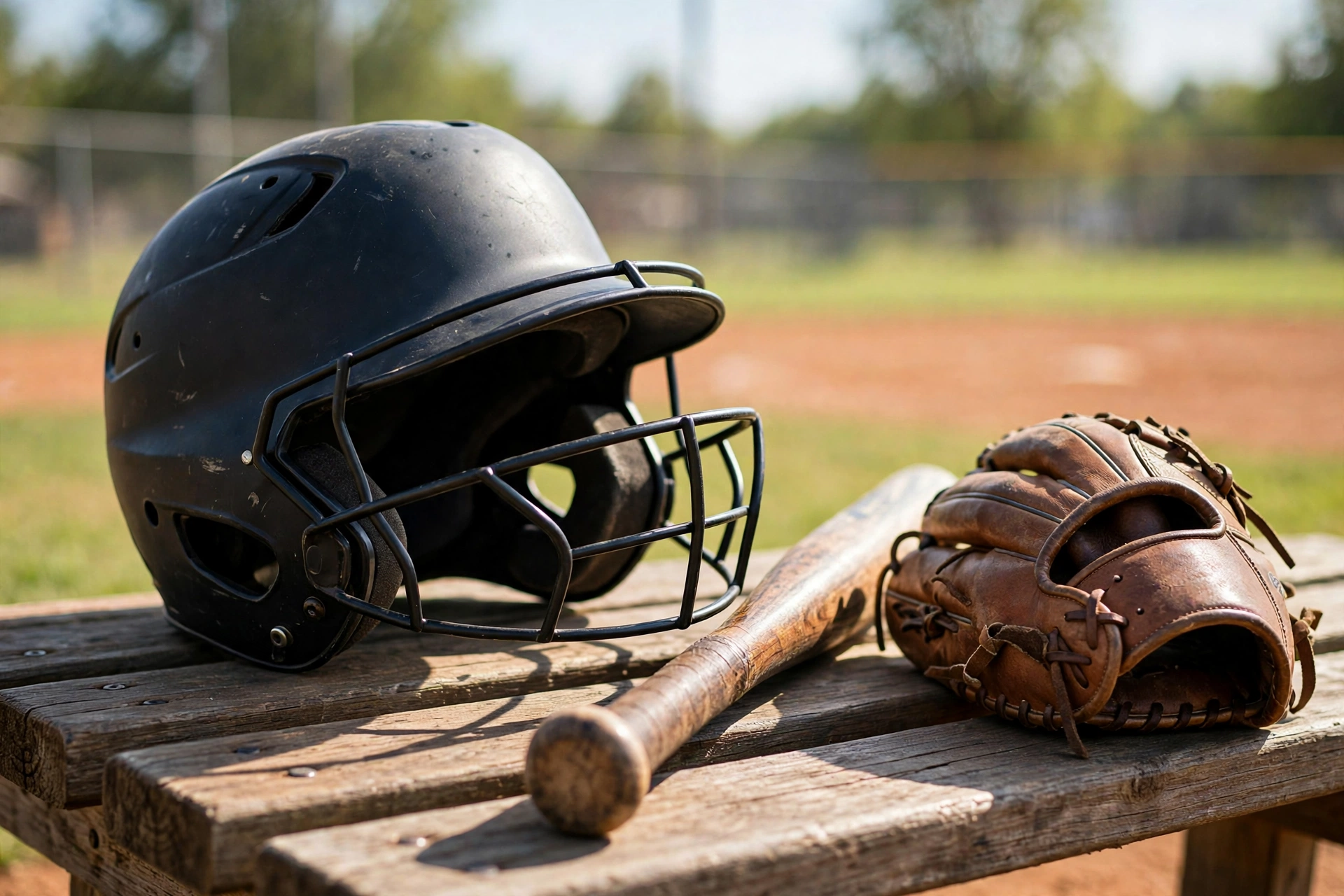
A fastpitch softball helmet is a hard-shell batting helmet with ear protection on at least one side and a face guard fixed to the front. The shell covers the top, back, and sides of the head, the ear flap guards the ear facing the pitcher, and the guard, usually a metal frame, sits in front of the face to stop a ball reaching the cheek, jaw, or teeth. The whole helmet fastens with a chin strap or a snug fit system, so it stays put when the batter swings.
Fastpitch helmets are made for the women’s and girls’ game in the main, though adult players of all ages wear them too. They are lighter than a baseball catcher’s helmet and shaped for batting, so the player can see the ball clearly and turn their head freely. Some helmets come with the face guard already fitted, while others let you add one, but in general terms a fastpitch helmet without a face guard is missing the part that makes it a fastpitch helmet.
Why do fastpitch players wear a face guard?
The face guard is there because the face is the part of the head most exposed at the plate. When a batter swings, their face turns towards the pitcher, and a ball that is pitched inside or a foul ball that deflects off the bat can head straight for the cheek or jaw. The guard is a simple frame of bars that stands off the face, so a ball hits the metal instead of the skin and bone behind it.
Some players dislike the guard at first, because it changes how the helmet feels and can narrow the view a little, but most get used to it quickly. In many leagues the guard is compulsory for younger players, and older players often keep wearing one by choice, because the protection is worth the small adjustment. A guard should be fitted firmly, with no wobble or loose fixings, and it should sit far enough from the face that a ball cannot press it into the skin.
How should a fastpitch helmet fit?
A fastpitch helmet should sit level on the head, low enough at the front to cover the forehead, and snug all round without pressing painfully on the temples. It should not slide forward over the eyes when the batter swings, and it should not wobble from side to side when the player shakes their head. The ear flap should sit over the ear facing the pitcher, and the face guard should run down in front of the face without touching the nose or chin.
Fit is best checked with the player’s hair tied back as it will be in a game, and with any headband or cap they plan to wear underneath. If the helmet is too loose, it can shift at the moment of the swing, which is when protection matters most. If it is too tight, it will give the player a headache and distract them from the ball. Most helmets come in a range of sizes with padding that can be swapped, so take the time to find the size that sits still and feels comfortable.
What is the difference between fastpitch and baseball helmets?
Fastpitch and baseball batting helmets look similar at a glance, but the face guard is the main difference. Baseball helmets usually have no face guard, or a smaller flap that covers only part of the cheek, because the pitch comes overarm from further away and the batter has more time to react. Fastpitch helmets carry a full face guard as standard, because the pitch is quicker, closer, and underarm, and the face is more exposed.
There are also differences in shape and sizing, because fastpitch helmets are often designed for younger players and for the women’s game. A baseball helmet can sometimes be used for softball if the league allows it and a face guard is fitted, but it is not always a good match, and a fastpitch helmet is the safer choice for the fastpitch game. Some modern helmets add a system designed to reduce rotational forces in a fall or a knock, such as MIPS, and it is worth asking about when you choose, though the face guard and the fit matter more for a batter.
How do you look after a fastpitch helmet?
After a game, wipe the shell clean and let the helmet dry naturally, away from direct heat. Do not leave it in a hot car or in strong sun for long stretches, as heat can weaken the materials over time. Check the face guard fixings regularly, and tighten any screws that have worked loose, because a guard that wobbles will not protect the face as it should. Wash the padding following the maker’s instructions, and let it dry fully before the next game.
Check the helmet for cracks, dents, or a loose shell before each season and after any hard knock. In general terms, a helmet that has taken a hard hit from a ball should be checked carefully, and if the shell is cracked or the lining is damaged, it should be replaced. The same applies to a helmet that has been dropped hard onto a hard surface. A batter’s helmet is not expensive compared with the rest of the kit, and a damaged one is not worth the risk.
Do all fastpitch softball players need a face guard?
In many leagues a face guard is required, at least for younger players, and it is recommended for everyone else. Check your league’s rules, but in general terms a face guard is a sensible part of a fastpitch helmet at any age.
Can you use a baseball helmet for fastpitch softball?
You can in some leagues if a face guard is fitted, but a helmet made for fastpitch is the better choice, because it is designed for the closer, faster pitch and the full face guard that goes with it.
When should a fastpitch helmet be replaced?
Replace it if the shell is cracked, the face guard is bent or loose, the padding is worn out, or the helmet has taken a hard knock from a ball. A helmet that no longer fits well should also be replaced.

Olivia
Writer at Helmet Today, covering helmet reviews, fit and riding safety.