Helmet peak extensions are clip-on or bolt-on add-ons that lengthen the peak, or visor, of a helmet to give extra shade and extra cover from rain. The peak is the small brim at the front of many cycling, mountain bike, and off-road helmets, and an extension makes it longer, so it blocks more sun from the eyes and keeps more rain off the face. They are a simple accessory, but they can make a real difference on a long ride in bright sun or wet weather.
Most helmets come with a short peak fitted as standard, which suits most riders most of the time. An extension is for the days when that short peak is not enough: a low sun in the eyes on a climb, a sudden shower on a trail, or a long ride across open ground with no shade. Rather than buying a new helmet, a rider can fit an extension to the one they already own and take it off again when it is not needed.
What is a helmet peak extension?
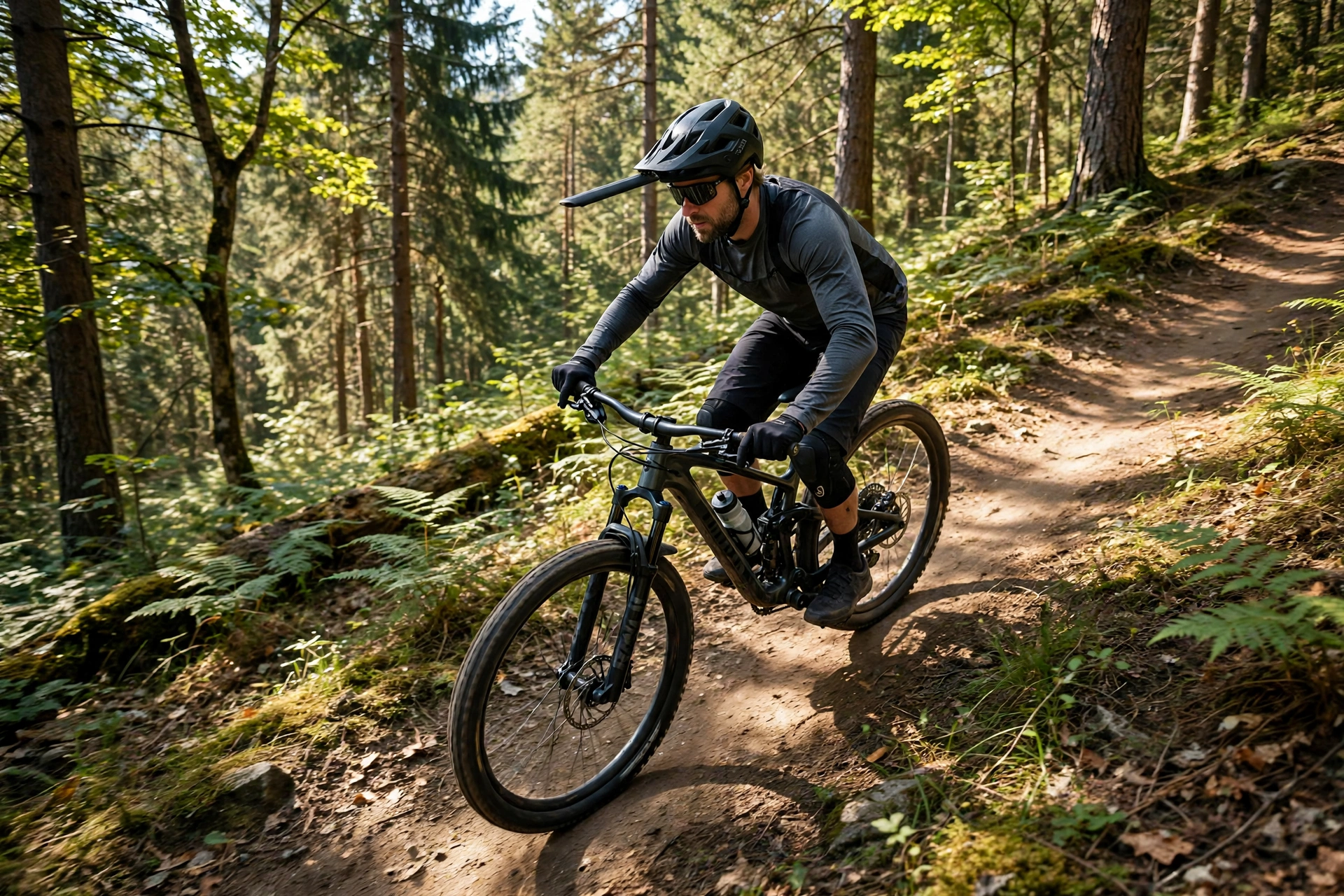
A helmet peak extension is a piece of shaped plastic, or sometimes a flexible fabric panel, that attaches to the front of a helmet’s existing peak and sticks out further forward. Some are rigid and bolt or clip onto the peak itself, while others are softer and slide over the peak like a cover. Either way, the result is a longer brim that shades more of the face and keeps more weather off the rider’s eyes and glasses.
Extensions come in different lengths and shapes, from a modest extra few centimetres to a long, wide brim that feels more like a cap peak. Some are made to match a specific helmet model, with clips that line up with the peak’s own fixings, while others are made to fit a range of helmets with adjustable straps or universal clips. In general terms, a model-specific extension will fit more neatly and sit more securely than a universal one, but both can work well if they are fitted properly.
Why would you add a peak extension?
The main reason is sun. When the sun is low, a short peak may not be enough to keep it out of the rider’s eyes, and squinting into the glare makes it harder to see ruts, roots, and other riders. A longer peak shades the eyes and the top of the glasses, which makes the trail easier to read and the ride more comfortable. It also shades the face, which helps on long rides in strong sun.
Rain is the other reason. A longer peak keeps rain off the face and off the top of the glasses, so the rider can see clearly without wiping their lenses every few minutes. It also helps in dusty conditions, keeping grit out of the eyes on a dry trail.
What types of peak extensions are there?
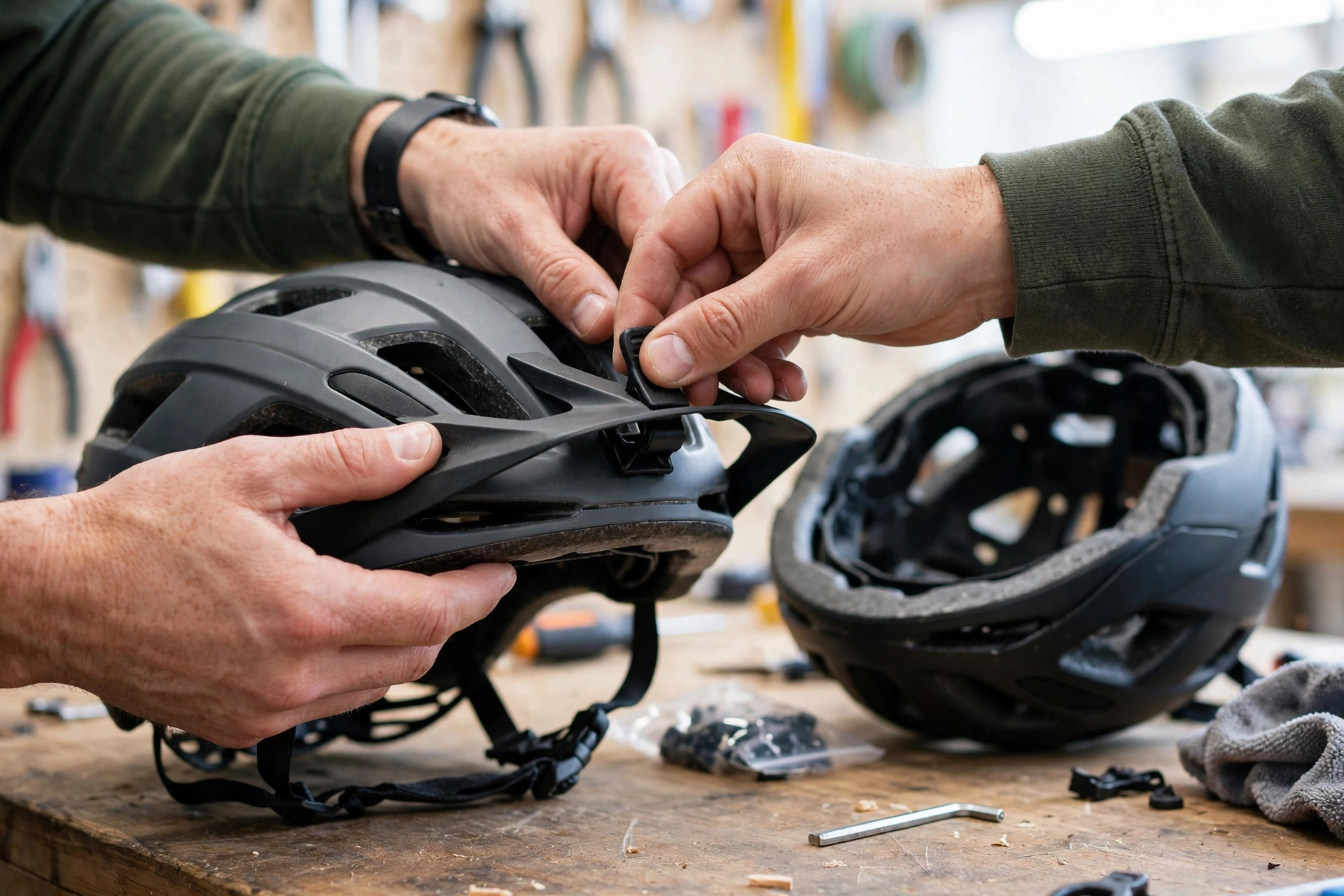
There are three common types of peak extension. The first clips onto the existing peak, using small hooks or clamps that grip the edge of the peak without any tools. The second bolts on, using the same screws that hold the peak to the helmet, which gives a firmer fit but takes a little longer to fit and remove. The third is a soft cover that slides over the peak and is held in place by a strap or elastic, which is the simplest option but can shift in strong wind.
Some extensions are made from rigid plastic, which holds its shape and blocks the sun well, while others are made from a softer material that can flex if it catches a branch. A rigid extension gives better shade and rain cover, but it can also catch on low branches more easily, so trail riders often prefer a softer one that bends rather than snags. When choosing, think about where you ride: open roads favour a long rigid peak, while wooded trails favour a shorter, softer one.
How do you fit a peak extension?
Fitting a peak extension is usually a simple job. For a clip-on type, line the extension up with the front of the peak, press the clips over the edge, and check that it sits level and does not wobble. For a bolt-on type, remove the screws that hold the peak, place the extension in line with the peak, and refit the screws through both, tightening them firmly but not so hard that the plastic cracks. For a soft cover, slide it over the peak and fasten the strap, then pull it smooth so it does not flap.
After fitting, check the extension from the rider’s point of view. Sit on the bike, look ahead, and make sure the extension does not block your view of the trail or the road in front of you. Shake your head gently to check that it stays in place, and ride a short test stretch before a long ride to be sure it does not rattle or slip. If it moves, refit it more firmly or try a different size — an extension that shifts while you ride is a distraction you do not need. If you are unsure about fitting, ask at a bike shop, and remember that any change to a helmet should never cover the vents or push the helmet out of position. A helmet’s fit and protection come first, and systems designed to reduce rotational forces in a fall, such as MIPS, only work properly when the helmet sits as the maker intended.
Are there any downsides to a longer peak?
A longer peak has a few downsides to weigh up. It can catch the wind more, which can make the helmet feel less stable at speed, and it can catch on low branches on a wooded trail, which can tug the helmet or snap the extension. A very long peak can also narrow the rider’s view when looking up a steep climb, which is why some riders tilt the peak up or remove the extension for technical riding.
There is also the question of looks and weight. A long extension adds a little weight to the front of the helmet, which some riders notice on a long ride, and it changes how the helmet looks, which matters to some riders more than others. In general terms, the best approach is to treat the extension as a tool for the conditions: fit it when the sun or the rain calls for it, and take it off when it does not. That way you get the benefit without living with the downsides.
Do peak extensions fit any helmet?
Not every extension fits every helmet, so check the maker’s guidance before you buy. Model-specific extensions fit best, while universal clip-on types fit a wider range but may need adjusting to sit level and secure.
Will a longer peak block my vision?
It should not, if it is fitted correctly and is the right length for your riding. Check your view on the bike after fitting, and choose a shorter peak for steep climbs or technical trails where you need to look up often.
Can you ride in the rain with a peak extension?
Yes, and that is one of the best uses for it. A longer peak keeps rain off your face and glasses, so you can see the trail more clearly, though it will not keep you dry on its own in heavy rain.

Olivia
Writer at Helmet Today, covering helmet reviews, fit and riding safety.