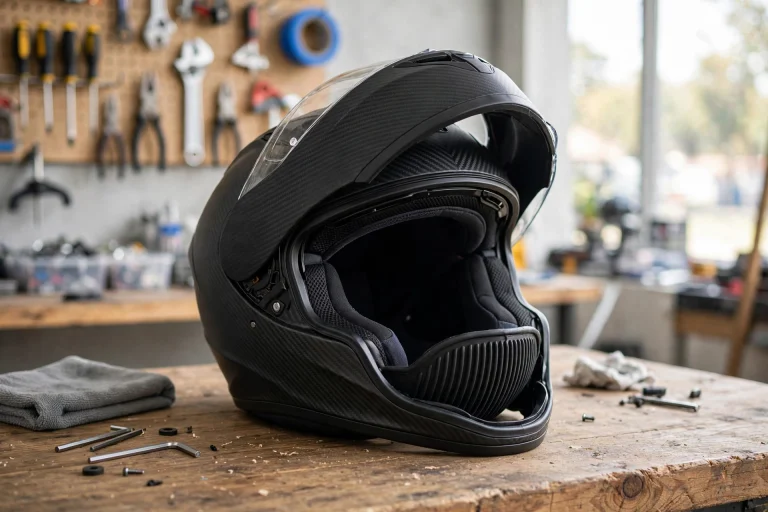
A helmet visor tint insert is a removable tinted layer fitted to the inside of a clear visor, and it cuts glare and bright sunlight while letting you keep the clear visor you already have. It works like a pair of sunglasses for your visor, darkening your view on bright days without forcing you to swap the whole visor for a tinted one.
Tint inserts are popular with riders who face changing light conditions, because they can be fitted or removed in minutes. On a bright summer ride, the tint takes the edge off the sun, and on a cloudy day or in the evening, you can take it out and ride with a clear view again.
How does a helmet visor tint insert work?
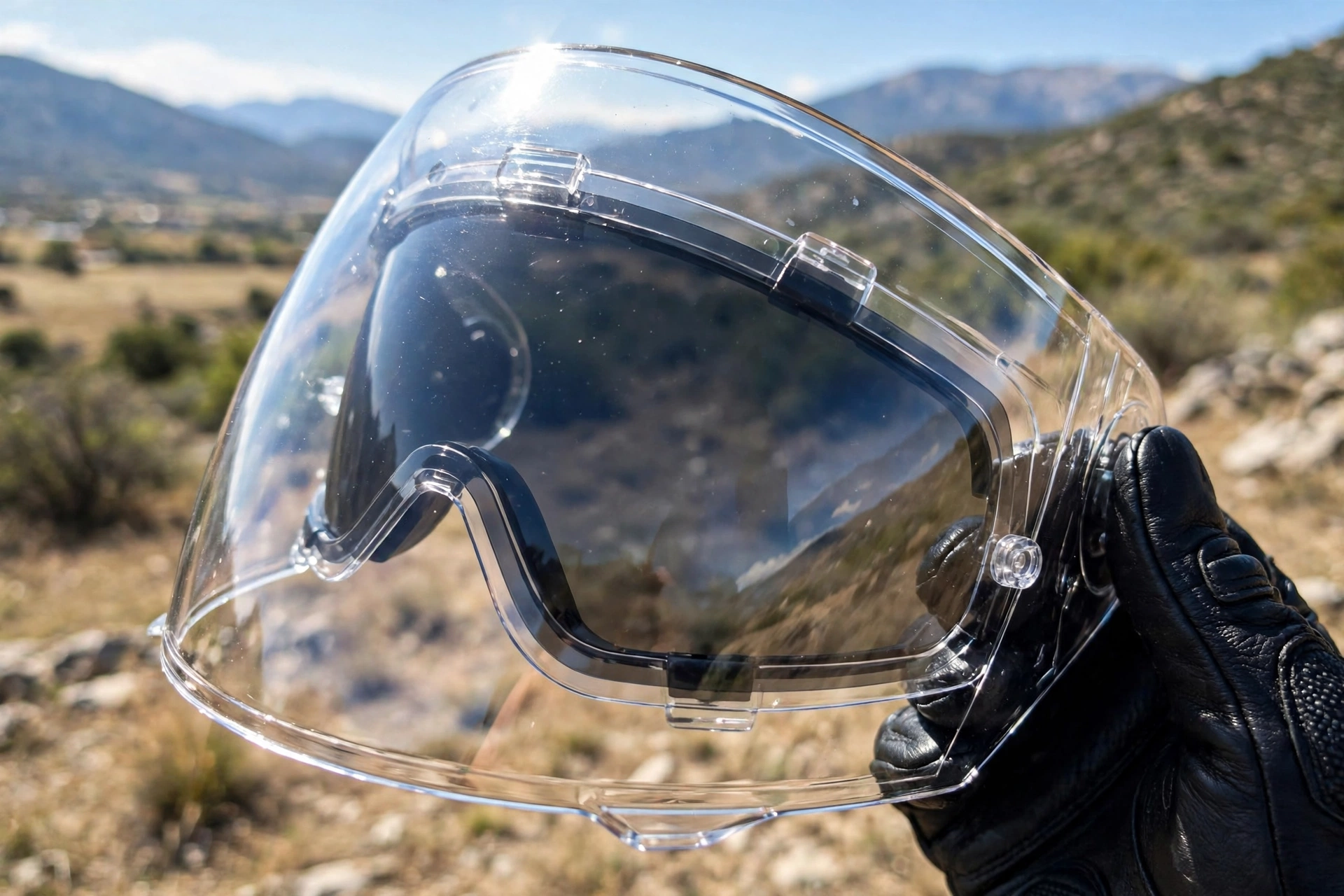
A tint insert is a thin, flexible sheet of tinted material that sits on the inside of a clear visor. It reduces the amount of light that reaches your eyes, which cuts glare from the sun, from wet roads, and from bright reflections off other vehicles.
Most tint inserts are made from the same kind of material as a fog insert, and some combine both jobs in one layer: a tint that also stops fogging. The insert is held in place by small pins on the visor, or by an adhesive edge, in the same way as a pinlock fog insert.
The tint does not change the colour of the world very much. Most inserts use a neutral grey or smoke tint, which darkens everything evenly rather than shifting colours. That matters when you need to read road signs and traffic lights, because a strong colour cast could make them harder to see.
What shades of tint insert are available?
Tint inserts come in several shades, from a light smoke that takes the edge off bright light, to a dark smoke that cuts a lot of glare. A light smoke insert is a good starting point for most riders, because it helps in sunshine without making the view too dark in shade or cloud.
Some inserts use a graduated tint, which is darker at the top and lighter at the bottom. This is useful when the sun is low, because the darker top blocks the sun while the lighter bottom keeps the road and the instruments easy to see.
There are also yellow and amber inserts, which some riders use in low light or overcast weather. In general terms, these are meant to increase contrast rather than cut brightness, and they suit riders who ride a lot in flat, grey light. Check the maker’s guidance before choosing a coloured insert, because it changes how you see the road.
How do you fit a tint insert?
Fitting a tint insert is very similar to fitting a fog insert. Start by removing the visor from the helmet, and clean the inside of the visor so no dust or marks get trapped under the insert.
If your insert uses pins, bend the visor gently to open the gap between the pins, and slip the insert into place so its holes sit over the pins. Release the visor and check that the seal around the edge is even, with no gaps or folds that would let air in.
If your insert is a stick-on type, peel the backing off, line the insert up carefully, and smooth it down from the centre outwards to push out air bubbles. Take your time, because a creased or bubbled insert will spoil your view, and it is hard to reposition once it is stuck down.
Can you ride at night with a tint insert?
In general terms, you should not ride at night with a dark tint insert in place, because it reduces the amount of light reaching your eyes and makes it harder to see in the dark. A light smoke insert is also best removed at night, even though it darkens the view less.
This is one of the main reasons tint inserts are made to be removable. If you set off in bright sunshine and expect to be riding after dark, you can stop and take the insert out before the light fades, or swap to a clear insert instead.
Some riders keep a clear fog insert in the helmet and carry the tint insert in a pocket or a bag, swapping between them as the light changes. That way, you get glare protection in the day and a clear view at night, without carrying a second visor.
How do you look after a tint insert?
Clean a tint insert gently, with a soft cloth and lukewarm water, and avoid paper towels or rough cloths, which can scratch the surface. Scratches show up more on a tinted insert than on a clear one, because they catch the light.
Do not use harsh cleaners, solvents, or alcohol-based products on a tint insert, because they can damage the tint and the anti-fog coating, if it has one. Mild soap and water is enough for most cleaning, and a soft microfibre cloth is the safest tool for drying.
Store the insert flat and out of direct sunlight when it is not in the visor, and keep it in a soft pouch if you carry a spare. A tint insert that is bent or creased will not sit flat against the visor, and the seal around the edge will let moist air in.
Is a tint insert better than a tinted visor?
A tint insert has one big advantage over a tinted visor: you can remove it quickly. A tinted visor is a fixed choice, and if the light changes, you either ride with a dark visor in the gloom or stop and swap the whole visor, which takes longer.
A tinted visor, on the other hand, gives a cleaner view, because there is only one layer of material between your eyes and the road. An insert adds a second layer, and if it is scratched or poorly fitted, it can slightly reduce clarity. For most riders, the difference is small, and the flexibility of an insert is worth it.
If your helmet has a MIPS liner, a tint insert will not affect it, because the insert sits on the visor and the liner sits inside the shell. The two work independently, and both can be used together without any problem.
Does a tint insert replace sunglasses?
It can, in general terms, because it cuts glare in the same way. Some riders still wear sunglasses under the helmet for extra protection, but check the fit first, because glasses arms can break the seal of the insert or press uncomfortably under the helmet.
Will a tint insert fit my visor?
It depends on your visor. Pin-style inserts need a visor with two pins, while stick-on inserts fit most visor shapes. Check the insert maker’s size guide and measure your visor before you buy.
Can I use a tint insert in the rain?
Yes. A tint insert works in the rain in the same way as a clear insert, and a light smoke tint can even help by cutting glare from wet roads. Just remember to remove a dark tint before it gets dark.

Olivia
Writer at Helmet Today, covering helmet reviews, fit and riding safety.