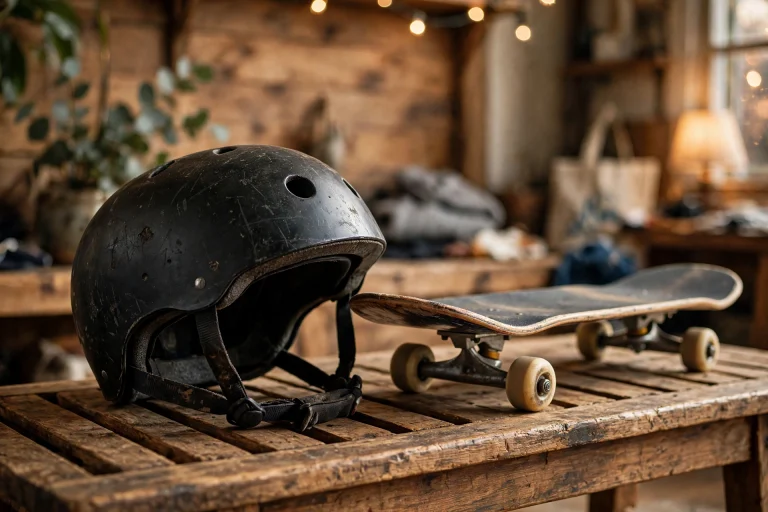
In general terms, a certified skate helmet is one that has been tested against a recognised safety standard, while a non-certified helmet has not passed such testing — and that difference matters more than the price tag or the look. A certified helmet gives you an independent check that its shell and foam can absorb a set level of impact. A non-certified helmet may look identical, but there is no verified test behind it, so you are taking the maker’s word for it.
Skate helmets are sold in every style and price range, and the word “certified” is easy to miss if you do not know where to look. This guide explains what certification actually means, how to spot it, and when a non-certified helmet might still have a place — so you can choose with your eyes open.
What Does a Certified Skate Helmet Actually Mean?
Certification means an independent laboratory has tested a helmet design against a published safety standard. The tests typically involve dropping the helmet onto hard surfaces at set speeds and measuring how much force reaches the headform inside. The helmet must stay intact, the strap system must hold, and the impact absorption must stay within the standard’s limits. Only helmets that pass earn the right to carry the standard’s label.
For skate helmets, the standards you will see most often are the multi-impact skate standards and the bicycle helmet standards that many skate-style helmets also meet. A helmet certified for skating is usually tested for repeated lower-speed impacts, which reflects how skaters actually fall — often more than once, and often onto concrete. That is a different test profile from a single big motorcycle-style impact, and it is one reason a helmet designed for one sport should not automatically be trusted for another.
Certification applies to a specific model, not to a brand as a whole. One model from a maker can be certified while another is not, so always check the individual helmet you are buying rather than assuming the brand name covers it.
How Can You Tell If a Skate Helmet Is Certified?
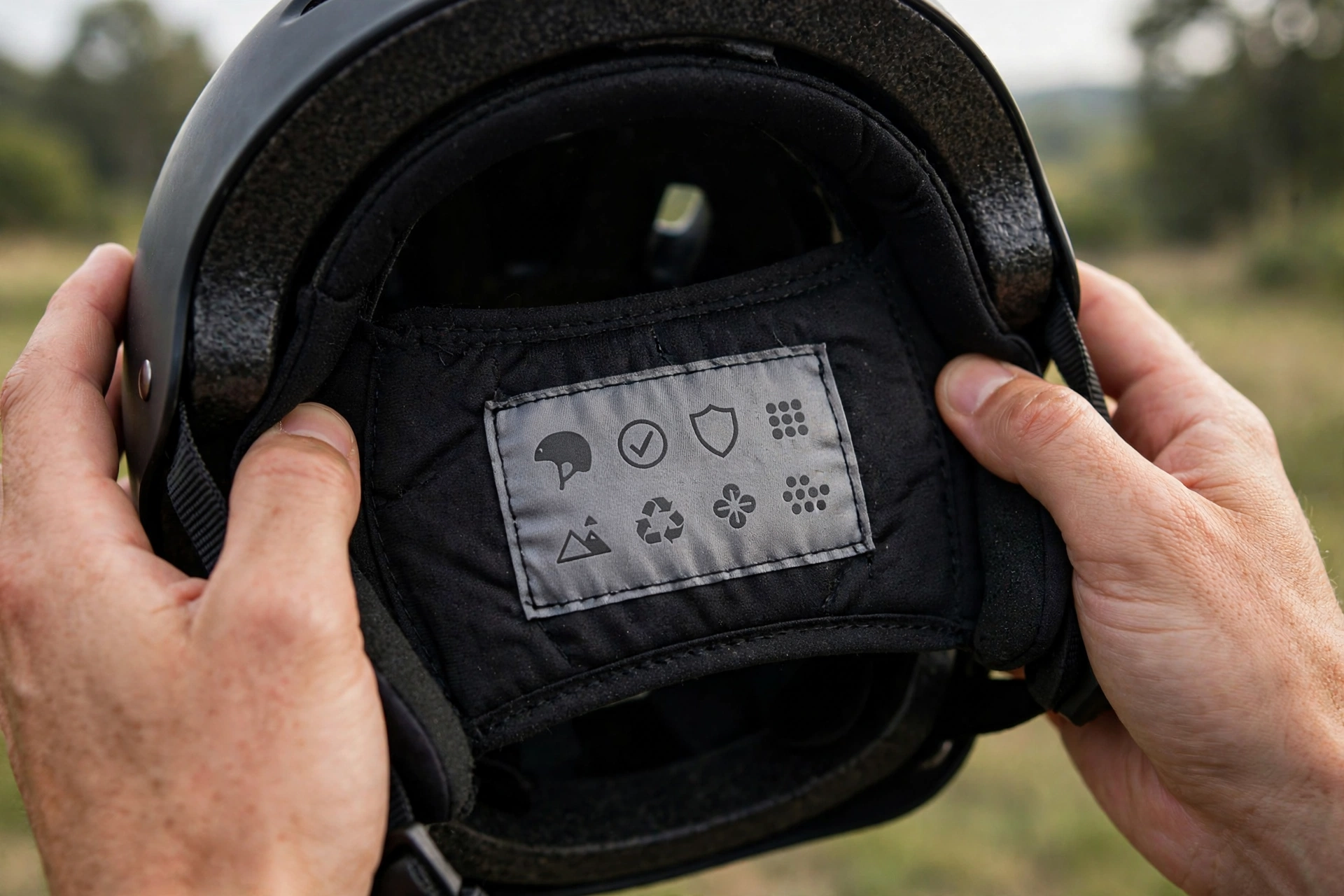
The most reliable check is the label inside the helmet. Certified helmets carry a sticker or printed label naming the standard they meet, usually placed inside the shell or on the comfort liner. If you are shopping online, the product description should name the standard too — a listing that only says “safety helmet” or “protective helmet” without naming a standard is a warning sign.
Look for the standard’s name and number, not just a vague claim. A trustworthy listing will say which standard the helmet is certified to, and often which laboratory did the testing. If the details are missing, ask the seller before buying. A genuine certified helmet has nothing to hide on this point, and the label is part of what you are paying for.
Be careful with lookalike labels. Some very cheap helmets carry stickers that imitate certification marks without any testing behind them. If the price seems far below comparable certified helmets, treat the certification claim with extra scepticism and verify it if you can.
Is a Non-Certified Skate Helmet Unsafe?
Not necessarily — but it is unproven. A non-certified helmet may still have a hard shell and foam liner, and it may perform perfectly well in a fall. The problem is that nobody independent has verified that. Without testing, there is no way to know whether the foam is dense enough, whether the shell spreads impact properly, or whether the straps will hold when they are needed most.
Some non-certified helmets are sold as fashion or novelty items rather than protective gear. These may be thin, soft, or built mainly for looks, and they can give a false sense of security that is worse than wearing nothing at all — because a skater who believes they are protected may take bigger risks. In general terms, if a helmet is marketed mainly on style with no safety information, treat it as a costume piece, not protection.
There is also a middle ground: helmets built to a good design that simply have not gone through formal certification, sometimes because of cost. These may be perfectly decent, but you as the buyer cannot tell them apart from the poor ones without test data. That uncertainty is exactly what certification removes.
Do Skateparks and Competitions Require Certified Helmets?
Many organised skateparks, schools, and competitions do require helmets, and some specify certified helmets in their rules. This is worth checking before you travel to an event or sign a child up for lessons, because a non-certified helmet may not be accepted even if it looks the part. Venue rules vary, so check the specific venue rather than assuming one rule covers everywhere.
For casual street skating, no official is likely to inspect your helmet. The decision is yours, but the logic stays the same: certification is a low-cost way to buy verified protection. Given that a certified skate helmet is often only slightly more expensive than an uncertified lookalike, the extra cost buys real peace of mind.
Parents buying for children should be especially careful here. Children fall often, their helmets take frequent knocks, and a certified helmet that fits well is one of the simplest safety decisions you can make. Check the fit as well as the label — a certified helmet that is too loose protects far less well than it should.
What Should You Look for Besides Certification?
Certification is the starting point, not the whole story. Fit matters just as much: the helmet should sit level on the head, cover the forehead without sliding over the eyes, and stay put when you shake your head. The straps should form a snug V under each ear and the buckle should sit comfortably under the chin. A helmet that rocks or slips needs adjusting or a different size.
Coverage matters for skating too. Skate-style helmets sit lower at the back of the head than many bike helmets, which suits the backward falls common in skating. Ventilation, weight, and comfort padding affect whether you will actually wear the helmet every session — and the best helmet is the one you keep on. Some skaters also consider rotational impact protection systems, which aim to reduce twisting forces in angled falls. You can read more about how one such system works in this guide to what MIPS means for helmets.
Finally, check the helmet’s condition over time. A certified helmet that has taken a hard crash, or that shows cracks, crushed foam, or frayed straps, should be replaced even if it still carries its label. Certification describes how the helmet performed when new, not after years of hard use.
Frequently Asked Questions
Q: Can a certified skate helmet be used for cycling?
A: In general terms, many skate-style helmets are certified for both skating and cycling, but not all. Check the label inside your helmet for each standard it meets, and use it only for the activities it is certified for.
Q: Does certification make a helmet crash-proof?
A: No. Certification means the helmet passed set laboratory tests when new. It reduces the risk of serious head injury in a fall, but no helmet can prevent every injury, and any helmet should be replaced after a hard impact.
Q: Is an expensive non-certified helmet better than a cheap certified one?
A: Not on safety evidence. Price often reflects style, brand, and comfort features rather than tested protection. A certified helmet at a modest price has verified impact performance, while an expensive uncertified helmet has not been independently tested.

Olivia
Writer at Helmet Today, covering helmet reviews, fit and riding safety.