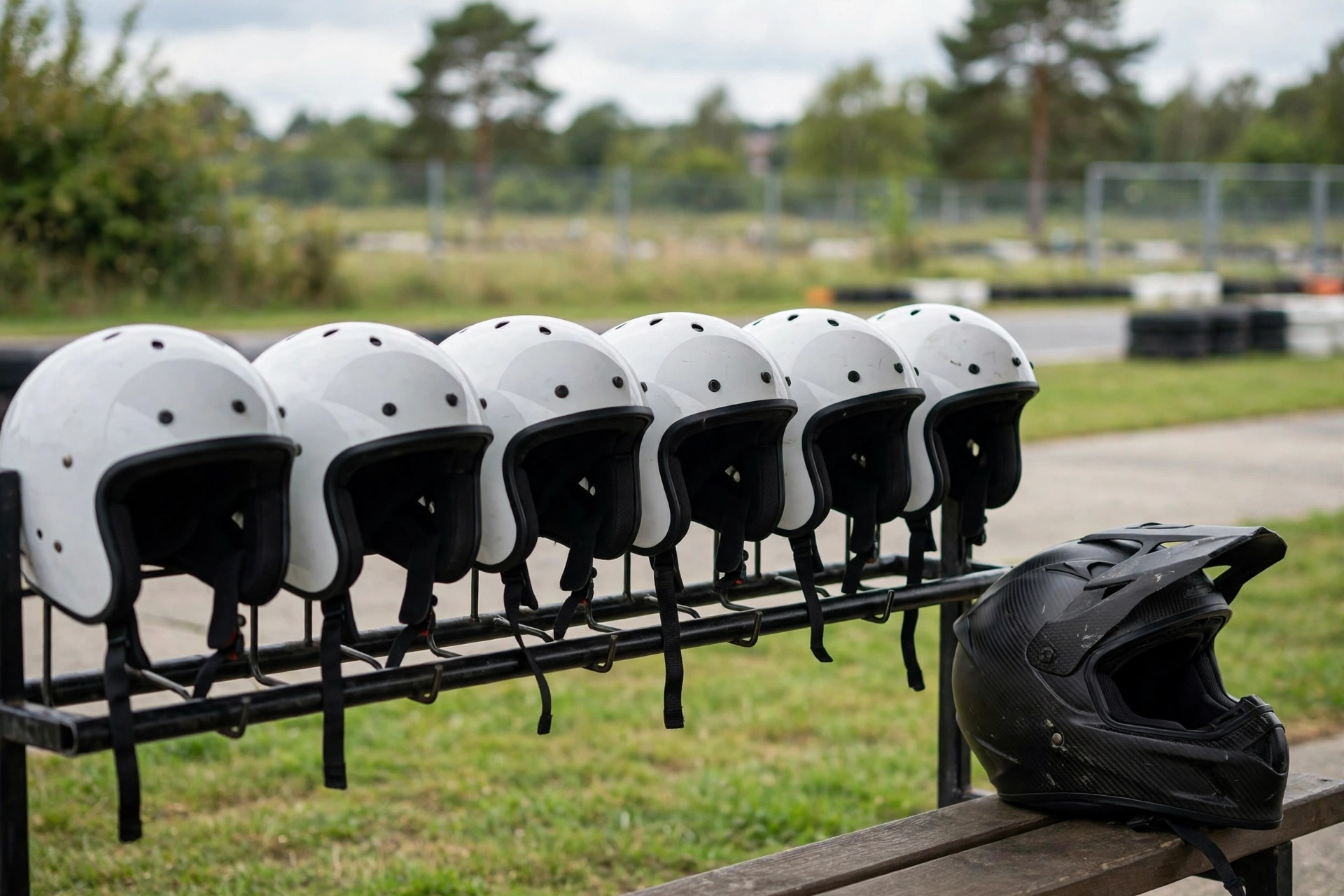
In general terms, the main difference between a rental karting helmet and one you own is control: your own helmet fits you, is cleaned to your standard, and is always available, while a rental helmet is shared, varies in fit and condition, and depends on the centre’s cleaning routine. For occasional drivers a rental is fine; for regular drivers, owning one is usually better.
Most people start karting in a rental helmet, and many never think about buying their own until they are karting regularly. That is a sensible path — but there comes a point where the compromises of renting start to outweigh the convenience. This guide compares the two options honestly, so you can decide when that point arrives for you.
What Are the Advantages of a Rental Helmet?
Convenience is the biggest advantage. You turn up, pick a helmet from the rack, and go. There is nothing to carry, nothing to store, and nothing to maintain. For a first-time driver, a birthday party, or a corporate event, that simplicity is exactly what you want.
Cost is the second advantage. Renting is included in the session price at most centres, so there is no upfront purchase and no ongoing cost for cleaning, storage, or replacement. If you kart once or twice a year, buying a helmet would be hard to justify, and the money is better spent on more track time.
Rental helmets also let you try karting without commitment. You can find out whether you enjoy the sport, what size you wear, and whether you prefer a particular style, all before spending anything on equipment. That trial period is valuable, especially for children who may outgrow a helmet quickly.
What Are the Drawbacks of Renting?
Fit is the main drawback. Rental helmets come in a range of sizes, but not every size is always available, and a shared helmet’s padding compresses over time with many different heads. The result can be a helmet that is slightly too loose, slightly too tight, or unevenly padded — none of which is ideal for protection or comfort.
Hygiene is the second concern. Good centres clean helmets between drivers, but standards vary, and even a well-cleaned shared helmet will not feel as fresh as your own. Sweat, odour, and the general wear of shared use are part of renting, and wearing a balaclava helps but does not remove the issue entirely.
Condition is the third drawback. Rental helmets lead hard lives: they are dropped, stacked, and used by drivers who do not own them and may treat them roughly. A centre should retire damaged helmets, but a rental helmet’s history is unknown to you, and its visor may be scratched or its lining worn in ways that are not obvious at a glance.
What Changes When You Own Your Helmet?
Everything about fit improves. Your helmet is sized for your head, its padding moulds to you over time, and you know exactly how it should feel. That consistency matters: you stop thinking about the helmet and start thinking about the driving, which is how it should be.
Hygiene improves too. You clean your helmet to your own standard, you know when it was last cleaned, and you are the only person who sweats in it. A personal helmet with a washable lining, kept clean and dry, stays fresh far longer than a shared one.
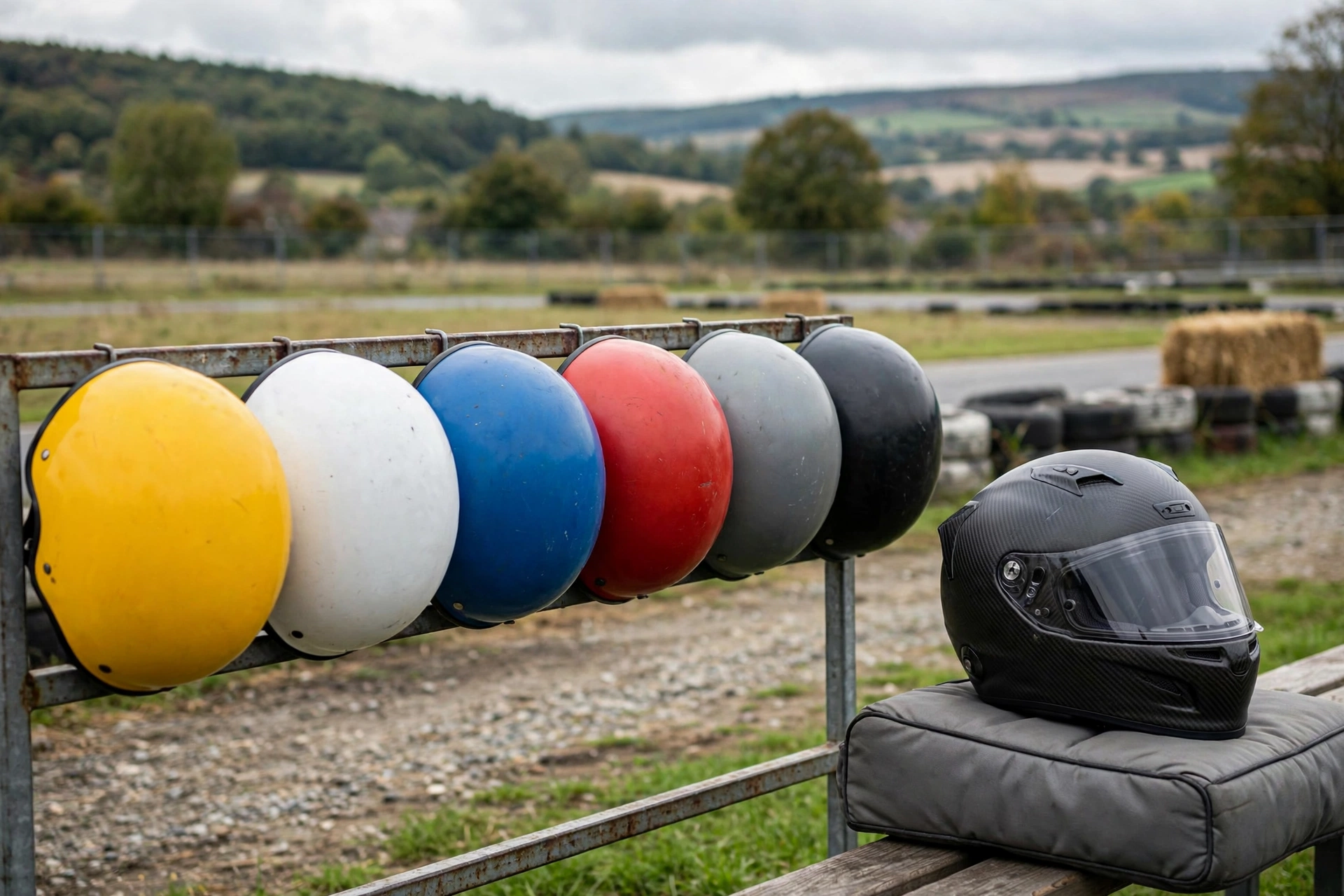
Choice opens up as well. Owning a helmet means you can choose the visor you prefer, the colour and design you like, and features that matter to you — better ventilation, a lighter shell, or a particular fit system. Rental racks offer what the centre stocks, not what you would choose for yourself.
When Is It Worth Buying Your Own?
In general terms, buying becomes worthwhile when you kart regularly — for example, monthly or more. At that frequency, the cost per session of owning a helmet drops quickly, and the benefits in fit and hygiene accumulate with every visit. Regular drivers notice the difference immediately.
Children are a special case. A child who karts regularly benefits from their own helmet for fit reasons, but they also outgrow helmets, so buying the cheapest acceptable helmet and replacing it as they grow is often the practical approach. Some centres and clubs run exchanges or second-hand sales for junior helmets.
Competitive drivers should buy early. If you plan to race, even at club level, you will need a helmet that meets your club’s standard, and rental helmets may not meet it. Buying your own, to the right standard, is a prerequisite for racing, not an optional upgrade.
How Do You Look After an Owned Helmet?
Owning a helmet means maintaining it. Clean the shell and visor after each session, wash removable linings regularly, and store the helmet in a cool, dry place, ideally in a bag that protects the visor from scratches. Never leave it in a hot car boot for long periods, because heat and sunlight degrade foam and shell materials over time.
Inspect it before each use: check the strap, the visor mechanism, the shell for cracks or dents, and the lining for compression. Replace it after a hard impact or when it shows signs of wear, even if it still looks presentable. A helmet’s protection is invisible, and wear is not always obvious.
Remember that ownership is about responsibility as well as comfort, and that fit is what makes any helmet’s protection work — including systems that address angled impacts, as explained in this guide to what MIPS means for helmets. A well-cared-for personal helmet, replaced when needed, is one of the best investments a regular karter can make.
Frequently Asked Questions
Q: Can I bring my own helmet to any karting centre?
A: In general terms, yes, but check first. Most centres welcome personal helmets, provided they are full-face, in good condition, and meet the centre’s safety requirements. Some may inspect your helmet before you drive.
Q: Is a rental helmet less safe than an owned one?
A: Not necessarily — a well-maintained rental helmet meeting the right standard can protect well. The concern is fit and unknown history, which is why owning becomes better as you kart more often.
Q: What should I wear under a rental helmet?
A: A balaclava or disposable helmet liner. It improves hygiene, makes the helmet more comfortable, and is required by some centres. Bring your own if you have one.

Olivia
Writer at Helmet Today, covering helmet reviews, fit and riding safety.