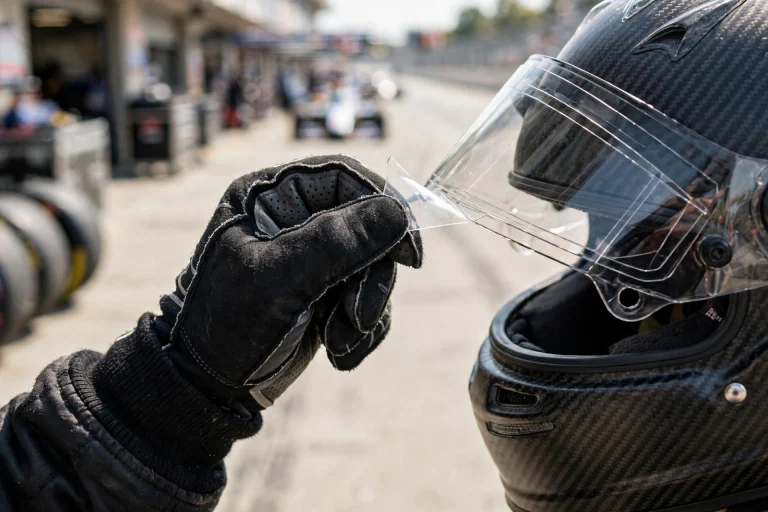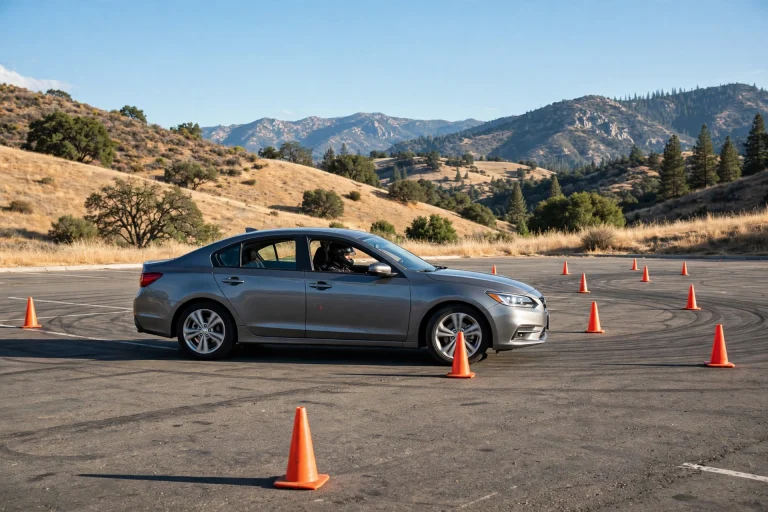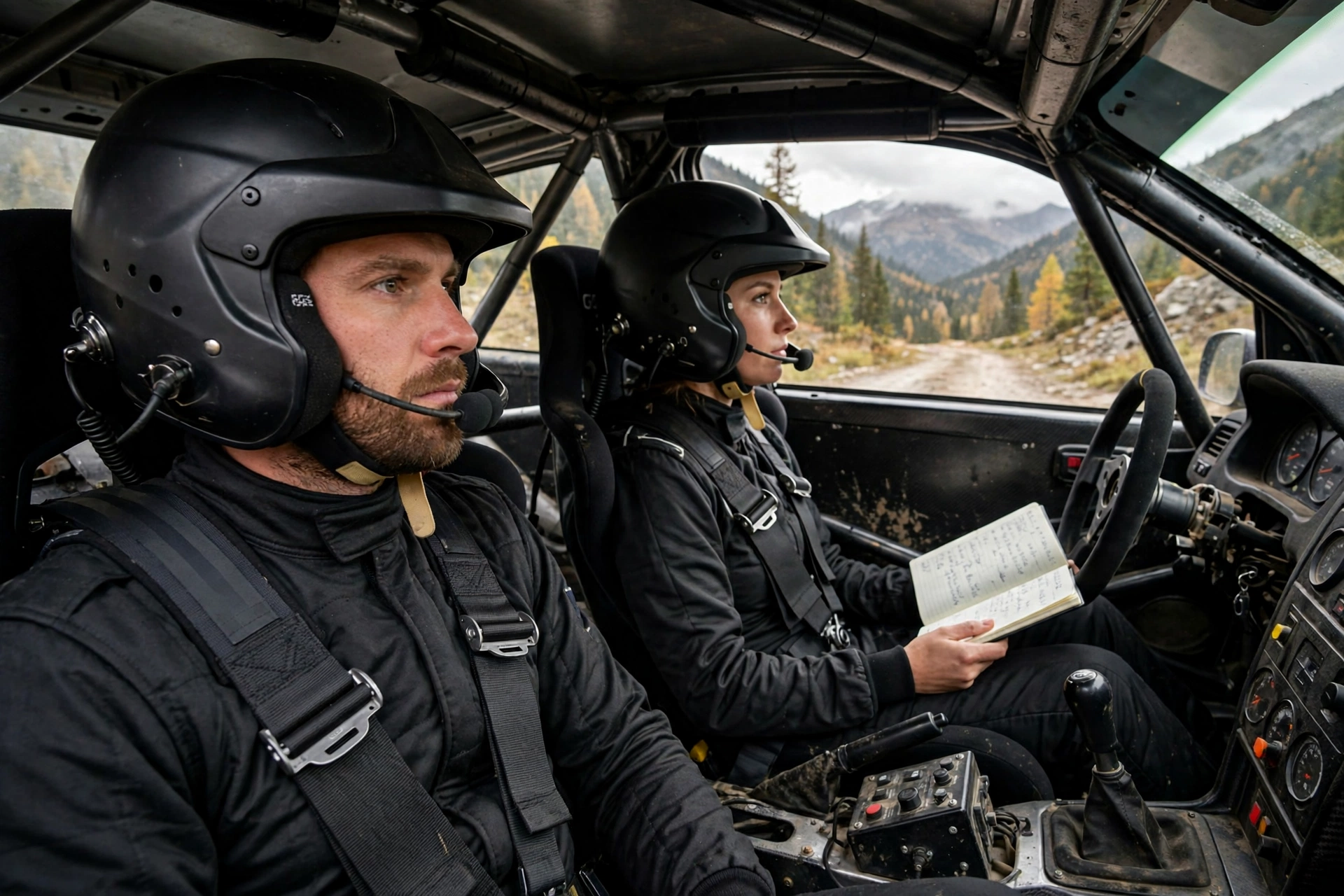
In general terms, a rally helmet and a circuit helmet differ mainly in communication and practicality: rally helmets are built around intercom systems so driver and co-driver can talk constantly, while circuit helmets are built for a single driver in a closed car, often with a head restraint device. Both meet high auto racing standards, but they are tuned for very different jobs.
Rally and circuit racing look similar on television — fast cars, helmets, and fireproof suits — but the experience inside the car could hardly be more different. A rally crew spends hours on varied roads, navigating by pace notes, while a circuit driver runs repeated laps on a known track. Those differences shape the helmets each one wears.
Why Do Rally Helmets Need Intercoms?
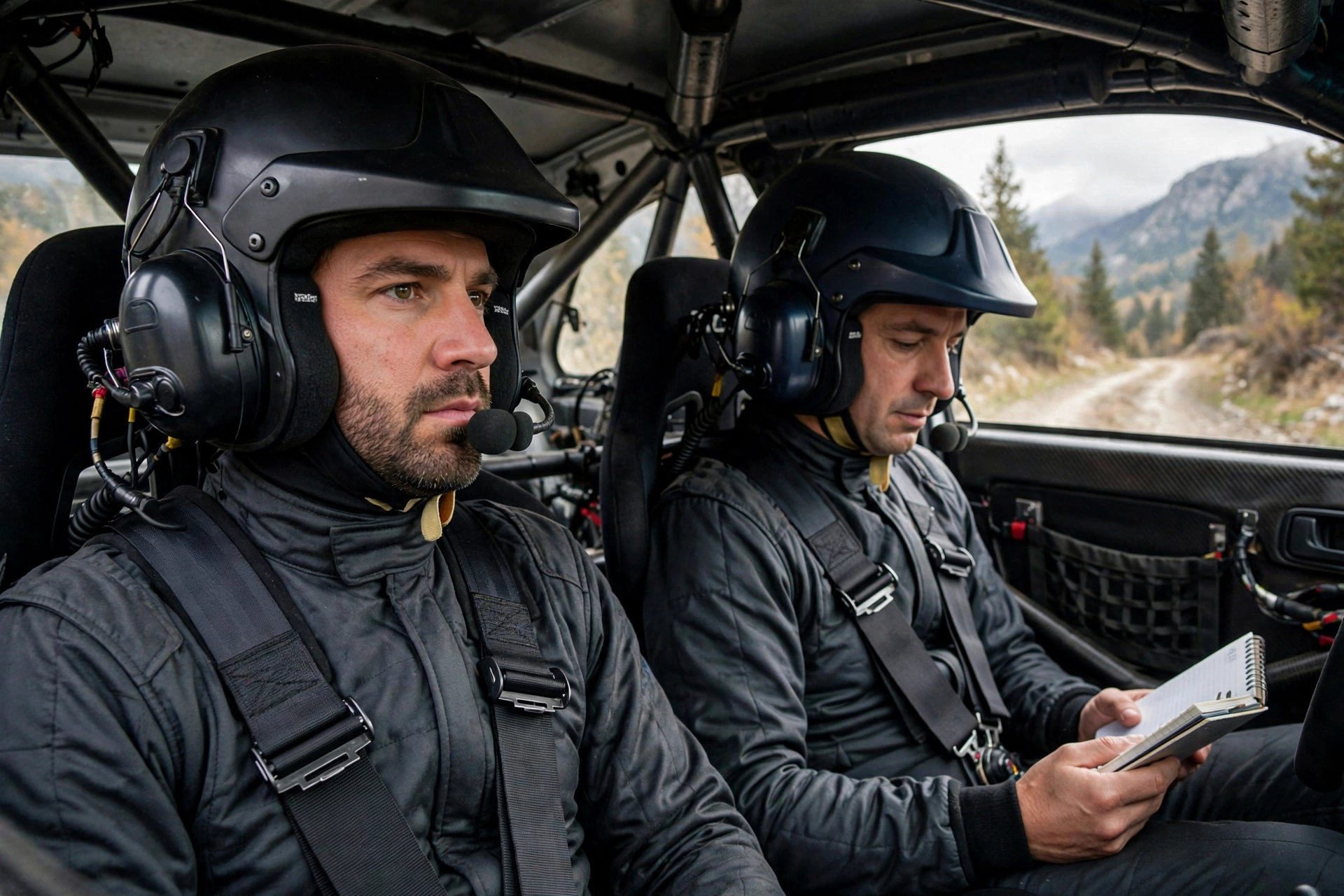
A rally driver cannot see most of what is coming. The co-driver reads pace notes — a coded description of every corner, crest, and hazard — and the driver relies on hearing those notes clearly, at speed, over engine and road noise. The helmet is therefore part of a communication system, not just protection.
Rally helmets are built with space and fittings for intercom earpieces and a microphone, and they are designed to work with the car’s intercom amplifier. The earpieces need to seal well enough to block noise but remain comfortable for stages that can last a long time, and the microphone must pick up the co-driver’s voice clearly without picking up too much background noise.
Circuit helmets, by contrast, usually have only a radio connection for pit communication, if they have one at all. A circuit driver does not need a constant stream of instructions — they know the track, they have practised the same corners many times, and their main communication needs are short messages about strategy, traffic, or safety. The helmet can therefore be simpler, lighter, and more focused on impact protection and head-restraint compatibility.
How Do Open-Face and Full-Face Choices Differ?
Rally has traditionally allowed open-face helmets more often than circuit racing, partly because communication is easier without a chin bar in the way and partly because rally cars, in general terms, run at lower average speeds than top-level circuit cars. Some rally drivers still prefer open-face helmets for the clearer speech and better ventilation.
Circuit racing, especially at higher levels, leans heavily toward full-face helmets, which protect the jaw and face in a high-speed impact and work better with head restraint devices. The closed car environment also means ventilation can be managed through the car’s systems, reducing the need for the open airflow an open-face helmet provides.
The choice is not purely personal: series rules set what is allowed, and those rules differ between rally and circuit disciplines and between levels of competition. A helmet legal for a club rally may not be legal for a circuit race, and vice versa, so the rulebook for your discipline is the final word.
What About Ventilation and Comfort?
Rally stages can last a long time, and crews may spend a whole day in the car, moving between stages on road sections. Comfort over hours matters enormously: a helmet that presses, overheats, or makes communication difficult will wear a crew down and affect performance and safety.
Rally helmets therefore tend to prioritise ventilation and all-day comfort, with padding that stays comfortable when damp with sweat and a design that works with a balaclava and an intercom headset. Weight matters too, because a heavy helmet over a long day adds neck fatigue.
Circuit helmets prioritise the intense, shorter bursts of a race: maximum protection, a tight fit that stays put under high cornering forces, and compatibility with a head restraint. Comfort matters here too, but it is comfort over a race distance, not over a full day of stages and road sections.
Can One Helmet Serve for Both Rally and Circuit?
In general terms, sometimes — but check carefully. A full-face auto racing helmet with intercom fittings can serve in both disciplines, provided it meets the certification each series accepts and has the anchors needed for any head restraint the circuit series requires. Many drivers who do both use one good full-face helmet for everything.
Problems arise when a helmet is specialised for one discipline. A rally open-face helmet may not be accepted for circuit racing, and a circuit helmet without intercom fittings will make rally communication difficult or impossible. Buying for both disciplines means choosing a helmet that covers both sets of requirements from the start.
Cost is a real consideration here. A helmet that does both jobs may cost more than a basic helmet for one discipline, but it is usually cheaper than buying two separate helmets, and it avoids the risk of arriving at an event with the wrong helmet.
Which Helmet Should You Choose?
Choose by the discipline you do most, then check whether it also covers the other. Rally drivers should prioritise intercom compatibility and all-day comfort; circuit drivers should prioritise head-restraint compatibility and a tight, stable fit at speed. Either way, certification for your series comes first.
Try helmets on with the rest of your kit — balaclava, intercom headset, and head restraint if you use one — because a helmet that fits alone may feel different once everything is connected. Check that the intercom earpieces sit comfortably, the microphone is in the right place, and the helmet still closes and straps securely.
Finally, remember that a helmet is part of a wider safety system, and that fit is what makes any helmet’s protection work — including systems that address angled impacts, as explained in this guide to what MIPS means for helmets. A well-fitting, correctly certified helmet, set up for the communication your discipline needs, is the right choice for rally or circuit alike.
Frequently Asked Questions
Q: Do rally co-drivers wear the same helmet as drivers?
A: In general terms, yes — co-drivers wear helmets meeting the same standard, with the same intercom fittings, because they face the same risks in a crash and need the same communication system.
Q: Can I fit an intercom to a circuit helmet?
A: Often, yes, if the helmet has space and fittings for earpieces and a microphone. Some circuit helmets accept intercom kits, but check compatibility with your helmet model and series rules before buying.
Q: Are open-face helmets still used in rally?
A: Yes, in some rally classes, where communication and ventilation are prized. Whether they are allowed depends on the series rules and the level of competition, so check your rulebook before choosing one.

Olivia
Writer at Helmet Today, covering helmet reviews, fit and riding safety.