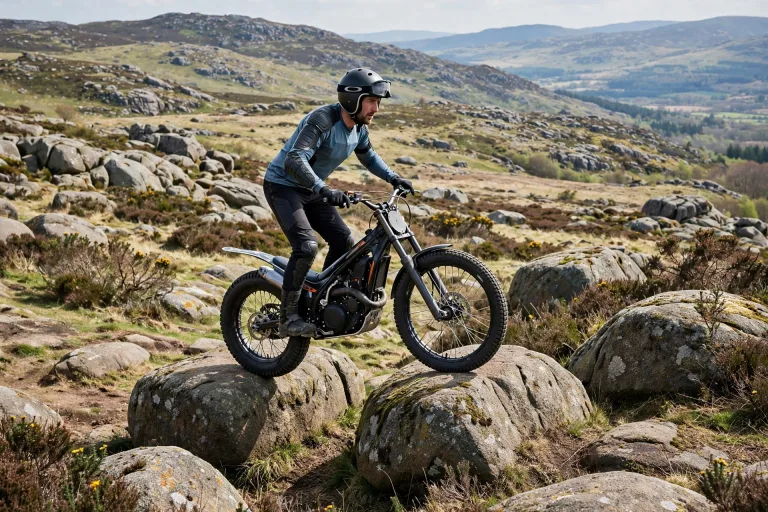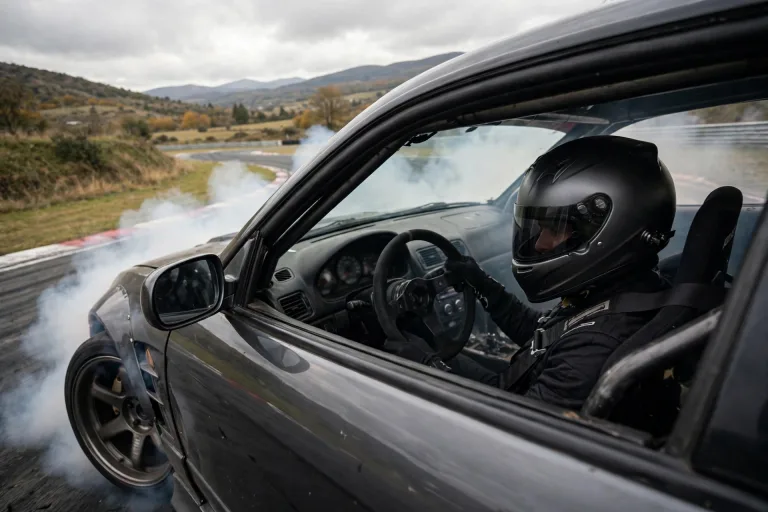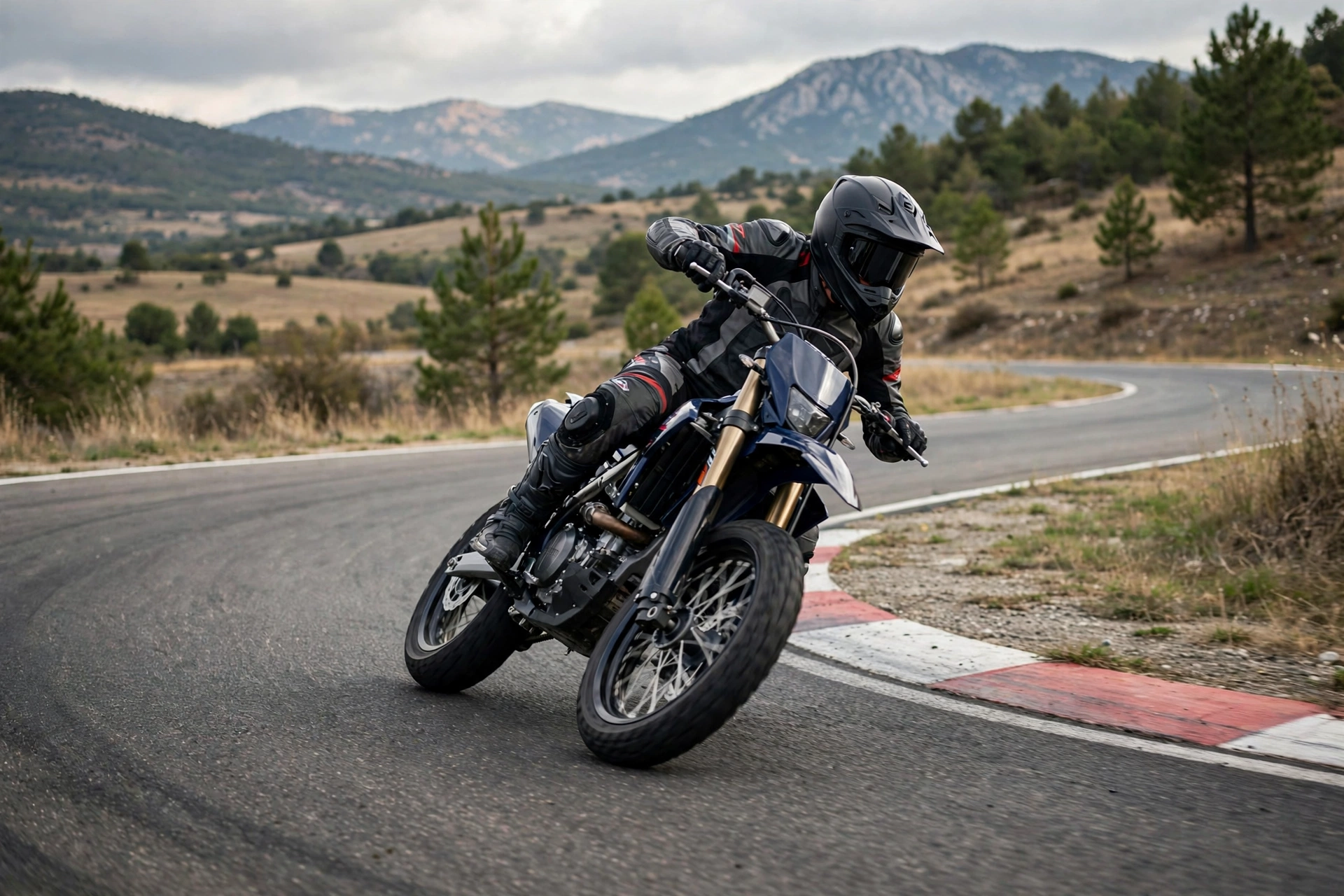
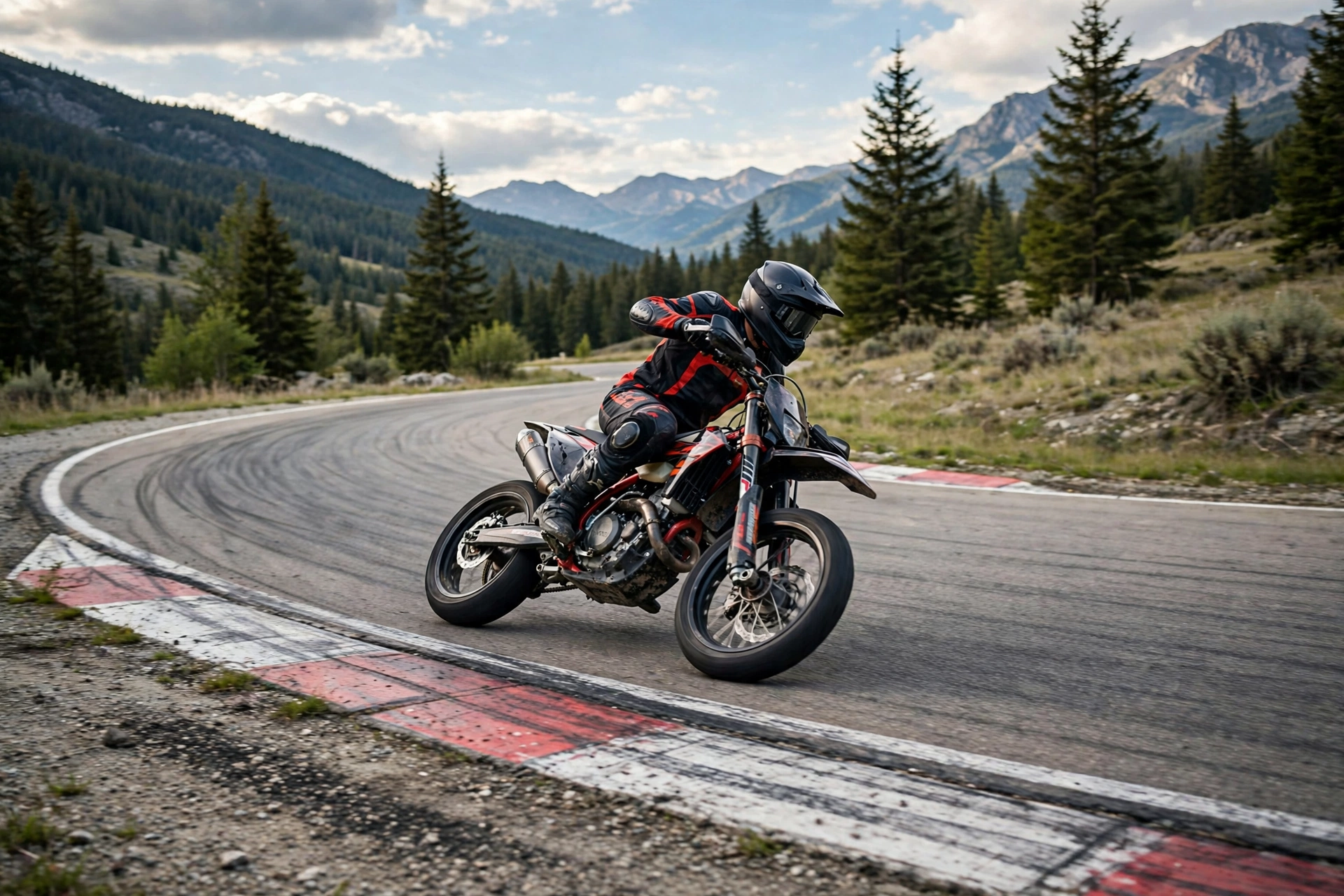
A helmet for supermoto riders is a full-face motorcycle helmet, often a motocross-style helmet with a visor, worn to protect the head on a bike that is ridden on both tarmac and dirt. In general terms, supermoto is a form of motorcycle racing that mixes road circuits with dirt sections, jumps, and tight corners, and the helmet has to cope with high speeds on tarmac, dust and mud off road, and the risk of a fall on either surface. A full-face helmet gives the rider protection for the whole head and face in all of those conditions.
Supermoto bikes are light, upright, and quick to turn, and the riding style is aggressive, with the rider sliding the back wheel into corners and jumping over dirt mounds. The helmet is therefore one of the most important pieces of kit a supermoto rider owns. It has to be strong, comfortable, well ventilated, and easy to see out of, because the rider’s head is moving constantly between the road, the dirt, and the next corner.
What makes a supermoto helmet different?
A supermoto helmet is different from a normal road helmet mainly in its shape, which usually has a peak or visor like a motocross helmet, a wider eye opening, and stronger ventilation. The peak shields the rider’s eyes from sun and mud, the wide opening gives a broad view of the track, and the large vents keep air flowing through the helmet during hard riding. In general terms, a supermoto helmet is a cross between a road helmet and a motocross helmet, built for a sport that uses both surfaces.
Some supermoto helmets have a full face shield like a road helmet, while others use goggles with an open eye port like a motocross helmet. The goggle setup suits the dirt sections, where dust and mud are a constant problem, while the face shield suits the tarmac sections, where wind and rain hit the face at speed. Many riders choose a helmet that can take either setup, so they can change it to suit the track. The shell itself is made to the same safety standards as other motorcycle helmets, so the protection is there whichever style the rider picks.
Do supermoto riders have to wear a helmet?
Yes, supermoto riders have to wear a helmet whenever they ride, both on the track and on the road. In general terms, the rules of the sport require a helmet that meets the approved standard for motorcycle use, and a rider without one will not be allowed to race or to practise. On the road, the law in most places also requires a motorcycle helmet, so the same helmet usually covers both.
The helmet must be in good condition, with no cracks or damage, and it must fit properly. Officials at a race meeting can check the helmet before the rider is allowed on the track, and a damaged or poorly fitting helmet can mean the rider is not allowed to start. That check is there for the rider’s own safety, because a supermoto crash can happen at speed on tarmac, on dirt, or on a jump, and the helmet is the rider’s main protection in all three.
How should a supermoto helmet fit?
A supermoto helmet should fit snugly all around the head, with no gaps and no pressure points, and it should stay in place when the rider shakes their head or looks over their shoulder. The helmet should sit level, covering the forehead, and the chin strap should be fastened firmly under the chin. In general terms, a helmet that moves when the rider moves is too loose, and a helmet that gives a headache after a few minutes is too tight.
The fit matters even more in supermoto than in normal road riding, because the rider’s head is thrown around by jumps, hard braking, and slides. A loose helmet can lift at speed or shift in a crash, which reduces the protection it gives. Try the helmet on with the goggles or the face shield you will use, and check that you can see clearly to the sides and that the vents do not whistle or let in dust. Some helmets include a system designed to reduce rotational forces in a fall, such as MIPS, which is worth considering for a sport where the head can strike the ground at an angle.
What should I look for when buying a supermoto helmet?
When buying a supermoto helmet, look for a helmet that meets the safety standard for your country, fits well, ventilates strongly, and works with your goggles or face shield. Check the standard label inside the helmet, and do not buy a helmet without it, because a helmet that has not been tested to a recognised standard may not protect you properly. In general terms, a helmet from a known maker, bought from a reputable shop, is a safer choice than a cheap unbranded helmet bought online.
Look for a peak that can be adjusted or removed, because the peak can catch the wind at high speed on a long straight, and some riders prefer to take it off for road use. Check that the lining can be removed and washed, since a supermoto helmet picks up sweat, dust, and mud quickly. Weight matters too: a light helmet is easier on the neck during a long race, and it is less tiring on a full day of riding.
Can I use a motocross helmet for supermoto?
Yes, you can use a motocross helmet for supermoto, and in general terms many riders do, especially if they already own one. A motocross helmet gives the same basic protection, with a peak, a wide eye opening, and strong ventilation, and it works well on the dirt sections of a supermoto track. The main difference is that a motocross helmet is usually worn with goggles rather than a face shield, so the rider’s face is more exposed to wind and rain on the tarmac sections.
Some riders prefer a dedicated supermoto helmet because it is designed for the mix of surfaces, with a peak that is shaped for road speeds and a face shield option for wet weather. If you ride supermoto regularly, a dedicated helmet is worth considering, but a motocross helmet is a perfectly good starting point. Whichever you choose, make sure it meets the safety standard for road use in your country, since a helmet made only for off-road use may not be legal on the road.
Is a supermoto helmet the same as a road helmet?
No, a supermoto helmet is shaped more like a motocross helmet, with a peak, a wider eye opening, and stronger ventilation. A road helmet is smoother and more aerodynamic, with a full face shield, and it is designed mainly for tarmac.
Do I need goggles with a supermoto helmet?
In general terms, yes, if your helmet has an open eye port rather than a face shield. Goggles protect the eyes from dust, mud, and wind, and they should fit neatly against the helmet with no gap.
How often should I replace a supermoto helmet?
Replace it after any hard crash, or when the shell, the liner, or the strap shows signs of wear. In general terms, a helmet that has taken a serious impact should not be used again, even if the damage looks small.

Olivia
Writer at Helmet Today, covering helmet reviews, fit and riding safety.