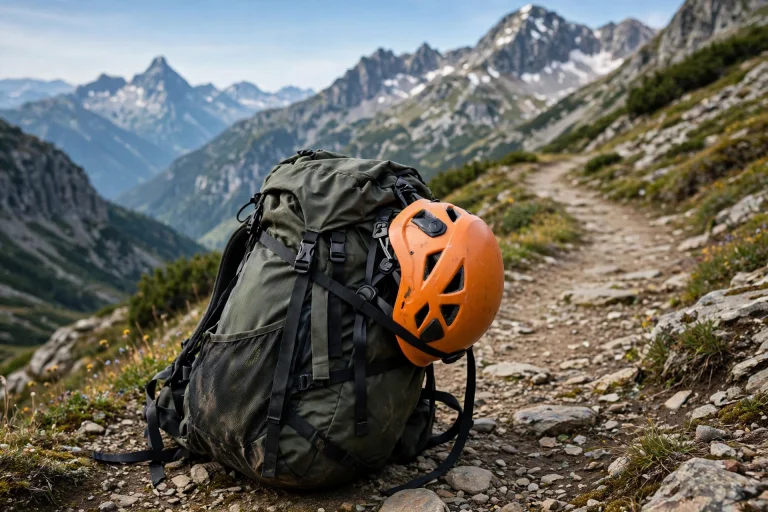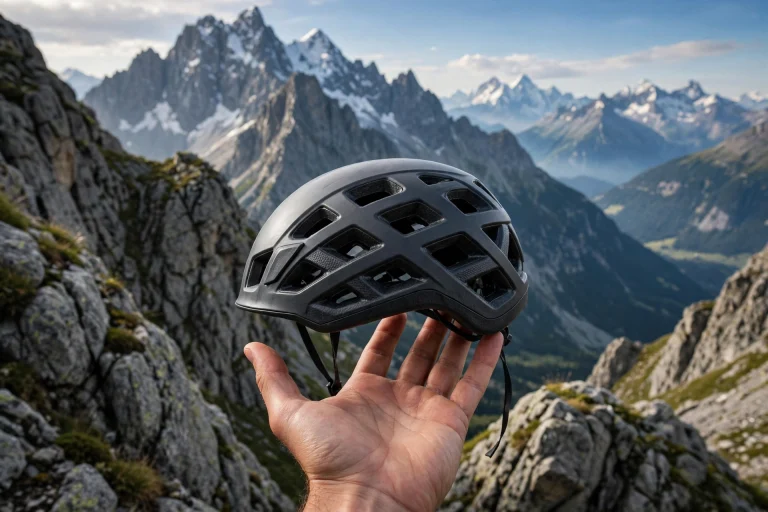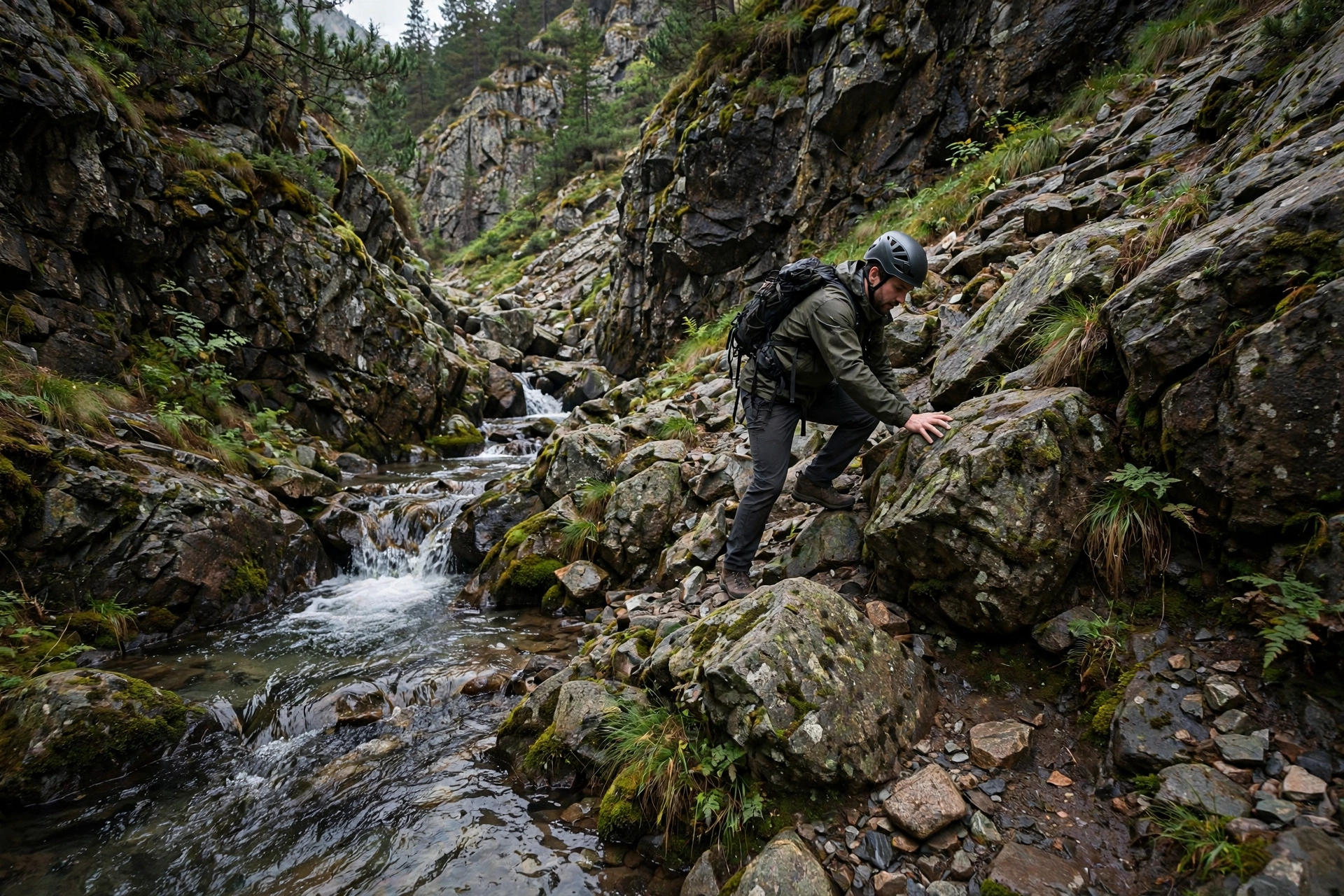
A helmet for gorge walking is a climbing-style helmet worn to protect the head from falling rocks, knocks against rock walls, and slips on wet stone while walking, scrambling, and wading through a gorge. In general terms, gorge walking takes you through a narrow river valley where the water runs between steep rock walls, and the route involves climbing over boulders, sliding down rock chutes, and jumping into pools. A helmet is standard kit for the activity, because the head is close to hard rock for most of the trip.
Gorge walking is often done as a guided group activity, and the guide will usually hand out helmets and buoyancy aids before the group sets off. The helmet is not there for show: the rocks in a gorge are wet, slippery, and often loose, and a fall or a falling stone can reach the head without warning. Wearing a helmet lets you enjoy the scrambling and the water without worrying about every step.
Do you need a helmet for gorge walking?
Yes, in general terms you need a helmet for gorge walking, and most organised trips will not let you take part without one. The helmet is part of the safety kit for the activity, along with a buoyancy aid and suitable footwear, and the guide will check that everyone is wearing one before the group enters the gorge. If you are gorge walking on your own, which is not recommended for beginners, a helmet is still a sensible piece of kit to bring.
The risk in a gorge comes from several directions at once. Rocks can fall from the walls above, especially after rain, and a slip on wet stone can send you into a boulder or a rock face. The route also involves climbing and sliding in tight spaces, where the head can easily bump against the rock. A helmet covers all of those risks with one simple piece of kit, and it is light enough that you will forget you are wearing it once the walk begins.
What type of helmet is best for gorge walking?
The best helmet for gorge walking is a climbing or mountaineering helmet, which is designed to protect against falling objects and knocks from the side. These helmets have a hard outer shell and a suspension or foam system inside, and they are light, well ventilated, and comfortable to wear for hours. In general terms, a climbing helmet is a better choice than a cycling helmet or a hard hat, because it is made for exactly the kind of impacts you meet in a gorge.
Look for a helmet with a secure chin strap and a good adjustment system, because a helmet that slips off in the water or on a climb is no use at all. The helmet should fit snugly and sit level on the head, and it should work with any hood or hat you wear underneath in cold weather. A bright colour is helpful, because it makes each person in the group easier to spot in the gorge, especially in the shade of the rock walls.
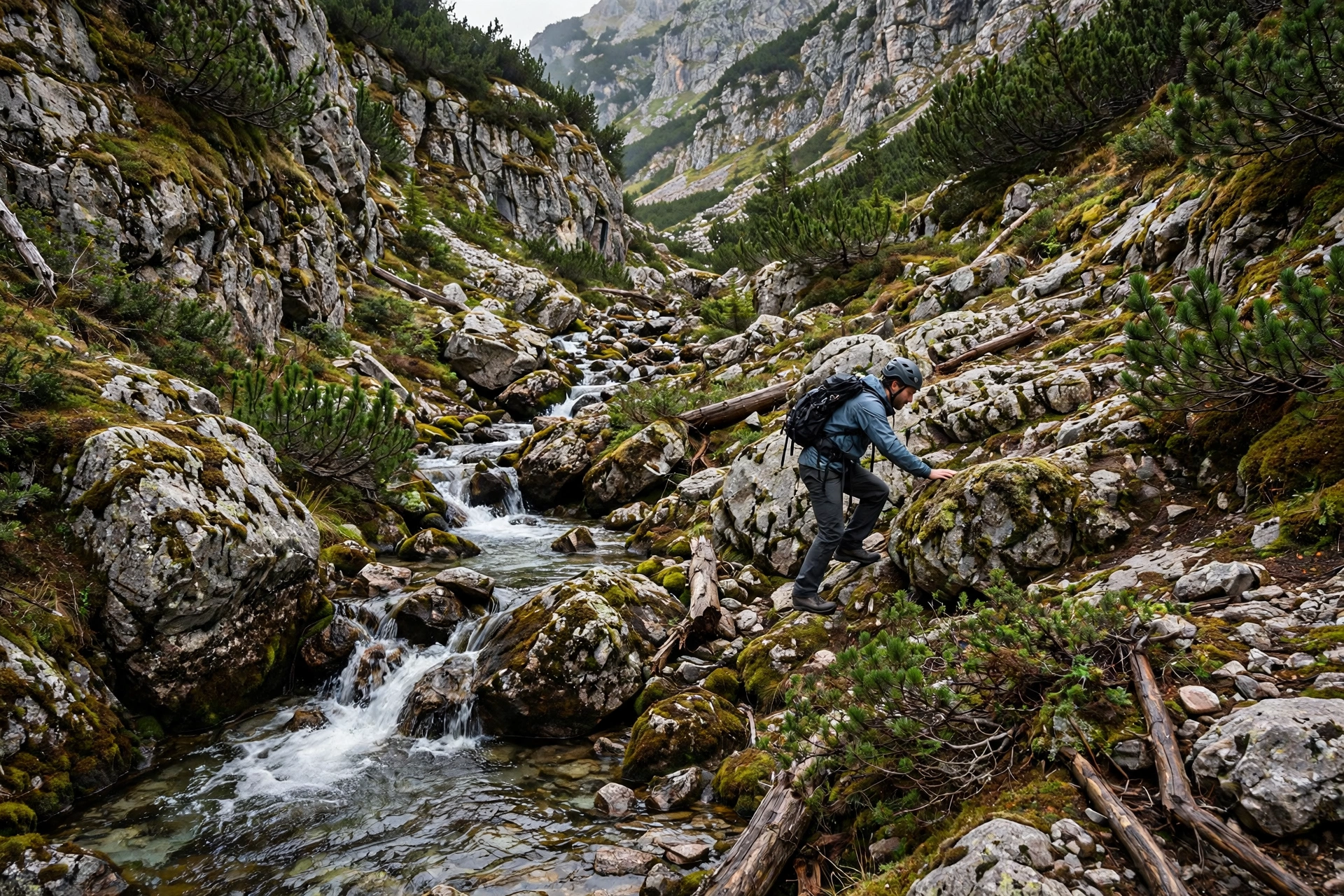
How does a gorge walking helmet protect you?
A gorge walking helmet protects you by putting a hard shell between your head and anything that might strike it, from a falling stone to a rock wall you slip against. In general terms, the shell spreads the force of an impact, and the liner or suspension inside absorbs some of that energy, so the head feels less of the blow. The helmet is most useful against the small, sharp knocks that are common in a gorge, rather than against a heavy fall from height.
The helmet also protects the head when you slide down a rock chute or jump into a pool, because the entry into the water can be awkward and the rocks below the surface are not always visible. Some helmets include a system designed to reduce rotational forces in a fall, such as MIPS, which can help when the head strikes a surface at an angle. Whatever the design, the helmet’s job in a gorge is simple: to take the edge off the knocks that are part of the activity.
What else should you wear for gorge walking?
Along with a helmet, you should wear a buoyancy aid, a wetsuit or suitable clothing for cold water, and footwear with a good grip on wet rock. The buoyancy aid keeps you afloat in deep pools and protects your chest and back from knocks, while the wetsuit keeps you warm in water that is often cold even in summer. In general terms, old trainers with a grippy sole work well, because they grip wet rock better than smooth soles and they are cheap to replace if they get damaged.
Gloves can help on rough rock, and a waterproof bag will keep a phone or a snack dry. Avoid loose clothing that can catch on rocks, and tie back long hair so it does not get in the way. The guide will usually provide the helmet and the buoyancy aid, but the clothing and footwear are often your own responsibility, so check with the operator before the trip and dress for cold water and rough rock.
Can children wear a helmet for gorge walking?
Yes, children can wear a helmet for gorge walking, and in general terms they should, because they are smaller and closer to the rocks and the water. Most operators that take children will provide a helmet in a child’s size, and the guide will fit it before the group sets off. The helmet should sit level, cover the forehead, and stay in place when the child shakes their head.
Age and size limits for gorge walking vary by operator and by the difficulty of the route, so check those before you book for a child. Some routes are suitable for older children, while others are for adults only, and the guide will know which sections are safe. A helmet is a sensible part of the kit for a young walker, but it does not change the operator’s limits, and a child who is below the limit should not take part.
Is a climbing helmet the same as a gorge walking helmet?
In general terms, yes, the same type of helmet is used for both. A climbing or mountaineering helmet is designed to protect against falling objects and knocks on rock, which is exactly what gorge walking involves.
Will my helmet get wet during gorge walking?
Yes, your helmet will almost certainly get wet, and it is made to cope with that. Climbing helmets are designed to work in rain and wet conditions, so a soaking in a gorge will not harm it. Let it dry naturally afterwards, away from direct heat.
Can I wear a helmet over a hat in a gorge?
In general terms, yes, if the hat is thin and the helmet still fits snugly. A thick hat can change the fit and make the helmet sit too high, so try the combination on before the trip and adjust the helmet’s fitting system to suit.

Olivia
Writer at Helmet Today, covering helmet reviews, fit and riding safety.