In general terms, no — a certified ultralight climbing helmet is not less safe than a heavier one, because it has to pass the same certification tests before it can be sold as a climbing helmet. What you genuinely give up with ultralight models is not test-day protection but durability: thin shells and exposed foam dent, gouge, and wear out faster, and some models offer a little less coverage. The honest question is not “is it safe?” but “how long will it stay safe, and in what kind of use?”
Ultralight helmets are now the default for alpine climbing. This guide explains what “ultralight” means, why certification levels the safety argument, and where the real trade-offs sit.
What Counts as an Ultralight Climbing Helmet?
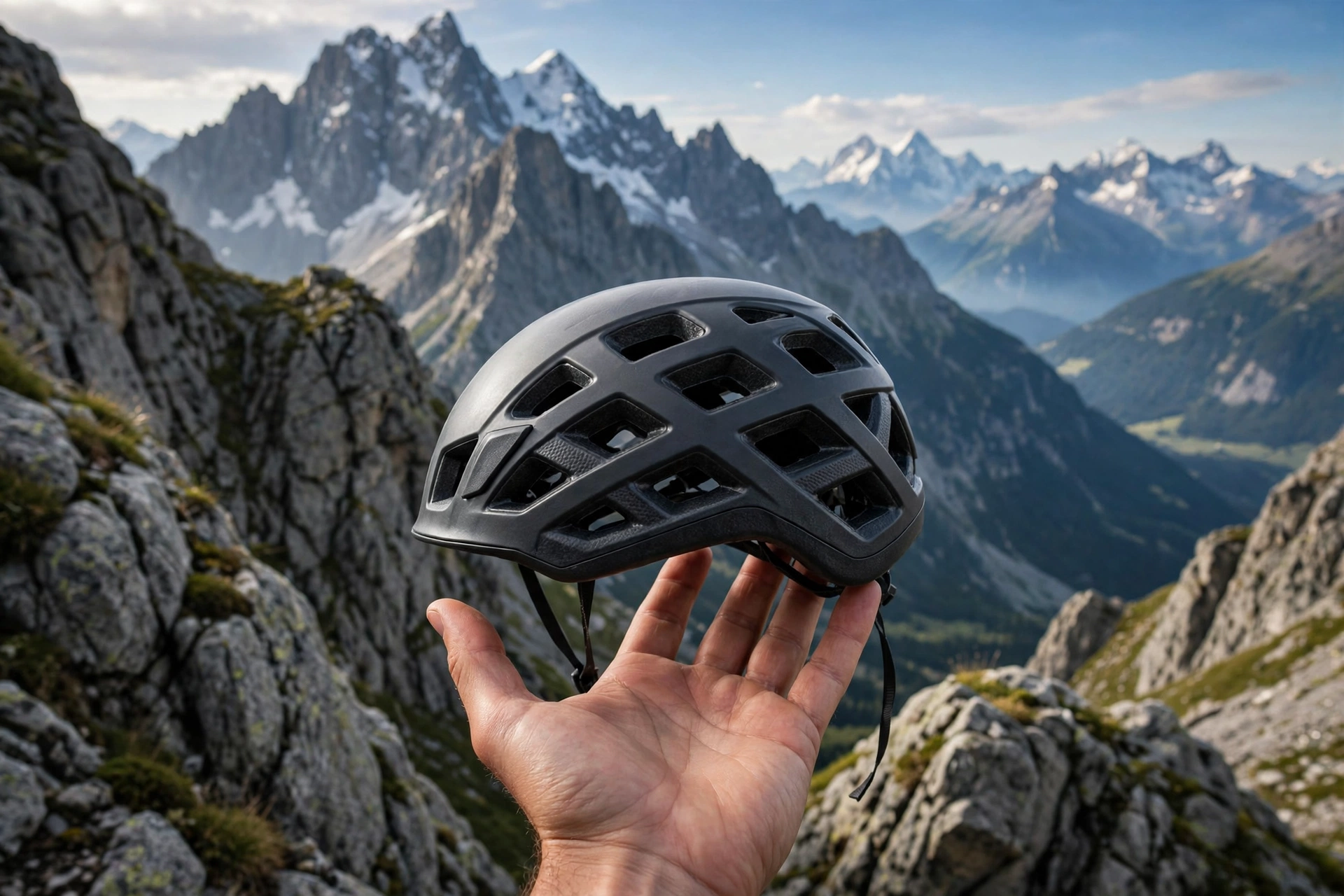
An ultralight climbing helmet is usually built around foam: a thick layer of expanded polystyrene or expanded polypropylene foam does the energy absorbing, with only a thin plastic shell — or in some designs a partial shell, or none over parts of the foam — protecting it from the outside world. Traditional climbing helmets, by contrast, pair a substantial hard shell with a thinner inner liner or suspension.
Removing the heavy shell is where the weight saving comes from, and many ultralight models weigh dramatically less than a classic hard-shell helmet — noticeable over a long alpine day, which is exactly the point. In modern helmets the foam is the protection; the shell on a traditional helmet is largely there to shield that protection from everyday knocks.
That distinction explains everything else in this article. The ultralight design asks the foam to survive both the crash and the years of small abuse leading up to it, and it is in the second of those jobs that the designs differ.
Do Ultralight Helmets Pass the Same Safety Tests?
Yes. In general terms, a helmet sold as a certified climbing helmet must meet the same climbing helmet standard — EN 12492, often alongside the UIAA standard — whatever it weighs. The tests involve impacts to the crown and, for climbing helmets, checks around the sides, front, and back, plus penetration and strap-retention requirements. A model that cannot pass cannot carry the certification.
Certification is best understood as a bar every certified helmet clears, not a ranking of how far above the bar each one lands. Manufacturers do not publish comparable scores, so buyers cannot say helmet A beat the standard by more than helmet B. What you can say is that both were independently tested to the same requirements.
Two conclusions follow. First, buy certified, from a reputable maker, and check the standard is printed inside the helmet — that applies at every weight. Second, since test performance is levelled by certification, your buying decision should rest on the things that genuinely differ: coverage, durability, fit, and how the helmet will be treated in your kind of climbing.
Where Do Ultralight Helmets Genuinely Give Something Up?
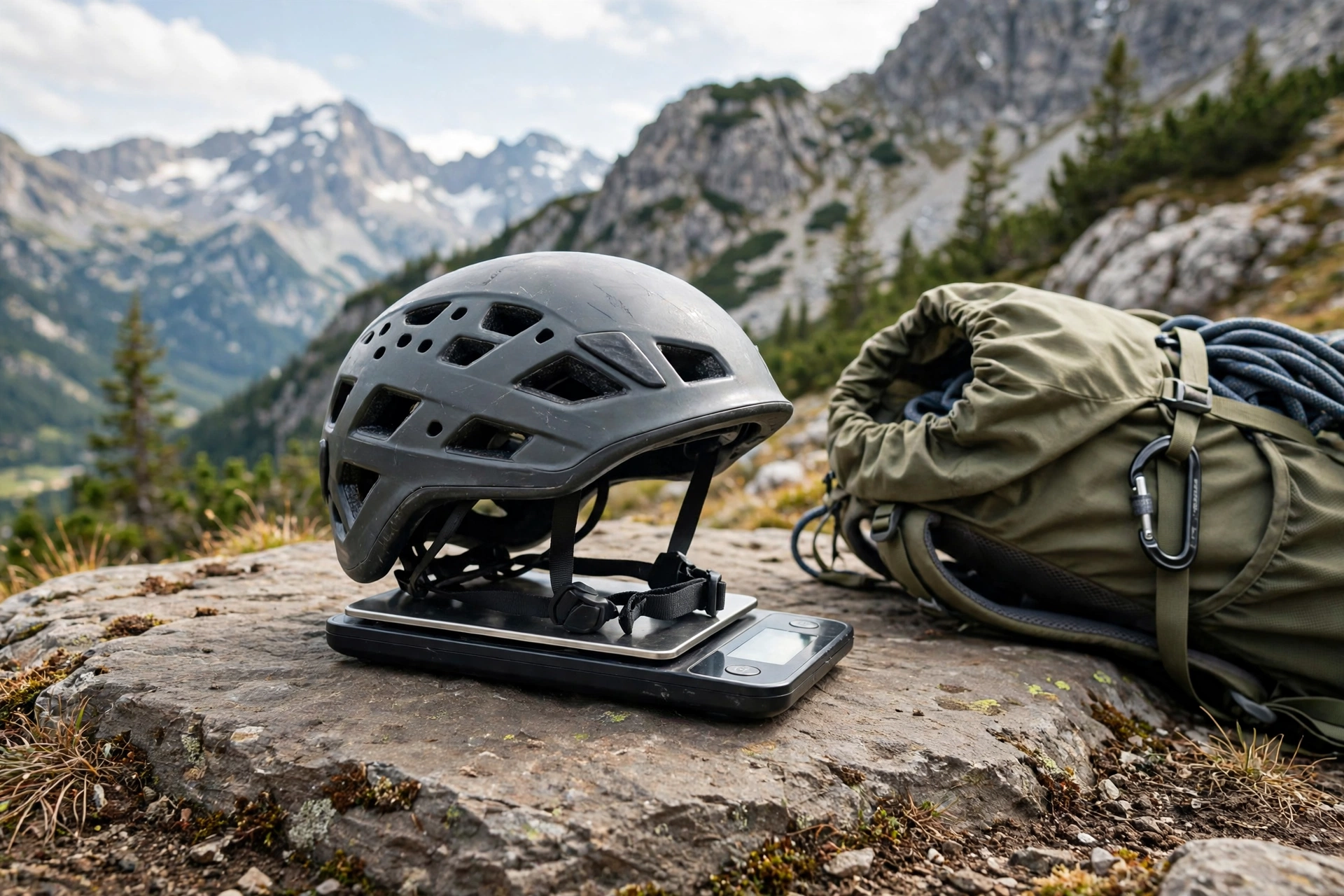
Durability is the big one. Thin shells crack and exposed foam dents and gouges from the routine abuse a crag bag delivers: being dropped on rock, sat on in a car boot, packed against crampons and cams, knocked against the cliff while hanging from a harness. Each dent is cosmetic until it is not — foam that is already crushed or torn in a spot has less to give there in a real impact.
Coverage varies more between models at the ultralight end. Some designs trim foam at the edges to save weight, sitting higher and covering less of the sides and back of the head than a traditional helmet. Check coverage physically when you try one on: how low the foam comes at the temples and above the ears differs noticeably between models, and it is a legitimate thing to choose between.
Service life follows from both. An ultralight helmet used daily — guiding, instructing, busy cragging — typically needs replacing sooner than a hard-shell model in the same life, simply because the wear shows up faster. None of this makes it unsafe on day one; it makes inspection and honest retirement more important for the whole of its life.
Does the Foam Type Change How the Helmet Absorbs Impacts?
Both main foams manage impact the same fundamental way: by crushing and deforming to spread the energy of a blow over time and area instead of passing it to your skull.
Expanded polystyrene (EPS) crushes permanently in a serious impact, which is why any helmet that takes a big hit is retired. Expanded polypropylene (EPP), used in many ultralight models, can recover its shape after smaller knocks and handle repeated minor impacts better — one reason it suits the ultralight format — while still being finished by a genuinely hard one.
Some helmets, at various weights, add a low-friction layer designed to reduce rotational forces in angled impacts — the idea behind rotational-impact systems like MIPS, which are increasingly offered on foam climbing helmets as well as bike helmets. Where that matters to you, it is available in both light and traditional designs; it is a feature choice, not a weight-class choice.
The point to hold onto is that foam behaviour in the crash is not where ultralight helmets are weaker. They are engineered to the same test bar. Their weakness is everything that happens to the foam before the crash.
Who Should Choose an Ultralight Helmet, and Who Should Not?
Choose ultralight if weight genuinely changes your day: long alpine routes, ski mountaineering, multi-pitch climbing with long approaches, or any climbing where a helmet light enough to forget is a helmet you will actually wear from the first pitch to the descent. A comfortable helmet worn all day protects more than a tougher one left in the pack until the hard pitches.
Think harder about a traditional hard-shell or hybrid design if your helmet lives a rough life: daily cragging, working routes, instructing, being lent to friends, travelling loose in the back of a van. In that life, a shell that shrugs off knocks keeps the certified protection intact for years, and the weight penalty matters less on short approaches.
Whichever you choose, close the safety gap with habits: store the helmet out of the sun and away from sharp gear, inspect the foam regularly, and retire it after any significant impact or visible foam damage. An ultralight helmet that is inspected honestly is a safe helmet; a neglected one of any weight is not.
Frequently Asked Questions
Q: Do ultralight climbing helmets pass the same tests as heavy ones?
A: Yes — in general terms, any helmet certified to the climbing standard (EN 12492, often with UIAA) has passed the same impact, penetration, and retention tests regardless of weight. Certification is a bar they all clear, not a score that ranks them.
Q: Why does my ultralight helmet dent so easily?
A: Because the foam is close to the surface, protected by only a thin shell or none. Dents from drops and packing are the known trade-off of the design. Small cosmetic marks are normal; crushed, cracked, or torn foam in an area means that area has less protection left, and deep damage is a reason to retire the helmet.
Q: Is an ultralight helmet a good first helmet for a beginner?
A: It can be, especially if you will wear it for long days and might otherwise skip wearing one. But beginners’ helmets tend to get dropped, lent, and knocked about, and a hard-shell or hybrid model usually survives that phase longer. Either way, buy certified and check the fit and coverage in person.

Olivia
Writer at Helmet Today, covering helmet reviews, fit and riding safety.