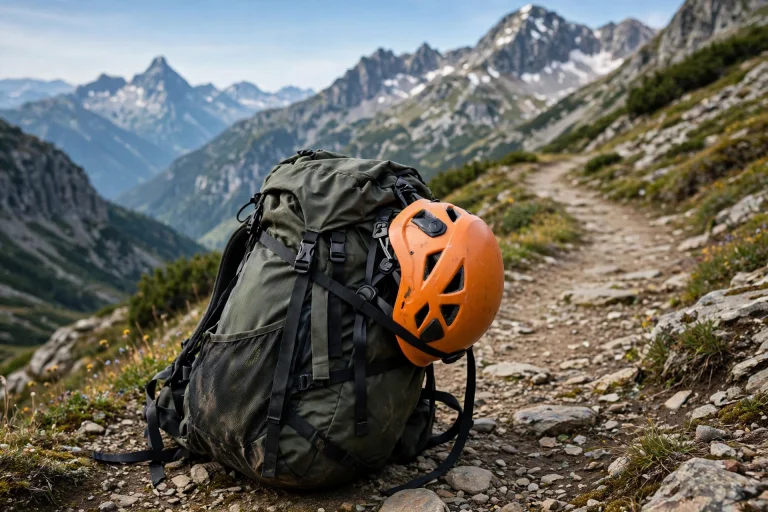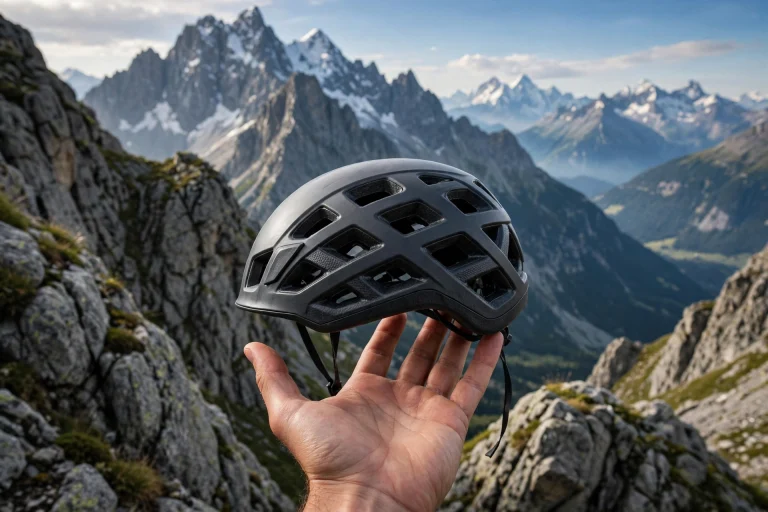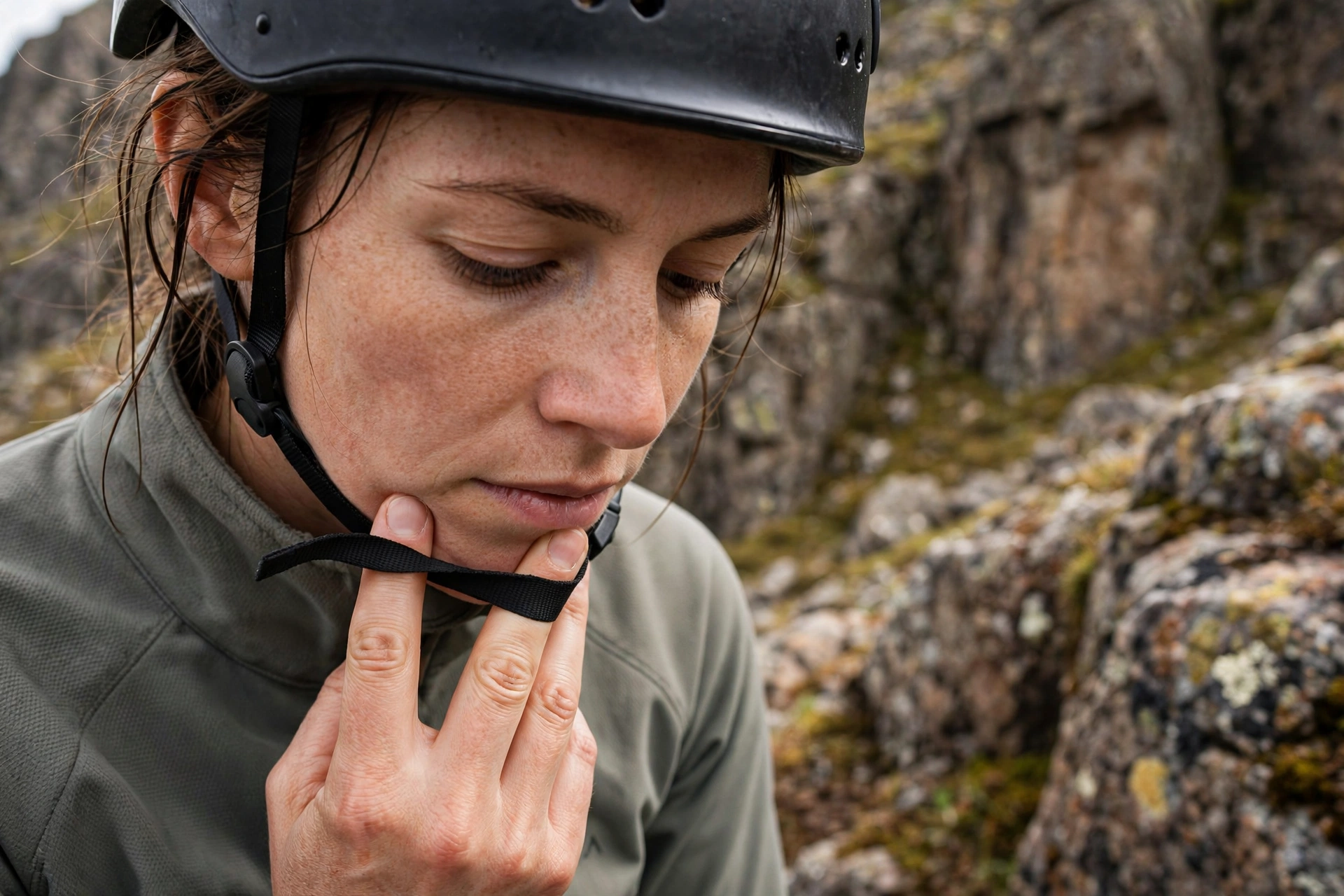
A climbing helmet chin strap should be snug: tight enough that you can just slide one or two fingers between the strap and your chin, with no slack gap, and the helmet should not shift, rock, or tip when you shake or tilt your head. If the helmet can move independently of your head, the strap is too loose; if it aches, digs in, or gives you a headache within minutes, it is too tight.
The strap is the part of the helmet climbers most often wear wrong — left dangling, buckled loosely over a hood, or cranked down until it hurts. This guide covers what the strap does, how to set it, and the checks that tell you the fit is right.
What Does the Chin Strap Actually Do?
A climbing helmet protects in two kinds of event: something hitting the helmet, and the wearer falling. In both cases the foam and shell can only absorb energy properly if the helmet is still in the right place when the impact happens. The chin strap is what keeps it there.
A stone rarely hits square on top and stops; it glances, and a loosely strapped helmet can be knocked sideways or clean off before a second stone arrives. In a climber’s own fall, the helmet meets the rock as the body swings and tumbles, and a loose strap lets it rotate away from the impact point at exactly the wrong moment.
Foam liners crush in a designed direction, and some modern helmets add rotational-impact systems like MIPS that manage twisting forces — but every one of those systems assumes the helmet starts the impact sitting level and centred on your head. The chin strap is the low-tech part that makes the high-tech parts possible.
How Tight Is Tight Enough?
The common guide is the two-finger check: with the buckle fastened under your chin, you should be able to slide one or two fingers between the strap and the underside of your chin, and no more. That leaves room for talking and breathing hard, while still holding the helmet firmly.
There should be no visible slack. If a loop of strap hangs below your jaw, or the buckle swings when you move, take up more length. Equally, the strap should not press into your throat or pull your jaw shut: you should be able to yawn and shout to your belayer without fighting it.
Set the length with the buckle sitting under your chin — roughly under the front of your jaw — not on the point of your chin and not back against your neck. A buckle on the chin point feels unstable and can slip off; a buckle against the throat is uncomfortable and encourages climbers to loosen everything. Most helmets adjust with a simple slider on the strap; even tension on both sides keeps the buckle centred.
How Should the Side Straps Sit Around Your Ears?
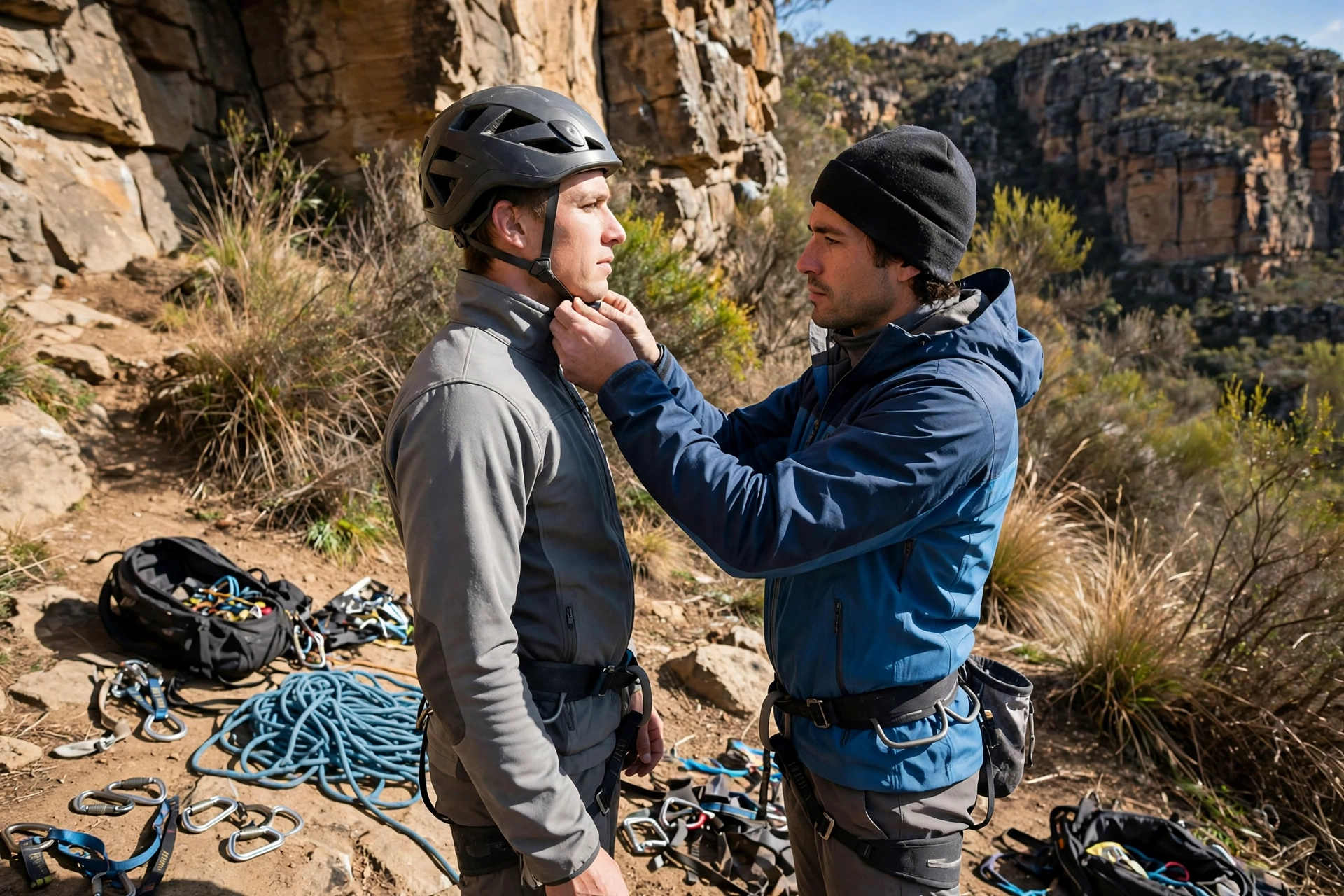
The side straps matter as much as the chin strap. On most climbing helmets the straps form a Y on each side of your head, and the junction of that Y — where the front and rear straps meet at a slider or divider — should sit just below your earlobe, not on it and not far below it.
If the junction sits on your ear, it will rub and fold the ear uncomfortably within an hour. If it hangs well below, the front strap usually ends up too slack, and the helmet can tip forward. Adjust the sliders so both sides match: uneven side straps are the usual hidden reason a helmet persistently tilts to one side no matter how tight the chin strap is.
Set the adjustments in order: side straps evenly first, then any rear cradle or wheel, then the chin strap length last. And check strap position over anything you wear underneath — a beanie or hood changes the geometry slightly, so do your strap check in your full cold-weather setup if that is how you climb.
What Fit Checks Tell You the Strap Is Right?
Run four quick checks every time you put the helmet on. First, the shake test: shake your head side to side and nod firmly. The helmet should move with your head as one unit, with no lag, wobble, or clunking.
Second, the push test. Push the front of the helmet up and the back down, as if a glancing rock or a fall tried to roll it off. A well-strapped helmet resists and springs back to level; one that stays tipped, or slides so the front uncovers your forehead, is too loose somewhere — usually the chin strap, sometimes the side straps.
Third, look up and look down. Climbers spend pitches looking up at the next moves and down at their feet; the helmet should stay put through both without the strap strangling you when you look up or the shell sliding over your eyes when you look down. Fourth, the talk test: speak loudly and open your mouth wide. Speech should be effortless; if the strap restricts your jaw, loosen it a notch at a time, then re-run the shake test to confirm you have not gone too far.
What Strap Mistakes Do Climbers Commonly Make?
The worst is also the simplest: climbing with the buckle undone. It happens on easy ground, on approaches that turn into scrambles, and on hot days, and it removes the strap’s protection entirely. A helmet with an open strap is headwear, not protection. Make buckling up as automatic as tying in.
Second is setting the strap once over bare skin and never adjusting it again. A strap set in summer will fit differently over a winter beanie or a hood, and straps also creep looser as webbing settles and sliders shift. Recheck at the base of each route — it takes five seconds.
Third is wearing the helmet tipped back with the strap holding it in that position. The helmet should sit level, with the front edge low enough to protect your forehead. Tightening a strap under a tilted helmet just locks in the bad position. Set the helmet level first, then strap it. Finally, watch strap condition: frayed webbing, a cracked buckle, or a slider that will not hold its setting are retirement or repair issues, because a strap that fails quietly is the same as no strap at all.
Frequently Asked Questions
Q: Can I loosen the chin strap on easy ground for comfort?
A: It is a poor trade. Rockfall and trips do not check the grade first, and a loose or open strap can let the helmet shift or come off in the fall it was meant for. If the strap is uncomfortable, fix the fit — reposition the side straps or the buckle — rather than wearing it slack.
Q: Should the buckle sit on my chin or under it?
A: Under the chin, against the underside of your jaw. On the point of the chin it can slip and feels unstable; pushed back against the throat it is uncomfortable and tempts you to loosen the strap. Centred under the jaw, with even strap length on both sides, is the position that stays put.
Q: My chin strap gives me a headache. Is it too tight?
A: Probably — or the pressure is coming from somewhere else. Check the side strap junctions are below your ears and even, confirm the helmet itself is the right size and sitting level, then back the chin strap off slightly. A correctly fitted strap should be forgettable; pain is information that something in the system is off.

Olivia
Writer at Helmet Today, covering helmet reviews, fit and riding safety.