For most glacier travel, yes — wearing a mountaineering helmet is the sensible default, and many guides and clubs expect one. The glacier itself produces head hazards: falling into a crevasse means striking hard ice walls on the way down, slips on steep firn are uncontrolled, and seracs, icefall, and moraine edges all shed debris. There is no universal law that requires it, but experienced teams generally treat the helmet as standard glacier kit, like the rope and harness.
Because flat, blue-ice walking can feel benign, the helmet is the piece of kit most often questioned. This guide covers what can actually hit your head on a glacier, when teams reasonably decide differently, and what kind of helmet suits the job.
What Can Hit Your Head on a Glacier?
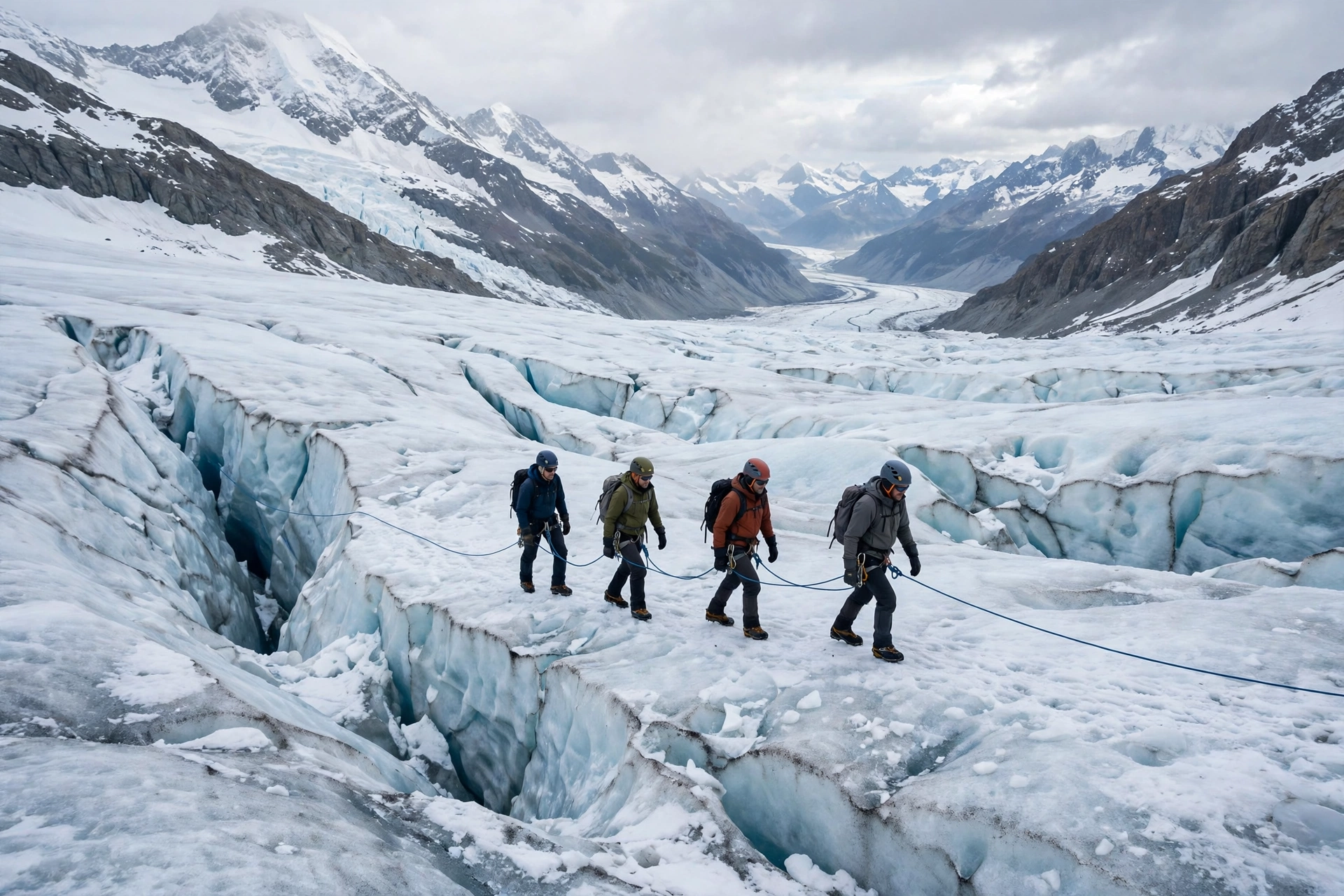
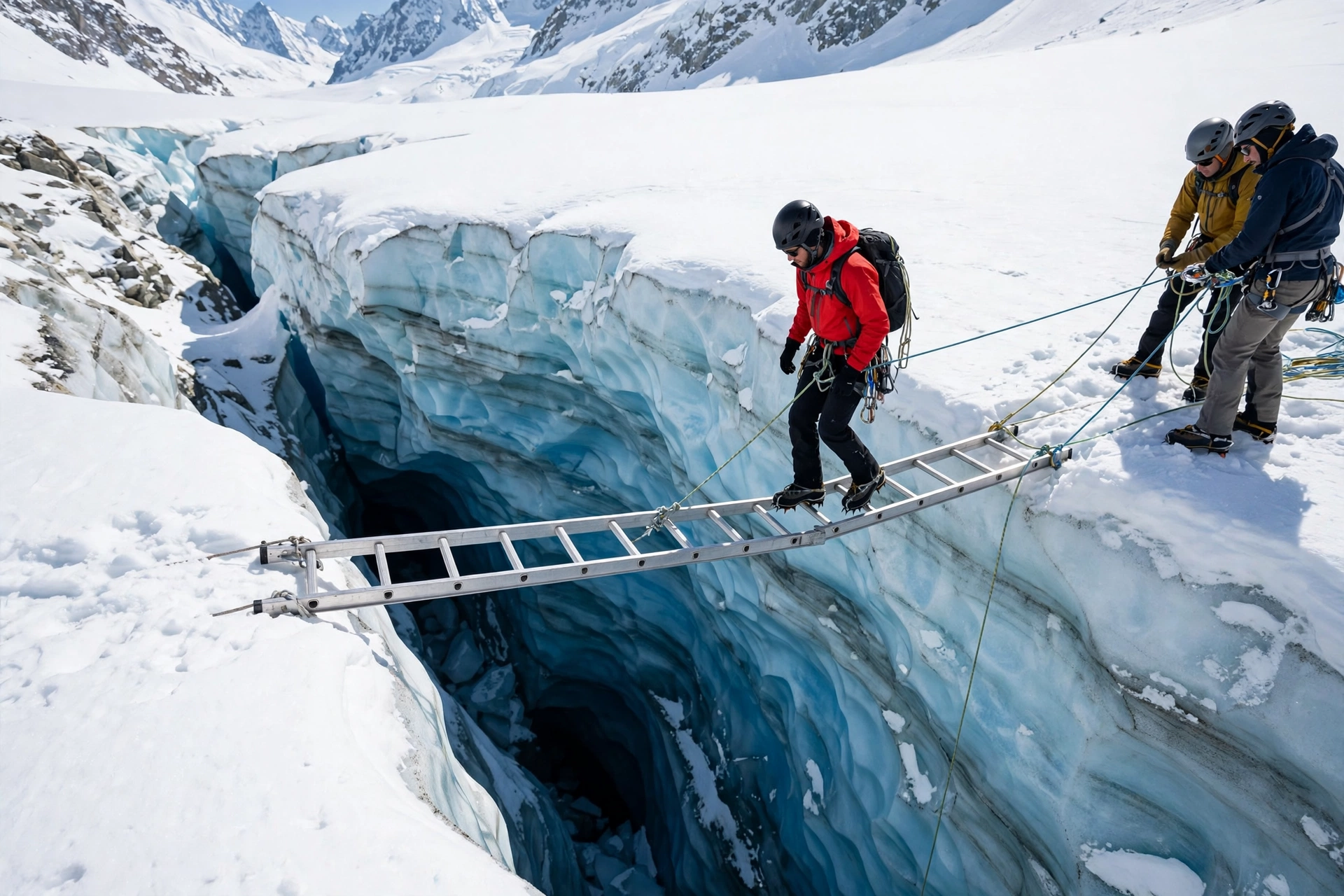
The crevasse fall is the defining one. When a snow bridge gives way, you do not lower gently into a slot: you drop, strike the ice walls on the way, and come to a stop against hard, featured ice — often while the rope comes tight and swings you into the wall again. A helmet is the difference between a frightening story and a head injury deep inside the mountain’s plumbing, where rescue is slowest.
Above you, glaciers are rarely as still as they look. Seracs topple without warning in icefalls, ice and rock debris slides off steeper sections, and at the glacier’s edges, loose moraine slopes and rock walls shed stones — the margins where you walk on and off the ice are often the most rockfall-prone terrain of the day.
And there is the ordinary slip. Boot-top deep postholing is harmless, but a slip on steep, hard firn or water ice, sliding with crampons and an axe in your hands, is an uncontrolled tumble in which heads meet ice at speed. Glacier travel strings these hazards along the whole route, which is why the helmet question answers itself for most teams.
Is a Helmet Required, or Just Recommended?
In general terms, there is no law that says a private party must wear helmets on a glacier. The decision belongs to the team. But the organised end of mountaineering has largely made the decision already: guided groups commonly require helmets for glacier travel, instructional courses issue them as standard kit, and many clubs expect them on club trips.
That professional consensus exists because guides manage the crevasse scenario constantly. In a crevasse fall and rescue, the casualty’s head is at risk during the fall, during the haul, and from debris knocked down by rescuers working at the lip. A helmet requirement is the cheap control for all three.
Private teams should also weigh a simpler point: the helmet costs almost nothing to wear. On a rope, moving steadily, a modern mountaineering helmet is light and soon forgotten. When the burden of wearing one is near zero, the burden of proof sits on leaving it behind — and “the glacier looked flat” is not much of a proof.
What Kind of Helmet Suits Glacier Travel?
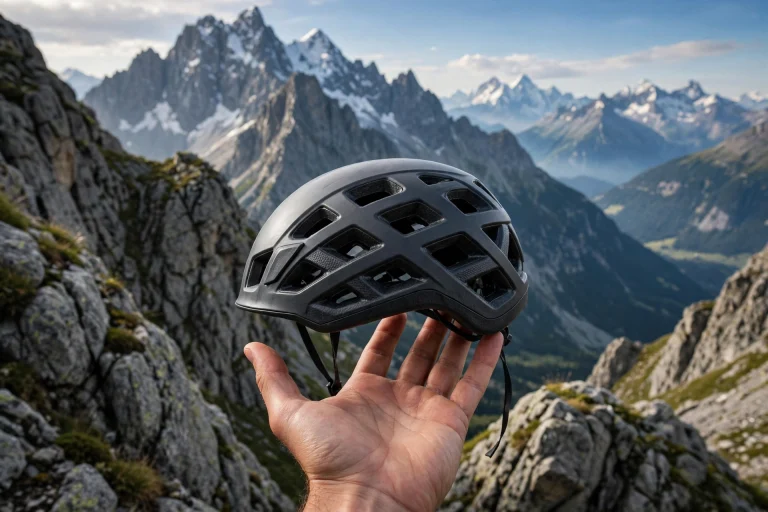
A certified mountaineering helmet — one meeting the climbing helmet standard, EN 12492 — is the right tool. These are tested for impacts from above and around the sides and for penetration by falling objects, which maps directly onto the crevasse-wall and debris hazards described above.
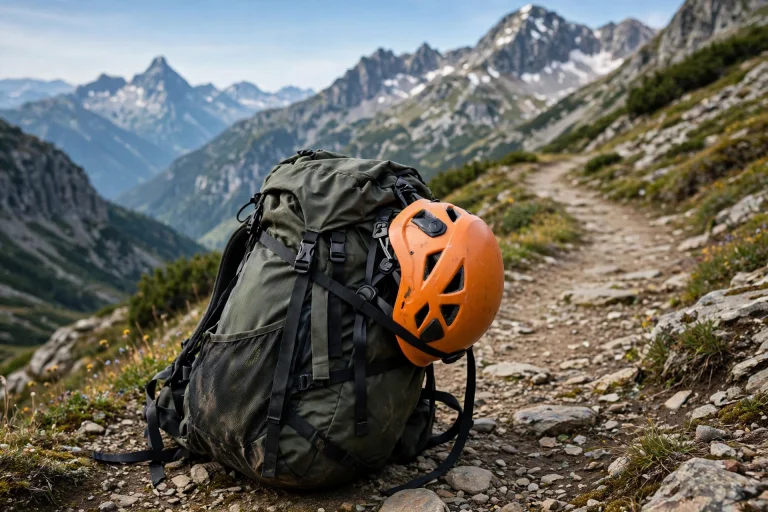
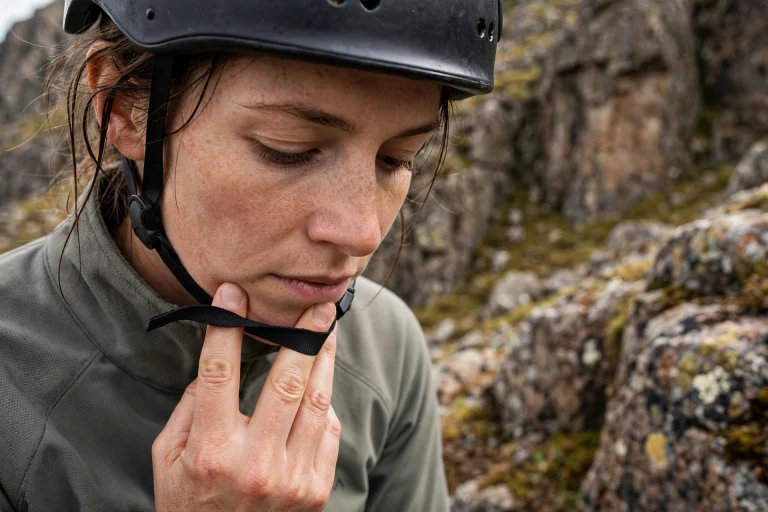
Foam and hybrid designs are both popular. Full foam helmets are lightest for long days; hybrids with a harder shell shrug off the knocks of being packed against ice screws and carried on approaches. Fit with your layers is the deciding detail: the helmet must sit correctly over a thin hat or balaclava, work with glacier glasses or goggles, and stay comfortable under a hood in bad weather.
Dual-certified helmets exist for ski mountaineering, meeting both climbing and ski standards, and are a sensible single purchase if your glacier travel is mostly on skis. A standard ski helmet on its own is not the same thing: it is designed around ski falls, not rockfall and crevasse-wall strikes. Whatever you choose, headlamp clips are worth having — glacier starts are famously early and dark.
When Might a Team Reasonably Skip the Helmet?
Honesty requires admitting the low end of the spectrum exists: a short crossing of a flat, dry, crevasse-free section of glacier in full view, with no icefall above and no steep firn, is closer to walking on a rough field than to the scenarios above. Some experienced teams relax about helmets for that kind of ground, particularly in heat.
The problem is that glaciers change character quickly and quietly. The flat section ends at a crevasse zone; the crevasse-free claim often rests on last season’s knowledge; the approach crosses a debris slope on the way. Teams that skip helmets sometimes end up carrying them on their packs through exactly the ground where they would have helped — attached for the approach, as it were, but never promoted to the head.
A workable rule many teams use: the helmet goes on when the rope goes on, and stays on until the team is off the ice and clear of the margins. It replaces judgment calls every hour with one judgment call at the start, and it matches how the guided world already operates.
How Does a Helmet Fit Into the Rest of Glacier Safety?
A helmet is one layer in a system, and it does not replace the others. Roping up correctly, probing and marking crossings, carrying crevasse rescue gear and knowing how to use it, arresting a fall fast — those prevent the accident. The helmet’s job begins when prevention fails, managing the energy of your head meeting the ice so that a rescue stays a rescue and not something worse.
That energy management is the helmet’s foam crushing as designed, and in some mountaineering models, additional systems address the twisting forces of a tumbling fall — the same principle as rotational-impact systems like MIPS found in other helmet sports. A fall into a crevasse is rarely a straight-down event, which is why that kind of design is relevant here.
So: rope, rescue skills, and judgment first — and a helmet on your head as the layer that assumes, realistically, that one day the first three will not be enough. On a glacier, of all places, that assumption is just good mountaineering.
Frequently Asked Questions
Q: Do mountain guides require helmets for glacier travel?
A: In general terms, commonly yes. Guided groups and instructional courses usually list a mountaineering helmet as required kit for glacier travel, because crevasse falls and rescues put clients’ heads at risk even when everything else is done well. Private parties make their own call — most experienced ones reach the same answer.
Q: Can I wear a ski helmet for glacier travel instead?
A: A plain ski helmet is not ideal: it is designed and certified around skiing falls, not rockfall, penetration, or crevasse-wall strikes. A certified mountaineering helmet is the right choice on foot. Dual-certified ski-mountaineering helmets, which meet both the climbing and ski standards, are the exception and work well for ski-based glacier travel.
Q: When should the helmet go on during a glacier day?
A: A simple, widely used rule is: when the rope goes on. Put it on before stepping onto crevassed ice, keep it on through icefall and debris-prone margins, and take it off once the team is off the glacier and clear of the slopes above it.

Olivia
Writer at Helmet Today, covering helmet reviews, fit and riding safety.